
Tesla does not appear to have one cleanly named “AI planning system” in 2026. What shows up in the evidence is messier and more interesting: a custom ERP and logistics operating layer, agentic planning workflows under development, dedicated procurement for AI infrastructure, and an upstream lithium refinery being pulled into the same supply-assurance logic. Taken together, those four layers explain why Tesla supply chain AI planning in 2026 should not be read as a software category. It is closer to an operating model.
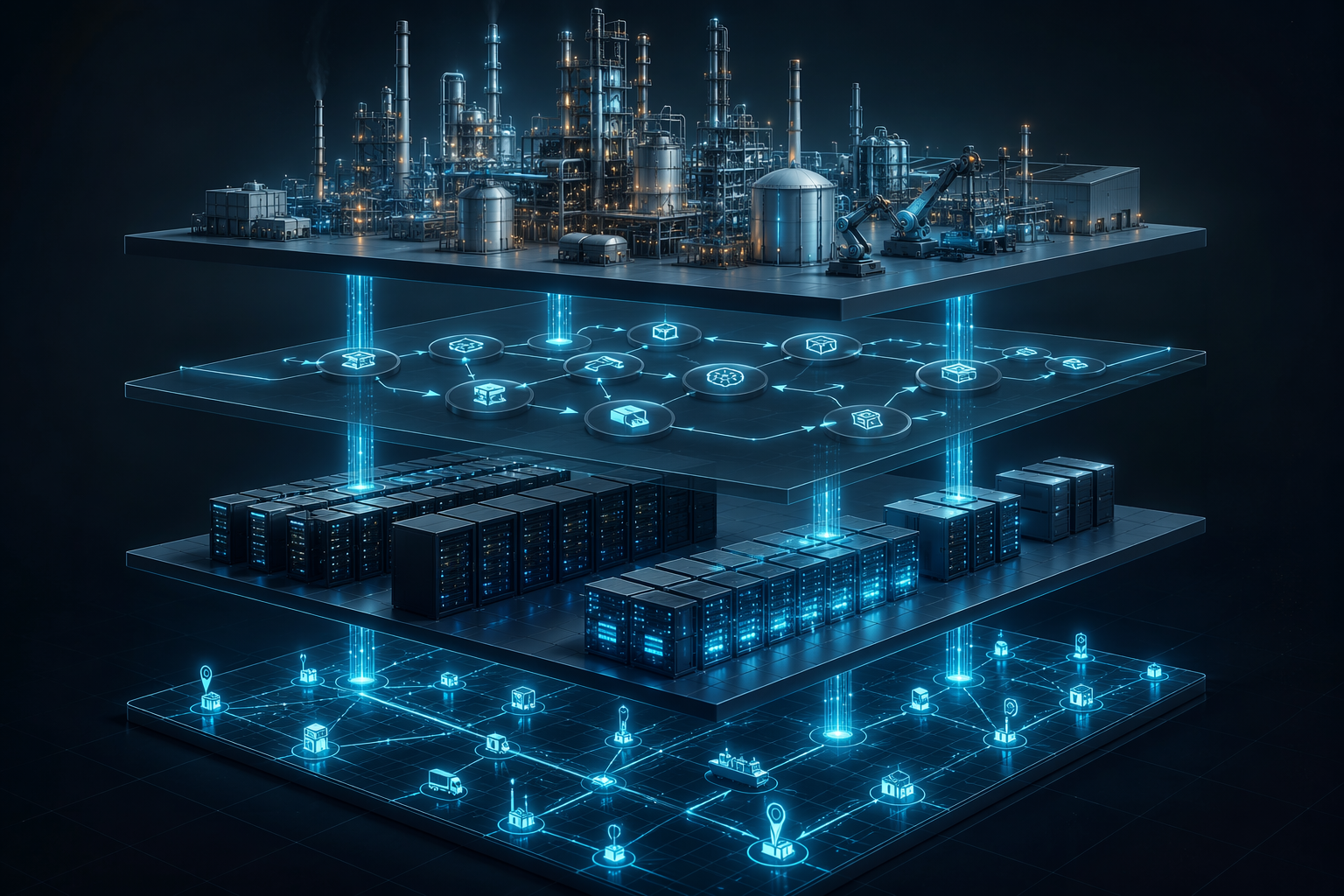
The measurable claims attached to that model are specific enough to deserve attention. Tesla’s custom Warp Drive environment has been described as processing more than 1.2 billion logistics events per month; its inventory position has been reported at 15 days, compared with 30 to 45 days at legacy automakers; and the working-capital benefit has been estimated at about $2.5 billion annually.[1] A separate April 2026 analysis puts Tesla’s logistics cost per vehicle at about $1,800, down from $2,600 in 2020, and attributes the decline to AI-assisted routing, localization, and predictive inventory control.[2]
Those figures do not prove that every planning decision is automated. They do show something more useful for operators: Tesla has put planning data, execution signals, capacity buying, and upstream material flows close enough together that planning can be measured against operating consequences. That is the part most companies still struggle to get out of slideware and into the Monday morning exception queue.
| Layer | What it appears to do | Evidence available in 2026 | What should not be overclaimed |
|---|---|---|---|
| Warp Drive ERP and logistics OS | Acts as the data and execution backbone for logistics, inventory, and operational coordination | More than 1.2B logistics events per month; 15-day inventory; about $2.5B working-capital benefit | Third-party reporting does not equal full internal system documentation |
| Agentic planning workflows | Moves planning and analysis toward AI-assisted automation | Fall 2026 posting for “AI-assisted (agentic) workflows that automate planning & analysis” | A job posting is a strong signal, not proof of fully autonomous production planning |
| AI infrastructure supply chain | Treats compute capacity and HPC systems as procured supply chain inputs | Active 2026 roles for AI Infrastructure Supply Chain Manager and AI Hardware Supply Chain Program Manager | The supply chain role of Dojo remains uncertain |
| Lithium refinery and physical AI | Extends planning logic into upstream material supply assurance | Corpus Christi lithium refinery operational in January 2026 at 30 GWh annual capacity | A refinery does not by itself prove end-to-end material autonomy |
Warp Drive Is the Load-Bearing Layer
The first layer matters because no AI planning claim survives bad operational grain. A forecasting model can be impressive and still be useless if the execution system cannot tell whether a supplier shipment is late, a lane has capacity, a plant has consumed buffer, or an expedite has already changed the plan. Warp Drive is the part of Tesla’s stack that appears to attack that problem directly.
Third-party reporting describes Warp Drive as a custom-built ERP and logistics operating system developed after Elon Musk decided not to upgrade SAP. The same reporting says the system processes more than 1.2 billion logistics events per month.[1][2] The key point is not that Tesla wrote its own software. Custom software can be a liability when it becomes a private museum of old process exceptions. The point is that Tesla appears to have made logistics events part of the planning substrate instead of treating them as after-the-fact status updates.
That distinction shows up in the inventory number. A 15-day inventory position is not just a lean trophy statistic; it means the organization has less time to absorb errors before production, service, or customer delivery feels the miss. Compared with the 30-to-45-day position reported for legacy OEMs, Tesla’s reported inventory level leaves less room for slow supplier visibility, stale transit updates, or disconnected planning assumptions.[1] Lower inventory only works when the exception signals arrive early enough, at the right level of detail, and in a place where someone or something can act.
The logistics cost figure points in the same direction. Moving from $2,600 per vehicle in 2020 to about $1,800 in 2024 is a roughly 30% decline, and the April 2026 analysis attributes the improvement to AI-assisted routing, localization, and predictive inventory control.[2] That mix is important. Routing alone is a transportation problem. Localization alone is a sourcing and network-design problem. Predictive inventory control is a planning problem. Put together, they describe a system where planning changes the shape of physical movement, rather than merely explaining after the quarter closes why freight costs went up.
For teams evaluating AI planning vendors, this is the uncomfortable benchmark. Tesla’s reported outcomes are attached to a backbone that absorbs execution signals at scale. If a company’s planning data still depends on weekly extracts, spreadsheet overrides, supplier emails, and a transportation feed that arrives after the dock appointment is missed, the first limitation is not model sophistication. It is that the model is being asked to plan inside a delayed version of the business.
That is why data readiness should be treated as operating work, not IT hygiene. Before planners ask whether AI can rebalance inventory or recommend supplier actions, they need to know whether demand, inventory, open orders, supplier commitments, transportation milestones, and production constraints can be reconciled at decision speed. ChainSignal’s AI inventory optimization data readiness guide is the more transferable starting point than trying to copy a custom ERP posture few organizations can afford.
Agentic Workflows Are a Directional Signal, Not a Permission Slip
The clearest 2026 evidence that Tesla is pushing beyond advisory analytics is not a product launch. It is hiring language. A Fall 2026 Tesla supply chain systems intern posting refers to building “AI-assisted (agentic) workflows that automate planning & analysis.”[3] That wording matters because it points at a different workflow boundary: not only producing a recommendation, but automating some part of the planning and analysis sequence that leads to action.
It should still be read carefully. A job posting does not confirm that Tesla has fully autonomous supply planning running in production, and it does not publish before-and-after results for agentic workflows. It does, however, show organizational intent. Someone is being hired into supply chain systems work where planning automation, analysis automation, and agentic methods sit in the same sentence. In a large manufacturer, that is not casual language.
The governance problem is exactly where this gets practical. RELEX’s 2026 survey found that 67% of supply chain leaders were more confident in AI than a year earlier, but only 10% trusted AI to make critical decisions without human review; 54% preferred a human-in-the-loop model.[4] That trust gap is not an argument against agentic planning. It is a reminder that “agentic” and “permissionless” are not the same operating design.
In a planning environment, the safe boundary depends on the consequence of the action. An agent that summarizes late supplier risk, drafts an expedite recommendation, or flags a stock-transfer candidate can move faster with lower approval burden. An agent that changes production priority, reallocates constrained supply, commits premium freight, or shifts supplier awards is making a decision with financial, customer, and operational consequences. Those actions need review rights, audit trails, and escalation logic.
That is why Tesla’s direction is more useful as an architecture signal than as a maturity claim. If Warp Drive supplies the event stream, agentic workflows could sit above it and compress the analysis cycle: detect exception, gather context, evaluate options, propose or execute the bounded action, and document the reason. The difference between a useful agent and a dangerous one is whether the system knows which step it is allowed to own.
For readers building similar capabilities, the near-term question is not whether to “turn on agents.” It is where graduated autonomy belongs. ChainSignal’s agentic AI supply chain risk taxonomy is useful for classifying failure modes, while the graduated autonomy guide is closer to how these systems should be deployed: observe first, recommend next, automate narrow actions later, and reserve critical decisions for reviewed workflows. That pattern also matches broader 2026 evidence on what works in agentic AI for supply chain, where confidence is rising faster than willingness to remove human review.
Compute Has Become a Supply Chain Category
The third layer is easy to miss because it looks like corporate recruiting rather than planning architecture. Tesla had active 2026 postings for a Supply Chain Manager, AI Infrastructure and a Supply Chain Program Manager, AI Hardware.[5] Those roles indicate that AI infrastructure is not being treated only as an engineering budget line. It is being treated as something that needs supplier management, capacity coordination, sourcing discipline, and program execution.
That matters for any company trying to scale AI planning. Models need compute, compute needs hardware, hardware needs suppliers, and suppliers live inside lead times, allocation constraints, commercial terms, and delivery risk. The same procurement organization that is used to buying production materials or logistics capacity may now need to support high-performance computing systems, accelerators, racks, networking, power-related dependencies, and service commitments. AI planning becomes a supply chain workload before it becomes a planning advantage.
There is a separate temptation to make Dojo the center of this story. The available material does not support that with enough precision. Dojo’s role in supply chain planning, as distinct from autonomous driving and broader AI development, remains uncertain; the reported August 2025 disbanding and January 2026 restart make the supply chain interpretation even less stable.[6] The safer conclusion is narrower: Tesla’s hiring shows dedicated supply chain management around AI infrastructure, and that alone is enough to change how procurement leaders should think about AI capacity.
This is also where many AI planning business cases understate the work. A team may benchmark inventory, service, forecast accuracy, and planner productivity using a broader AI use cases and ROI framework, but still fail to budget for the capacity planning behind the AI itself. If compute is constrained, expensive, or operationally fragile, planning automation will inherit those constraints.
The Lithium Refinery Extends the Planning Boundary
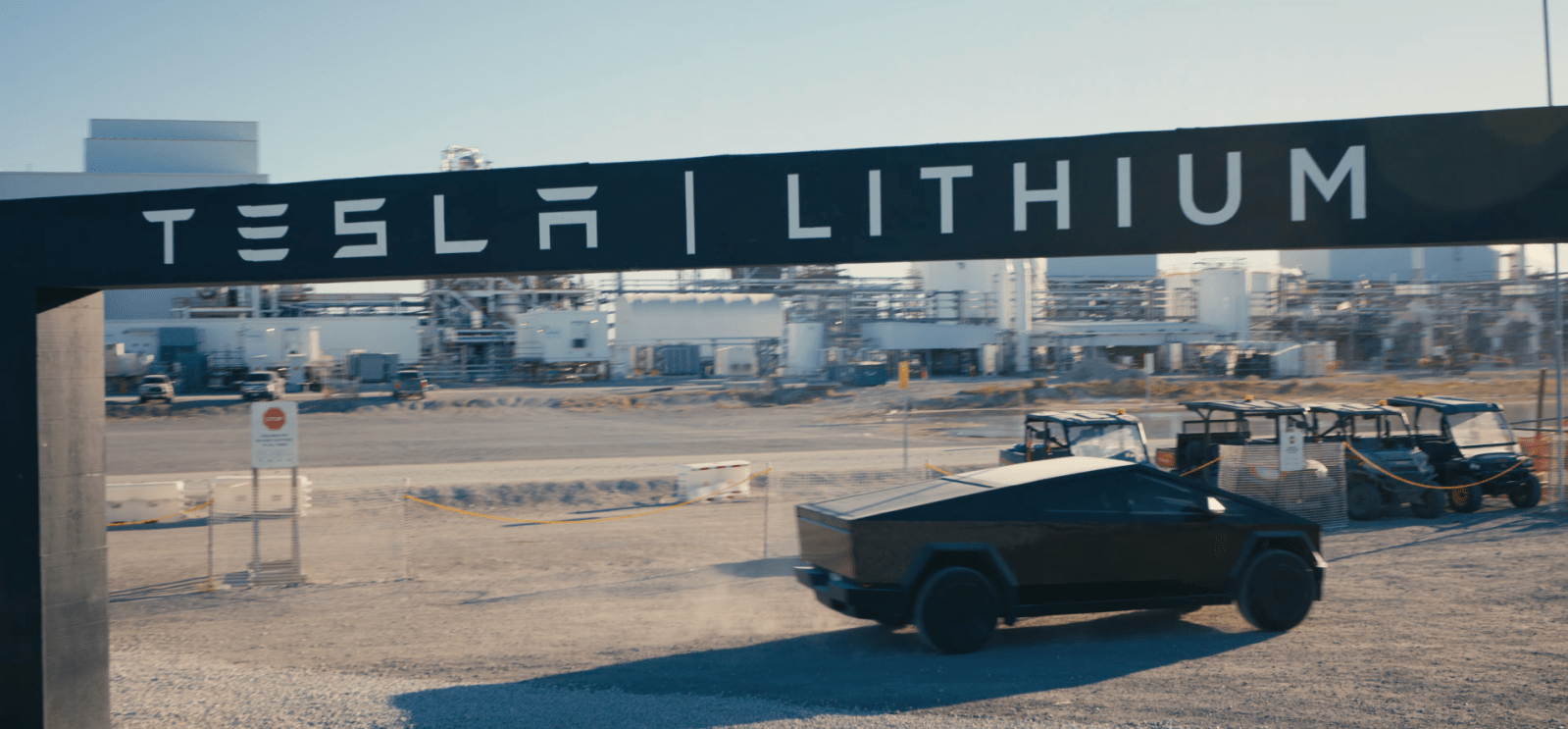
Tesla’s Corpus Christi lithium refinery is the outer edge of the stack, not a side story. The facility was reported operational in January 2026 with 30 GWh of annual capacity.[7] In planning terms, that brings upstream material conversion closer to the same operating logic as factory output, logistics flow, and capacity management.
This does not mean the refinery proves an autonomous end-to-end battery material system. It means Tesla is reducing the distance between a critical upstream constraint and the planning system that must respond to that constraint. Lithium availability, refining capacity, battery production, vehicle build plans, and logistics commitments are different planning objects, but they become more useful when they can be modeled as connected constraints rather than separate quarterly narratives.
Vertical integration helps here, but it is not a sufficient explanation. Some commentary cites an 87% vertical integration figure, but that number is not well sourced in the available material. The more reliable figure in the available sources is that about 80% of Tesla’s production value is in-house or under direct supplier control.[1] Even that should be used carefully. Control over more of the chain gives Tesla more levers, but levers do not create performance unless the planning system can sense, prioritize, and coordinate them.
What Other Operators Can Actually Copy
Most manufacturers and retailers cannot reproduce Tesla’s scale, integration depth, or willingness to build custom operating systems. They also should not pretend that a vendor implementation will replicate a stack assembled around Tesla’s own factories, logistics flows, AI infrastructure needs, and upstream material bets.
The transferable sequence is more modest and more useful. First, unify operational data at the level where exceptions are actually managed. Second, connect planning to execution signals instead of letting planning live in a slower reporting cycle. Third, introduce AI-assisted workflows where the decision rights are explicit. Fourth, treat AI compute as a real supply chain input with procurement, capacity, and supplier risk attached. Fifth, bring critical upstream constraints into the planning model where the business has enough influence to act.
That sequence is harder than buying software, but it is the part visible in Tesla’s 2026 evidence. The reported 15-day inventory position, $2.5 billion working-capital benefit, and roughly $1,800 logistics cost per vehicle are not clean proof of one AI engine beating the market.[1][2] They are evidence that planning precision improves when data, physical flow, automation, infrastructure procurement, and upstream capacity are managed as one operating system.
The benchmark is sober: Tesla’s advantage in 2026 appears to come less from owning everything than from making the things it owns, buys, moves, computes, and refines visible to the same planning logic.
References
- Tesla Supply Chain 2026 Analysis, Logistics Navigators.
- Tesla’s AI-Driven Logistics Operating Model, Logistics Viewpoints, April 2026.
- Fall 2026 Supply Chain Systems Intern Posting, Tesla Careers / LinkedIn.
- 2026 Supply Chain AI Survey, RELEX Solutions, 2026.
- Supply Chain Manager, AI Infrastructure and Supply Chain Program Manager, AI Hardware Postings, Tesla Careers, 2026.
- Dojo Supercomputer Supply Chain Role Reporting, 2025–2026.
- Tesla Lithium Refinery Operational Update, ChargedEVs, January 2026.
Comments
Join the discussion with an anonymous comment.