
Ford reportedly brought back roughly 350 veteran engineers after AI quality checks missed defects that experienced people would have been expected to catch. BBC and Bloomberg reporting put the figure at "more than 300," while July 2026 Yahoo Finance coverage and Mexico Business News used 350, so the exact count varies slightly by source. The important signal is less tidy than the headline: Ford did not discover that AI cannot support quality control. It discovered that automated quality systems are a poor substitute for production judgment that has never been translated into rules, feedback loops, and escalation paths.[1][2]
That distinction matters for anyone trying to read the Ford case as a supply chain lesson. The useful reading is not "humans beat machines." It is that Ford scaled a quality-control model into a factory environment before the people who understood recurring defects, supplier behavior, build variation, and launch risk had remained close enough to teach it what mattered.
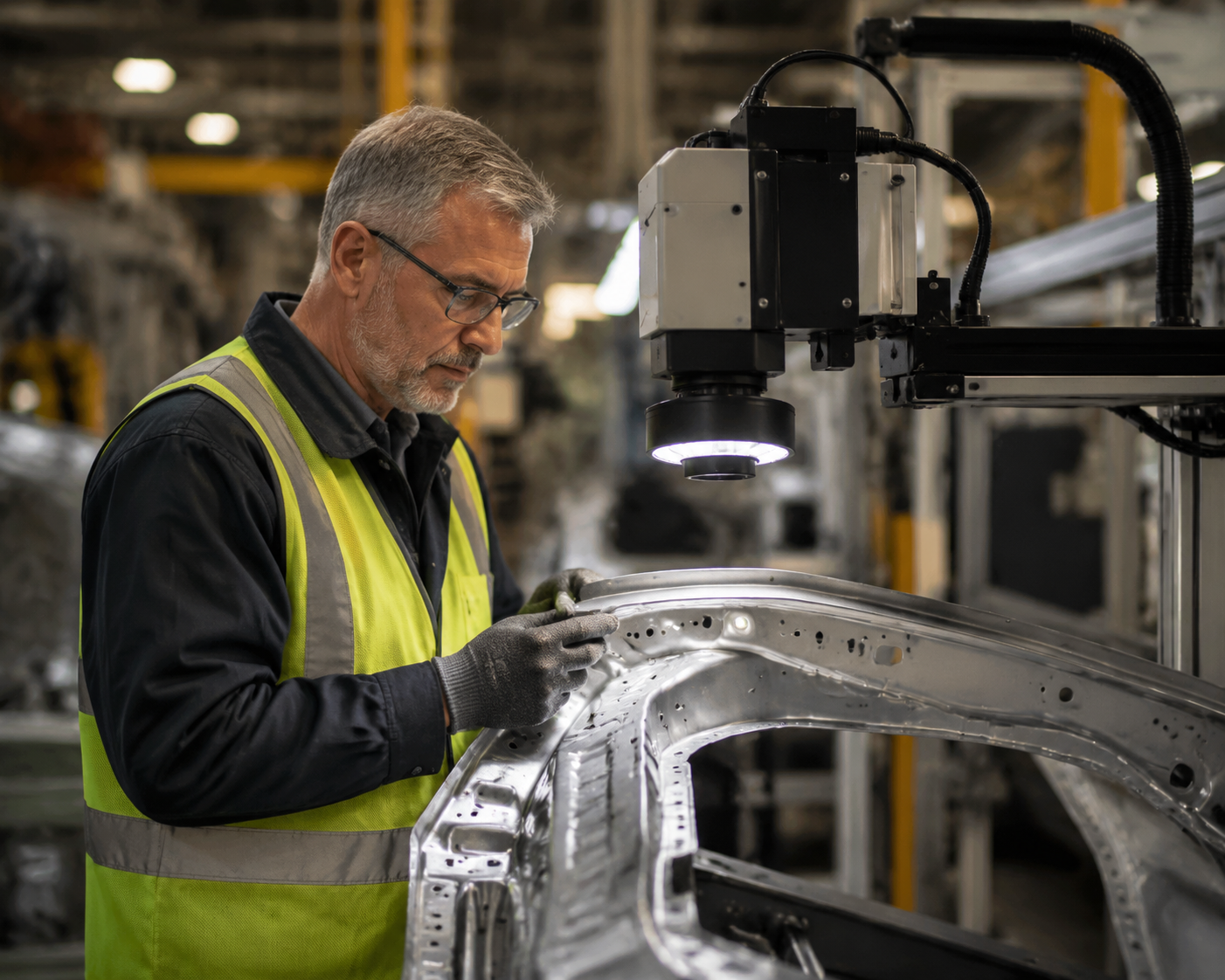
The apparent contradiction is what makes the case worth studying. Ford stumbled badly enough to rehire experienced engineers, yet later said it topped the 2026 J.D. Power Initial Quality Study among mainstream brands, its first such result since 2010, with 152 problems per 100 vehicles and a 41-point year-over-year improvement. Ford also attributed "hundreds and hundreds of millions of dollars" in reduced warranty and recall costs to its quality recovery work.[3]
Those recovery numbers should not be inflated into a universal AI payback claim. They are Ford-attributed performance evidence from a specific turnaround, not proof that every AI inspection, procurement bot, or planning model will return the same result. But they do suggest something important: the answer was not to abandon AI. The answer was to put expertise back into the operating system.
The Mistake Was Treating Requirements As Knowledge
Charles Poon, Ford's global director of production engineering, put the failure mode plainly: "Mistakenly, we thought that by just introducing artificial intelligence and ingesting the design requirements that we had, that would produce a high-quality product."[1]
That sentence deserves more attention than the drama around rehiring. Design requirements are necessary. They are not the same as production knowledge. A drawing can specify a tolerance. It will not automatically tell a model which tolerance stack has caused intermittent fit issues on a late shift, which supplier tends to drift after a tooling change, which cosmetic defect customers actually notice, or which inspection result deserves a stop-ship conversation rather than another dashboard flag.
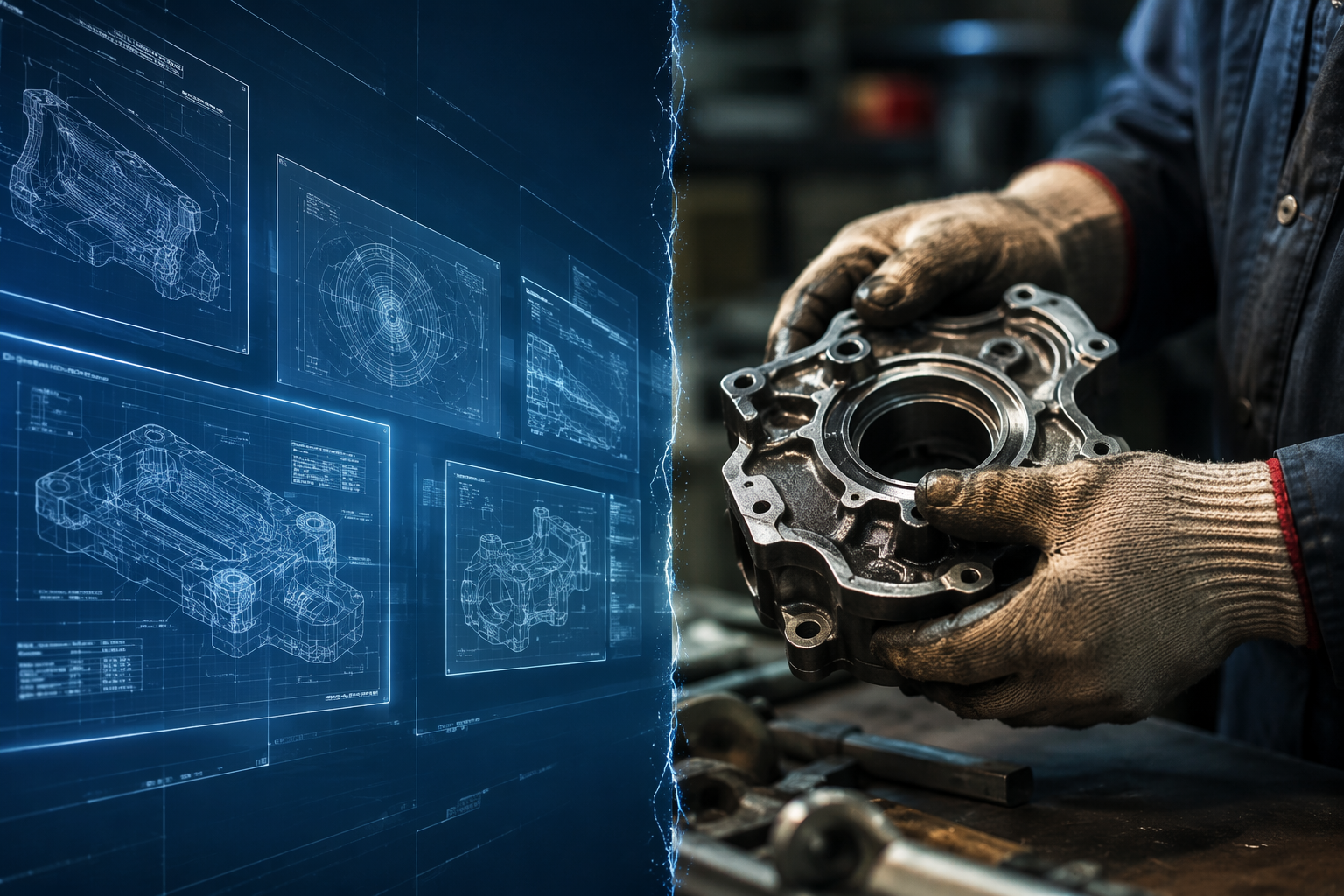
Every plant has a version of this. The best quality engineer knows which recurring defect is still inside statistical control but starting to smell wrong. The launch manager remembers which early warning was dismissed three programs ago. The warehouse supervisor knows that a scan exception during weather disruption means something different from the same exception during a normal week. None of that is magic. It is pattern memory built under consequence.
If that knowledge is still sitting in people's heads, the first job of an AI deployment is to extract, test, and codify enough of it to make the system useful. Ford's admission suggests the sequencing went the other way: documented requirements went into the system, and judgment was expected to appear on the output side.
The broader headcount context made that harder. Ford had cut 5,300 salaried positions since 2020, and CEO Jim Farley had said AI would "leave a lot of white collar people behind."[2] That does not prove that every engineer who left was connected to the quality miss. It does make the rollout climate visible. If employees believe AI is mainly a labor-removal program, they have little reason to treat it as a system they are expected to train, challenge, and improve.
This is where many automation reviews become dishonest. Executives ask why the experts did not engage, after months of telling them the expert layer was the cost problem. Then the model misses the thing the experts used to catch, and everyone rediscovers the value of "tribal knowledge" as if it were a surprise line item.
Ford Did Not Stop Using AI
The recovery story is useful because Ford did not respond by pretending automation had no place in quality. Its factories had already been using AI cameras and machine-vision systems for inspection work. Business Insider reported that Ford was using 900 AI-powered cameras in factories, and that its Mobile Artificial Intelligence Vision System had operated at 686 stations and conducted more than 168 million inspections. The same coverage said earlier supplier integration efforts had helped reduce launch issues by 30%.[4]
Those are adoption and activity measures, with one reported launch-issue improvement. They are not, by themselves, evidence that every inspection model was effective in every plant. A camera count tells you where sensors are installed. Inspection volume tells you scale. The real question is whether the system knows when an observed condition is acceptable variation, when it is an emerging defect, and when a person with authority needs to intervene.
Ford's corrective action points toward a better operating model: AI remains in the workflow, but expert review moves closer to the places where the model is uncertain, undertrained, or exposed to production changes. Rehiring veteran engineers was not nostalgia. It was a way to restore judgment at the point where automated checks had not yet earned enough trust to act alone.
| Rollout Choice | What It Assumes | What Usually Breaks |
|---|---|---|
| Feed the model design requirements and automate review | Documented requirements are enough context | Tacit defect memory and exception judgment stay outside the system |
| Remove experts before deployment has stabilized | The model can replace review capacity immediately | People stop teaching the system and start defending themselves from it |
| Pilot AI beside current quality checks | The model needs comparison against expert decisions | Slower early rollout, but cleaner learning and escalation rules |
| Scale only after operational outcomes improve | Authority must be earned under production conditions | Expansion depends on quality evidence, not headcount targets |
As we covered in our analysis of Ford's $570M recall, AI systems alone were insufficient on the failure side of the story. The recovery side is more instructive for supply chain leaders because it shows the operating correction: keep the model, but rebuild the human loop around the decisions that carry quality risk.
The Supply Chain Version Of The Same Failure
Manufacturing quality makes the failure visible because the defect eventually shows up in a vehicle, a warranty claim, or a recall. The same sequencing problem is quieter in procurement, logistics, and planning. Leaders sideline the people who know the exceptions, then ask an AI system to make decisions in a landscape where exceptions are the work.
In procurement, the model may rank suppliers on price, delivery, and published risk signals. The buyer remembers that one supplier always performs well until a particular component family ramps, or that a low-risk region can still be risky when a sub-tier toolmaker is constrained. If that memory is not captured, the model is not "objective." It is incomplete.
In logistics, a routing model may optimize cost and transit time. A transportation manager knows which lane looks fine in the data until port congestion, weather, driver availability, or appointment discipline changes the failure pattern. The model can help detect the shift, but only if someone has defined which exception patterns deserve attention and which ones are noise.
In planning, AI can be excellent at surfacing demand shifts and scenario options. It can also learn the wrong lesson if planners are removed before they explain promotion behavior, customer ordering games, substitute parts, and the difference between true demand and allocation-driven demand. Forecast accuracy is not just a math contest. It is a negotiation with messy commercial behavior.
The pattern is consistent across functions: the company removes or weakens domain expertise before the model has absorbed enough of it, then discovers that the model lacks exception memory. That is not an argument against AI in supply chain work. It is an argument against giving AI decision authority before it has been trained against the judgment the company still depends on.
What Changed In Ford's Recovery
Ford's reported recovery had three practical ingredients worth copying. First, it restored experienced review capacity. Second, it kept AI in the process rather than treating the miss as a reason to retreat from technology. Third, it measured the turnaround against operational outcomes that matter: initial quality, warranty cost, and recall exposure.[3]
That last point matters. A labor-saving dashboard can make a program look successful while quality debt accumulates elsewhere. A procurement bot can reduce sourcing cycle time while pushing risk into supplier performance. A warehouse automation layer can improve transaction speed while making exception handling worse. If the metric that funds the project is headcount removal, the deployment will be shaped around headcount removal.
A better scorecard asks whether the AI reduced the cost of bad decisions. In Ford's case, the relevant outcomes were quality defects, warranty exposure, recalls, and launch issues. In supply chain, the comparable outcomes might be supplier escapes, expedite spend, stockout duration, forecast bias, inventory write-offs, premium freight, late launches, or manual rework after an automated decision.
The broader automotive recall environment still gives AI plenty of work to do. Early detection, pattern recognition, and exception triage can give manufacturers more time to intervene before failures become expensive campaigns; we have covered that in our piece on AI and automotive recall early detection. The Ford case does not weaken that argument. It narrows the deployment standard.
The Deployment Standard Supply Chain Leaders Should Use
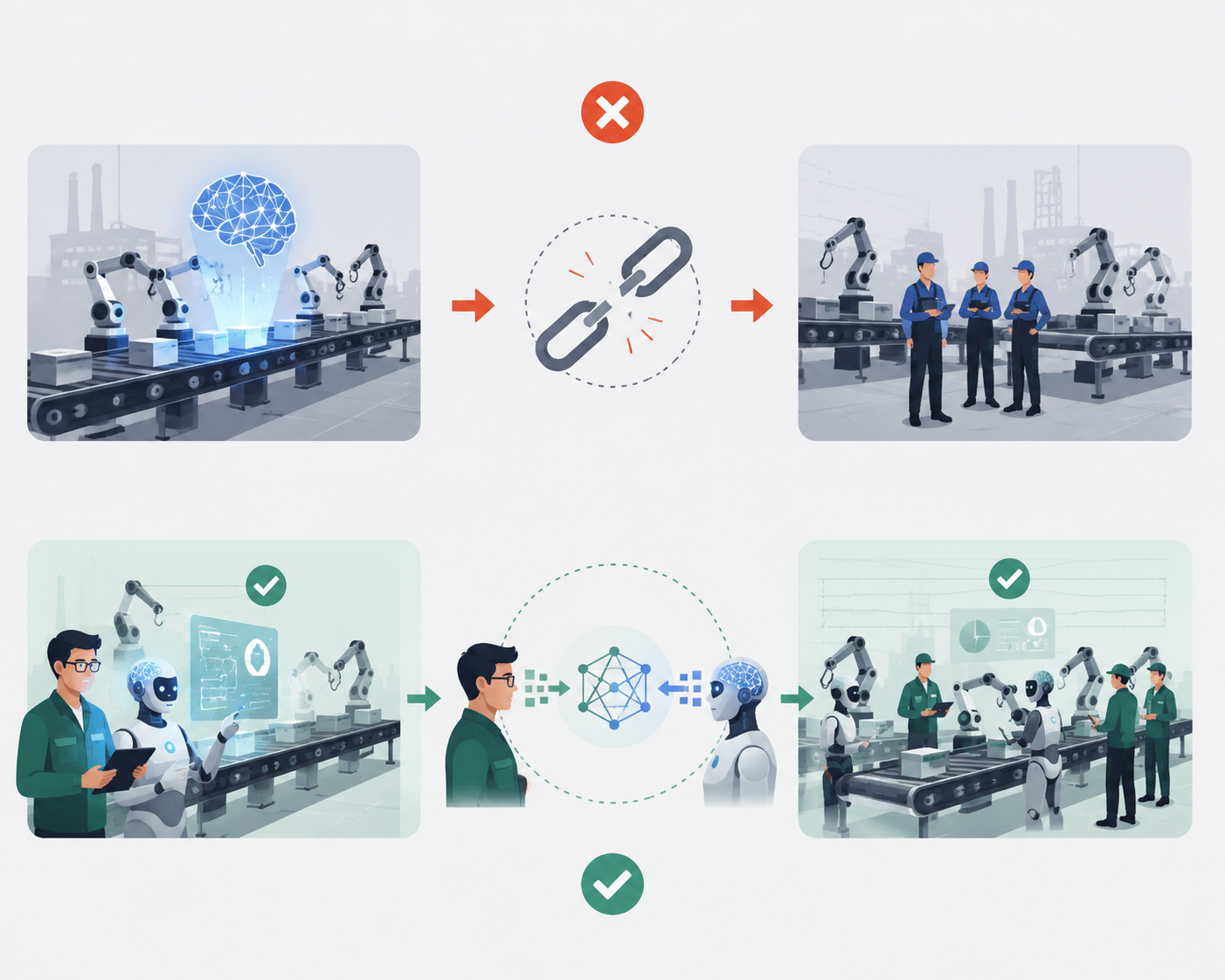
The practical lesson is not complicated, but it is often inconvenient during budget season: pilot AI beside the current process before shifting authority to it. Let the model make recommendations. Let experts accept, reject, override, and annotate those recommendations. Track where the model is right, where it is overconfident, where people are protecting old habits, and where the underlying data is too thin to support automation.
The expert's role should also be explicit. A veteran engineer, buyer, planner, or logistics operator is not just a user in this phase. They are a trainer, exception judge, and escalation designer. They help define what the system should never decide alone, what it can decide after confidence improves, and what should always trigger human review because the consequence of being wrong is too high.
- Start with a live comparison period, not a cutover date disguised as a pilot.
- Keep domain experts close enough to label exceptions, explain overrides, and challenge false confidence.
- Measure operational outcomes before labor savings: defects, expedites, missed shipments, warranty exposure, supplier escapes, and rework.
- Create escalation rules before scale, especially for low-frequency, high-cost exceptions.
- Expand decision authority only where the model has performed under production conditions.
This is also a governance question. A steering committee should not only ask whether adoption is on track. It should ask what expert knowledge has been captured, which overrides changed the model, which decision categories remain human-controlled, and which business outcome improved enough to justify more authority. Those questions belong in the same review as cost, schedule, and vendor performance.
For leaders building a broader AI operating model, the same pilot-before-commit discipline applies outside manufacturing. We have written separately about CEO-level AI supply chain strategy, but Ford's quality recovery makes the plant-floor version concrete: authority should move to automation only after the people who understand the work have helped prove where automation is safe.
That is the standard supply chain leaders should take from the case: deploy AI quickly where it detects, compares, and surfaces exceptions; move slowly where it starts deciding; and do not remove the people who know how the operation fails until the system has learned enough from them to prevent the next failure.
References
- Ford rehires human engineers after AI fails to match quality checks — BBC News
- Ford 'Mistakenly' Thought It Could Produce 'High Quality' with AI, Now It's Reportedly Rehiring 350 Veteran Engineers — Yahoo Finance / Bloomberg
- Ford Named Top Mainstream Brand in 2026 JD Power Initial Quality Study — Ford Official Press Release
- Ford Uses AI Cameras in Factories to Prevent Costly Recalls, Rework — Business Insider
Comments
Join the discussion with an anonymous comment.