
The AI supply chain problem in Ford’s Expedition recall starts with a part customers could touch. In June 2026, Ford recalled 548,463 Expedition vehicles from the 2018 through 2024 model years because chrome trim on the center console could bubble, peel, and form sharp edges. Before the recall, 65 injuries and one accident had been documented, according to reports on NHTSA recall 26S38.[1][2]
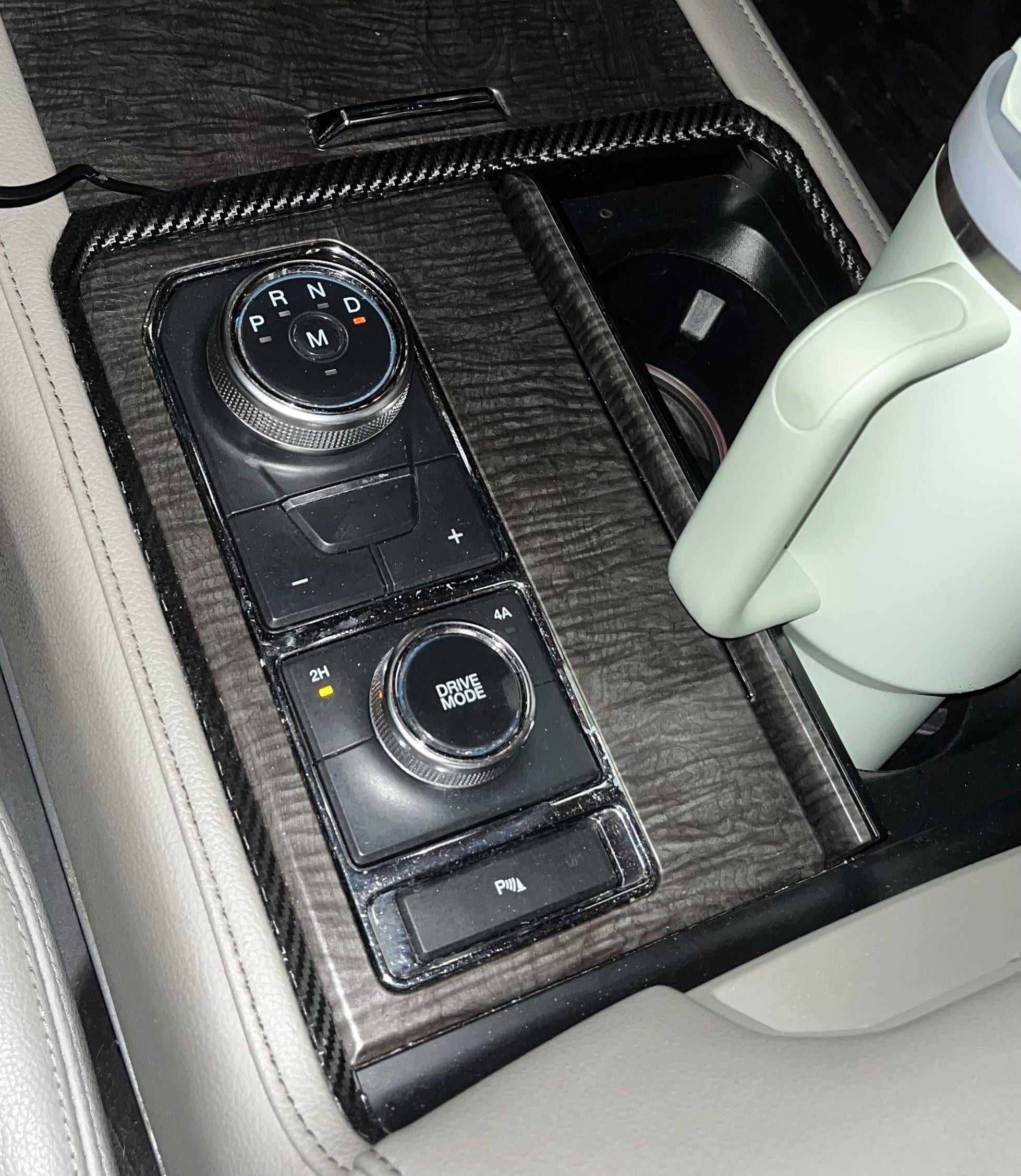
That physical detail matters. This was not a hidden software bug, a rare electronic fault, or a defect detectable only after unusual field use. It was trim that degraded into a customer-contact hazard across seven model years. The recall record points to a manufacturing compliance failure in the supply base: tier-2 supplier Xin Point and tier-1 supplier Forvia manufactured the chrome trim outside Ford’s specified parameters, rather than Ford identifying the issue as a design defect.[1]
That distinction changes the quality question. If the design requirement was wrong, the corrective work would begin with engineering release, validation assumptions, and design change control. If the supplier process drifted outside specified tolerances, the first question is more prosaic and more uncomfortable: where, exactly, was compliance being verified while the parts were being made?
The Defect Was Introduced Before Ford’s Factory Could See It
A chrome trim surface does not usually fail all at once. It depends on substrate preparation, coating adhesion, process parameters, handling, environmental exposure, and repeatability across batches. The recall materials available publicly do not give a full process-control map for the Expedition trim. They do, however, support a narrower conclusion: the part was made outside Ford’s specified tolerances by suppliers, and the nonconformance persisted long enough to affect vehicles built over multiple model years.[1][2]
That is the kind of failure that can pass through a conventional supply chain when the required evidence is treated as paperwork rather than live process data. A supplier may certify that a part meets specification. A receiving plant may inspect samples. An assembly line may confirm that the correct part is installed. None of those checks necessarily proves that the coating process stayed inside the intended window at the tier-2 point of manufacture.
The sharp-edge injury count also tells procurement and quality teams something that a simple part-replacement remedy cannot. A defect with customer-contact consequences remained below the effective detection threshold until field complaints accumulated. That does not mean no inspection existed. It means the inspection and escalation system did not convert supplier-side process drift into an early containment action.
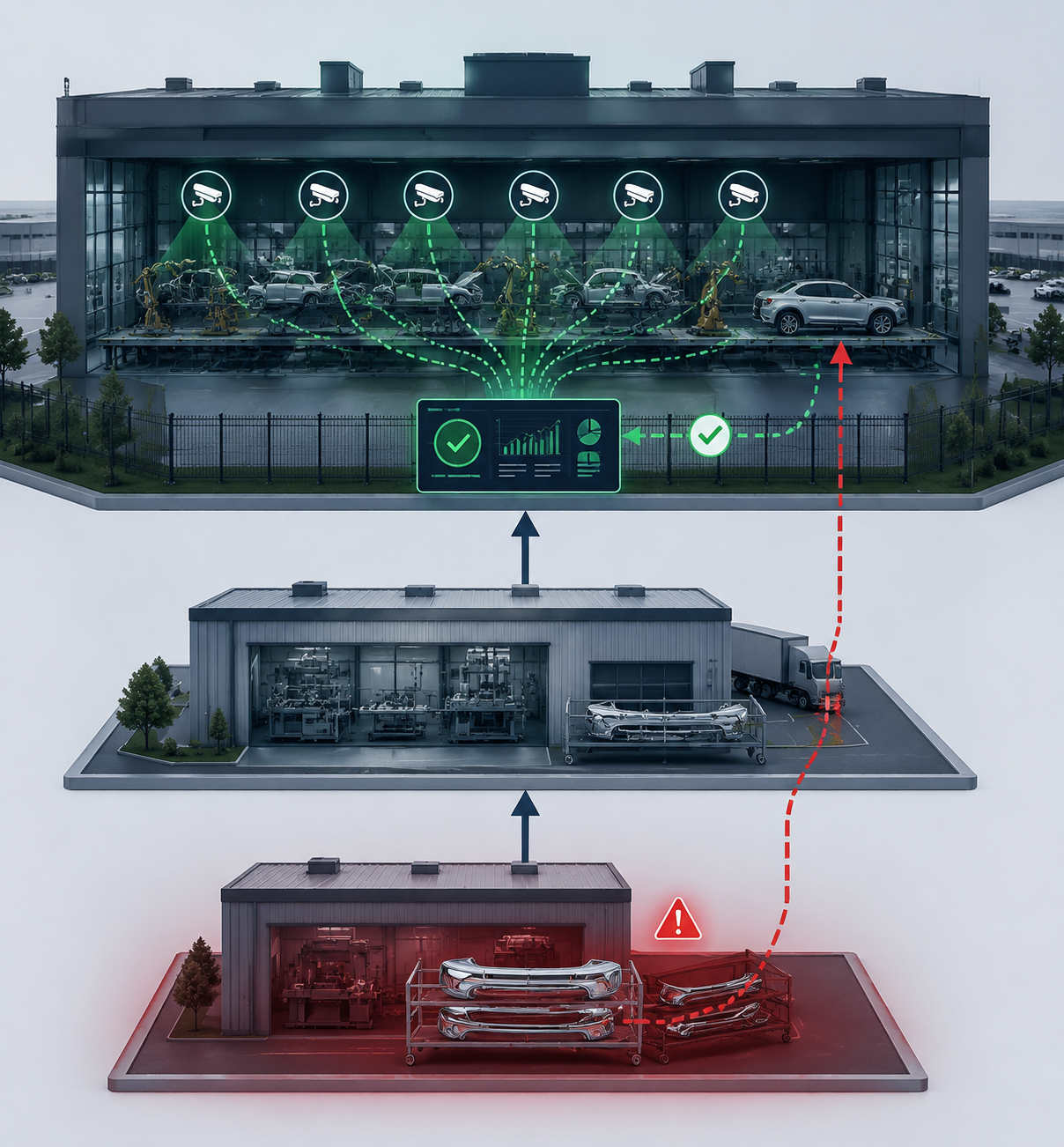
The remedy status also keeps the case grounded. As of late June 2026, recall remedy letters were still being mailed, so final completion rates were not yet available. The case is therefore not a finished remedy-performance story. It is a visibility story: how a supplier-made defect moved from an upstream process into finished vehicles for years before the quality system treated it at recall scale.
Ford Had Already Proved Factory AI Could Catch Real Defects
The Expedition recall is easy to misread if Ford’s AI work is treated as either irrelevant hype or an obvious missed miracle cure. Ford had already shown practical uses for AI inspection inside its own plants. Reports in 2025 described roughly 900 AI-powered cameras deployed across Ford facilities, including AiTriz video-based machine learning at 35 stations to catch millimeter-level misalignments and MAIVS still-image AI at about 700 stations to verify correct parts.[3][4]
Those are not abstract demonstrations. At Ford’s Van Dyke Electric Powertrain Center, AI inspection was reported to have reduced faulty electric oil pump seals from 40 units per month to zero.[4][5] That is the kind of unglamorous quality automation worth taking seriously: cameras looking at repeatable work, models trained on specific defect modes, and feedback close enough to production that the next bad unit can be stopped.
| Ford AI Quality Use | Observed Boundary | Reported Result |
|---|---|---|
| AiTriz video-based inspection | Ford plant stations | 35 stations catching millimeter-scale misalignments |
| MAIVS still-image verification | Ford plant stations | About 700 stations verifying correct parts |
| Van Dyke oil pump seal inspection | Ford powertrain facility | Faulty electric oil pump seals reduced from 40 per month to zero |
| Expedition chrome trim process | Supplier manufacturing process | Trim made outside specified parameters across affected model years |
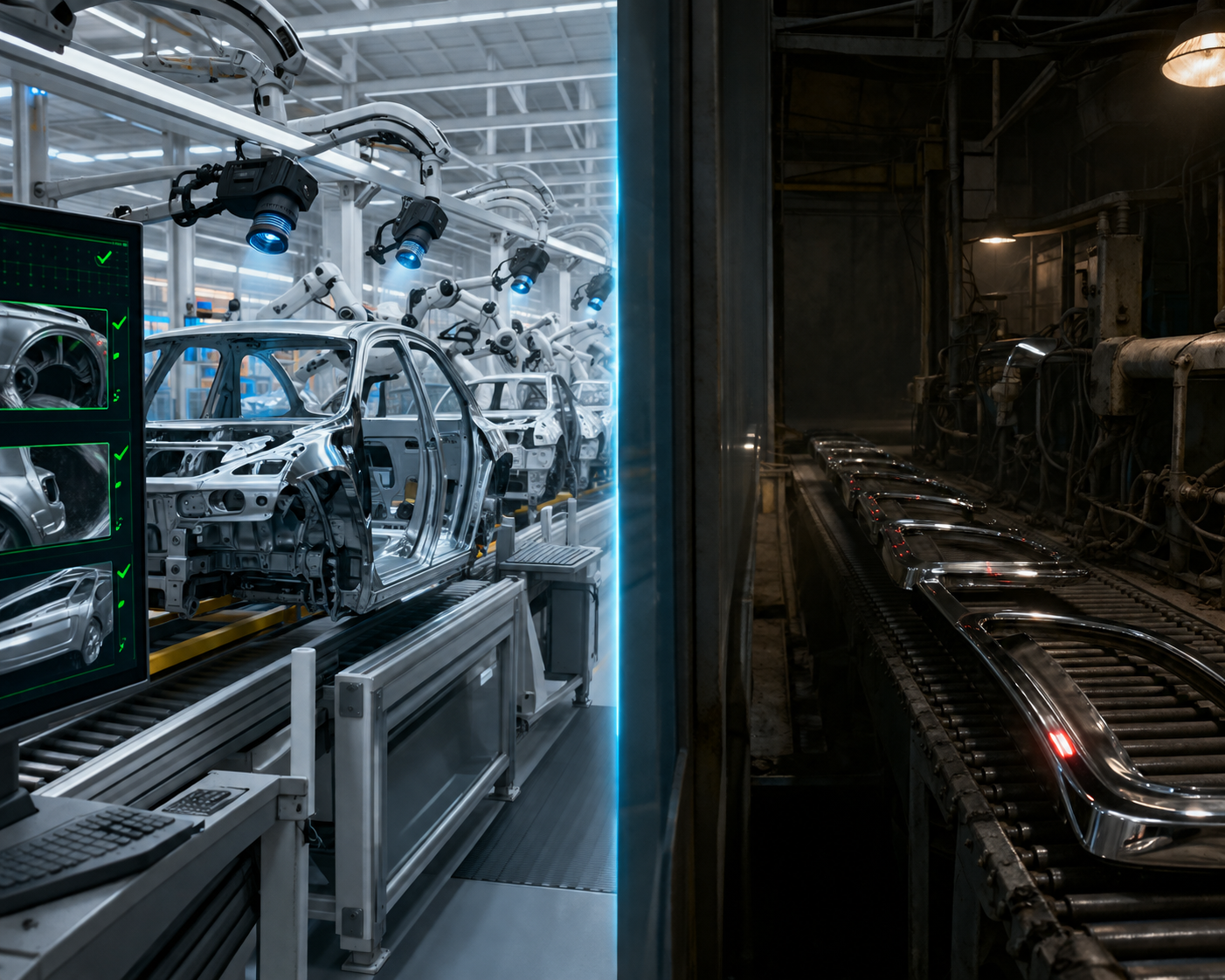
The contrast is direct. Ford’s in-plant AI systems appear to have been aimed at defects that were visible inside Ford-controlled production environments. The Expedition trim failure was attributed to supplier manufacturing parameters. If the defect was introduced at Xin Point or Forvia before parts arrived at Ford, a camera at a Ford assembly station could verify installation and still miss the supplier process condition that made the installed part unsafe over time.
Ford COO Kumar Galhotra was quoted describing Ford as “deploying AI across the entire industrial system.”[3] The Expedition case does not make that statement worthless. It makes the boundary of “industrial system” the operational issue. A camera network can be excellent within the four walls where it operates and still be blind to the tier-2 process that creates a critical characteristic.
A Supplier Tolerance Is Not Controlled Until It Becomes Evidence
For supplier quality teams, the word “specified” can create false comfort. A tolerance written into a drawing, purchase order, supplier quality manual, or production part approval package is not the same thing as continuous compliance. It becomes control only when the relevant process signal is captured, checked, retained, and connected to the lot, shipment, build record, and field outcome.
In the Expedition case, the public facts support the inference that the critical missing layer was automated parameter verification at the supplier point of manufacture. Ford and NHTSA did not state that AI would have prevented the recall. That stronger claim would overreach the record. The supported point is narrower: Ford had demonstrated AI inspection inside its own plants, while the supplier process later associated with the recall sat outside that same level of monitored visibility.[1][3][4]
A supplier-side quality system for this type of risk would not begin by asking a general AI model to “find bad trim.” It would begin with the process variables that make bad trim possible. Which parameters define adhesion risk? Which measurements prove the coating process stayed within Ford’s allowed window? Which lots used which parameter history? Which finished vehicles received those lots? Which early warranty claims or customer complaints should trigger containment against that lot family?
That is where the gap between inspection and traceability becomes expensive. An OEM can have advanced camera inspection at final assembly and still lack the upstream data needed to connect a late field symptom back to a supplier process window. Once injuries have occurred and seven model years are implicated, the organization is no longer using quality data to prevent exposure. It is using field evidence to reconstruct exposure.
This is also why AI recall management and AI supplier quality should not be treated as the same project. Recall analytics can help narrow affected populations after a problem is detected; supplier quality monitoring is meant to catch the process drift earlier. ChainSignal’s existing discussion of AI recall management from reactive to predictive addresses the downstream traceability problem. The Expedition trim case shows why upstream evidence has to exist before predictive containment can do much useful work.
Why the Plant-to-Supplier Extension Is Harder Than It Sounds
It is tempting to say Ford should simply put the same AI cameras in every supplier plant. That sentence is too easy. A Ford-owned plant offers a controlled environment: known lines, common IT governance, direct labor training, standardized escalation, and a management chain that can act on the model’s output. A tiered supply network is messier by design.
- A tier-1 supplier may buy a critical subcomponent from a tier-2 supplier whose process data the OEM does not receive in real time.
- Process parameters may live in supplier equipment, spreadsheets, local quality systems, or formats that do not map cleanly to OEM traceability records.
- Suppliers may resist camera feeds or process-data sharing when they expose proprietary methods, capacity constraints, scrap rates, or commercial leverage.
- AI models trained for one plant station rarely transfer cleanly to a different supplier process without new defect libraries and domain review.
- The business case is harder when the defect rate is low, the harm appears after time in service, and the supplier process seems stable until it is not.
Those constraints are real. They do not excuse the blind spot; they define the work. Supplier quality AI is less a camera-installation program than a negotiated evidence architecture. It needs data rights, common identifiers, lot genealogy, parameter thresholds, exception workflows, and a way to decide who acts when a supplier process signal disagrees with a certificate of compliance.
The supplier side also changes the human requirement. Ford’s later decision to rehire 350 veteran engineers after AI fell short in quality work was reported alongside comments from Ford vice president Charles Poon, who said, “Mistakenly, we thought that by just introducing AI and ingesting the design requirements, that would produce a high-quality product.”[6][7] That quote should not be stretched into a humans-versus-AI fable. It is better read as a reminder that models need the right problem framing, defect examples, and process knowledge. If supplier parameter data never enters the system, experience and AI both arrive late.
Quality Improvement Can Coexist With a Supplier Visibility Failure
The broader Ford quality picture is mixed rather than theatrical. Ford said it topped the J.D. Power 2026 U.S. Initial Quality Study among mainstream brands, its first such result since 2010.[8] At the same time, Ford faced heavy recall scrutiny: Business Insider reported 94 recalls in 2025 and 51 recalls in 2026 at the time of its reporting.[3] Those figures should be read with reporting-window caution, but they help place the Expedition case in the right frame.
A company can improve initial quality and still carry residual exposure in the supply base. A plant can reduce one defect mode to zero and still receive a part whose upstream manufacturing history is not visible enough. An AI deployment can be useful and still fail to cover the process that matters for a particular recall.
That is the Expedition lesson for supply chain leaders. The relevant question is not whether Ford used AI, or whether AI works in automotive quality. The record already shows Ford using AI for practical inspection tasks with reported benefits inside its plants.[3][4][5] The question is where Ford drew the boundary of quality visibility, and whether supplier-made critical characteristics were governed by evidence strong enough to catch drift before customers did.
The Case Study Judgment
The 548,463-vehicle Expedition recall does not prove that AI quality systems fail. It proves that factory AI has limited value against defects introduced outside its field of view. Ford’s in-plant systems could catch misalignments, wrong parts, and oil pump seal defects where cameras and models were deployed. The chrome trim defect was tied to supplier manufacturing parameters that, based on the public record, were not monitored with equivalent automated verification at the point where the nonconformance was created.
For procurement and quality teams, that makes the recall less a warning against AI than a warning against drawing the system boundary too narrowly. Supplier quality AI has to be designed as a network traceability problem: part genealogy, parameter evidence, supplier process visibility, and field feedback tied together tightly enough that a drifting upstream process becomes a containment event before it becomes a multi-year recall.
References
- Ford to recall more than 548,000 US vehicles over defective center console — Reuters, June 11, 2026
- Ford recalls over 540K vehicles. See affected models — USA Today, June 11, 2026
- Ford Uses AI Cameras in Factories to Prevent Costly Recalls, Rework — Business Insider, August 2025
- In-house AI systems help Ford spot vehicle defects earlier — Automotive News, July 2025
- Ford Using AI Tech To Get A Grip On Quality Control Issues — CarBuzz, May 2024
- Ford rehires human engineers after AI fails to match quality checks — BBC, June 2026
- Ford rehires 350 engineers after AI fails at quality — Repairer Driven News, July 8, 2026
- Ford Update on Quality and Recalls — Ford, 2025
Comments
Join the discussion with an anonymous comment.