
The operational lesson from the July 2026 Wildberries strikes is not that every warehouse is now a military target. It is narrower, and more useful: when a commercial logistics network is alleged to support dual-use supply chains, warehouse concentration becomes part of the targeting calculus. That is the supply chain disruption risk leaders need to take seriously.
On July 18, Ukrainian drone attacks hit Wildberries distribution facilities in Elektrostal and Kotovsk, with CNN reporting eight deaths and PBS reporting nine killed and more than 60 wounded across multiple sites, based on Russian regional officials and related reporting.[1][2] On July 22, a second wave hit two more Wildberries facilities, in Krasnodar and Nevinnomyssk.[3] Within one week, four of the retailer’s top 10 distribution centers were damaged or destroyed.
Those casualty figures should be read carefully. They come through Russian official channels and media reporting, and independent third-party verification is limited. The same caution applies to restoration-cost estimates and lost-goods claims circulating on social media; without audited company disclosures, they are signals of possible scale, not settled accounting.
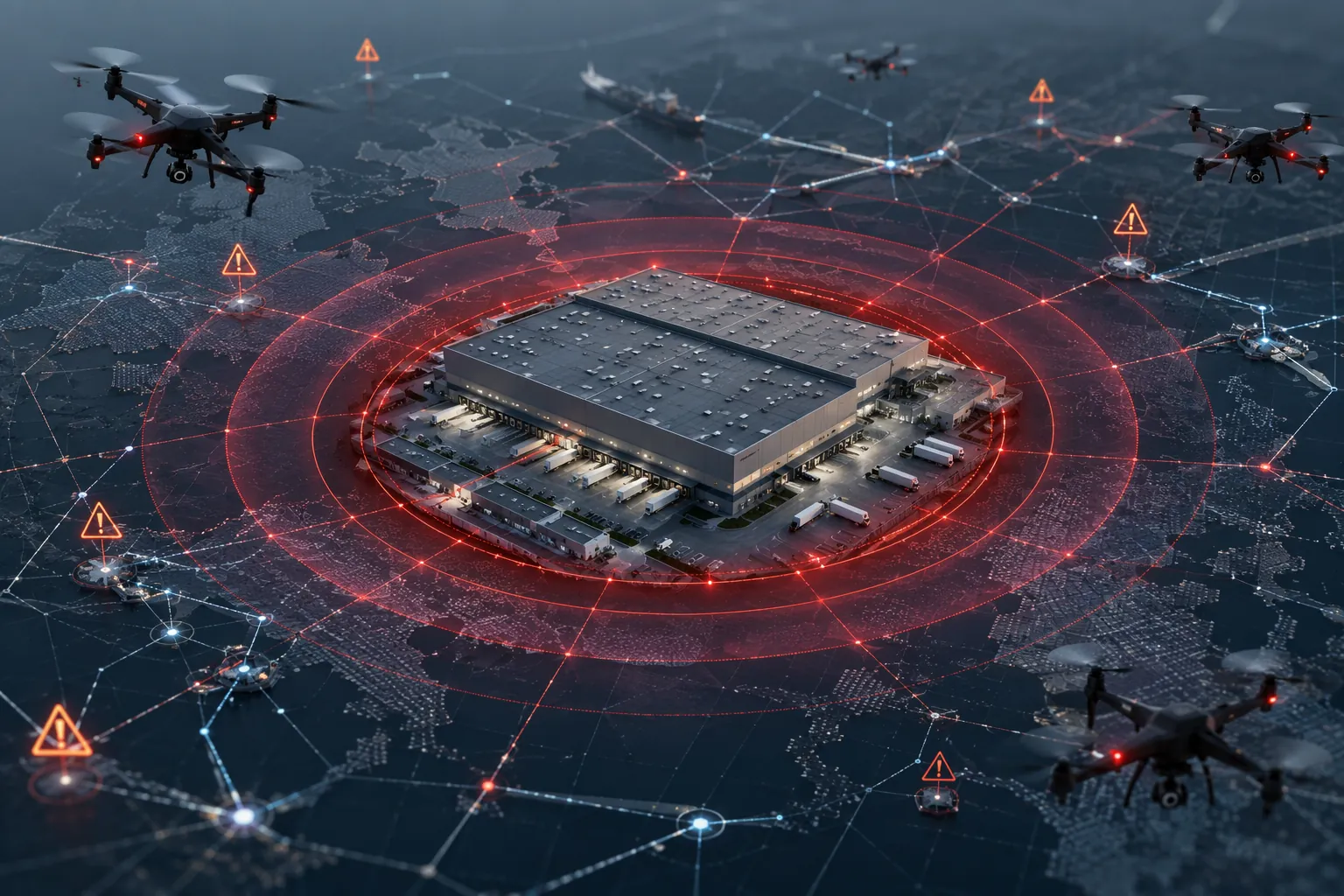
Even with those guardrails, the case is hard to dismiss as a small wartime anomaly. Wildberries handles more than 20 million orders daily, supports more than 1 million sellers, has been valued at about $12.6 billion by Forbes Russia, and its e-commerce platform is tied to roughly 8.5% of Russian GDP. The Kremlin acknowledged that the attacks caused losses, while denying that the warehouses were military targets.[4]
Why These Warehouses Mattered
A large fulfillment network can look reassuring on a planning screen. Multiple nodes, high automation, dense seller coverage, mature routing logic: all of it reads as resilience until the wrong type of exposure is concentrated in the same facilities. The July strikes matter because they appear to have moved warehouse risk out of the familiar categories of fire, labor shortage, cyber incident, weather, and border delay, and into a category that network models often treat as external noise.
Ukrainian officials and analysts argued that the Wildberries sites were not simply retail facilities. Serhii Kuzan of the Ukrainian Security and Cooperation Centre and Defence Matters analysis said the facilities were linked to sanctioned components used in drone and navigation equipment production. Defence Matters described the strikes as operating in a “grey zone between civilian logistics and military supply chains.”[5]
That claim is contested. The Kremlin denied that the warehouses had military functions, and the public record does not independently verify the specific military role of each facility. For commercial risk teams, however, the immediate question is not whether every assertion can be adjudicated from open sources. The question is whether a counterparty, marketplace, 3PL, industrial distributor, or warehouse cluster could be perceived by a belligerent as materially useful to military production or sustainment.
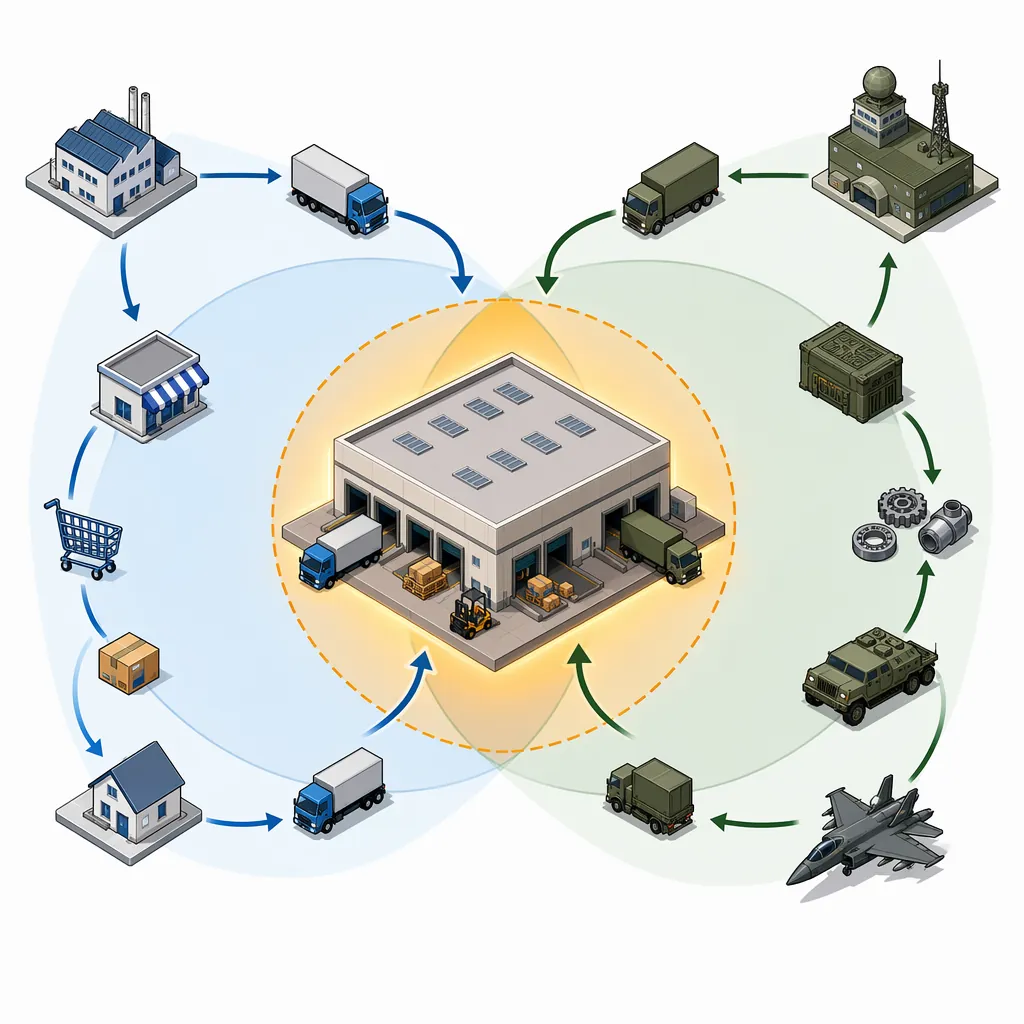
That is an uncomfortable classification problem because it rarely sits cleanly with one department. Legal may look at sanctions. Procurement may look at supplier eligibility. Logistics may look at service levels. Security may look at facility access. Government affairs may track official statements. But the blast radius, if the classification is wrong, lands in operations: inventory becomes unavailable, sellers wait for settlement, customers wait for replacement stock, carriers are rerouted, and planners discover which dependencies were never modeled as dependencies.
The Pattern Around the Case
The Wildberries strikes did not occur in isolation. CNN reported that Ukraine’s mid-range drone missions against Russia increased 28-fold year over year, citing OSINT analysis that cannot be fully independently audited.[6] Kyiv Post reported that 26 logistics and energy targets were hit in a June 7 operation.[7] Atlantic Council analysis described Ukrainian drone campaigns as cutting into Russian logistics and cited a 71% decline in freight traffic over the Chonhar bridge within two weeks.[8]
The point is not to turn a supply chain article into a battlefield chronicle. It is to recognize the operational pattern: logistics nodes, fuel systems, bridges, refineries, and storage sites are being pressured because they determine what can keep moving. Ukrainian forces reported Russian artillery usage down 60% in the Zaporizhzhia direction because of fuel and logistics shortages, while the Institute for the Study of War reported that Russia lost about 40% of refining capacity for at least two months.[9]
For a B2B logistics or manufacturing leader, the relevant insight is not that a marketplace warehouse and a refinery are the same kind of asset. They are not. The relevant insight is that physical infrastructure once treated as commercial background can become operational foreground when it supports production, movement, repair, energy, or military-adjacent inputs.
Concentration Is No Longer Just an Efficiency Trade-Off
Warehouse concentration is usually defended with respectable arguments: labor pooling, automation economics, faster inventory turns, easier carrier procurement, tighter quality control, and lower unit handling costs. Those benefits are real. The problem is that the risk ledger often stops at conventional disruption and does not price the possibility that the facility itself becomes strategically interesting.
Four top distribution centers in one week is the kind of event that exposes a planning blind spot. A network may have enough aggregate capacity on paper and still be brittle if too many flows, sellers, SKUs, repair parts, or regulated components pass through a small set of nodes located in an escalating risk zone. The node does not have to be irreplaceable to create a serious disruption. It only has to be important enough that its removal forces decisions faster than the organization can validate inventory, reroute transportation, and communicate with affected partners.
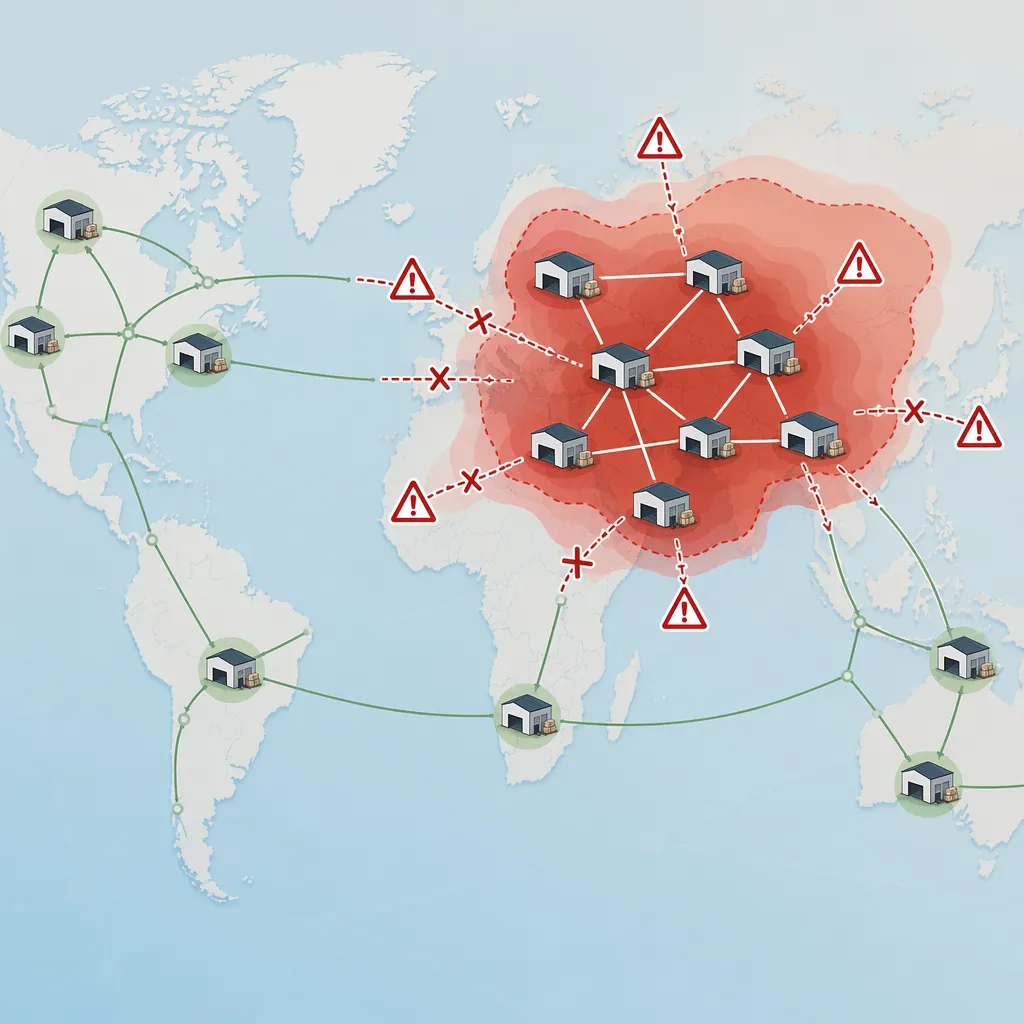
The practical redesign question is not whether to abandon scale. It is where scale becomes a single point of geopolitical exposure. That changes how leaders should review warehouse footprints:
- Map which facilities carry disproportionate volume, margin, regulated goods, repair parts, defense-adjacent inputs, or seller concentration.
- Separate ordinary business-critical nodes from nodes that could be perceived as strategically useful by a state or armed actor.
- Test whether inventory can be rebalanced before a crisis, not merely rerouted after one.
- Assign decision rights for suspending flows, shifting carriers, or activating alternate sites when threat indicators change.
Many resilience programs already maintain business continuity plans for fires, floods, labor stoppages, and IT outages. The missing layer is geopolitical targetability: whether the goods, customers, owners, tenants, sellers, or adjacent flows passing through a facility make it more exposed than its real estate profile suggests.
Dual-Use Exposure Belongs in Partner Vetting
Dual-use risk is often treated as a compliance issue until it becomes a logistics issue. That sequencing is dangerous. If a warehouse operator, marketplace, distributor, supplier, tenant, or customer base includes materials that could support sanctioned or military-adjacent production, the exposure is not confined to paperwork. It can affect insurance, carrier willingness, customs scrutiny, banking relationships, physical security, and ultimately facility continuity.
The Wildberries case shows why partner vetting cannot stop at ownership screening or sanctions-list matching. A facility may be commercially branded, consumer-facing, and deeply embedded in ordinary retail flows, while still being alleged to support sensitive component movement. Whether that allegation is true for a particular site is a factual matter. Whether a supply chain leader should examine similar overlap in their own network is not.
| Question | Why it changes the risk assessment |
|---|---|
| Which products and components move through the facility? | Sensitive inputs can change how an otherwise commercial node is perceived. |
| Who are the largest tenants, sellers, customers, or consignees? | Concentration among high-risk counterparties can make the whole node more exposed. |
| Are any flows linked to sanctioned sectors or military-adjacent production? | Legal exposure and physical targeting exposure may rise together. |
| Can the company isolate, pause, or reroute specific flows quickly? | Segmentation only matters if operations can execute it under time pressure. |
| Who has authority to act when public claims are disputed? | Waiting for certainty may be too slow when carriers, insurers, and employees need direction. |
This is also where procurement and logistics need a shared vocabulary. Procurement may approve a supplier because the contract is compliant. Logistics may place that supplier’s goods in a high-throughput regional hub because it is efficient. Risk management may monitor the country but not the specific facility. Each decision is defensible in isolation; together they can create a node that is more exposed than anyone intended.
AI Monitoring Helps Only If It Changes Decisions
AI belongs in this discussion, but not as a magic layer placed over a fragile network. ABI Research’s 2026 survey of 490 supply chain professionals found that 65% say AI or GenAI is important or very important for technology purchase decisions, and the firm describes cognitive control towers as emerging solutions for detecting geopolitical disruption.[10] That finding is directional. It does not prove that most companies have deployed AI for warehouse-threat monitoring specifically, or that a dashboard alone improves resilience.
The useful test is whether the system changes timing. A control tower that notices a strike after social media has already circulated footage is a reporting tool. A stronger system connects early indicators to exposed assets: drone activity patterns, sanctions developments, route closures, official warnings, OSINT claims, insurance signals, port or rail disruptions, and concentration maps. It should show which facilities, suppliers, lanes, and customers are implicated before the response meeting begins.
That requires more than buying a geopolitical feed. The model must know the company’s own network well enough to answer operational questions: which warehouse handles the affected SKUs, which alternate site has qualified capacity, which carriers can legally and safely move the goods, which customers require notification, which inventory is bonded or restricted, and which executive can authorize deviation from the standard plan.
For teams evaluating tools, the relevant buying question is not whether a vendor uses AI language. It is whether the platform can connect external threat signals to internal exposure and trigger governed action. A practical evaluation framework looks much closer to choosing an AI platform for geopolitical supply chain risk than to a generic automation roadmap.
- Detection: Does the tool surface credible physical-infrastructure threats early enough to matter?
- Exposure mapping: Does it know which company assets, suppliers, lanes, and customers are connected to the threatened node?
- Source discipline: Does it distinguish official claims, OSINT, media reports, vendor disclosures, and independently verified facts?
- Escalation: Does it route the alert to people with authority to change inventory, transport, procurement, or customer commitments?
- Auditability: Can leaders see why a risk score changed and what assumptions sit behind the recommendation?
The source-discipline point matters in this case because the public facts are uneven. Casualty counts, dual-use allegations, strike tallies, and damage estimates carry different levels of verification. A serious AI-enabled control tower should not flatten those into the same alert color. It should help leaders act under uncertainty without pretending uncertainty has disappeared.
What Should Change in Network Reviews
The immediate executive response should be a targeted review, not a theatrical reinvention of the supply chain. Start with the facilities whose failure would create the most operational compression: top-volume distribution centers, single-region import hubs, spare-parts depots, cold-chain nodes, e-commerce sortation centers, and warehouses serving regulated or sensitive sectors. Then overlay geopolitical exposure and dual-use perception, not just natural disaster and labor risk.
A useful review separates three decisions that are often blended together:
- Location strategy: whether certain nodes are too concentrated in regions where infrastructure targeting is plausible.
- Flow design: whether sensitive products or counterparties should be isolated from general commercial throughput.
- Response authority: who can shift volume, hold shipments, activate alternates, or notify customers when signals are credible but incomplete.
The third decision is usually the weakest. Many companies can identify exposure after the fact. Fewer have pre-agreed thresholds for acting before a facility is closed, a carrier refuses a lane, or a government statement changes the risk category. In a fast-moving geopolitical disruption, resilience depends less on the elegance of the dashboard than on whether the organization has permission to use what the dashboard shows.
That is where scenario modeling earns its keep. A model should not simply ask what happens if a warehouse goes offline. It should ask what happens if a warehouse goes offline while public claims about its function are disputed, casualty reports are still changing, insurers are reviewing coverage, carriers are reassessing routes, and customers are asking whether their goods were involved. That is a different recovery problem from a roof collapse or a localized power outage.
The New Boundary for Commercial Logistics
Supply chain leaders do not need to assume every warehouse is a wartime target. That would lead to bad planning in the opposite direction: overreaction, duplicated cost, and vague risk language that cannot guide investment. The more disciplined conclusion is that some commercial logistics assets can become targetable enough to change network design when scale, location, counterparties, product flows, and perceived dual-use value converge.
The July 2026 Wildberries strikes make that convergence visible. A huge retail platform, concentrated high-volume distribution centers, alleged dual-use exposure, official denials, human casualties, and acknowledged economic losses all arrived in the same operational event. A clean node-and-lane diagram will not capture that unless leaders force it to.
Warehouse concentration, dual-use exposure, and real-time geopolitical monitoring can no longer be separate conversations. If they remain separate, the first team to understand the combined risk may be the one trying to keep goods moving after the node is already gone.
References
- Eight killed in Ukrainian drone attacks on Russian warehouses, CNN, July 18, 2026.
- Ukrainian drones hit warehouses and other sites across Russia, killing 9 and wounding over 60, PBS NewsHour.
- Russia reports injuries after top online retailer Wildberries hit again, Al Jazeera, July 22, 2026.
- Kremlin says Ukrainian attacks on warehouses of online retailer Wildberries hurt, Reuters, July 21, 2026.
- Ukraine-Russia warehouse strikes: dual-use logistics, Defence Matters.
- Ukraine mid-range drones Russia logistics, CNN, June 20, 2026.
- June 7 operation hit 26 logistics and energy targets, Kyiv Post.
- Ukrainian drones are cutting Russian logistics and reshaping the battlefield, Atlantic Council.
- Russian Offensive Campaign Assessment, July 16, 2026, Institute for the Study of War, July 16, 2026.
- Supply Chain Disruptions 2026: How to Build Resilience with AI and Automation, ABI Research.
Comments
Join the discussion with an anonymous comment.