
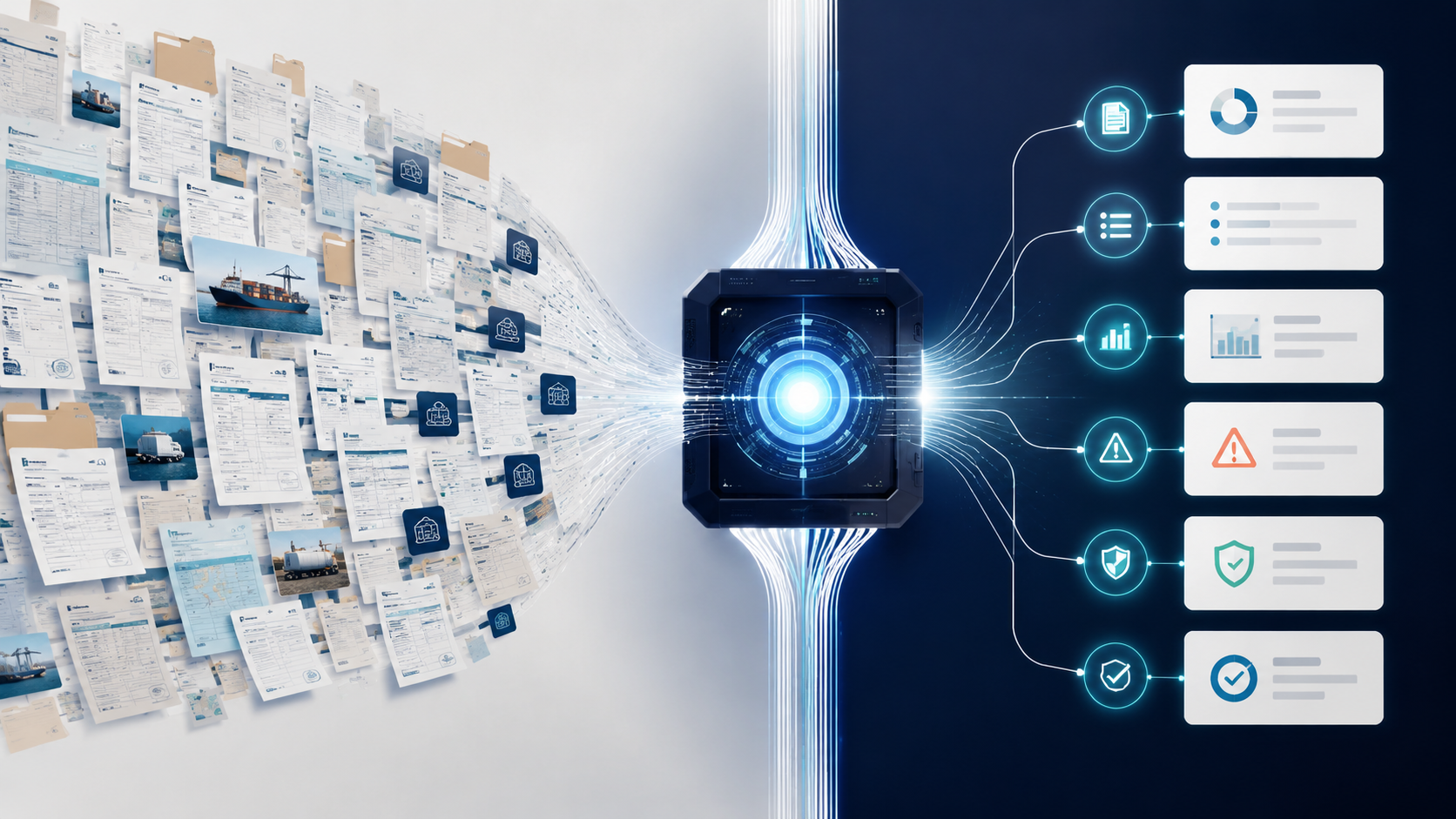
Moonshot AI's Kimi K3 is worth attention because it changes the cost equation before it changes the brand conversation. Moonshot said the model launched on July 17, 2026 with 2.8 trillion parameters, a 1 million-token context window, and pricing of $3 per million input tokens and $15 per million output tokens, while Anthropic's Claude Fable 5 was priced at $50 per million output tokens; the company also claimed K3 trails only Claude Fable 5 and GPT-5.6 Sol on overall benchmarks.[1][2][3] That is not just model trivia. For supply chain teams that spend their day inside contracts, customs filings, bills of lading, exception notes, and planning threads, a model that can hold the whole record in context and do it at materially lower cost changes what is economically reasonable to automate.
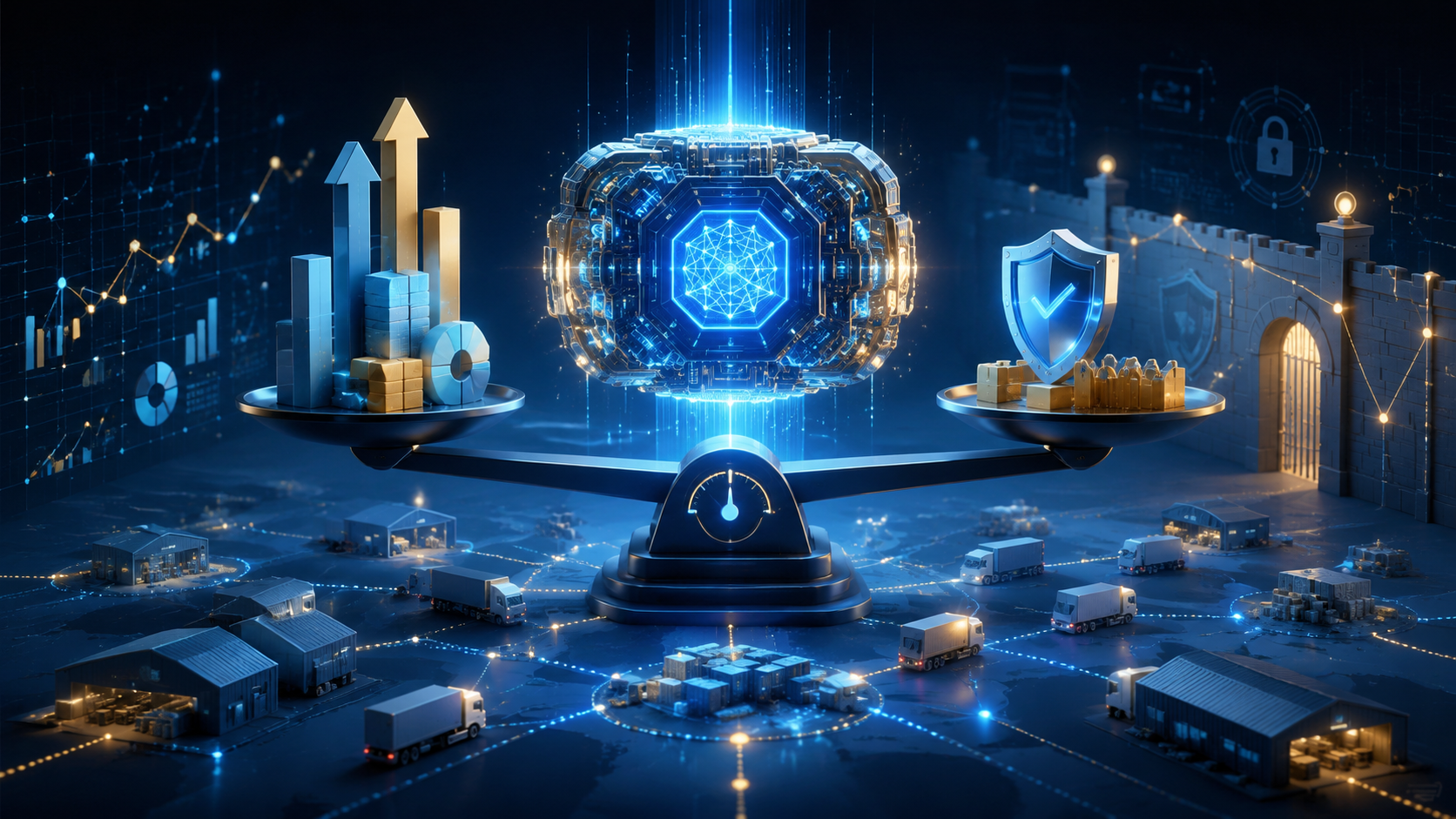
The benchmark claim is still Moonshot's own, so the right reading is cautious: Kimi K3 looks strong enough to justify internal testing, not strong enough to assume a default enterprise win. What makes it unusual for supply chain work is the combination of long context and low output cost. That combination matters when the job is not one document but the relationships among many documents: master service agreements, redlines, rate cards, freight invoices, exception logs, and the back-and-forth that follows when a shipment misses a window.
| Supply-chain workload | Why Kimi K3 is compelling | What still needs review |
|---|---|---|
| Contract and filing review | The 1M-token window can keep long procurement, customs, and compliance packets in one pass | Redaction, retention, and privilege controls |
| Agentic exception handling | Tool-heavy workflows can chain through systems instead of stopping at summarization | Action approval, logging, and rollback rules |
| Supply-chain software development | Lower output cost changes the economics of code-heavy workflow support | Repository access, IP, and change management |
Who Is Behind Kimi
Yang Zhilin gives Moonshot more credibility than a typical launch-week AI startup. Business Insider describes him as a Carnegie Mellon-trained founder who previously worked at Google and Meta and led AI teams in Beijing before founding Moonshot in 2023.[4] The company has also scaled quickly enough to matter in enterprise planning: reported figures put its funding around $2 billion, valuation above $20 billion, annual recurring revenue above $200 million, and headcount around 300, with Alibaba, Tencent, and Meituan among the backers.[5] None of that proves Kimi K3 belongs in a supply chain stack, but it does explain why buyers are taking the vendor seriously instead of treating it as a curiosity.
Where The Early Signals Are Real
The first enterprise signals are narrow but credible. In Business Insider's reporting, DoorDash CTO Andy Fang said Kimi handles "lower-level work," including operational logistics tasks, and Cursor embedded Kimi 2.5 in Composer 2; MintMCP also points to AlphaEngine's FinGPT Agent using Kimi for automated supply chain breakdown analysis.[4][6] Those examples matter because they show the model sitting inside workflows, not just inside benchmark posts. They do not prove broad production readiness, but they do show that real teams are already testing Kimi where the work is messy, repetitive, and expensive to staff with humans alone.
The Gating Issue Is Not Model Quality
For a U.S.-based supply chain organization, the bigger question is whether the model can clear legal, security, and governance review. A Chinese-origin open-weight model can be attractive on sovereignty grounds if you host it yourself, but origin still changes the procurement path, the security review, and the tolerance for sensitive data leaving approved systems. Shadow AI is the practical failure mode here: a planner, buyer, or logistics analyst starts using a cheap and capable model because it is faster than the sanctioned stack, and sensitive vendor or shipment data moves before governance catches up.[6] If legal cannot approve the model, or security cannot constrain how it is hosted, logged, and accessed, the cost advantage is not enough.
Kimi K3 deserves a serious evaluation in the right environment. It looks unusually attractive for document-heavy, tool-heavy supply chain work where long context and lower output cost directly reduce friction. It is a strong candidate for internal document intelligence, agent orchestration, and code-assist use cases. But the deployment decision should move forward only after legal, security, and governance teams agree on hosting, monitoring, access boundaries, and retention rules.
References
- China's Moonshot AI unveils Kimi K3 that rivals OpenAI, Anthropic — CNBC, July 17, 2026
- Markets experience new DeepSeek shock after MoonShot AI releases Kimi K3 — Fortune, July 17, 2026
- Chinese AI Startup Moonshot Unveils Kimi K3 Model — Forbes, July 17, 2026
- Who Is Yang Zhilin, the CEO Behind China's Latest AI Model, Kimi K3 — Business Insider, July 2026
- Moonshot AI — Wikipedia
- Kimi K2: What Enterprises Should Know — MintMCP Blog, 2026
Comments
Join the discussion with an anonymous comment.