
The useful signal in Nvidia's market value lead over Apple is not the ranking itself. It is that market value is now backing a different kind of purchasing power. In analyst projections cited by CNBC, Nvidia is expected to generate about $33 billion of TSMC revenue, or roughly 22% of TSMC's total, compared with about $27 billion, or 18%, from Apple. If that projection proves right, it would mark the first change in TSMC's largest customer in 15 years, though TSMC itself does not disclose customer revenue by name.[1]
That is the procurement inversion. Apple spent years as the customer every advanced-node supplier could underwrite: predictable volume, premium devices, disciplined launches, and the kind of purchasing prestige that helped anchor capacity decisions. Nvidia is now showing suppliers something even harder to ignore: enormous forward demand tied to capital commitments, customer financing, infrastructure buildouts, and purchase obligations that reserve capacity before ordinary buyers reach the negotiating table.

Nvidia's market capitalization makes that posture visible. It hit a reported $5 trillion market cap on April 24, 2026, while a Visual Capitalist ranking placed Nvidia at $4.8 trillion and Apple at $4.0 trillion.[2][3] Those figures are not procurement contracts. They do not, by themselves, buy wafers, HBM, substrates, or rack integration. But they change what Nvidia can credibly promise to suppliers and customers: multi-year volume, financing support, and tolerance for upfront balance-sheet exposure.
The Leverage Is In The Commitments
Nvidia is not vertically integrated in the old semiconductor sense. It does not own the fabs. It does not run the HBM lines. It does not control every advanced packaging plant or server assembly floor. Calling this traditional vertical integration blurs the mechanism. What Nvidia has built is closer to financial integration: using cash flow, equity stakes, purchase obligations, and customer-linked capital to make scarce capacity behave as if it has already been claimed.
The clearest number is Nvidia's $95.2 billion in purchase obligations with supply vendors, described in Ledan.ai's analysis of Nvidia's filings as commitments that secure long-term access across wafers, HBM, packaging, and substrates.[4] The important point is not just the size. A purchase obligation tells a supplier that capacity will not sit idle if it builds or reserves output. In a constrained supply chain, that can matter more than a buyer's brand history.
A second number is larger but needs more care. TraxTech reported that Nvidia announced more than $40 billion in supply chain investments for 2026, along with a $500 billion multi-year U.S. manufacturing commitment.[5] That $40 billion figure should not be read as a clean, single-year cash line that can be neatly added to every other public commitment. The available material indicates a mix of infrastructure spending, supply chain investment, and programs that may overlap with previously announced commitments. Even with that caveat, the direction is hard to miss: Nvidia is using capital not merely to place orders, but to shape the availability of the system that will fulfill those orders.
| Commitment | What it changes in procurement terms |
|---|---|
| $95.2B purchase obligations | Turns future component demand into supplier-backed capacity planning across constrained nodes |
| $40B+ reported 2026 supply chain investment | Signals willingness to finance infrastructure around the AI hardware supply chain, with overlap caveats |
| $500B multi-year U.S. manufacturing commitment | Links Nvidia's demand story to geographic capacity expansion and political-industrial support |
| $30B OpenAI equity investment and $5B Intel equity investment | Connects customer financing and supplier ecosystem exposure to future GPU demand |
| $635B-$670B hyperscaler AI infrastructure capex | Creates a demand umbrella under which suppliers can justify prioritizing AI accelerator capacity |
This is why the OpenAI and Intel equity stakes belong in the same conversation as wafers and HBM. Ledan.ai describes Nvidia investing $30 billion in OpenAI's February 2026 round and $5 billion in Intel equity in September 2025.[4] These are not ordinary component purchases. They are capital placements inside the demand and supply environment around Nvidia's own products. When Nvidia helps finance a customer that buys GPUs, or takes exposure to a strategic semiconductor supplier, it makes procurement less like spot buying and more like ecosystem underwriting.
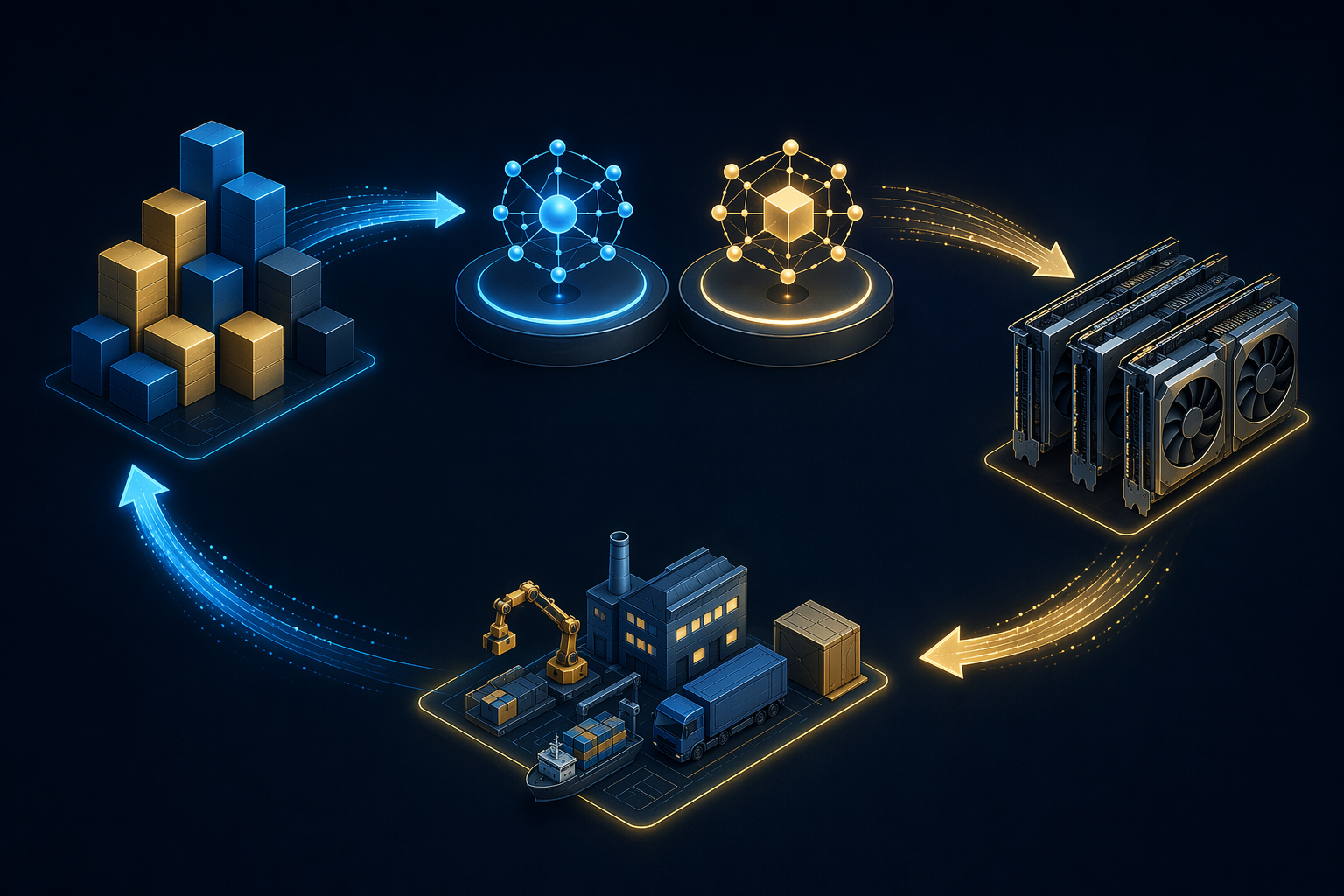
The circularity is both the strength and the risk. If OpenAI, hyperscalers, and other AI infrastructure buyers keep converting capital expenditure into GPU deployments, Nvidia's commitments look like disciplined capacity preemption. If demand gets ahead of monetization, those same links can look like a system financing its own revenue visibility. Procurement teams should not dismiss the model because it is circular. They should price the possibility that circular capital can still win allocation for several planning cycles.
Where The Money Turns Into Priority
AI chip supply is constrained in layers, not in one heroic chip design. The wafer start is only the first gate. HBM supply, advanced packaging, substrates, board-level integration, power components, and server assembly can each become the point where a forecast turns into a missed deployment window. Nvidia's advantage is that its commitments appear to touch the stack at several points at once.
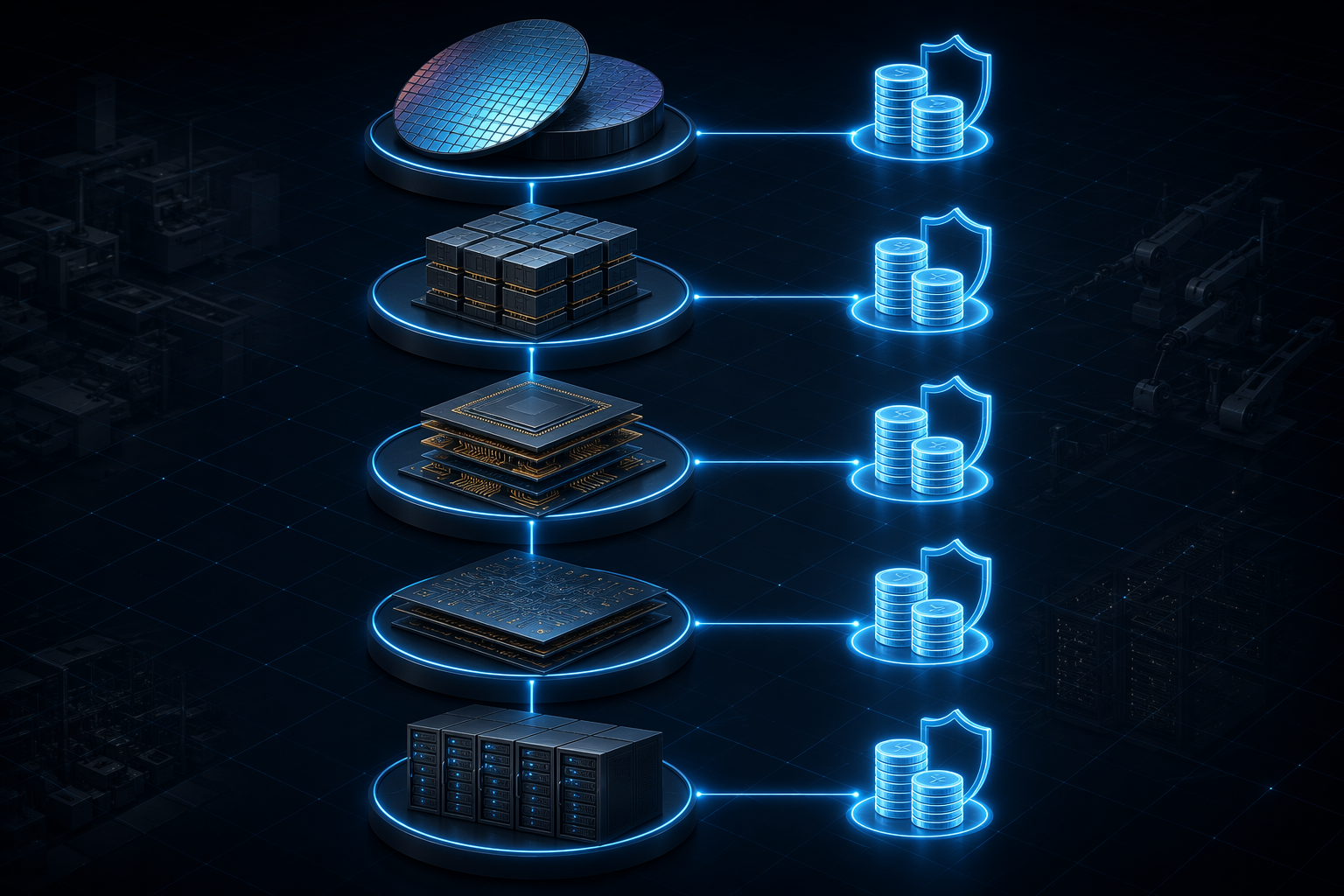
TSMC remains the symbolic and practical choke point. Enkiai reported TSMC CEO C.C. Wei's confirmation that the industry bottleneck remains "TSMC's wafer supply."[6] That sentence matters because it strips away a lot of secondary noise. A buyer can have the best accelerator roadmap, the most urgent cloud customer, or the most elegant device architecture. If it cannot secure leading-edge wafer supply on time, the rest of the plan is a negotiation with physics and calendar capacity.
Nvidia's purchasing position is especially powerful because the bottlenecks are mutually reinforcing. A supplier deciding whether to reserve HBM output wants confidence that the GPU package will move. An advanced packaging provider wants confidence that wafers and memory will arrive in the right cadence. A server assembler wants confidence that the customer will take rack-scale systems, not just trays of chips. Nvidia can approach those nodes with a demand story supported by hyperscaler spending, purchase obligations, and infrastructure commitments.
The hyperscaler layer makes the model harder for other buyers to match. Amazon, Google, Meta, and Microsoft committed an estimated $635 billion to $670 billion in combined 2026 AI infrastructure capex, with Nvidia capturing the dominant GPU share, according to Ledan.ai's analysis.[4] That is not proof that every dollar becomes Nvidia revenue, and it should not be treated as a one-to-one order book. It does show why suppliers see Nvidia demand as attached to a broader capital spending wave rather than to one product cycle.
Goldman Sachs estimated $383 billion in Nvidia GPU and hardware sales for calendar 2026, up 78% year over year.[2] Again, this is an estimate, not a supply contract. But estimates like this influence how the ecosystem allocates risk. When a supplier has to choose between reserving incremental capacity for a buyer with cyclical consumer-device exposure and one tied to hundreds of billions of AI infrastructure capex, the procurement conversation changes before pricing even begins.
Apple Is The Cleanest Signal, Not The Whole Story
Apple is useful here because it shows how quickly supplier leverage can move even against a first-tier customer. The CNBC-cited projection that Nvidia could surpass Apple as TSMC's largest customer is unofficial, but symbolically sharp: the old anchor customer of advanced consumer silicon may no longer be the most compelling allocation story at the world's most important foundry.[1]
That does not mean Apple has become weak. It still has scale, cash, operational discipline, and one of the most sophisticated supply chains in technology. Business Insider described Apple's responses as including Project Baltra custom AI chips, a $500 billion U.S. investment plan, and a target of assembling 25% of iPhones in India.[7] Those moves are not identical, and they do not all solve the same constraint. Together, they show the new defensive playbook: reduce exposure to any single allocation queue, bring more AI silicon work under internal control, and make large geographic or industrial commitments that suppliers and governments can underwrite.
Project Baltra matters because internal chip design can improve Apple's control over architecture and product differentiation. It does not automatically solve wafer access, HBM access, or packaging access. A custom AI chip still has to be manufactured somewhere, packaged somewhere, and assembled into systems or devices through constrained partners. In this market, design ownership is only one side of control; capacity reservation is the other.
The India assembly target works on a different layer. Moving iPhone assembly capacity can reduce geopolitical and operational concentration in final assembly, but it does not replace leading-edge foundry capacity. The $500 billion U.S. investment plan, meanwhile, gives Apple an industrial-policy answer to the same problem Nvidia is addressing through AI infrastructure commitments: suppliers are increasingly prioritizing customers who can help finance, justify, or politically support capacity expansion.
What Downstream Buyers Now Have To Bring
For electronics OEMs, cloud-dependent software companies, and buyers building AI products on someone else's infrastructure, the uncomfortable lesson is that a forecast is no longer enough. Suppliers already hear strong forecasts from everyone. What separates priority customers is the willingness to absorb risk earlier in the chain.
- Pre-payments can move a buyer from interested demand to bankable demand, especially when the supplier is deciding whether to reserve scarce capacity.
- Multi-year contracts can reduce supplier uncertainty, but only if volume, cancellation terms, and escalation mechanics are credible.
- Co-investment can help unlock capacity, though it also exposes the buyer to utilization risk if end demand softens.
- Supplier diversification can reduce dependence on one constrained node, but it rarely removes the need to compete for leading-edge capacity.
- Geographic diversification can improve resilience, while leaving technical bottlenecks such as advanced wafers, HBM, and packaging unresolved.
The practical change is in the timing of procurement authority. In older cycles, a buyer could often wait for product plans to harden, then use volume and relationship leverage to negotiate supply. In the AI accelerator cycle, waiting may mean entering after the most credible customers have already underwritten capacity. The purchasing team is then negotiating residual allocation, not strategic supply.
That changes internal governance. Procurement cannot be the department that receives an engineering roadmap and goes shopping. It has to sit inside capital allocation, product planning, and customer revenue modeling. If the company wants AI hardware access, someone has to decide how much balance-sheet risk it can take before demand is fully proven.
This is also where supplier prestige becomes less useful as a planning assumption. A buyer may still be strategically important to TSMC, a memory supplier, or an assembly partner. But if another customer arrives with larger committed spend, clearer AI infrastructure pull-through, and willingness to finance capacity years ahead, historical status will not automatically protect allocation.
Recognition Follows The Operating Model
Gartner ranked Nvidia No. 2 in its 2026 Global Supply Chain Top 25, citing its supply chain capabilities in a June 17, 2026 press release.[8] That ranking is not proof that every commitment will earn a return, and it should not be confused with independent validation of every dollar figure attached to Nvidia's ecosystem. It does reflect that Nvidia is being judged not only as a chip designer, but as an operator of capacity, supplier risk, and market timing.
The distinction matters. Nvidia's moat is not just CUDA, not just GPU performance, and not just a large market capitalization. Those may be necessary conditions, but the procurement moat is built where capital becomes credible supply reservation. It is the difference between telling a supplier demand will arrive and making it financially rational for that supplier to plan as if the demand has already arrived.
There is no need to turn that into a prophecy that Nvidia owns the future. This model is expensive. It depends on continued AI infrastructure spending. It carries circular exposure when Nvidia finances customers or ecosystem partners that later buy, enable, or support Nvidia hardware demand. It can work brilliantly while the end market expands and become much more fragile if capacity commitments outrun real utilization.
For Q3 2026 procurement planning, the rule set is already different. In constrained AI chip supply, the buyer with the strongest forecast is not necessarily the winner. The buyer willing to finance capacity, lock demand years ahead, and accept exposure across customers and suppliers is the one more likely to receive priority. Nvidia has not merely bought components; it has made capital commitment itself a procurement weapon.
References
- Nvidia set to supplant Apple as TSMC's largest customer, CNBC
- NVIDIA Hits $5 Trillion Market Cap, Intellectia.ai
- Visual Capitalist market value ranking, Visual Capitalist
- The AI Supply Chain, Ledan.ai
- Nvidia's $40B Supply Chain Investment Sets New AI Spending Bar, TraxTech
- AI Chip Supply Chain Risk 2026, Enkiai.com
- Apple Is Losing Its Grip on the World's Tech Supply Chain, Business Insider
- Gartner Announces Rankings of the 2026 Global Supply Chain Top 25, Gartner, June 17, 2026
Comments
Join the discussion with an anonymous comment.