
The Defense Logistics Agency’s Bid Data Analytics supplier-risk models did something every enterprise risk program claims to want and many struggle to operationalize: they changed the review queue before a bad supplier became only a postmortem finding. The models analyzed 43,000 vendors and identified more than 19,000 as potentially high risk. In one case, BDA data triggered an investigation that led to a supplier’s guilty plea for falsely certifying domestic production.[1]
That is the right place to begin a discussion of AI for military logistics and supply chain resilience, because the useful lesson is not that an algorithm spotted something interesting. The useful lesson is that the signal had somewhere to go. A risk model that produces a suspicious pattern, a contracting team that can act on it, an investigative path that can absorb it, and a governance system that keeps the model from becoming a one-off tool are all part of the same operating design.
By 2026, DLA’s AI environment had grown well beyond a single supplier-risk application. Its AI Center of Excellence, created in June 2024, was providing centralized oversight for more than 55 AI models and more than 200 use cases across demand planning, supply chain risk management, finance reconciliation, and long-term contract optimization.[2] The number matters, but only because the models did not remain scattered experiments owned by whoever had the most patient analyst or the most flexible local budget.
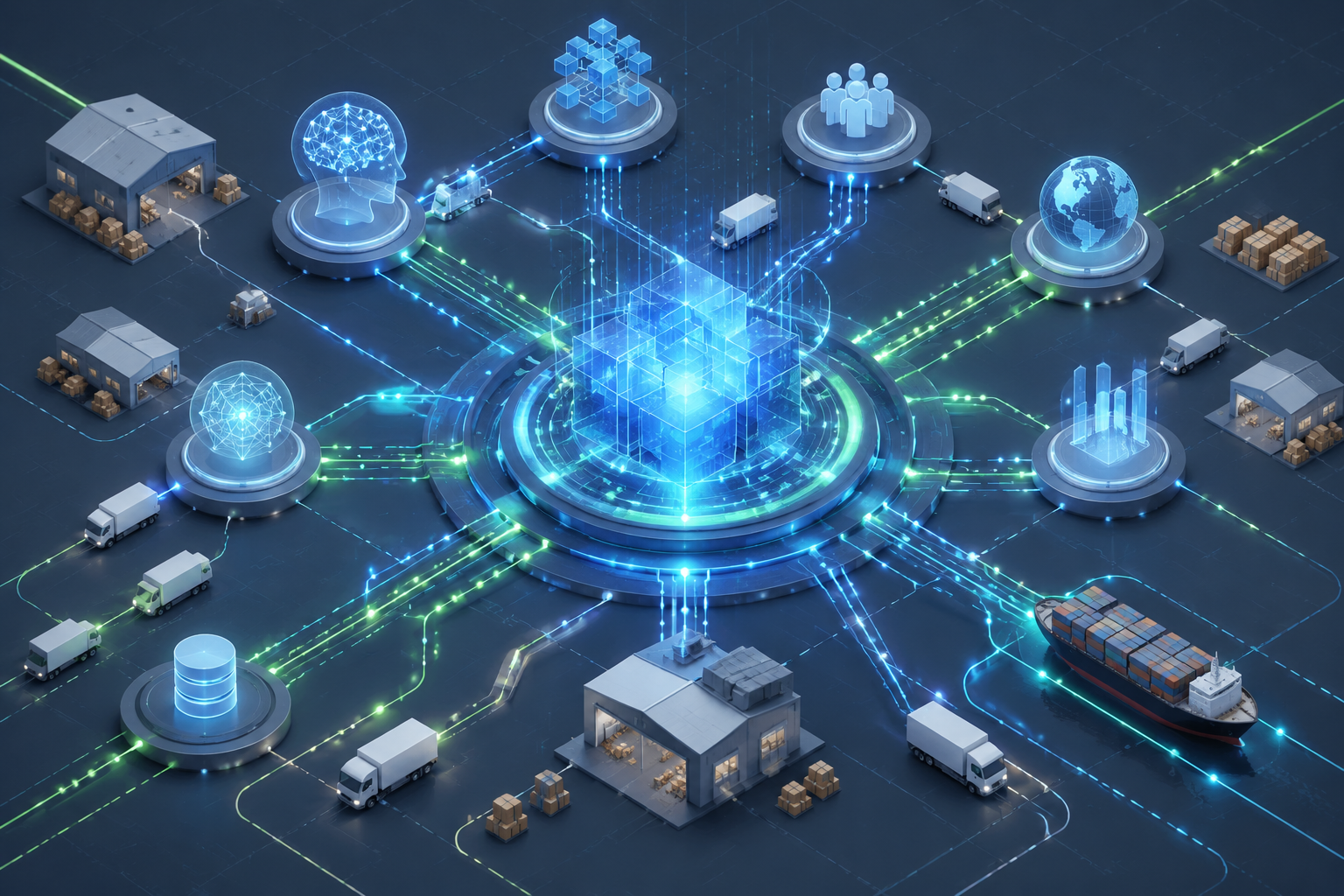
The real asset was the operating model
Large organizations rarely fail at AI because nobody can imagine use cases. They fail because every pilot quietly invents its own data access path, evaluation standard, exception process, security review, and handoff to operations. That is how a portfolio becomes a museum: impressive on a slide, fragile in production, and almost impossible to audit.
DLA’s model moved in a more practical direction. The Center of Excellence acted as the central control point for model inventory management, data-sharing agreements, security accreditation, model evaluation, and scaling support. At the same time, the use-case pipeline was not limited to top-down executive initiatives. DLA reported that 56 of its AI models were generated from employee-submitted use cases.[1][2]
That combination is easy to praise and harder to build. Central AI offices often become approval bottlenecks, especially when governance is treated as a stage gate rather than a production service. Bottom-up innovation, left alone, creates another problem: a field of clever tools with no common view of data lineage, security posture, model performance, or operational ownership. DLA’s structure is interesting because it tried to avoid both traps.
| Program Function | Why It Matters After The Demo |
|---|---|
| Model inventory | Leaders can see what exists, where it is used, and whether similar models are being rebuilt in parallel. |
| Data-sharing agreements | Teams do not have to negotiate data access from scratch every time a useful idea appears. |
| Security accreditation | Production use is not delayed indefinitely by reviews that arrive only after the prototype is finished. |
| Evaluation standards | Models can be compared, monitored, and challenged against common expectations instead of local enthusiasm. |
| Scaling support | A working use case can move from one office or function into broader use without being rebuilt as a bespoke project. |
This is the part commercial supply chain leaders should study most closely. DLA did not appear to solve scaling by asking every function to wait for a perfect enterprise roadmap. It created a central mechanism that could receive local ideas, standardize the conditions for production, and keep the portfolio visible as it grew.
Why supplier risk became the proof point
Supplier risk is where governance either proves itself or becomes theater. A model can rank vendors, surface anomalies, or flag concentration exposure, but those signals only matter if procurement, legal, compliance, and operational teams can use them without arguing for six months about whether the data is allowed, whether the model is approved, or whether the output is reliable enough to influence a decision.
DLA’s supplier environment gave the problem urgency. The agency lost about 3,000 suppliers between 2016 and 2022, a 22% decline, while 7% of DoD critical suppliers were sole-source.[3] Those figures describe two different risks that often arrive together in large supply networks: a shrinking supplier base reduces optionality, and sole-source dependence raises the cost of being surprised.
Fraud detection is one piece of that picture, not the whole picture. The BDA case matters because it shows an AI-enabled risk signal connecting to a legal outcome. But the broader enterprise value is earlier triage: which vendors deserve additional review, which suppliers may need qualification alternatives, which contracts carry concentration exposure, and where operational teams should spend scarce investigative capacity.
In a commercial enterprise, the equivalent may be a component distributor with opaque sourcing, a logistics provider whose performance deteriorates across regions, a supplier that keeps winning because no one sees cross-business-unit exposure, or a vendor whose compliance attestations are accepted because the review process is overloaded. The model is useful only if it changes the queue for people who can act.
The portfolio was broader than supplier screening
BDA is the clearest entry point into the program, but it was not the entire portfolio. DLA’s model portfolio included supplier risk assessment, long-term contract optimization through tools such as LNA and LTC Parameter Optimization, finance reconciliation, demand planning, and inventory optimization.[1][2] That mix is important because it shows AI being placed where supply chain work actually becomes expensive: contract terms, payment mismatches, demand uncertainty, inventory positioning, and vendor exposure.
A mature AI supply chain program does not need every model to be dramatic. Finance reconciliation models may save hours of exception handling. Demand planning models may reduce avoidable churn in forecast review. Contract-optimization models may help teams examine parameter choices that would otherwise sit inside spreadsheets and institutional memory. Supplier-risk models may move suspicious vendors into a deeper review path before an award decision becomes expensive to unwind.
The connective tissue matters more as the portfolio expands. A finance model and a supplier-risk model may not share the same workflow, but they still need common answers to basic questions: who owns the model, what data does it use, what decision does it influence, how is performance measured, who can override it, and when should it be retired?
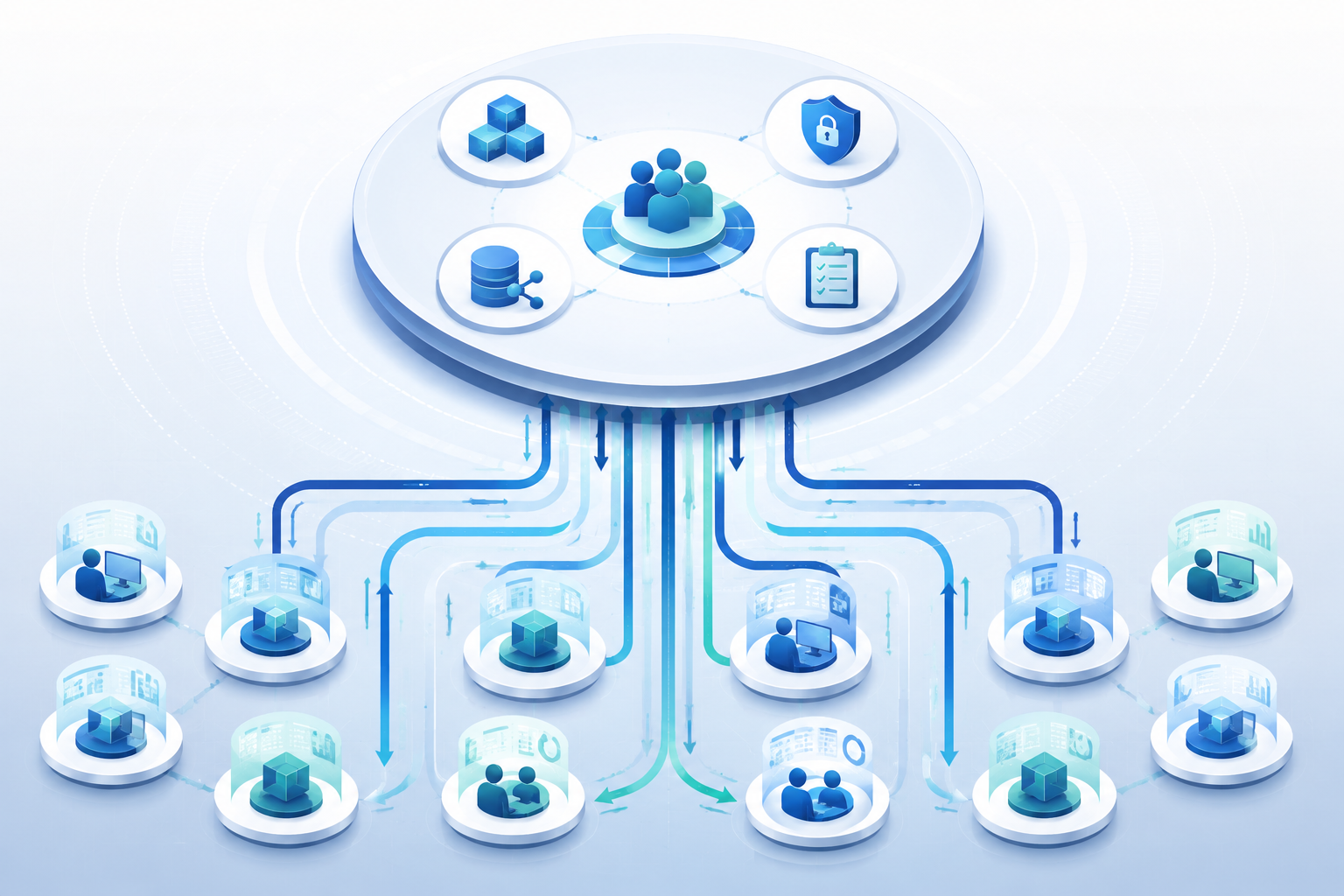
A controlled path for bottom-up ideas
The employee-submitted use-case channel is more than a morale detail. It is a recognition that the best AI candidates often appear where people are tired of reconciling bad data, checking the same exception pattern, or translating between systems that were never designed to speak to each other.
A contracting officer may see recurring bid patterns before a central analytics team does. A logistics analyst may know which readiness issue is actually a supplier lead-time issue wearing a different label. A finance reconciliation team may understand which payment exceptions consume time without changing outcomes. If those observations have no route into the enterprise AI portfolio, the organization leaves its best problem-sensing network unused.
The difficult part is giving those ideas a path without turning every local frustration into a model. DLA’s Center of Excellence appears to have served as the translation layer: employee-generated use cases could enter the portfolio, but production required common handling around data, security, evaluation, and scaling.[1][2] That is the difference between empowering the field and simply decentralizing risk.
Commercial organizations can copy that pattern without copying DLA’s mission. The intake form is the least important artifact. The real design question is what happens after an employee submits an idea. Someone has to test whether the pain point is material, whether the workflow can absorb model output, whether the data is available lawfully and reliably, whether a simpler rule or dashboard would do the job, and whether the use case can be owned after launch.
What the outcome metrics can and cannot prove
There are promising performance claims attached to DLA’s unified AI ecosystem. TraxTech has cited 15% to 20% logistics cost reductions and up to 30% improved service reliability as DLA outcomes.[4] Those figures are worth noting, but they should not carry more evidentiary weight than the sourcing allows. They are secondary-source claims from a commercial vendor summary, and the original DLA source document was not available in the research material reviewed for this article.
That caveat does not make the figures useless. It does mean they should be treated as directional until confirmed against primary DLA reporting, with scope carefully defined. A cost reduction across which logistics activities? Over what baseline? For which model set? Under what operating conditions? A service reliability improvement measured how, and across which lanes, parts, or customer groups? Those are not academic questions. They determine whether a metric is suitable for board-level ROI discussion or only for early benchmarking.
The stronger evidence in the available material is more concrete: the supplier-screening volume, the number of vendors flagged for potential high risk, the identified legal outcome, the documented creation of the Center of Excellence, and the expansion from identified use cases into a production model portfolio.[1][2] For operators, that is often the more useful proof trail anyway. It shows work moving through a governed system, not just a benefit percentage appearing at the end.
What commercial enterprises can copy
The transferable lesson is not to build a defense-style AI office. It is to stop treating AI governance and AI scaling as separate conversations. In a large enterprise, the same structure that evaluates a model should also make it discoverable, reusable, monitorable, and safe enough for production teams to trust.
- Create a live model inventory before the portfolio becomes too large to reconstruct.
- Define the operational decision each model influences, not only the prediction it produces.
- Standardize data-sharing, security review, and evaluation requirements so teams do not renegotiate them pilot by pilot.
- Let employees submit use cases, but require evidence that the workflow can act on the output.
- Tie supplier-risk models to review queues, investigation paths, alternate sourcing decisions, or contract controls.
- Separate independently verified outcomes from vendor-attributed or secondary-source performance claims.
That last point is not a compliance footnote. It is how an AI program protects its own credibility. Operations teams can work with uncertainty when it is labeled honestly. They lose trust when every model becomes a success story before anyone has agreed what success means.
DLA’s growth from 26 identified use cases in 2018 to more than 55 production models by 2026 suggests institutional learning, but the lesson is not scale for its own sake.[2] The lesson is that production AI needs an enterprise path: local problems enter, central governance shapes them, operating teams use them, and measurable risk outcomes determine whether they deserve to keep running.
For commercial supply chain leaders, the first question should not be which model DLA used. It should be how to make models governable, discoverable, scalable, and tied to the operational risks that already keep procurement, logistics, finance, and compliance teams awake.
References
- DLA CIO Adarryl Roberts comments, Federal News Network, September 2025, Federal News Network
- DLA official news article on AI Center of Excellence, Defense Logistics Agency, DLA News; DLA official news article on AI use cases, Defense Logistics Agency, DLA News
- DLA official news article on supplier-base decline and critical suppliers, Defense Logistics Agency, DLA News
- TraxTech summary of DLA AI outcomes, TraxTech, TraxTech
Comments
Join the discussion with an anonymous comment.