
Tropical Storm Bertha is not a planning exercise for Gulf Coast supply chains. As of July 22–23, 2026, NOAA’s National Hurricane Center and AccuWeather were tracking Bertha as an active Gulf of Mexico storm, with path and intensity still subject to change after publication.[1][2] Freight-focused coverage has already put the operational risks in familiar terms: port delays, road flooding, and disrupted freight movement along exposed Gulf corridors.[3]
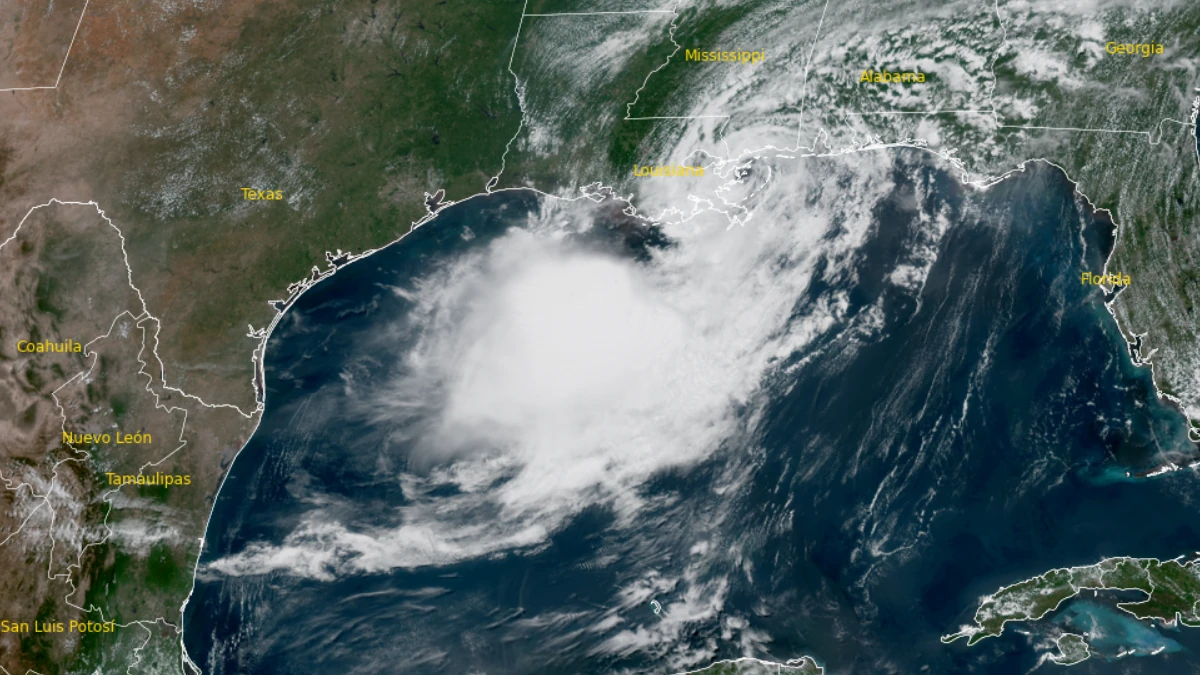
That timing matters. A storm that is still a forecast can be acted on. A storm that has already closed roads, backed up terminals, and emptied local shelves is mostly cleanup work. For companies with Gulf Coast customers, suppliers, ports, plants, or distribution centers, AI for supply chain disaster preparedness during Storm Bertha is less about watching a smarter weather map and more about whether the right team gets a decision-grade signal early enough to move inventory, shift production, reroute trucks, or quantify revenue at risk.
Bertha-specific assumptions should be handled carefully. Track, rainfall, surge, and inland flooding risk can change quickly during an active tropical system. The point is not that any model can make Bertha certain. The point is that supply chains do not need certainty to act; they need a defensible view of probability, exposure, and timing.
The Cost Of Waiting For Landfall
Storm preparation has always had a timing problem. Demand for plywood, roofing materials, bottled water, generators, fuel, tarps, batteries, and repair labor can move before the worst weather arrives. Transportation capacity tightens before the roads are impassable. Port and warehouse decisions need to happen while the forecast cone still has room in it.
The broader loss environment is no longer a rare-event footnote. U.S. natural disaster losses reached $218 billion in 2024, according to reporting cited by SDCExec through Capgemini and CBS News.[4] Resilinc EventWatchAI data cited by Everstream Analytics and the World Certification Institute reported that supply chain disruptions surged 38% year over year in 2024, with hurricane and typhoon events up 101% and flood alerts up 214%.[5] Those figures do not prove any single AI system will pay for itself, but they do explain why more companies are trying to move weather risk out of the emergency room and into operating cadence.
Buyers are also treating weather intelligence as a commercial capability, not only a safety expense. The Weather Company and Magid reported in 2024 that 92% of executives planned to maintain or increase investment in weather intelligence, and that companies using it effectively reported 5–10% revenue uplifts.[6] The wording deserves care: reported uplifts are not the same thing as a guaranteed causal return. Still, the direction is useful. Weather data becomes more valuable when it changes a shipment, a production run, a buy quantity, or an executive approval.
What The Hurricane Ian Roofing Case Actually Shows
The cleanest example in the current evidence set comes from ClimateAi’s Hurricane Ian case study, because it links a forecast to an operating decision and then to a reported business outcome. ClimateAi says its FICE model forecasted a 30–50% elevated hurricane risk in Florida ahead of Hurricane Ian in September 2022. A building materials manufacturer used that signal to pre-produce Florida-code roofing inventory and reported $15 million in additional sales after the storm.[7]
That is not a universal ROI promise. It is a vendor-reported, single-company case. It should not be stretched into “AI creates $15 million every hurricane season” or used as a shortcut around due diligence. Its value is more specific and, frankly, more useful: it shows the pattern a storm-exposed supply chain is trying to build.
- A probabilistic storm-risk signal arrived before demand fully materialized.
- The signal pointed to a geography and product requirement, not just a general warning.
- Production changed before the disruption window closed.
- Inventory fit the post-storm demand environment closely enough to capture sales that might otherwise have gone unserved.
For Bertha, that pattern matters more than the brand name attached to it. If elevated storm risk points to specific Gulf Coast markets, the supply chain question becomes: which SKUs will be pulled forward, which local requirements matter, which nodes can still receive product, and which production or allocation choices must be approved now?

Turning A Storm Forecast Into A Supply Chain Decision
A useful AI workflow during Bertha would not start with a generic “hurricane risk” alert. Regional teams already know a storm exists. The harder work is connecting weather probability to demand, inventory, transportation, and finance in the same decision window.
| Operating question | AI-assisted signal | Decision it should support |
|---|---|---|
| Where will demand move first? | Storm-track probabilities combined with historical demand patterns and current orders | Pre-position or reserve inventory for exposed markets |
| Which lanes may fail or slow? | Weather, flood, road, port, and carrier-status feeds integrated into route planning | Divert freight, change tender timing, or stage capacity outside the impact zone |
| What is the financial exposure? | Probabilistic estimates of delayed throughput, missed sales, expedite costs, and recovery demand | Approve production shifts, inventory buys, or premium freight before the case is obvious |
Demand planning is the first pressure point because storm demand is not evenly distributed. A bottled-water spike behaves differently from a roofing-materials spike. Plywood, shingles, generators, batteries, and cleanup supplies may see demand before landfall, after landfall, or both. The inventory lead does not need a philosophical answer about resilience; they need to know whether scarce product should sit in a central DC, move closer to likely demand, or be held back because the receiving node may lose access.
This is where the Hurricane Ian roofing case becomes practical for Bertha. The operational leap was not “the model predicted a hurricane.” It was that the risk signal supported pre-production of region-specific inventory. In a Bertha scenario, the equivalent might be shifting production toward Gulf-compliant building materials, moving repair supplies toward safer nearby nodes, or changing allocation rules so national accounts do not consume inventory needed for exposed local demand.
Dynamic rerouting is the second pressure point, and it has a different clock. Inventory decisions may need days. Truck and carrier decisions may need hours. Weather models such as The Weather Company’s GRAF are used to feed higher-resolution weather data into operational systems, while risk platforms such as Everstream Analytics, e2open, Bronson.AI, and ClimateAi focus on different combinations of disruption alerts, demand forecasts, visibility, and predictive analytics.[6] The tool category matters less than whether dispatchers see route-level consequences soon enough to avoid sending freight into a closure they could have bypassed.
The most common failure is not that no one had weather data. It is that the data never became an approved action. A planner sees rising demand but cannot get production changed. A dispatcher sees a lane getting risky but lacks authority to reroute. A finance owner sees expedite costs coming but receives the business case after service has already failed. AI helps only if its output lands inside those handoffs.
The Three Use Cases That Matter During Bertha
Demand And Inventory Sensing
The demand-sensing use case blends storm forecasts with order history, customer type, regional inventory, open purchase orders, and current sell-through. During an active storm, the useful output is not a beautiful demand curve. It is a ranked set of products and locations where the cost of being late is high.
For Bertha, that could mean identifying Gulf Coast branches likely to see pre-landfall demand for water, fuel-related accessories, plywood, and generators, then separating that from post-storm recovery demand for roofing, insulation, tarps, fasteners, and cleanup materials. The forecast does not need to be perfect to be useful. It needs to be better than waiting for point-of-sale demand to show up after customers have already found another supplier.
Dynamic Rerouting And Delivery Protection
Rerouting during a Gulf storm is not only about finding a different highway. Port slowdowns, flooded access roads, closed yards, driver hours, customer receiving windows, and carrier capacity all collide. A route that looks open on a map may still fail if the warehouse cannot receive or the driver cannot safely complete the run.
AI-assisted routing earns its keep when it ingests weather and disruption signals alongside transportation constraints, then recommends exceptions early. That might mean pulling forward deliveries into an exposed zone before conditions deteriorate, holding noncritical freight outside the impact area, or redirecting inventory to a nearby facility that can serve recovery demand after the storm passes.
Cost And Revenue Exposure Modeling
Finance teams often enter too late in storm response. By the time a premium freight request, overtime plan, or emergency production run reaches approval, the operating team may already have lost the practical option. Exposure modeling gives executives a cleaner tradeoff: the probable cost of acting early versus the probable cost of missed sales, stranded inventory, late penalties, and recovery delays.
This is also where broader AI benchmarks can help, as long as they are kept in their lane. A Johnson & Johnson internal AI system has been cited as detecting 85% of major supply disruptions an average of seven days before impacts materialize, though that figure is second-hand in the available material and should be verified before being treated as authoritative.[8] McKinsey has reported that AI can reduce supply chain errors by 20–50% and mitigate lost-sales risk by up to 65%.[9] Those are capability indicators, not Bertha-specific guarantees.
Where The Tools Still Need Adult Supervision
The wrong lesson from the AI storm-preparedness market is that more alerts equal better readiness. Regional logistics teams have lived through enough named storms to know that alerts can become noise. A useful system has to show confidence, timing, operational exposure, and recommended action in terms the business can approve.
Several constraints decide whether the work holds up during Bertha. The model needs clean location data for suppliers, plants, customers, carriers, ports, and inventory. It needs current inventory positions, not last week’s snapshot. It needs exception rules that reflect safety, customer priority, and contractual obligations. And it needs an escalation path that says who can approve production changes, inventory reallocations, and premium freight before the storm removes the option.
There is also an attribution problem that should not be brushed aside. The ClimateAi Hurricane Ian outcome is a strong proof point for a specific pattern, but it remains a self-reported case study from one vendor.[7] The Weather Company/Magid revenue-uplift data is useful buyer context, but reported revenue uplift depends on how “effectively leverage” is defined.[6] The disaster-loss and disruption-growth figures help size the urgency, but they do not by themselves prove that one storm tool will reduce loss for one enterprise.[4][5]
That caution does not make the use case weak. It makes the operating standard clearer. AI should be judged by whether it moves a decision earlier: production shifted before capacity is gone, inventory placed before roads flood, trucks diverted before they are trapped, and revenue exposure translated into a decision executives can make while the forecast still matters.
From Forecast To Action
Bertha will not be stopped by a model. The storm’s track and intensity may change after this article is published, and any Bertha-specific operating assumption should be refreshed against current NOAA, local emergency, carrier, port, and road information. AI does not remove uncertainty from hurricane logistics.
What it can do is move the supply chain out of the worst kind of reaction: learning about demand only after shelves are empty, discovering a lane failure only after freight is stuck, or calculating revenue exposure only after the recovery market has moved on. The practical difference is measured in hours and days. During a Gulf storm, that is often the difference between acting while Bertha is still a forecast and explaining later why the warning never became a decision.
References
- NOAA NHC Public Advisory on Tropical Storm Bertha, National Hurricane Center, July 2026.
- AccuWeather Tropical Storm Bertha track data, AccuWeather, July 2026.
- Weather Optics: Unpacking Tropical Storm Bertha's Impact on Freight, FreightWaves, July 2026.
- CBS News natural disaster loss reporting cited by Capgemini and SDCExec, SDCExec, 2024.
- Resilinc EventWatchAI disruption data cited by Everstream Analytics and World Certification Institute, 2024.
- The Weather Company/Magid 2024 weather intelligence investment and revenue-uplift research, The Weather Company and Magid, 2024.
- ClimateAi Hurricane Ian roofing materials case study, ClimateAi.
- Johnson & Johnson AI disruption-detection statistic cited by World Certification Institute, World Certification Institute.
- McKinsey supply chain AI error-reduction and lost-sales-risk benchmarks, McKinsey.
Comments
Join the discussion with an anonymous comment.