
Earthquake risk becomes a procurement problem when exposure is both physical and concentrated. A buyer can insure a warehouse, reroute around a port, or expedite a shipment. It is harder to recover when the affected node is a wafer fab, specialty materials supplier, precision equipment maker, or sub-tier component source that several critical programs quietly share.
That is why the useful question is not whether AI can predict an earthquake. It cannot give procurement a reliable calendar invite for the next major rupture. The question is narrower and more operational: can AI detect supplier distress, event signals, and multi-tier exposure early enough for planners to protect service levels before a seismic event turns into a line-down event?
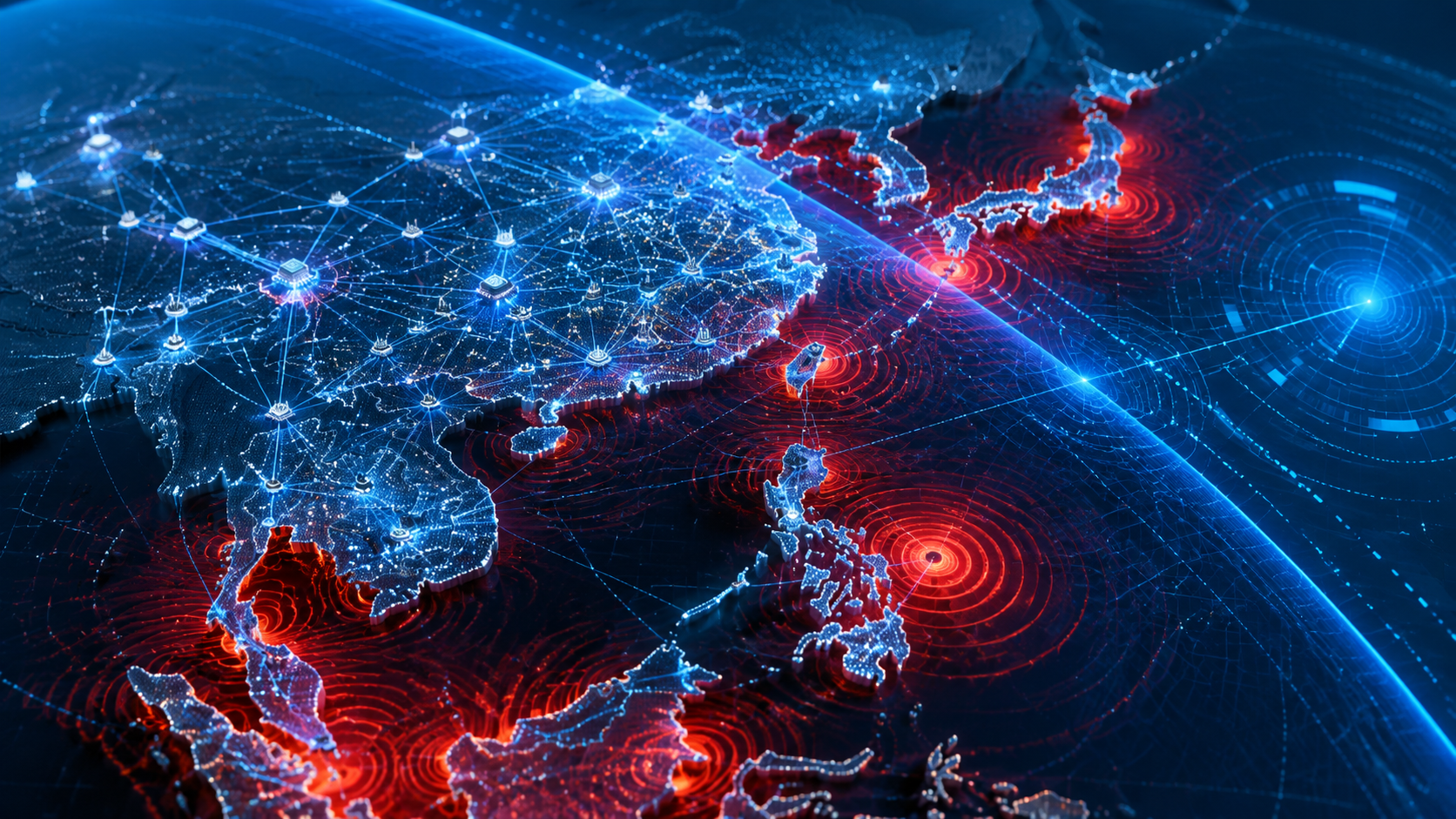
For semiconductor-linked networks, that question is not theoretical. Taiwan and Japan sit inside dense electronics ecosystems where advanced manufacturing, specialty materials, equipment, testing, packaging, logistics, and customer qualification cycles all compress the room for error. Semiconductor-focused resilience analyses after recent quakes have emphasized how concentrated fabrication and supplier ecosystems can amplify localized physical disruptions into global supply concerns.[1]
The 2024 Taiwan Quake Was a Recovery Test, Not a Prediction Win
The April 2024 Taiwan earthquake gave procurement teams a hard example of the difference between physical event awareness and production recovery. TSMC evacuated facilities after the magnitude 7.4 quake, and reports said about 70% of tools were recovered within 10 hours. That is a meaningful operational recovery signal. It is not the same as saying full production recovered in 10 hours, because some advanced lines required extended recalibration.[2]
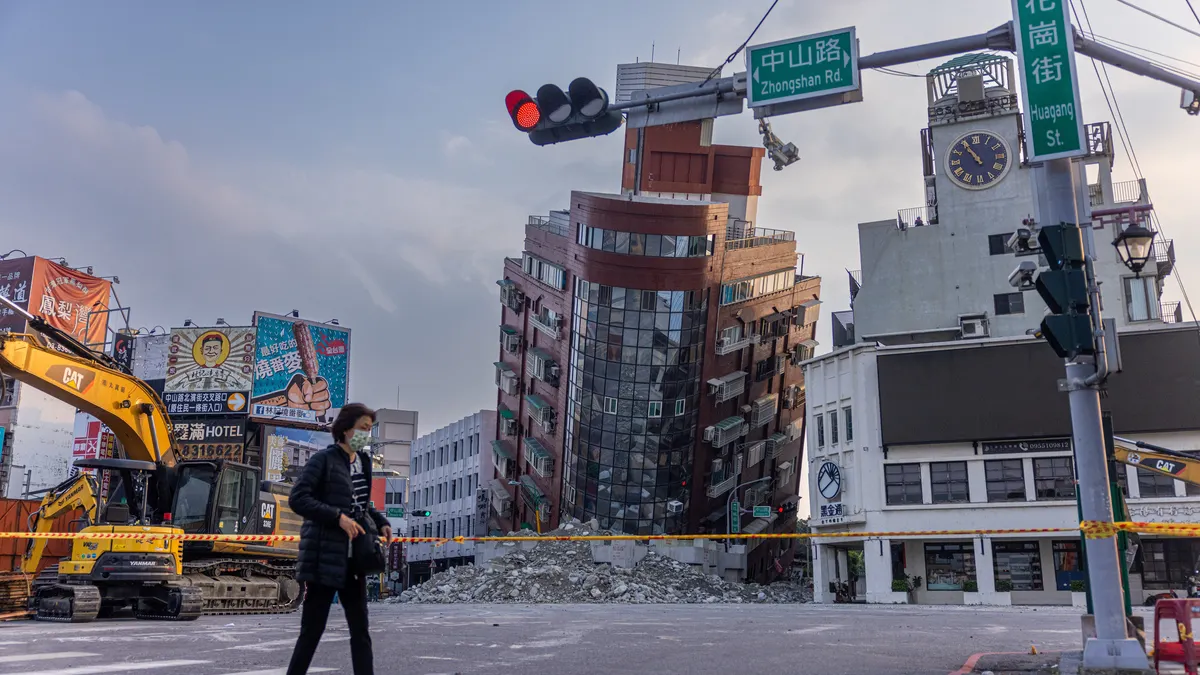
That distinction matters to anyone defending an inventory decision after the fact. Tool restoration tells you the site is stabilizing. Recalibration tells you output, yield, committed allocations, and customer shipments may still be exposed. A risk platform that collapses those two states into a green dashboard is not helping the planner who has to decide whether to pull inventory forward, ask sales to prioritize customers, or activate an alternate that still needs engineering approval.
The value of AI in this setting is therefore not drama. It is earlier classification. Which suppliers are inside the affected radius? Which products depend on those suppliers directly or through sub-tiers? Which purchase orders, open allocations, inventory positions, and customer programs are tied to the exposed nodes? Which sites have reported evacuation, utility issues, transport disruption, or delayed restart? A system that answers those questions faster buys time, even when it cannot change the geology.
Japan Keeps the Risk Live
Japan adds a second concentration problem. It is a major source of precision materials, components, equipment, automotive capacity, and port-dependent flows. The 2024 Ishikawa magnitude 7.6 earthquake caused semiconductor fab disruptions, though the available briefed evidence does not support treating it as a repeat of the 2011 Tohoku shock. Tohoku remains the stronger historical warning: Japanese listed firms saw an average profit drop of 33%, and Toyota, Sony, and Nissan halted production.
The Nankai Trough risk is the standing concern behind many Japan exposure reviews. Japanese government estimates cited in supply-chain coverage put the probability of a magnitude 8 to 9 megaquake at 70% to 80% within 30 years, with projected economic damage above $1.5 trillion. The damage figure is widely repeated through secondary sources, so it should be verified against the underlying Cabinet Office or Japanese disaster-management documents before a board paper treats it as a primary-source number.
Even without leaning too hard on the dollar estimate, the procurement exposure is plain enough. Ports such as Nagoya and Kobe sit inside scenarios that matter to automotive and electronics just-in-time networks. A team does not need a perfect catastrophe model to know that a single-region supplier map, low safety stock, long qualification cycles, and tight customer commitments are a bad combination.
What the Better AI Claim Actually Is
The strongest claim for AI-powered supplier risk platforms is not earthquake forecasting. It is signal detection and consequence modeling. Global discussions of AI in supply chains and disaster response increasingly focus on using models to identify weak signals, process large volumes of external data, and help organizations prepare before shocks fully propagate.[3][4]
In procurement terms, the platform has to do three jobs well enough to affect a decision:
| Job | What It Changes for Procurement |
|---|---|
| Scan for external event signals | Moves teams from rumor-tracking to structured alerts across news, government notices, logistics updates, seismic bulletins, and local-language sources. |
| Score supplier vulnerability | Separates suppliers that are physically near the event from suppliers whose financial, operational, or geographic profile makes disruption more likely to affect supply. |
| Simulate multi-tier impact | Shows which products, plants, customers, purchase orders, and alternate-source plans are exposed if one node or corridor fails. |
This is where a 60- to 90-day lead-time claim becomes credible only if it is understood correctly. It does not mean the model knows an earthquake will occur two months from now. It means the model may detect deteriorating supplier conditions, logistics fragility, inventory exposure, financial stress, geographic concentration, and event patterns early enough for a planner to take protective action before the eventual disruption reaches the customer schedule.
That lead time is useful because the procurement actions are slow. Alternate sourcing can require engineering qualification. Customer allocation rules need executive approval. Additional inventory may be expensive and politically hard to justify. Logistics rerouting can require carrier capacity that disappears once everyone else sees the same headline. Early warning is not valuable because it is elegant; it is valuable because the countermeasures have lead times of their own.
How the Workflow Looks Before a Line Goes Down
A mature workflow starts before the quake. The platform already knows the supplier graph: direct suppliers, known sub-tiers, manufacturing sites, logistics lanes, ports, customer programs, approved alternates, contract terms, purchase orders, and inventory buffers. Without that graph, external AI alerts become another inbox.
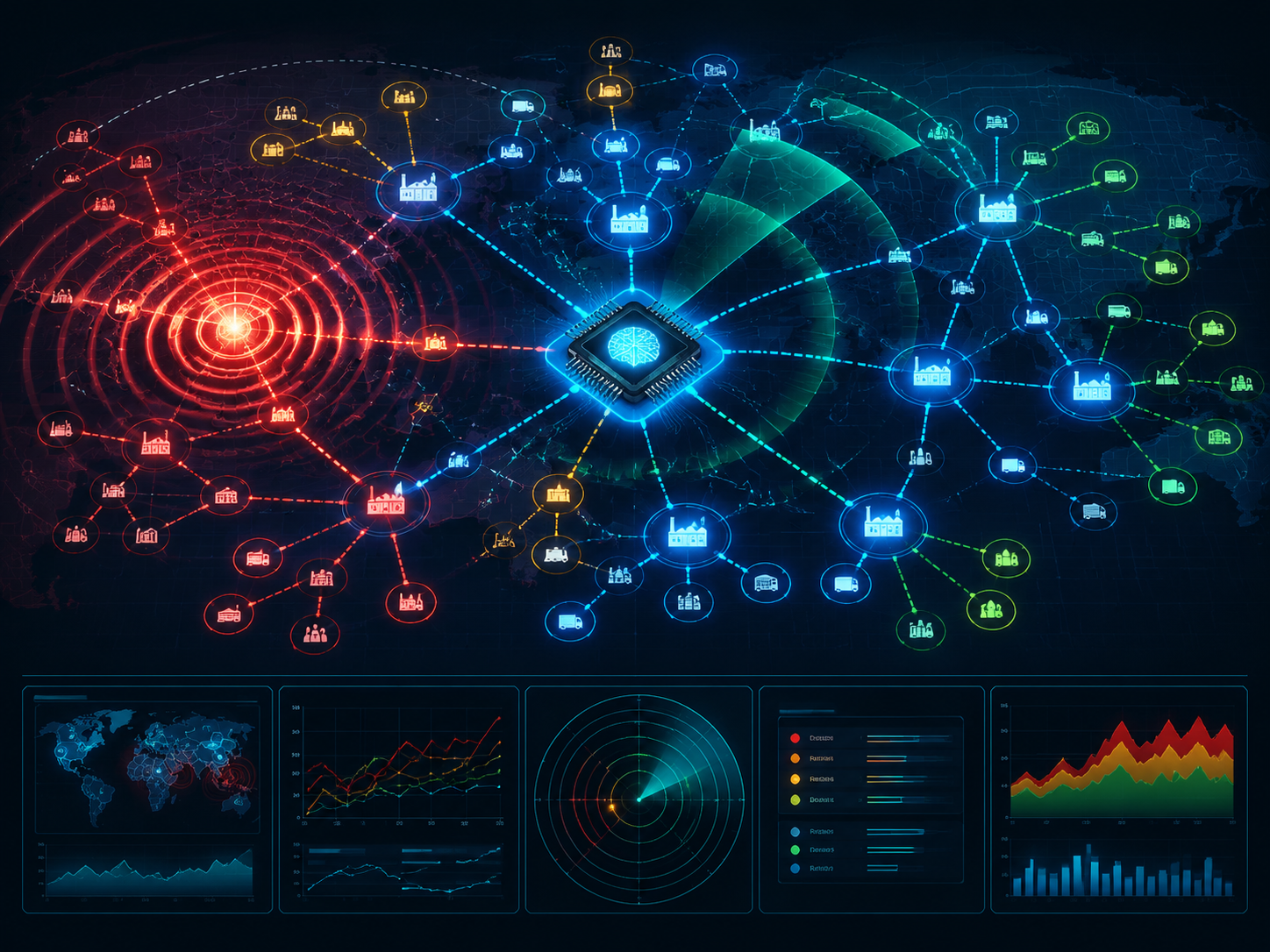
When an event starts to surface, natural-language processing can scan large volumes of multilingual information: local news, government updates, social posts, transport notices, utility disruption reports, supplier statements, and sector-specific bulletins. Vendor materials for platforms such as Resilinc EventWatchAI describe monitoring hundreds of event types across more than 100 languages. That kind of coverage is only useful if the alert is mapped back to the supplier sites that matter, rather than sprayed across every category manager.
The next layer is supplier condition. A supplier that is profitable, geographically diversified, and carrying finished-goods buffers is not the same risk as a single-site sub-tier supplier with thin liquidity and long restart procedures. Machine-learning financial health models, including those described by Debales AI, claim to flag supplier financial distress 60 to 90 days ahead of visible failure. For earthquake-driven disruption, that signal does not predict the quake; it helps rank which affected suppliers are least able to absorb one.
The third layer is simulation. Digital twin tools such as C3 AI Supply Network Risk model supplier networks so teams can test what happens if a fab, port, material supplier, or logistics corridor becomes unavailable. Broader supply-chain AI discussions point to this shift from static dashboards toward scenario analysis and decision support, especially as disruption planning becomes more continuous.[3][5]
For a planner, the useful output is not a heat map. It is a ranked action queue: expedite these orders, freeze these customer allocations, validate these alternates, contact these suppliers first, raise these parts to executive review, and defer the rest. If the system cannot reduce the number of people waiting for a decision, it has not yet earned its place in the response room.
Where the ROI Evidence Is Stronger, and Where It Is Softer
The cleanest ROI argument is response-time compression. Debales AI cites evidence that AI-integrated supply chains respond 30% to 40% faster. Sphera describes AI supplier-risk summaries reducing review cycles from weeks to minutes. Those are the kinds of metrics procurement can translate into avoided expediting, earlier allocations, faster supplier outreach, and fewer hours spent reconciling conflicting spreadsheets.
Preparedness confidence is useful, but it needs more care. Ivalua research says 98% of mature AI users feel prepared for geopolitical disruption, compared with 0% of organizations without AI. That is a striking contrast, not proof that AI alone caused the gap. Mature AI adopters may also have better data governance, larger risk teams, more disciplined supplier mapping, and more executive support. Treat the figure as a due-diligence prompt, not as a guaranteed business case.
The more defensible buyer-side business case is built from internal timing. How long does it take today to identify all affected suppliers after a quake? How many hours pass before procurement, planning, logistics, quality, and sales share the same exposure list? How often are alternates found too late for qualification? How many manual reviews are required before leadership approves inventory? AI earns budget when it shortens those intervals in live drills or real events.
There is also a reason electronics and semiconductor-heavy networks make better validation grounds than loosely coupled categories. They have clearer concentration, more visible event consequences, higher qualification barriers, and more expensive downtime. A platform that proves value there has done something meaningful. It still has to prove that the same signal quality and response economics travel to categories with broader supplier bases and more substitutable materials.
What to Ask Before Shortlisting a Platform
A procurement team evaluating AI for earthquake-driven supplier disruption should press vendors on workflow evidence, not just model language. The practical diligence questions are straightforward:
- Can the platform map alerts to actual manufacturing sites, sub-tiers, ports, parts, programs, and purchase orders?
- Does the system distinguish tool recovery, production recovery, shipment recovery, and customer recovery?
- Which claimed early-warning signals are independently validated, and which are vendor-reported?
- How does the model handle suppliers with sparse data, private ownership, or incomplete site disclosure?
- Can planners run Nankai Trough, Taiwan fab, port outage, and single sub-tier failure scenarios without a data science team?
- What changed in a real event: escalation time, alternate activation, inventory decisions, customer allocation, or only dashboard visibility?
The data problem should not be minimized. Supplier risk data is often split across ERP, sourcing systems, quality records, logistics providers, external feeds, and individual category-manager files. If the supplier master is wrong, if sub-tier visibility is thin, or if site-level data is missing, the AI layer will still produce polished uncertainty. Model transparency matters because planners need to defend why one supplier was escalated and another was not.
For teams comparing disruption types, earthquake response also differs from weather events, cyber incidents, and geopolitical chokepoints. The same continuous-monitoring discipline may apply, but the data and timing differ. ChainSignal’s related reviews of AI for flood risk management, AI for hurricane planning, and AI for Strait of Hormuz disruption monitoring are useful comparators because they test similar claims against different lead times and network structures.
The Practical Boundary
AI-powered supplier risk platforms are most credible today when they are framed as readiness tools for earthquake-driven disruption. They improve detection, escalation, scenario modeling, and response coordination. They do not see the earthquake itself before the earth moves.
For semiconductor-linked networks with exposure to Taiwan, Japan, and nearby supplier ecosystems, the case for a pilot or shortlist is strong enough to investigate seriously. Recent seismic events have tested recovery visibility, and the concentration risk is severe enough that faster escalation has real value. The open question is how far the same validation extends into less concentrated supplier bases, where disruption signals may be weaker, substitutes may be easier, and the ROI depends less on avoiding one catastrophic node failure than on improving everyday response discipline.
References
- Navigating The Quake — Enhancing Supply Chain Resilience In The Semiconductor Industry, OPSdesign, 2024.
- Taiwan earthquake impact semiconductor supply chain TSMC Micron, Manufacturing Dive, April 2024.
- AI will protect global supply chains from the next major shock, World Economic Forum, January 2025.
- How AI Is Changing Our Approach to Disasters, RAND, August 2025.
- Supply chain AI trends 2026, Dataiku, February 2026.
Comments
Join the discussion with an anonymous comment.