
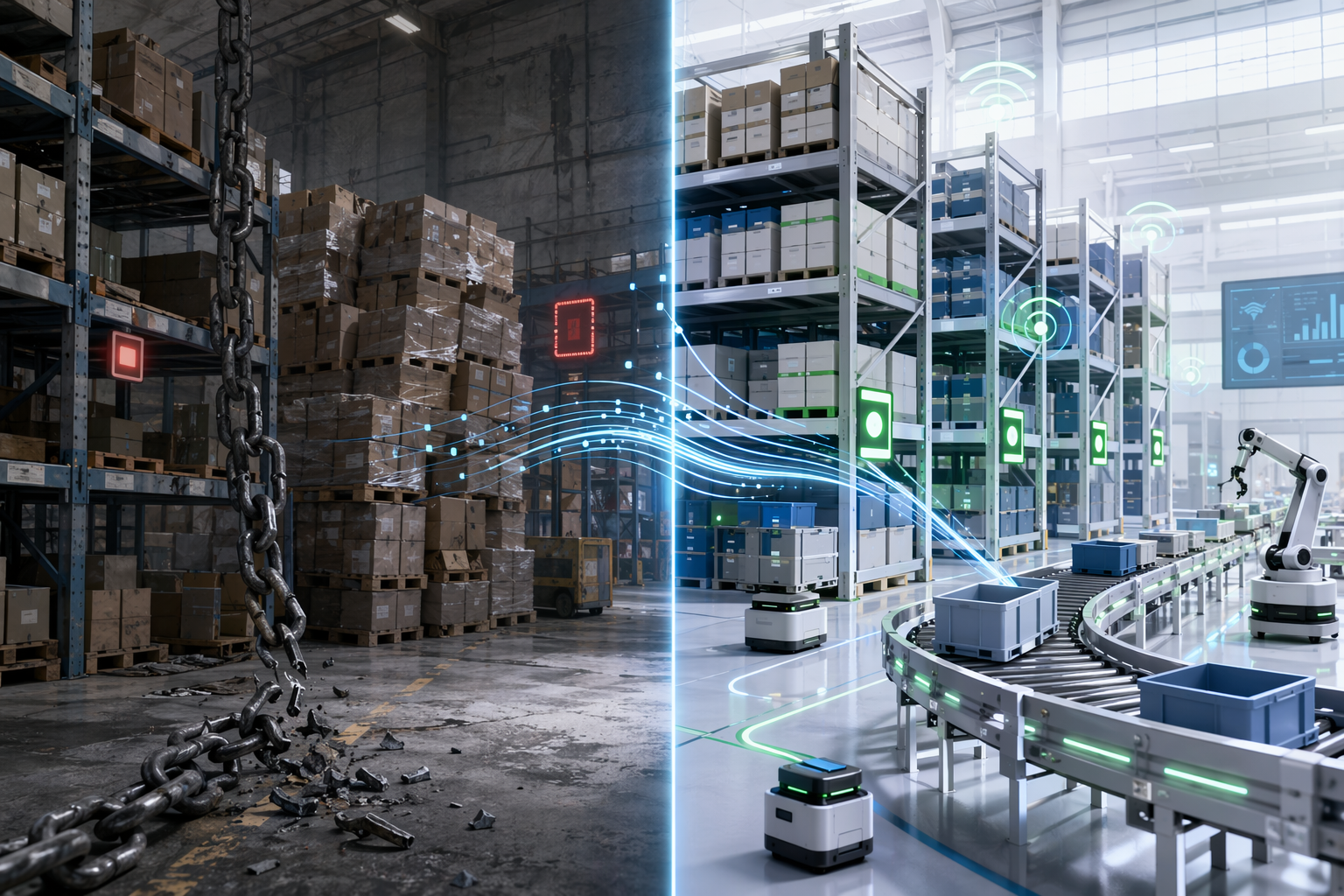
What changes when reorder rules stop being fixed
Fixed min/max and reorder-point rules are easy to explain, but they react slowly to the real reasons stock gets away from you: late supplier receipts, demand that shifts under you, and item masters that never quite match warehouse reality. AI-driven automated replenishment replaces that rigid threshold with dynamic safety stock, demand sensing, and lead-time signals, so the system is adjusting before the next missed pick or emergency order lands on the planner's desk.
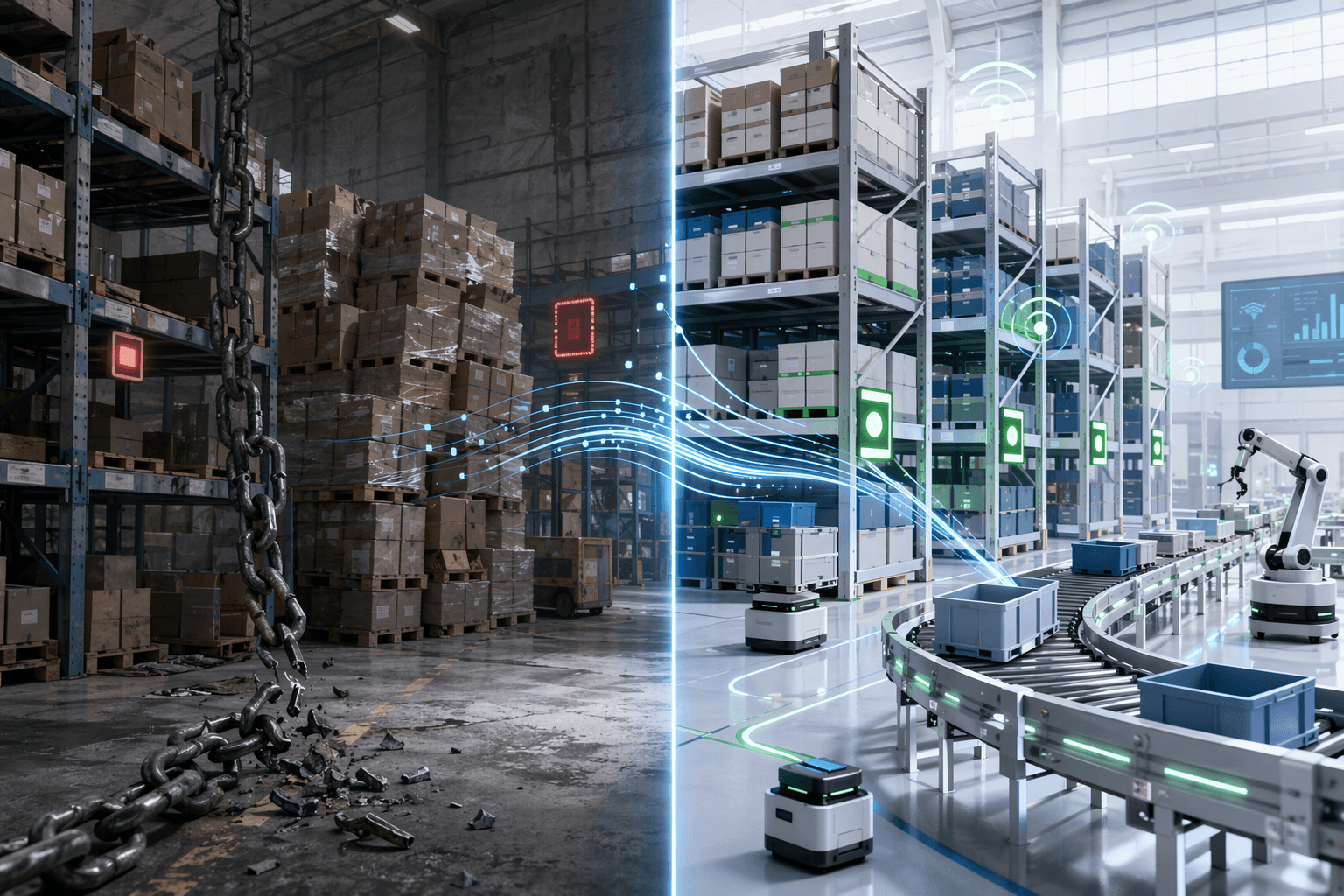
The measurable claims are strong enough to matter. ToolsGroup's customer benchmarks put stockout reduction at 20–50%, inventory holding-cost reduction at 15–30%, and payback at 6–12 months when dynamic reordering replaces static rules.[1] A 2025 McKinsey distribution finding, summarized by OpenSky Group, reported 10–15% lower carrying costs without sacrificing availability.[2] Tailor's 2025 playbook says as much as 80% of routine purchase orders can be auto-generated, with human review reserved for exceptions.[3]
That is the practical appeal for inventory management using AI: fewer stockouts that become service failures, less excess stock that sits on the floor, and less routine PO work that keeps planners busy without improving the outcome. The catch is that these are benchmark outcomes, not a guarantee. They are strongest when replenishment is already disciplined enough for the model to learn from.
The data foundation decides whether the model works
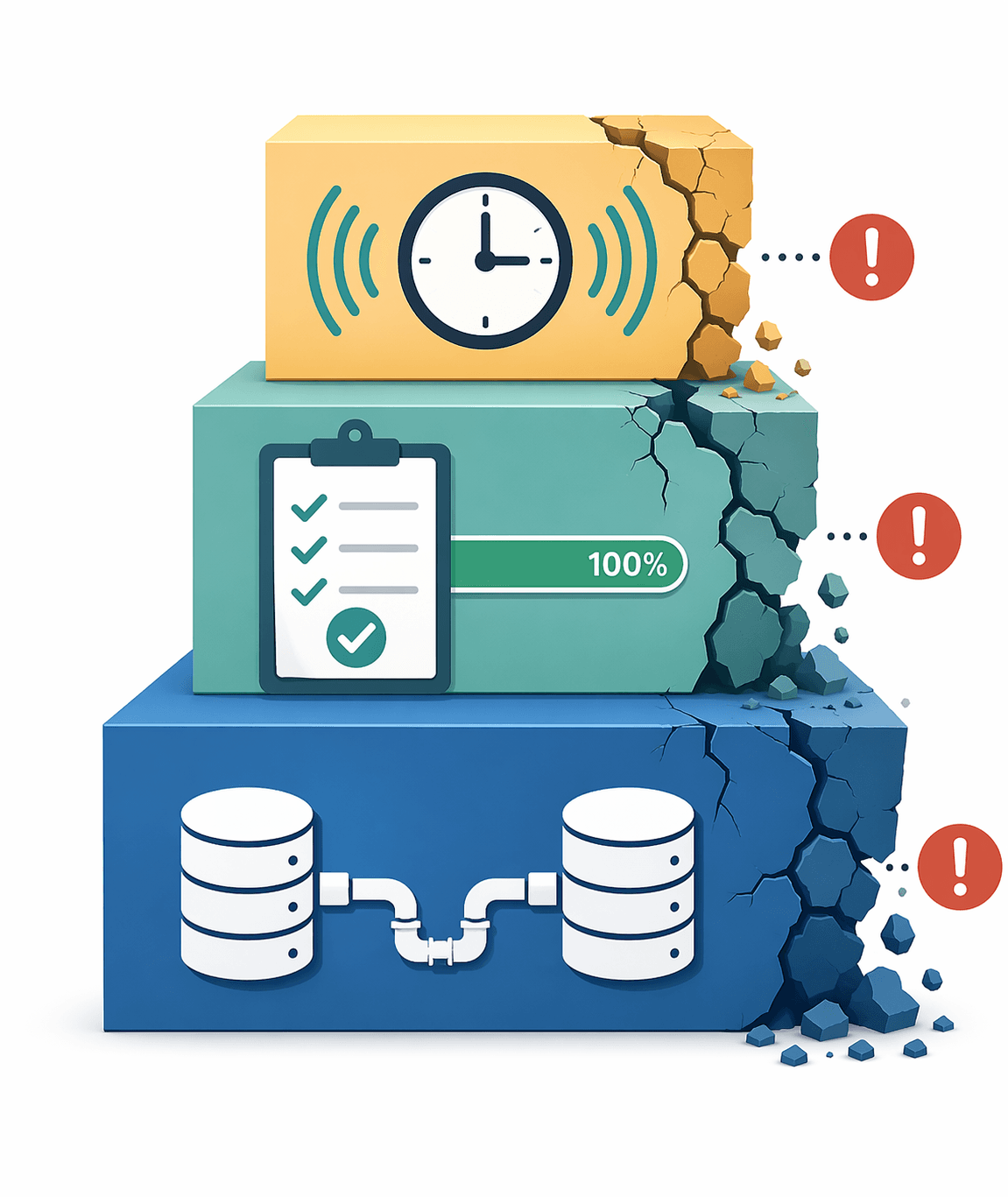
This is where most replenishment projects either become useful or collapse into another dashboard nobody trusts. Clean ERP/WMS integration is not a nice-to-have, because the system needs reliable transaction flow, current on-hand balances, and usable lead-time signals to calculate anything better than a dressed-up average. If the item master is wrong, the receipt is late, or the lead time is guessed in a planner's spreadsheet, the automation inherits that error instead of correcting it.
That concern is not theoretical. ECR Loss research found inventory records were inaccurate in 60% of typical retailer cases, which is enough to explain why automated sensing can look impressive in a pilot and then lose its footing in live operations.[4] The model cannot compensate for bad inventory truth at the source; it will only make the bad truth move faster through the workflow.
- ERP and WMS events have to line up closely enough that receipts, adjustments, and issues are visible when they happen.
- Inventory counts and item masters need to be trusted before anyone expects automation to improve service levels.
- Supplier lead times have to be usable signals, not a stale average copied from last quarter.
That is why the first real decision is often not model selection. It is whether the data cleanup work is far enough along to let automation do something better than reinforce noise.
Where it fits cleanly, and where it gets brittle
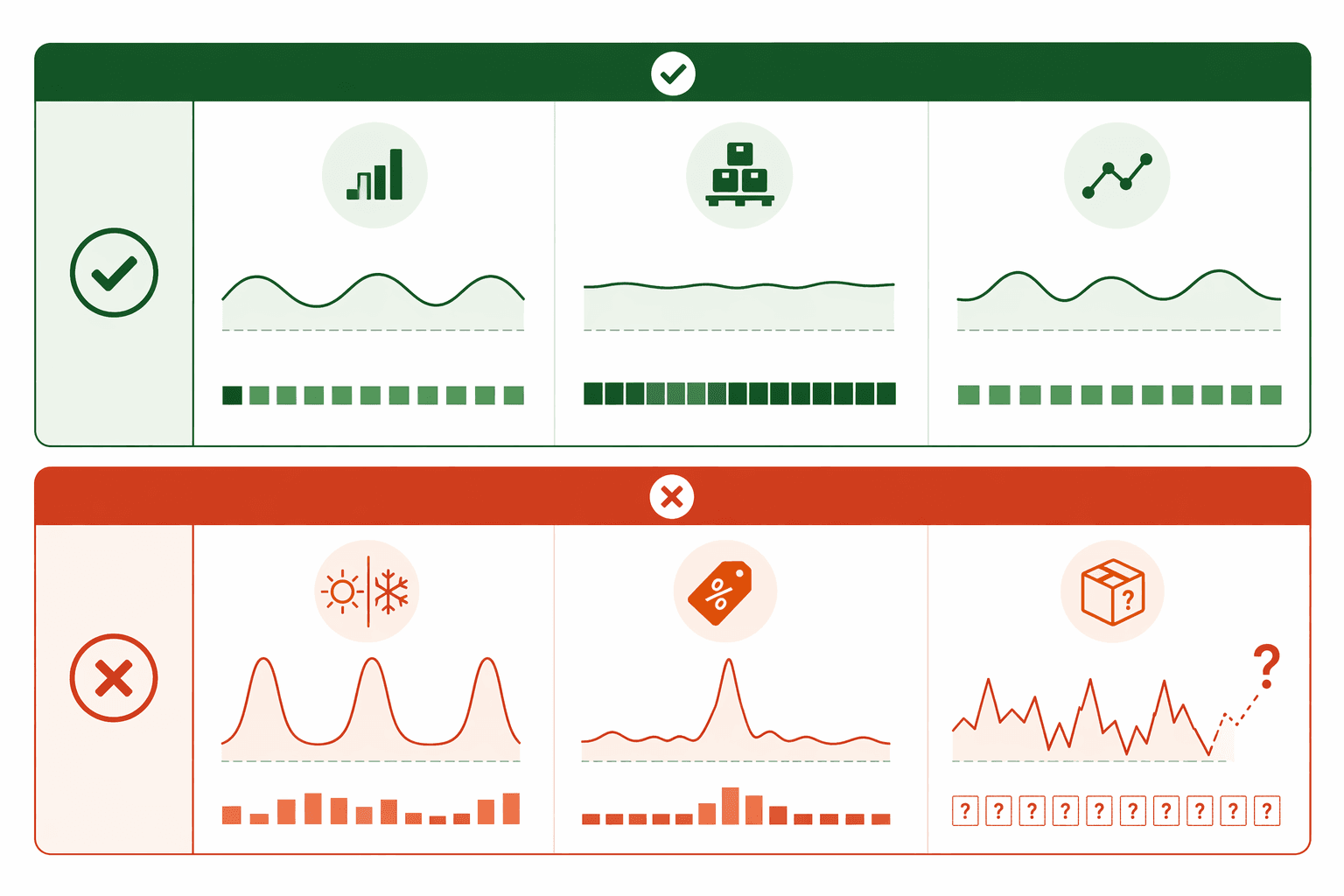
The cleanest fit is stable, high-volume, predictable-demand SKUs. These are the items where history has enough shape to be useful, lead times are repetitive enough to model, and routine POs are repetitive enough to automate. This is also where the planner's judgment can shift from typing the same order every week to checking exceptions, supplier changes, and the handful of items that actually need intervention.
The hard edge of the use case is seasonal, promotional, and new-product-introduction inventory. Demand there is spikier, history is less reliable, and the system can mistake a temporary pattern for a durable one. In those conditions, human exception review stays necessary because the main risk is not that the model will do nothing; it is that it will behave confidently around the wrong signal.
That is also why small pilots matter. Tailor's playbook recommends starting with 5–10 stable SKUs and running a 7-day sensor sprint before widening the scope.[3] The point of that kind of pilot is not to prove universal autonomy. It is to check whether the data pipeline, exception logic, and planner workflow actually hold when orders begin moving without manual touch every time.
A broad rollout across promotional or launch-heavy assortments usually asks the model to do more than the records can support. A narrower rollout on steady movers gives the system a fair test and gives operations a result that can be measured instead of argued about.
The decision boundary
AI-powered automated replenishment is worth serious attention when the data foundation is solid and the SKU profile is stable. That is where the stockout and carrying-cost gains are most believable, the payback window is not stretched by manual cleanup, and routine PO automation actually removes work from the team instead of moving the same work into a different screen. When the records are dirty, the answer is not a better model. It is usually cleaner inventory truth first, then automation.
References
- Maximize Inventory Optimization ROI with AI — ToolsGroup
- OpenSky Group roundup of McKinsey distribution research — OpenSky Group, 2025
- AI Inventory Management Playbook — Tailor, 2025
- ECR Loss research on inventory record accuracy — ECR Loss
Comments
Join the discussion with an anonymous comment.