
The practical supply chain impact of Trump's AI Action Plan is not that AI companies get a friendlier policy headline. It is that federal policy is trying to pull semiconductor fabs, AI data centers, and grid upgrades through the pipe at the same time, while the pipe is already crowded with steel orders, concrete pours, transformers, switchgear, chillers, skilled trades, substations, and local land-use fights.
That matters more in Q3 2026 than it did on announcement day. The AI Action Plan was released on July 23, 2025, and the accompanying implementation environment is now old enough that procurement teams should not treat it as a press release, but still uneven enough that no one should assume every recommendation has become agency practice. One widely cited review counted 103 policy actions, with roughly one-third lacking a designated lead agency and no implementation timelines specified.[1]

The infrastructure pillar is best read as three connected build zones. Fabs need specialized construction and semiconductor manufacturing equipment. Data centers need land, power, cooling, fiber, servers, storage, and large electrical packages. The grid needs generation, interconnection capacity, substations, reconductoring, and transmission upgrades. The federal government can shorten some reviews and prioritize some projects, but it cannot conjure a transformer factory, a construction crew, or a local zoning vote out of the permitting text.
The scale is already visible. The Stargate project, tied to Oracle and OpenAI partnerships, is described as a 4.5 GW AI infrastructure program.[2] Separately, the data-center permitting executive order targets qualifying projects above 100 MW and with at least $500 million in capital investment.[3] On the grid side, the United States built only 55 miles of high-voltage transmission in 2023, compared with a 925-mile annual average from 2015 through 2019.[4] Those three facts belong in the same procurement meeting, because they describe the same collision from different angles: demand is being federalized faster than the physical delivery system can be expanded.
The Buildout Splits Into Three Supply Chains
The AI Action Plan does not create one generic AI supply chain. It creates overlapping demand in three industrial systems that share some inputs and diverge sharply on others. Treating them separately is useful because each one fails at a different gate.
| Build zone | What federal acceleration changes | Where constraints reappear |
|---|---|---|
| Semiconductor fabs | CHIPS Act streamlining, Commerce review, and tighter controls around semiconductor manufacturing sub-systems | Specialized tooling, cleanroom construction capacity, export-control exposure, and long project qualification cycles |
| AI data centers | Accelerated permitting for large qualifying projects, broader federal review tools, and potential access to federal or remediated land | Power availability, cooling systems, high-voltage equipment, local zoning, land acquisition, and construction labor |
| Grid and energy | Interconnection reform, dispatchable power prioritization, reconductoring, dynamic line ratings, and grid management technologies | Transmission build rates, transformer and switchgear supply, utility queue discipline, and regional generation mix |
The shared input basket is broad: steel, concrete, HVAC systems, networking equipment, data storage, and dispatchable energy equipment are all pulled into the same mobilization.[2] A procurement director buying rooftop units for a data hall may not be bidding against a fab package item for item, but both projects are drawing from the same industrial base of electrical contractors, metal fabricators, logistics capacity, and construction management talent.
Semiconductor Fabs: Faster Policy, Narrower Equipment Channels
The semiconductor portion is not the largest day-to-day headache for every data-center procurement team, but it sets the ceiling for domestic AI hardware resilience. The plan calls for CHIPS Act program streamlining, including removal of what legal summaries describe as “extraneous policy requirements” from grant programs, alongside a Commerce Department review of grant and research programs.[5]
For fab developers and their suppliers, that kind of streamlining can change the front end of a project: fewer grant conditions to model, a clearer federal posture toward expansion, and potentially faster decisions on which facilities deserve support. It does not make lithography-adjacent systems, cleanroom components, process tools, specialty gases, or qualified contractors suddenly abundant. The plan also includes new export controls on semiconductor manufacturing sub-systems, which may tighten the compliance burden around exactly the equipment categories fab projects cannot easily substitute.[5]
That is the semiconductor supply chain tradeoff: policy may shorten some approval and funding friction while adding scrutiny to the movement of sensitive manufacturing capability. Procurement teams should therefore separate grant timing from tool availability. A fab that clears a policy gate still has to reserve equipment, installation labor, factory acceptance testing slots, and logistics capacity. For a deeper treatment of domestic chip capacity pressure, see why the CHIPS Act can't keep up with AI chip demand.
Data Centers: The Permitting Shortcut Moves the Bottleneck to Power
The data-center provisions are where the plan most directly turns into purchase orders. Qualifying projects above 100 MW and $500 million get the most attention because they define the class of campuses the administration wants to move faster.[3] At that size, “permitting” is not paperwork in isolation. It is the starting gun for land control, utility studies, cooling architecture, high-voltage procurement, water strategy where applicable, and contractor allocation.
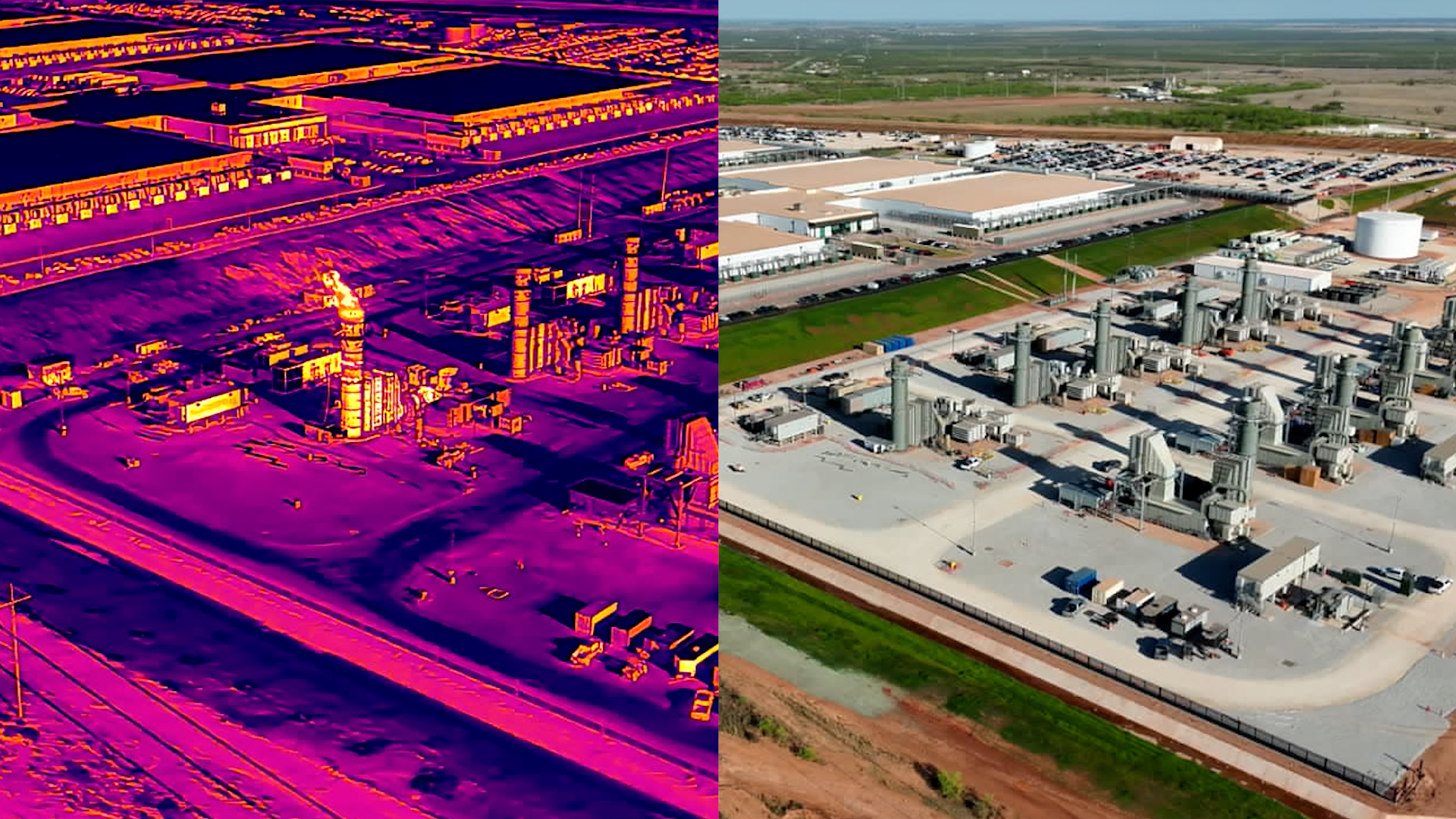
The federal toolbox includes new NEPA categorical exclusions for data center projects, FAST-41 coverage for accelerated environmental review, consideration of nationwide Clean Water Act Section 404 permits, incentives to repurpose Brownfield and Superfund sites, and access to federal lands for data center development.[6] Each mechanism can matter. A categorical exclusion can remove a review layer. FAST-41 can impose more disciplined coordination. Brownfield or Superfund reuse can make previously marginal land worth rechecking. Federal land access can widen the map in regions where private land assembly is slow.
None of those mechanisms guarantees delivery. A 100 MW-plus campus that moves faster through federal review can still sit behind a utility interconnection queue, a substation transformer lead time, a county hearing, or a cooling equipment allocation problem. If the site depends on new transmission, the 55-mile figure from 2023 should be treated less as a statistic than as a warning label.[4]
The Stargate example shows why. A 4.5 GW program is not just a server procurement event; it is a power and construction program large enough to pull on civil works, structural steel, medium- and high-voltage electrical equipment, cooling systems, networking hardware, storage, and dispatchable energy supply.[2] The procurement question is not simply whether a preferred vendor can meet a unit price. It is whether the vendor can hold manufacturing slots while the site is still resolving power, land, and environmental sequencing.
Federal acceleration also collides with local counter-pressure. Reporting and analysis around the plan noted state and local zoning trends moving in the opposite direction, including Atlanta data center zoning restrictions and a Fairfax County moratorium.[2] Those are signals, not a national frequency count. But they are enough to keep zoning risk on the critical path, especially for campuses whose federal qualification may be clear before their local political acceptability is.
For more on the categories most likely to bind data-center delivery, see AI data center supply chain bottlenecks and eminent domain as an AI data center bottleneck.
The Grid Is No Longer a Back-End Utility Conversation
The grid provisions are where the supply chain consequences become most uncomfortable. The plan points toward preventing premature decommissioning of power resources, prioritizing interconnection for dispatchable sources such as nuclear and geothermal, and using advanced conductors, reconductoring, dynamic line ratings, and grid management technologies to expand effective capacity.[4][5]
Those measures can help, especially where existing corridors can carry more power through reconductoring or better line ratings. But they also change site selection. A parcel with attractive land costs and fiber access is weaker if it depends on a transmission upgrade that has no credible delivery path. A more expensive site near dispatchable generation, substation capacity, or a utility with a clearer interconnection process may be the cheaper project once delay, escalation, and equipment reservation risk are priced in.
The interconnection priority for dispatchable sources also has procurement consequences. It can favor sites that can credibly pair with nuclear, geothermal, gas-backed, or other firm resources, depending on regional availability and regulatory acceptance. It may disadvantage projects whose energy strategy assumes that renewable procurement alone will satisfy both timing and reliability needs. That is a planning implication, not a universal rule; the actual effect will vary by region and may face legal or political challenge.
This is where procurement needs to move earlier than many organizations are used to moving. Transformers, switchgear, breakers, protection systems, advanced conductors, and substation packages should be discussed while sites are still being screened, not after a real estate team has selected a preferred parcel. Grid interconnection is a site-selection variable now. Treating it as a utility afterthought is how a project wins the land race and loses the energization schedule.
Acceleration Does Not Remove Queues; It Changes Which Queue Matters First
The strongest version of the AI Action Plan is an industrial sequencing policy. It tries to move large projects through federal review faster, reduce selected grant friction, widen the land base, and push grid agencies toward capacity-enhancing tools. The weaker reading is that faster federal permitting equals faster delivery. That is where procurement teams can get hurt.
A project can qualify for accelerated permitting and still miss its commercial operation target because the utility cannot energize it. A fab can benefit from CHIPS Act streamlining and still wait on specialized equipment. A data center can secure federal land or a remediated site and still face local opposition, water constraints, or a shortage of high-voltage electrical packages. A grid upgrade can be policy-prioritized and still depend on crews, conductors, and outage windows.
This is not an argument for waiting. Long-lead categories already run beyond annual budgeting cycles, and many 2026 sourcing decisions will shape 2027 delivery. The better response is to distinguish between gates that policy may move and gates that procurement must still secure.
- For data centers, verify whether the project actually meets the 100 MW and $500 million thresholds before building a schedule around accelerated federal treatment.
- For land selection, score interconnection path, substation proximity, local zoning posture, and dispatchable power options before final parcel ranking.
- For electrical equipment, reserve supplier capacity early enough to survive permitting uncertainty rather than waiting for final approvals.
- For construction materials, qualify alternate suppliers in steel, concrete, HVAC, networking, and storage categories before campus-scale projects crowd the bid calendar.
- For semiconductor-linked projects, separate federal funding assumptions from tool availability, export-control exposure, and installation labor constraints.
What to Verify Before Building a 2027 Procurement Plan
Because the plan moved from announcement into implementation over the past year, the first procurement task is verification. Legal summaries and policy analyses are useful maps, but agency ownership, rulemaking status, permitting practice, and regional utility behavior can change faster than capital plans. Any 2027 sourcing model that assumes a qualifying project will automatically move on an advertised federal timetable is carrying avoidable schedule risk.
| Planning question | Why it matters |
|---|---|
| Has the relevant agency implemented the specific permitting or review mechanism the project is relying on? | The plan included many actions without clear lead agencies or timelines, so announcement language is not enough. |
| Does the site need federal review relief, local zoning approval, utility interconnection, or all three? | Federal acceleration may not solve the slowest gate. |
| Which equipment categories must be reserved before permit certainty? | Waiting for final approvals can push transformers, switchgear, HVAC, or networking equipment into a later delivery window. |
| Does the energy strategy depend on new transmission, existing capacity, or dispatchable generation priority? | The answer changes both site ranking and supplier qualification. |
| Can the project tolerate substitution in cooling, electrical, or construction packages? | Rigid specifications increase exposure when multiple AI infrastructure projects compete for the same vendors. |
The procurement posture through 2027 should be more aggressive than a normal real estate-led expansion plan and more skeptical than a policy memo. Qualify suppliers earlier in steel, HVAC, power equipment, and networking. Put grid interconnection into the first round of site screening. Treat local zoning as a live constraint even when federal policy is favorable. Recheck current agency implementation before using the AI Action Plan as a schedule assumption.
References
- Inside Trump's Ambitious AI Action Plan, Stanford HAI
- US National AI Policy: Practical Implications for U.S. Supply Chains, Logistics Viewpoints, July 24, 2025
- Trump Administration Unveils AI Action Plan with Implications for Innovation, Infrastructure, and Global Tech Competition, Mayer Brown, July 2025
- Experts React: What Trump's New AI Action Plan Means for Tech, Energy, the Economy, and More, Atlantic Council
- How Trump's AI Action Plan and Executive Orders Will Impact U.S. Technology and Federal Procurement, Orrick, August 2025
- America's AI Action Plan: What's In, What's Out, What's Next, Holland & Knight, July 2025
Comments
Join the discussion with an anonymous comment.