
Riyadh Air’s most useful AI supply chain lesson did not arrive as a demo. It arrived as a fleet decision. On July 20, 2026, at Farnborough, the airline firmed 34 widebody aircraft in one day: 28 Boeing 787s, including 20 converted to the larger 787-10, and 6 Airbus A350-1000s.[1][2] For a carrier still in its first operating season, that is not just a growth announcement. It is a live test of whether fleet planning, procurement, supplier visibility, and commercial ambition can sit inside the same operating picture.
The timing matters. In early 2025, CEO Tony Douglas described the aircraft supply chain as “stretched and under huge stress,” while calling delivery delays “massively frustrating.”[3] By mid-2026, Riyadh Air was still young enough that every aircraft choice carried disproportionate weight. Its disclosed orderbook after the Farnborough action stood at 67 Boeing 787s, 31 A350-1000s, and 60 A321neos.[4] That mix is not an abstract network-planning exercise. It determines pilot training demand, spares provisioning, ground equipment, supplier contracts, route economics, and how much operational complexity the airline accepts before its systems have years of production history behind them.
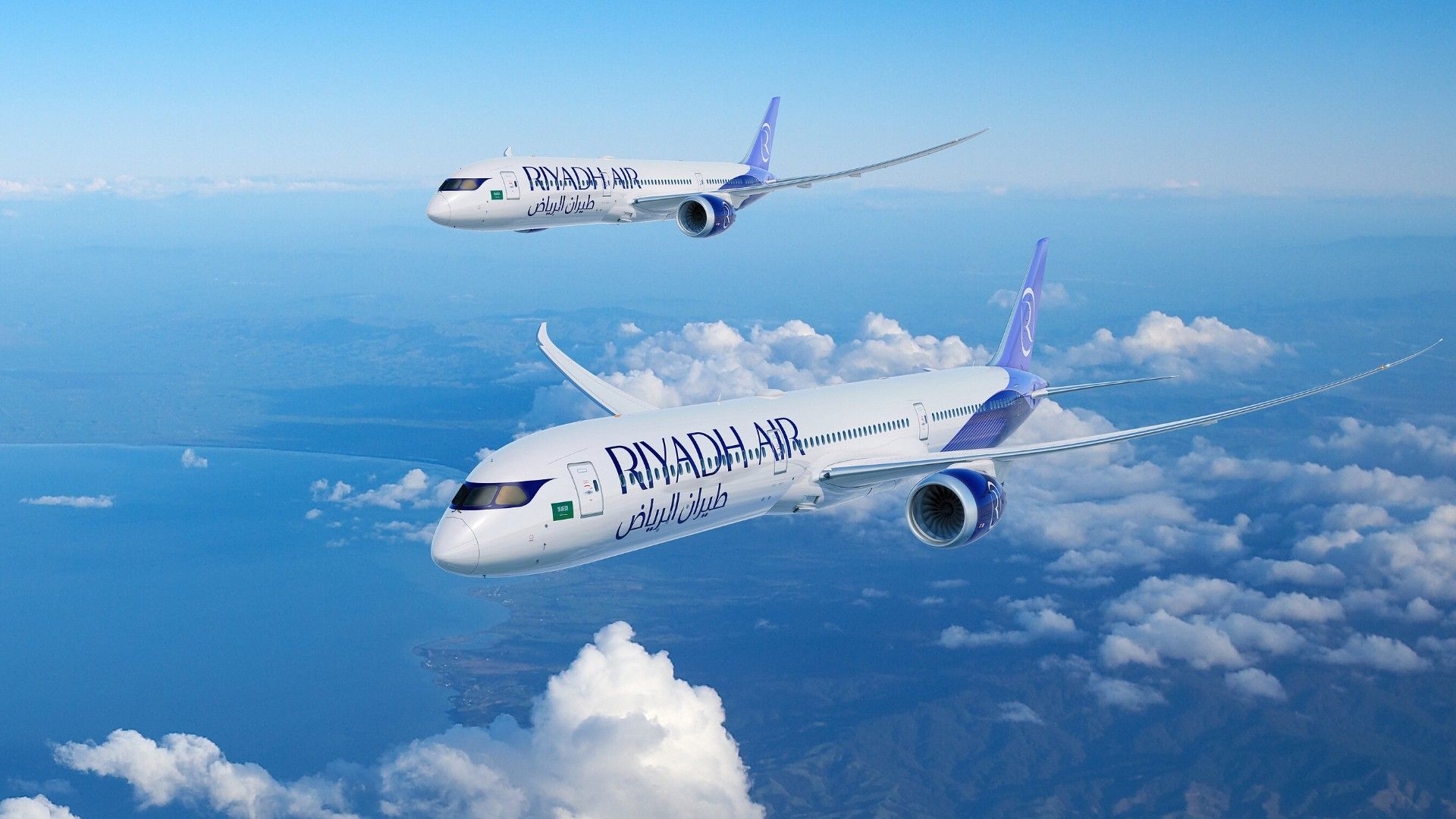
That is why Riyadh Air’s fleet planning supply chain is not a separate back-office topic. A fleet order made in a constrained aerospace market only creates value if the airline can see what it has committed to, what suppliers can actually support, what demand signals justify the capacity, and where the next bottleneck will surface. A clean architecture diagram helps only if it shortens that chain of translation.
The Rare Advantage: No Old Airline Stack to Unpick
Most airline technology programs begin with excavation. Procurement data lives in one system, maintenance demand in another, crew constraints somewhere else, and supplier performance often has to be reconstructed from purchase orders, emails, spreadsheets, and expediting calls. By the time a planning team has reconciled the baseline, the decision window has already moved.
Riyadh Air had a different starting point. It did not have to migrate a legacy IT estate before choosing its operating model. The airline selected Oracle Fusion Cloud applications across supply chain management, enterprise resource planning, and human capital management as an integrated platform from day one.[5] Arab News reported the Oracle selection in February 2024, framing it as part of the airline’s attempt to build core business operations on cloud infrastructure before launch rather than retrofit later.[5]
That distinction is easy to understate. Oracle Fusion SCM, ERP, and HCM do not magically solve aircraft delivery delays or supplier capacity constraints. What they can do, when implemented before operating compromises harden, is keep the transaction spine coherent. Purchase orders, finance controls, inventory records, supplier commitments, workforce planning, and approval workflows start closer to a common data model. The airline does not need a multi-year reconciliation program before it can ask ordinary operating questions: which supplier is late, which station will feel it first, which aircraft induction plan is exposed, and who has authority to change the order or contract.
This is the point legacy carriers should watch carefully. The greenfield advantage is not that Riyadh Air bought a fashionable cloud suite. It is that the airline could make the cloud suite the transactional backbone before the business learned to work around fragmented systems. Workarounds become culture quickly in airlines. Once planners stop trusting the system of record, they build their own. Riyadh Air’s early design gives it a chance to avoid that drift, though only production use will show whether the discipline holds.
The Engine Room Is the Integration Fabric
The more credible part of the Riyadh Air story is not the “AI-native” label. It is the scale of the integration burden. IBM says its consulting team orchestrated 59 workstreams across more than 60 partners and built more than 1,800 integrations across more than 75 systems, using IBM Cloud Pak for Integration and Red Hat OpenShift on Microsoft Azure.[6] Those numbers matter because they describe the operating surface area. An airline does not become integrated by naming one platform as the center; it becomes integrated when partner systems, operational tools, commercial platforms, finance controls, crew constraints, and supplier data can move without constant manual stitching.

This is also where the architecture avoids the false choice between one monolith and dozens of disconnected best-of-breed tools. Oracle can remain the system where many core transactions live. IBM’s integration layer can move data and process events across the wider estate. Red Hat OpenShift gives the platform a containerized operating layer on Azure rather than tying every future capability to one application suite.[6] That arrangement is less glamorous than a generative AI assistant, but it is closer to the work that determines whether procurement and fleet planning actually improve.
Consider what has to happen around a fleet decision. A larger 787 variant changes capacity, range economics, cabin configuration assumptions, spares demand, maintenance planning, airport readiness, training, and supplier commitments. If those consequences stay in separate planning lanes, the airline discovers conflicts late. If they are connected through an integration fabric, a planner can model the commercial upside of the aircraft choice while procurement sees long-lead spares exposure, finance sees capital and operating commitments, and operations sees constraints that might affect entry into service.
The important word is “can.” IBM’s case study establishes architecture and implementation scope; it does not, by itself, prove years of superior operating performance. But the architecture is directionally sound because it puts the tedious part in the right place. Airlines do not fail at supply chain transformation because nobody drew an AI use case. They fail because the use case cannot reliably reach the purchase order, the supplier record, the stock position, the aircraft plan, and the operational constraint at the moment someone has to decide.
Where AI Enters the Workflow
Computer Weekly reported that Riyadh Air planned to launch with end-to-end AI workflows, with IBM watsonx Orchestrate used to support business processes across the airline.[7] Greyhound Research, in a report co-developed with IBM, adds more detail: Nvidia A100 and H200 GPUs on Azure support AI workloads, while watsonx.ai and watsonx Orchestrate use fine-tuned language models on Riyadh Air’s proprietary knowledge base.[8] The independence of those claims is not equal; Computer Weekly is a stronger external reporting source, while Greyhound is useful for architecture detail but should not carry the verdict alone.
The useful question is not whether Riyadh Air has AI agents. It is what those agents are close enough to influence. IBM describes agentic workflows across supplier management, inventory optimization, and fleet parts planning.[6] Those are sensible targets because they are decision-heavy, exception-rich, and dependent on context from outside one application. A supplier-risk workflow, for example, is weak if it only reads supplier master data. It becomes more useful when it can also see open purchase orders, late deliveries, aircraft induction timing, planned routes, substitution options, and whether an operational team is already absorbing a constraint elsewhere.
| Workflow area | What has to be connected | Why it matters |
|---|---|---|
| Supplier management | Supplier records, purchase orders, delivery performance, contract terms, escalation history | Procurement can act before a late part becomes an aircraft or station constraint. |
| Inventory optimization | Stock position, aircraft plan, maintenance demand, route schedule, supplier lead times | Inventory decisions can reflect real operating exposure instead of static reorder logic. |
| Fleet parts planning | Fleet mix, delivery timing, configuration data, maintenance program, spares contracts | Parts provisioning can move with aircraft option decisions and variant changes. |
| Operations-linked planning | Flight operations, ground handling, crew scheduling, commercial demand, disruption signals | A supply decision can be judged against the operation it is meant to protect. |
This is where an AI-native airline supply chain differs from a conventional analytics overlay. A dashboard may tell procurement that a supplier is trending late. A workflow connected into the operating fabric can route the issue, assemble relevant context, propose alternative actions, and expose who bears the consequence of waiting. The improvement is not that AI “knows” the answer. It is that the system has less distance to travel between signal, transaction, and accountable decision.
There is still a practical limit. Early AI workflows can reduce search, reconciliation, and triage effort before they prove they optimize the airline. Long-term claims would require evidence such as sustained reduction in aircraft-on-ground events tied to parts availability, lower expedite cost, better supplier recovery times, or higher schedule reliability attributable to the new operating model. The available evidence in Q3 2026 supports architecture readiness and early workflow deployment, not durable ROI.
Demand Signals Belong in the Supply Chain Conversation
Artefact’s work is usually described through the customer lens: a data foundation using more than 20 integrated data sources and Informatica MDM to create Golden Guest Records, or 360-degree traveler views.[9] For fleet and supply chain leaders, the more interesting point is that passenger demand signals do not have to remain trapped in commercial systems. If the data foundation is shared properly, demand can become an input to operational and procurement decisions rather than a downstream forecast passed around after the commercial plan is already fixed.
A traveler record will not tell an airline how many engine components to buy. But aggregated demand patterns, booking behavior, route development priorities, and service expectations can change what the airline asks of its fleet and suppliers. A premium-heavy route plan affects cabin configuration, onboard product supply, maintenance assumptions, airport servicing, and spare equipment choices. A fast ramp in a particular geography changes station readiness and ground handling demand. The supply chain does not need every customer attribute; it needs reliable, governed signals that explain what the airline is trying to operate.
That is why unified records matter beyond personalization. If commercial forecasts, aircraft availability, supplier constraints, and operational readiness all rely on different versions of the business, planning becomes negotiation by spreadsheet. Riyadh Air’s data foundation gives it a chance to make those signals available earlier. Again, the cautious verb is necessary. The case study shows the data foundation and integration ambition; it does not yet show multiple years of closed-loop planning performance.
Composability Is Useful Only If the Boundaries Are Real
Riyadh Air’s commercial technology choices reinforce the same pattern. FLYR describes its role in Riyadh Air’s offer and order environment, positioning the airline around modern retailing rather than older ticketing-centered processes.[10] SabreMosaic AI pricing and Amadeus distribution also sit in the broader ecosystem, though those materials are better treated as evidence of a modular architecture than as separate proof points for supply chain performance.
Composability has a procurement implication that is often missed. If the integration layer is mature, a capability can be added, replaced, or scaled without dragging the whole airline through a core-system surgery. That matters in supply chain planning because vendor landscapes change, aircraft programs shift, and operating priorities move faster than traditional airline ERP programs. The airline can treat offer management, pricing, distribution, supplier workflows, and data products as connected capabilities rather than one frozen program.
But real composability has boundaries. It requires clean ownership of master data, clear event definitions, reliable APIs, consistent identity and access controls, and a disciplined approach to process exceptions. Without that, “composable” becomes another word for “many systems with nicer diagrams.” Riyadh Air’s 1,800-plus integrations suggest the team understood the size of the problem.[6] The next test is whether those integrations remain governable as aircraft enter service, suppliers miss dates, routes change, and commercial teams ask for new capabilities at speed.
The Farnborough Order Shows Why the Architecture Matters
The July 2026 widebody move is a useful doorway because it connects ambition to constraint. Firming 28 Boeing 787s, including the conversion of 20 aircraft to the 787-10, and adding 6 Airbus A350-1000s gives Riyadh Air more widebody depth, but it also increases exposure to aircraft production timing, engine and component availability, cabin supplier readiness, training pipelines, and spares provisioning.[1][2] In a loose supply market, a fleet planner can afford more sequential thinking. In a stressed market, option conversion becomes a supply chain capture strategy.
That does not mean AI made the Farnborough decision. The public evidence does not support that. What the case does support is narrower and more useful: Riyadh Air designed a technology environment in which fleet scenario modeling, procurement exposure, supplier performance, and operational readiness can be connected earlier than they usually are in a legacy carrier. The value is not an algorithm replacing fleet judgment. It is fewer blind handoffs between the people making the fleet decision and the teams who must live with it.
A 787-10 conversion, for instance, is not only a capacity decision. It changes the planning assumptions around routes, payload, cabin products, maintenance provisioning, and the balance between commonality and variant-specific complexity. Adding A350-1000 commitments beside a Boeing widebody base gives network flexibility, but it also requires supplier and operational readiness across another long-haul aircraft family. A connected planning environment should help expose those trade-offs before they become late-stage procurement surprises.
This is the practical standard for AI-native fleet planning: does the system make the consequence of a fleet choice visible to the people who must source, staff, maintain, finance, and operate it? If it does, the architecture has earned its place. If it only produces executive visuals, it has not.
What Legacy Carriers Can Take From the Case
Riyadh Air is not a clean template for an incumbent airline. A mature carrier cannot wish away decades of reservations, maintenance, finance, operations, and procurement systems. It cannot stop flying while it redesigns the enterprise. It also has labor agreements, supplier histories, route obligations, and exception processes that a new airline has not yet accumulated.
Still, the case is useful because it changes the order of evaluation. Legacy carriers often begin with the AI use case: supplier risk scoring, inventory prediction, disruption response, crew recovery, or demand forecasting. Riyadh Air’s design suggests the first question should be whether the transaction backbone, integration fabric, and data foundation are good enough for the use case to reach the operating decision. If they are not, AI will mostly accelerate the discovery of bad interfaces and inconsistent records.
- Start with the decision path, not the model: identify who changes the purchase order, fleet assumption, supplier escalation, or inventory position.
- Map the systems that must agree before that decision is safe: ERP, SCM, maintenance, crew, operations, commercial, finance, and supplier platforms.
- Treat integration as a product, not a migration byproduct: APIs, event definitions, master data, and access controls need permanent ownership.
- Use AI first where context-switching is expensive: supplier triage, inventory exceptions, fleet parts planning, and operational escalation.
- Separate adoption evidence from performance evidence: a deployed workflow is not the same as a proven reduction in cost, delay, or disruption.
The lesson is not that every carrier should copy Riyadh Air’s vendor stack. The lesson is that AI-native supply chain transformation is an architecture and governance problem before it is a model-selection problem. Oracle, IBM, Azure, Red Hat, Artefact, FLYR, and the rest of the ecosystem matter here because they sit in a designed operating fabric, not because any one supplier can declare the airline transformed.
What Riyadh Air Has Not Proved Yet
The caution is straightforward. Riyadh Air had 6 aircraft in service as of June 2026. That makes the evidence early. The airline has shown an unusually coherent greenfield architecture, a large integration program, a serious partner ecosystem, and a fleet action that demonstrates why connected planning matters. It has not yet shown years of operating performance across a mature network and a fully scaled fleet.
The strongest public claims also come heavily from parties involved in the program. IBM’s case study is valuable for scope and architecture, but it is still vendor material.[6] Greyhound Research adds useful technical detail, but the report was co-developed with IBM.[8] Artefact and FLYR explain their respective roles, but those are partner case studies.[9][10] Independent reporting from Computer Weekly, Reuters, FlightGlobal, and AeroTime helps anchor the story, yet the long-term performance record is not available in Q3 2026.[1][2][3][7]
That does not weaken the case; it places it properly. Riyadh Air demonstrates that an airline can design away many technology silos before they form. It shows how fleet planning and supply chain decisions can be placed closer to the same data, workflow, and integration environment from the beginning. Its Farnborough order shows why that matters when aircraft availability, supplier timing, and growth plans collide. What remains unproven is the harder, slower question: whether the architecture delivers sustained operational advantage once the fleet, network, supplier base, and exception volume reach full scale.
References
- Riyadh Air to take 787-10s as it firms up Dreamliner and A350-1000 options, FlightGlobal, July 2026
- Riyadh Air firms up order for 28 Boeing 787s, adds 787-10 at Farnborough 2026, AeroTime, July 2026
- Riyadh Air CEO says airline supply chain issues starting to improve, Reuters, February 20, 2025
- Fleet, Riyadh Air
- Riyadh Air selects Oracle Fusion Cloud Applications Suite, Arab News, February 2024
- Riyadh Air, IBM
- Airline set to launch with end-to-end AI workflows, Computer Weekly
- IBM and Riyadh Air: How AI-Native Design Is Redefining Global Aviation, Greyhound Research
- Riyadh Air’s Intelligence Blueprint: Embedding AI, Data, and Trust from Day One, Artefact
- Riyadh Air, FLYR
Comments
Join the discussion with an anonymous comment.