
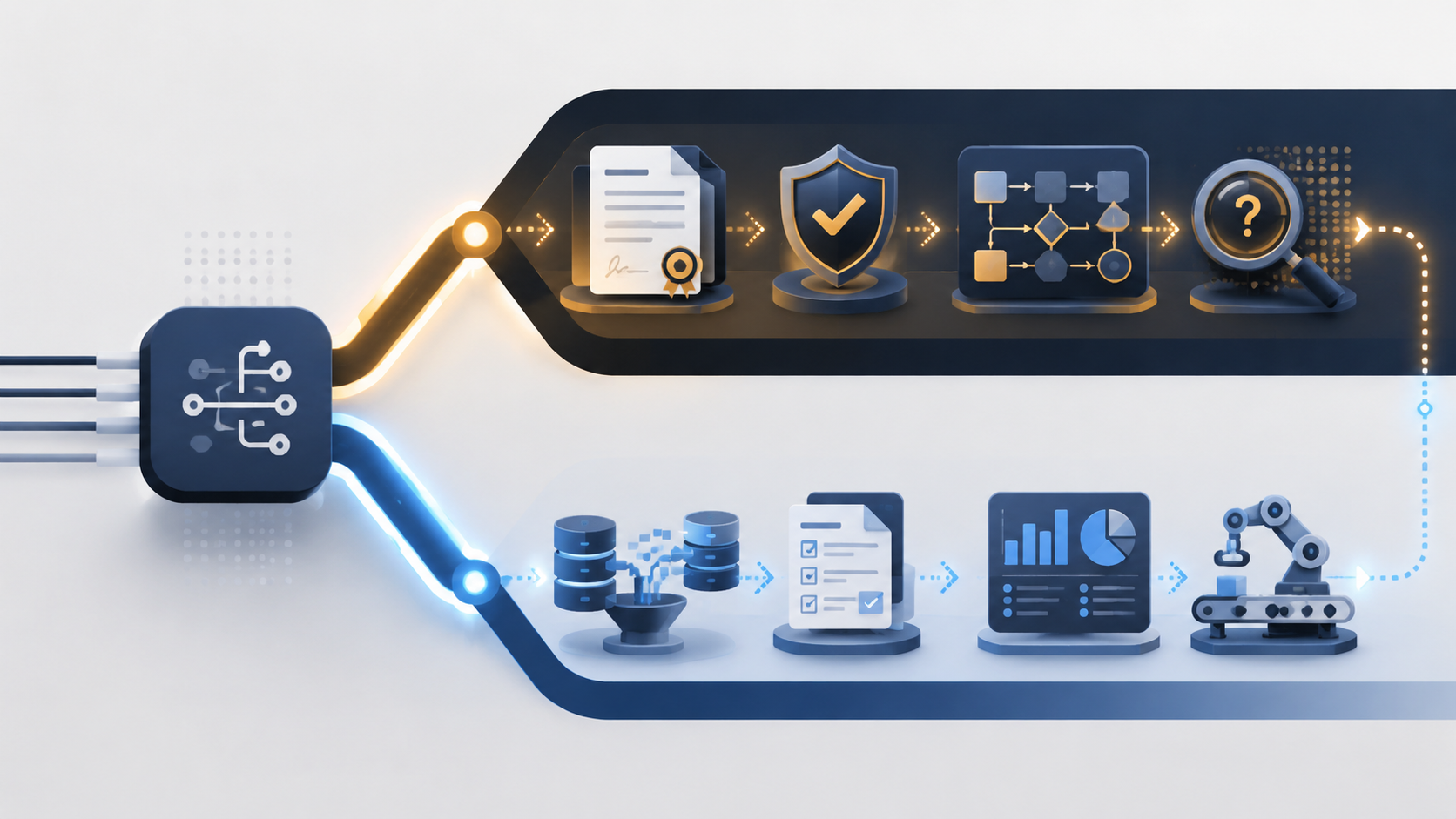
The practical version of “Moonshot Kimi K3 vs Claude for supply chain AI” is not a beauty contest between model families. It is a routing decision. One queue contains high-volume jobs with explicit acceptance criteria: generate a SQL patch, normalize supplier names, draft a standard purchase order clause, explain yesterday’s fill-rate variance, retry a failed EDI transformation. Another queue contains work where a wrong answer can become a contract exposure, compliance breach, bad allocation decision, or executive narrative that misstates reality.
Kimi K3 changes the economics of the first queue. Moonshot lists K3 at $3 per million input tokens and $15 per million output tokens; Anthropic lists Claude Fable 5 at $10 and $50 respectively, putting K3 roughly 70% below Fable 5 on list token price before enterprise discounts enter the negotiation [1][2]. Claude still carries the stronger evidence base for broad complex knowledge work, and it has at least one public supply-chain operations story with measurable results. That combination makes the architecture question more useful than the winner question.
Start With The Workload, Not The Leaderboard
A supply chain AI stack does not run one kind of task. It runs planning explanations, contract review, invoice matching, procurement drafting, demand history analysis, customs document extraction, supplier email triage, KPI reporting, and the glue code that keeps all of it moving. Flattening terminal benchmarks, reasoning tests, vision scores, and token prices into a single rank hides the thing architects actually need to know: which model reduces cost per successful task without moving risk into the review queue.
The benchmark split is not random. In comparisons reported by Artificial Analysis and LLM-Stats, Claude Fable 5 wins more shared benchmarks overall, while Kimi K3 is stronger on several automation-relevant measures: Terminal-Bench 2.1 by 3.7 points, SWE-Marathon by 7.0 points, and BrowseComp by 3.2 points against Fable 5 [3][4]. Those are not “supply chain” benchmarks, and they should not be treated as proof that K3 will outperform Claude inside a procurement desk. They do suggest a shape of work: terminal use, agentic coding, long-running task execution, and web-style retrieval workflows.
Claude’s counterweight is the ceiling on ambiguous knowledge work. LLM-Stats reports Fable 5 ahead of K3 on HLE-Full by 9.8 points, ahead across 8 of 12 vision benchmarks, and ahead by 92 Elo on GDPval-AA [4]. Those categories matter when the task is not “produce a script that passes tests,” but “read these documents, understand which obligations conflict, and explain the operational consequence.”
Both sides also have large-context capability. Kimi K3 and Claude Fable 5 are both described with 1 million-token context windows, which means the basic ability to ingest long supplier contracts, regulatory packs, demand histories, or multi-site incident logs is not the differentiator by itself [1][2]. The differentiator is what the model does after ingestion: routine transformation, risky interpretation, or something in between.
Where K3 Should Own The Queue
Kimi K3 belongs first in places where the output can be checked cheaply and the task can be retried without turning a planner into a forensic analyst. That is not a small category. A modern supply chain platform has thousands of bounded jobs that are expensive only because they happen constantly.
| Supply chain workload | Why K3 is a strong first route | What must be measured |
|---|---|---|
| Data pipeline scripting | Terminal and coding strength maps well to SQL, Python, dbt, API glue, and validation scripts. | Pass rate, rollback rate, human patch time, failed job reruns. |
| Routine procurement automation | High-volume purchase requests, supplier follow-ups, and intake classification are bounded when policies are explicit. | Correct routing, exception rate, cycle-time reduction, buyer review burden. |
| Standard contract templates | Template drafting and clause population can be constrained to approved language libraries. | Deviation from approved language, legal escalation rate, reviewer edits. |
| KPI reporting | Recurring commentary on service level, inventory, forecast error, and supplier performance can be generated from governed metrics. | Metric fidelity, explanation accuracy, analyst correction time. |
| Repeatable exception workflows | Known exception categories can be triaged when decision trees and escalation rules are explicit. | Triage accuracy, wrong-queue rate, aging exceptions, rework. |
The strongest K3 case is not that it is cheaper on paper. It is that cheaper tokens can be spent against work where the organization already knows how to score the result. A failed transformation script can be caught by tests. A misclassified procurement intake can be sampled. A generated KPI narrative can be compared to the governed metric layer. If the retry loop is visible, the lower list price has somewhere to become real savings.
This is also where K3’s agentic evidence is most relevant. VentureBeat reported that K3 completed a 48-hour autonomous chip-design task covering architecture, optimization, and verification [5]. That is not a supply chain deployment, and it should not be promoted as one. The useful inference is narrower: a model that can sustain long-horizon technical work may be a good candidate for supply chain automation jobs that require planning, tool use, checking intermediate outputs, and continuing without a human at every step.
For teams already considering K3 beyond this comparison, the broader vendor and workload context can sit elsewhere. A deeper profile of Moonshot AI’s Kimi K3 for supply chain is the better place to evaluate data sovereignty, procurement fit, and operating constraints. In this comparison, the point is simpler: K3 should get the first call when the job is bounded, frequent, testable, and cheap failure is designed into the workflow.
Where Claude Should Remain The Default
Claude’s strongest claim in supply chain AI is not just benchmark breadth. It is evidence that a Claude-based workflow has operated against supply chain exceptions with reported performance improvements. Gmelius describes a DoorDash supply chain operations deployment with a 44% handle-time reduction on exceptions, 97% triage accuracy, and shift-end reporting reduced from 45 minutes to 8 minutes [6]. It is one public customer story, not a universal performance guarantee. Still, it is closer to the work supply chain leaders actually run than a general-purpose leaderboard.
Claude should own tasks where the first answer is expensive to distrust. High-stakes contract and SLA review is the obvious category. If a model misses an indemnity carveout, misreads a service-credit trigger, or treats a renewal notice as optional when it is binding, the cost does not show up as token spend. It shows up as legal review escalation, supplier friction, and sometimes a lost negotiating position.
Regulatory and compliance work falls into the same bucket. A model can summarize sanctions language, customs requirements, forced-labor documentation, or dual-use material constraints, but the system design should assume human review for critical decisions. Anthropic also states that Claude Fable 5 falls back to Opus 4.8 in about 5% of sessions on flagged categories such as cybersecurity, biology, and distillation [2]. Most routine supply chain work will not touch those boundaries. Screening, restricted materials, and compliance-adjacent queries might, so the fallback behavior belongs in the architecture notes rather than in a footnote after launch.
Vision-heavy document interpretation also leans Claude. Supply chain document AI is full of scanned bills of lading, certificates, packing lists, inspection photos, customs forms, and supplier PDFs that were never designed for clean parsing. K3’s context window helps with volume, but Fable 5’s reported advantage across most shared vision benchmarks makes Claude the safer first route when the job is image-heavy and the consequence of misreading a document is material [4]. For adjacent document workflow design, AI document intelligence for supply chain content workflows is the better expansion path.
The last Claude category is ambiguous executive analysis. When a chief supply chain officer asks why inventory is up while service is down, the model has to separate accounting timing, demand mix, supplier reliability, planning parameter drift, promotion effects, and regional execution issues. That is not a KPI caption. It is a reasoning task with a political afterlife. The right model is the one that gives reviewers fewer subtle mistakes to catch.
Cost Per Successful Task Beats Cost Per Token
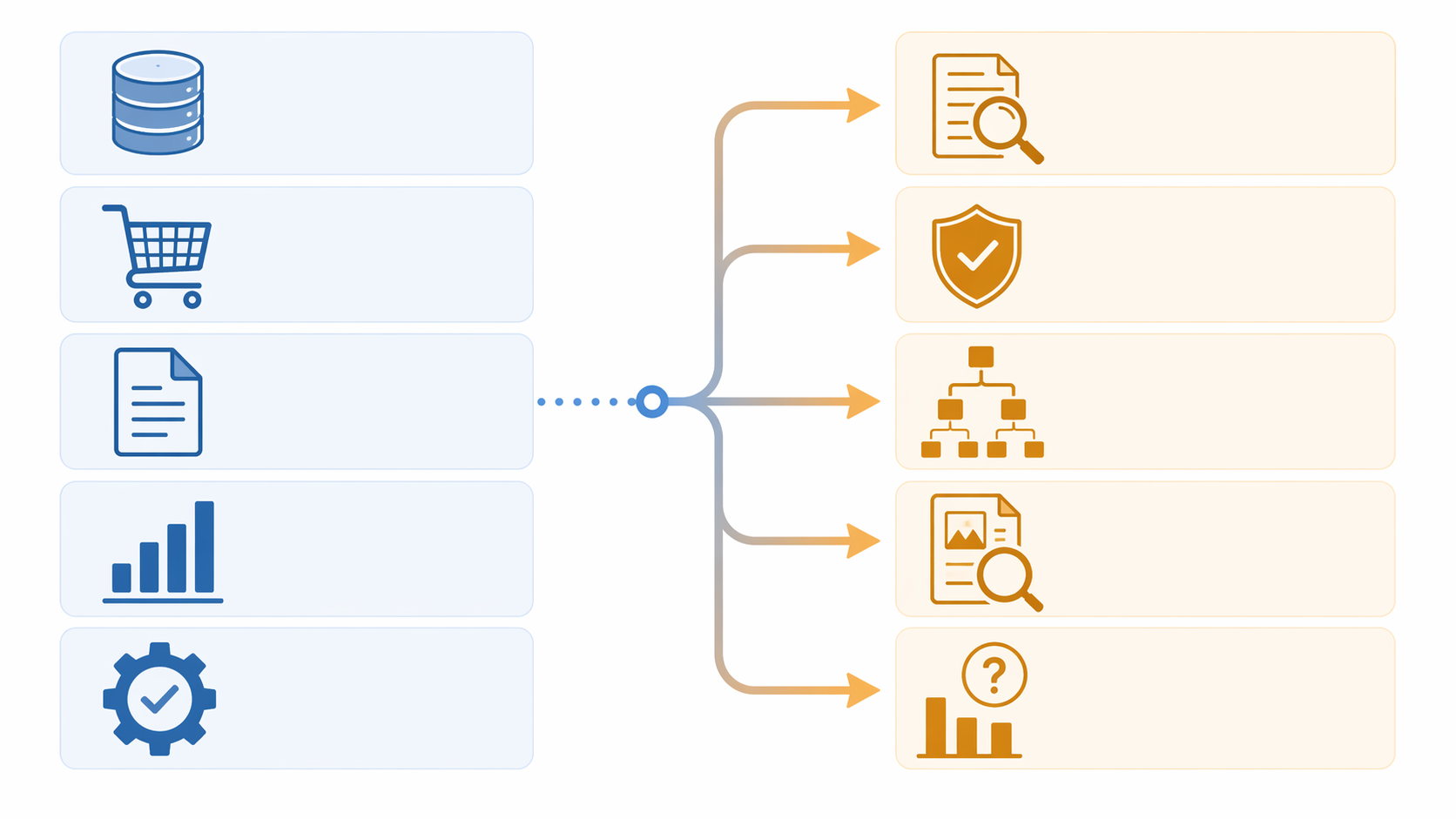
Token price is the visible number in procurement. It is not the operating cost. The operating cost is closer to: model spend plus retries plus human review plus escalation plus the downstream cost of mistakes. K3’s price advantage matters most when those other terms stay controlled.
| Cost driver | What it means in a supply chain workflow | Model implication |
|---|---|---|
| List token price | The direct API or inference cost of processing inputs and outputs. | Strongly favors K3 against Fable 5 at list prices. |
| Benchmark fit | Whether the model is strong at the task shape: coding, terminal work, reasoning, vision, or document analysis. | Splits ownership by workload rather than vendor. |
| Retry rate | How often the workflow must be rerun because output fails validation or review. | Can erase cheap-token savings if failures are frequent. |
| Review burden | How much human time is required to trust or correct the answer. | Favors the model with higher accuracy-per-attempt on risky tasks. |
| Escalation rule | When the task moves to another model or a human reviewer. | Determines whether routing saves money or just adds latency. |
| Error consequence | The cost of a wrong answer after it leaves the AI system. | Overrides token economics for contracts, compliance, and critical decisions. |
A hypothetical example makes the difference clear. Suppose a procurement operations team uses an LLM to classify intake requests and draft the first supplier response. If K3 processes most requests cheaply, passes policy checks, and escalates only edge cases, the savings compound with volume. If the same workflow creates many ambiguous drafts that buyers must rewrite, the token bill still looks good while the operating metric gets worse.
Now move the same logic to an SLA dispute. A cheaper first pass is not useful if legal, procurement, and operations all spend time checking whether the model understood the clause. Here, cost per successful task depends on accuracy-per-attempt. Claude can be more expensive per token and still cheaper in the workflow if it reduces review time, catches more obligations, and produces fewer escalations.
This is why pilots often mislead. A pilot counts prompts and unit costs. Production counts reruns, queue aging, exception leakage, reviewer confidence, and the amount of work quietly pushed back onto analysts. The model that wins the demo is not always the model that keeps the Monday morning backlog down.
The Routing Layer Is The Architecture, Not A Compromise
The cleanest design is a routing layer that assigns work by risk, ambiguity, and measurability. K3 handles bounded automation by default. Claude handles ambiguous reasoning, compliance-sensitive review, vision-heavy interpretation, and executive analysis. Humans remain in the loop where the organization would not trust an autonomous decision even if the benchmark score looked attractive.
That last point matches where supply chain AI adoption appears to be in 2026. RELEX reports that 67% of supply chain leaders are more confident in AI than they were last year, but only 10% trust AI for critical decisions without human review [7]. The gap between confidence and autonomy is exactly where routing belongs. The system can automate more work without pretending every task deserves the same level of review.
- Route to K3 when the task is high-volume, bounded, text- or code-heavy, governed by explicit rules, and scored by automated checks or low-cost sampling.
- Route to Claude when the task is ambiguous, high-stakes, contract-heavy, compliance-sensitive, vision-heavy, or likely to influence executive decisions.
- Escalate from K3 to Claude when validation fails, confidence is low, policy terms are missing, the document class is unfamiliar, or the request crosses a defined risk threshold.
- Escalate from either model to a human when the output changes obligations, approves an exception, affects a regulated shipment, or commits the organization externally.
- Log every route, retry, correction, and escalation so model mix can change when better evidence arrives.
The routing layer also protects against vendor evidence changing. Kimi K3 was released on July 16, 2026, and Moonshot says the open-weight release is scheduled for July 27, 2026 [1]. Until weights are available, independent reproduction of K3’s full claims is limited. After release, GPU-rich organizations may be able to self-host and reduce API exposure for high-volume automation, but only if they already have the infrastructure and operating discipline to run large-scale inference. K3 is described as a 2.8 trillion-parameter mixture-of-experts model with 16 of 896 experts active, so self-hosting should not be treated as free just because the weights become available [1].
Enterprise pricing can move the boundary too. The 70% gap against Fable 5 is a list-price comparison, not the last word after committed spend, volume tiers, support bundles, and platform credits. The practical question is not whether K3 is cheaper in a pricing table. It is how many successful tasks K3 completes before Claude or a human has to absorb the exception.
Data Quality Can Erase Model Advantage
Model selection will not rescue a weak master-data layer. PwC reports that 87% of operations leaders say poor data quality has affected the value of digital initiatives [8]. In supply chain AI, poor data quality shows up as duplicate supplier records, stale lead times, mismatched units of measure, incomplete contract metadata, unreliable shipment milestones, and planning histories polluted by one-time events.
This matters for both K3 and Claude. K3 can generate a clean script against a dirty schema and still produce a bad operational result. Claude can reason carefully over contract and supplier data that should never have been joined. A routing layer should therefore sit beside data validation, not in place of it. The minimum production design includes source freshness checks, schema validation, policy libraries, retrieval logging, reviewer feedback, and a way to quarantine outputs when upstream data fails basic tests.
This is also where softer adoption can mislead the architecture conversation. Planners may prefer one assistant’s tone. Buyers may trust one explanation style faster. Those differences matter, especially if the system asks people to review output all day. But preference should be measured next to correction rate, cycle time, exception leakage, and decision quality. A pleasant assistant that quietly adds review work is not cheaper.
A Practical Ownership Map
For teams building a 2026 supply chain AI stack, the first routing policy can be simple enough to implement and strict enough to audit.
| Task family | Primary model | Reason |
|---|---|---|
| Data pipeline scripting and repair | K3 | Coding and terminal-oriented benchmark strengths align with testable automation. |
| Routine procurement intake, classification, and supplier follow-up drafts | K3 | High volume, bounded policy logic, and measurable routing outcomes favor lower-cost execution. |
| Standard contract template generation | K3 with legal-approved libraries | Template work is suitable when deviation controls and escalation rules are strict. |
| KPI commentary and recurring performance reports | K3 for first draft; Claude for executive ambiguity | Routine metric explanation can be bounded; cross-functional causality needs stronger reasoning. |
| Repeatable supply chain exception triage | K3 for known classes; Claude for novel or disputed exceptions | Known exceptions can be scored; ambiguous exceptions need deeper interpretation. |
| High-stakes contract, SLA, and supplier-risk review | Claude | Accuracy-per-attempt and review burden dominate token savings. |
| Regulatory, sanctions-adjacent, customs, and compliance analysis | Claude plus human review | The cost of an autonomous mistake is too high for cheap-token routing alone. |
| Vision-heavy document interpretation | Claude | Reported vision benchmark advantage makes Claude the safer first route. |
| Ambiguous executive analysis and scenario explanation | Claude | The work requires synthesis, judgment, and defensible reasoning rather than routine generation. |
Demand forecasting deserves a split rather than a single assignment. If the task is generating pipeline code, checking forecast files, explaining routine forecast-error movements, or drafting planner notes from governed metrics, K3 is a reasonable first route. If the task is interpreting whether a demand break reflects channel shift, promotion distortion, macro signal, supplier constraint, or planning behavior, Claude should take the lead. The same distinction applies to digital twins and continuous planning workflows: K3 can operate the repeatable machinery; Claude should handle the uncertain interpretation layer.
Teams comparing K3 with other frontier models can extend the same logic rather than restart the debate. The workload mapping in Kimi K3 or GPT-4.1 for supply chain AI use cases is useful because the question is still task ownership, not model identity. The model mix can change; the routing disciplines should not.
The Decision Rule
Use Kimi K3 where volume, boundedness, retry visibility, and measurable output dominate: data engineering support, routine procurement automation, standard template drafting, recurring KPI reporting, and repeatable exception workflows. Use Claude where ambiguity, stakes, reasoning depth, vision interpretation, and review cost dominate: contract and SLA review, compliance analysis, novel exception handling, executive synthesis, and document-heavy work where a subtle miss is expensive.
The organization that forces one model to own everything will either overpay for routine tokens or under-protect high-consequence decisions. The better architecture routes work by task shape, measures cost per successful task, and keeps the escalation paths explicit enough to change the mix as K3 evidence matures, Claude pricing changes, and internal review data replaces vendor claims.
References
- Kimi K3: Open Frontier Intelligence — Kimi Official Blog
- Claude Fable 5 and Claude Mythos 5 — Anthropic
- Kimi K3 vs Claude Opus 4.8 — Artificial Analysis
- Kimi K3 vs Claude Fable 5: Complete Analysis — LLM-Stats
- China's Moonshot AI releases Kimi K3, the largest open-source model ever, rivaling top U.S. systems — VentureBeat
- Claude for Supply Chain Operations: Does It Work? — Gmelius
- Supply chain AI in 2026: The numbers behind the hype — RELEX
- 2026 Digital Trends in Operations Survey — PwC
Comments
Join the discussion with an anonymous comment.