How AI Transforms Supply Chain Earthquake Disruption Planning
AI enables predictive earthquake disruption planning through multi-tier supplier mapping, aftershock forecasting, and digital twin simulation. This use case covers how the technology works, evidence from the 2024 Taiwan earthquake, representative vendors, and implementation constraints.
The useful question in ai supply chain disruption planning for earthquakes is not whether a model can name the next epicenter. It is whether the organization can change a decision before the crisis meeting: move inventory, qualify an alternate supplier, reserve capacity, re-route production, or explain to executives why a short fab pause is not short for everyone downstream.
The April 2024 Taiwan earthquake showed why that standard matters. After the 7.4 event, TSMC and UMC temporarily suspended chipmaking, and Interos cited a US-Taiwan semiconductor partnership report estimating that a significant disruption could affect up to $1.6 trillion, roughly 8% of annual US GDP.[1] Those figures are not just about the size of Taiwan's semiconductor sector. They expose how much supposedly global production still depends on a small number of places, firms, process steps, and machines that do not tolerate vibration well.
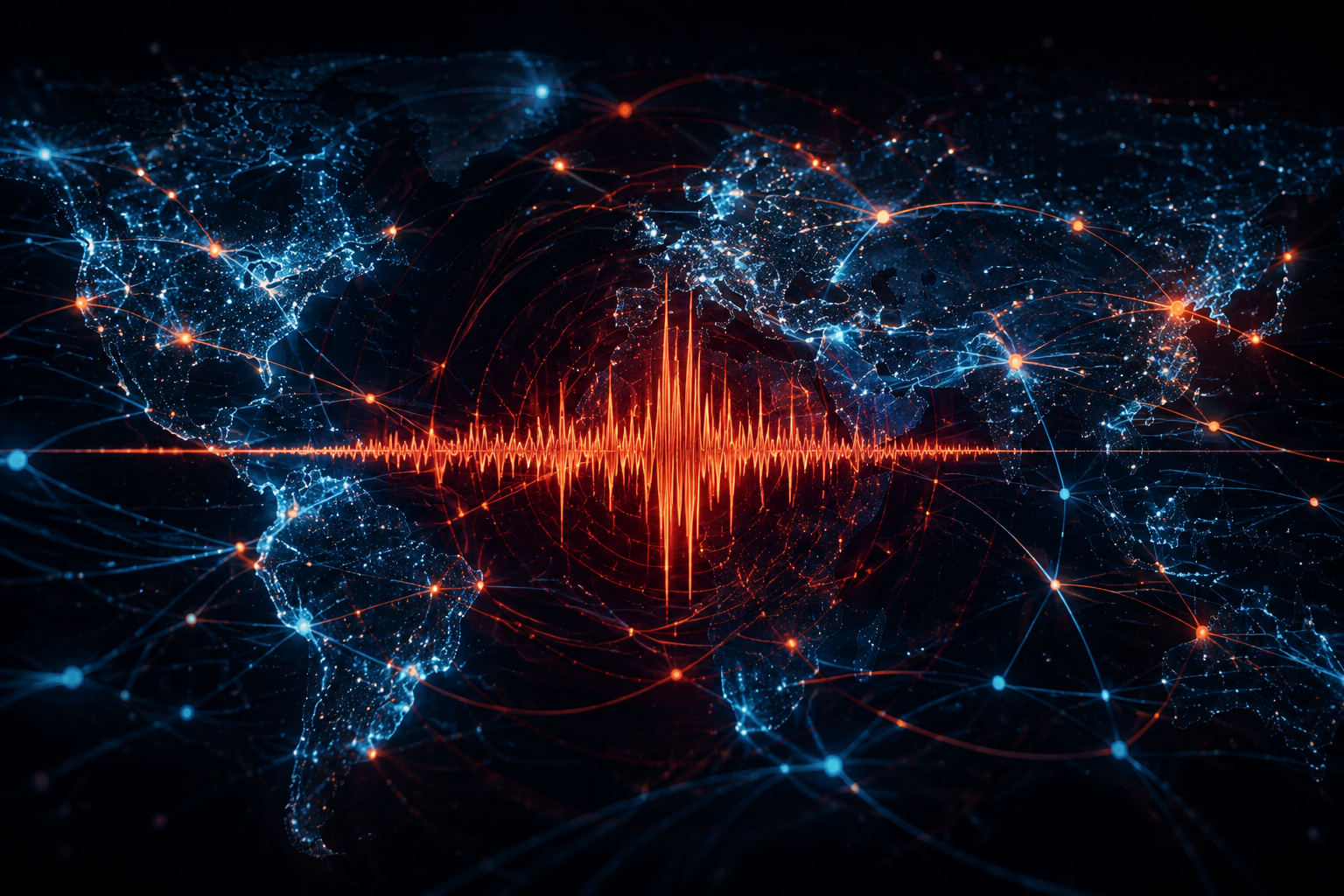
A first-tier supplier list rarely shows that shape. Interos reported that US companies maintain nearly 70,000 direct tier-1 supplier relationships with Taiwanese firms, while G7 companies have more than 315,000 tier-2 and 750,000 tier-3 connections to Taiwanese entities.[1] That is the awkward middle ground where earthquake planning usually succeeds or fails: not at the moment the floor moves, and not in the tidy annual risk register, but in the weeks when hidden concentration can still be found and contingency choices can still be tested.
Why Taiwan Changed The Planning Question
Earthquake exposure in semiconductor supply chains is easy to understate because many leading fabs are engineered for seismic regions. That is not the same as saying production is interruption-proof. Munich Re's review of major earthquake events from the 2011 Tohoku M9.0 earthquake through the 2025 Taiwan M6.0 earthquake emphasizes business interruption mechanisms that matter operationally: vibration-triggered equipment recalibration, wafer scrapping, and disruption to tools that depend on extremely tight tolerances.[2]
Those details change the risk conversation. A procurement team may see no catastrophic structural damage at a named supplier and assume the exposure is contained. A planner may hear "temporary suspension" and treat the event as a short production gap. But in chipmaking, a pause can mean tools must be checked, work in process may be lost, and upstream or downstream partners may wait for capacity that cannot be recovered evenly across product families.
That is why AI planning earns attention here. The value is not a glowing incident dashboard after the headline has already crossed the wire. The value is a live dependency model that can answer harder questions before and immediately after the event: which product lines touch the affected geography, which tier-2 or tier-3 firms matter, which alternates are actually qualified, which inventory is sitting in the wrong place, and which recovery assumption depends on a supplier nobody has called.
The Foundation Is Multi-Tier Visibility
Multi-tier supplier mapping is the first serious use case because earthquakes punish shallow maps. AI systems can ingest supplier master data, purchase orders, bills of material, shipment records, public filings, news, web signals, facility locations, and third-party relationship data, then use entity resolution and graph models to infer connections beyond direct suppliers. The output is not perfect knowledge. It is a better map of where to ask, validate, and act.
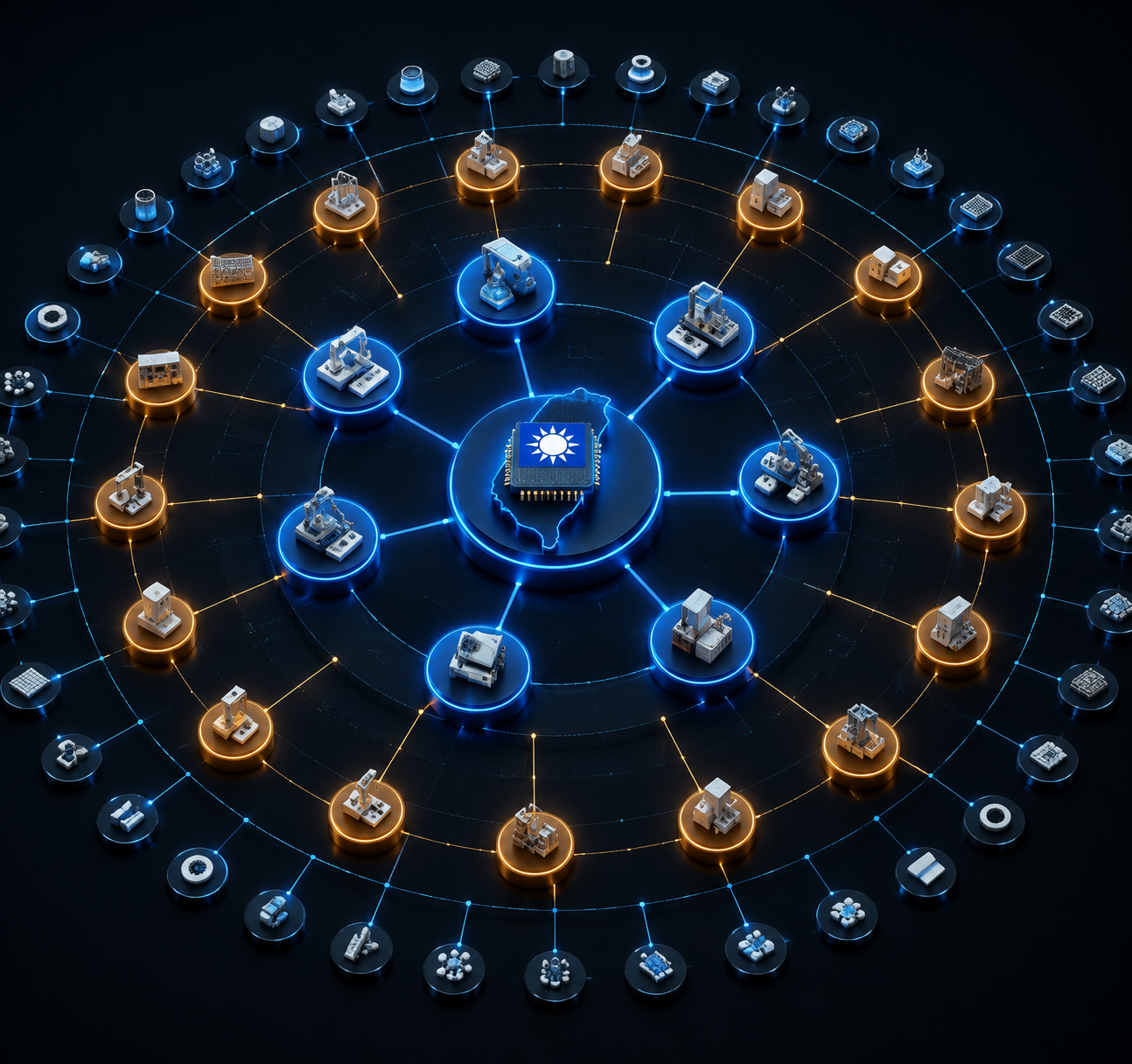
In an earthquake-exposed network, that map needs more than supplier names. It needs facility-level location, component-to-product linkage, revenue or production dependency, single-source status, tooling constraints, inventory position, approved alternates, logistics routes, and the difference between a supplier's corporate headquarters and the site that actually performs the constrained process. A supplier relationship that looks diversified at the company level may still collapse into one industrial park, one chemical input, one test house, or one calibration provider.
This is where the Taiwan numbers become uncomfortable. If G7 companies have hundreds of thousands of tier-2 and tier-3 connections to Taiwanese entities, then direct contracting data alone is not enough for semiconductor, electronics, automotive, or pharmaceutical risk planning.[1] A business continuity team does not need to know every obscure node with equal precision. It does need to know which hidden nodes can stop a high-margin product, a regulated product, or a customer commitment with penalties.
Representative platforms in this category include Interos, Everstream Analytics, Resilinc, Z2Data, and Sphera. They should be evaluated less as earthquake prediction engines and more as systems for dependency discovery, event monitoring, supplier intelligence, and scenario analysis. The practical test is whether the tool can connect an affected geography to a specific product, supplier tier, and decision owner fast enough to change the plan.
For readers comparing this problem with other natural hazards, the same mapping discipline appears in AI flood disruption planning and hurricane supply chain planning. The earthquake version is less forgiving on advance warning, which makes pre-built supplier visibility more important, not less.
What The Map Must Support
| Planning question | Why AI helps | Decision it can change |
|---|---|---|
| Which products depend on the affected region? | Graph models connect suppliers, sub-suppliers, parts, facilities, and products. | Prioritize customer allocations and production sequencing. |
| Which supplier tiers are exposed? | Entity resolution and relationship inference reveal non-obvious tier-2 and tier-3 links. | Start validation calls beyond the direct supplier list. |
| Which alternates are usable? | AI can compare approved sources, capacity constraints, geography, and qualification status. | Reserve alternate capacity before the market tightens. |
| Where should inventory move? | Scenario models compare inventory position against likely disruption paths. | Pull forward, hold, or reposition stock based on exposure rather than anxiety. |
| Which assumptions need executive attention? | Risk scoring highlights dependencies with high revenue, lead-time, or compliance impact. | Escalate the few constraints that can change financial outcomes. |
From Seismic Signal To Supplier Action
After an earthquake, the first operational need is not a perfect loss estimate. It is a fast, defensible sorting mechanism. Which facilities are likely inside the impact zone? Which aftershock areas deserve attention? Which suppliers need direct confirmation now, and which can wait? Which orders should be frozen until the picture clears?
AI-based monitoring systems can combine seismic feeds, news, government notices, port and airport signals, supplier communications, social media, and logistics data. The better systems then connect those signals to the multi-tier dependency graph rather than treating the earthquake as a generic event on a map. That connection is what turns monitoring into planning.
The workflow is usually simple in outline and difficult in execution:
- Detect the seismic event and define the affected geography.
- Match the event to supplier facilities, logistics lanes, utilities, ports, and critical sub-tier nodes.
- Rank exposed parts and products by revenue, customer criticality, lead time, compliance, and available substitutes.
- Trigger supplier validation requests and separate confirmed disruption from probable exposure.
- Run contingency scenarios for inventory, sourcing, production sequencing, and customer allocation.
The distinction between confirmed disruption and probable exposure matters. If a tool treats every supplier in a broad radius as equally impaired, planners drown in false urgency. If it waits only for confirmed supplier statements, it is late. The useful middle is a ranked action queue: call these suppliers first, protect these orders, simulate these alternates, and brief executives on these assumptions.
Aftershock Forecasting Is A Speed Advantage, Not Certainty
Aftershocks create a second planning problem. Even if a supplier restarts, another significant shock can interrupt recovery, damage already stressed infrastructure, or force renewed evacuations and inspections. Traditional aftershock models can take hours to days to run; machine-learning models developed by the British Geological Survey, the University of Edinburgh, and the University of Padua produce risk assessments in seconds, according to BGS's November 2025 report.[3]
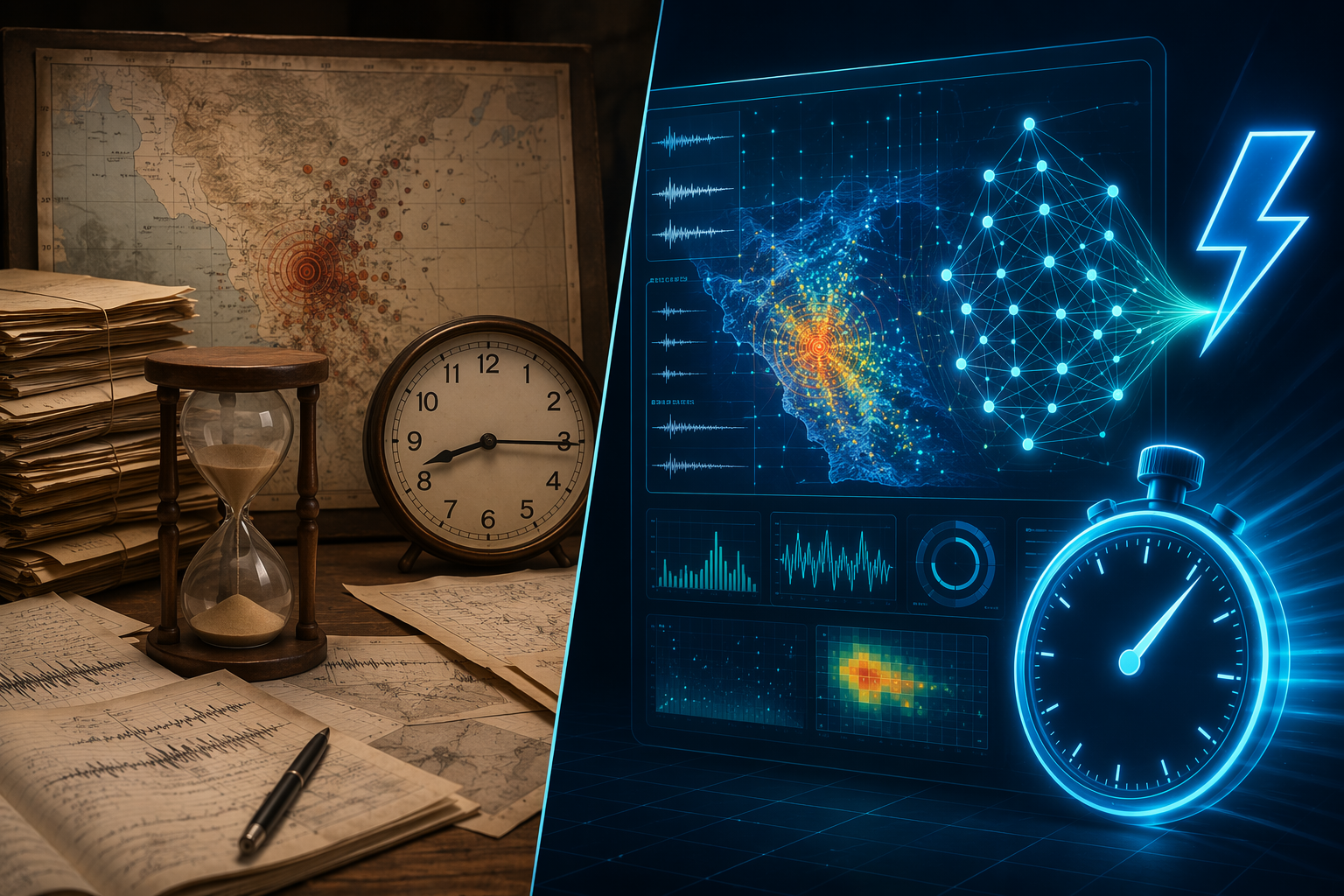
For supply chain teams, that time compression is more useful than it may sound. Hours matter when a planner is deciding whether to release a high-value shipment, whether to move safety stock out of a nearby warehouse, or whether to ask a contract manufacturer to shift a build before capacity disappears. Days matter when alternate suppliers are shared across competitors and reservations become political as well as operational.
This should still be framed correctly. AI aftershock tools do not make the earthquake sequence safe to ignore, and they do not eliminate field verification. They accelerate risk assessment after a known event. That is a real operational improvement, but it is different from claiming that commercial supply chain systems can reliably predict the next damaging earthquake before it happens.
The same boundary applies to broader earthquake forecasting research. A University of Texas at Austin AI system achieved 70% accuracy in a seven-month China trial, as reported by PreventionWeb.[4] That is promising scientific work. It is not yet a production-grade planning basis for a procurement team deciding buffer stock, supplier qualification, or quarterly capacity commitments. Readers who want the forecasting question separated from the supply chain workflow can go deeper in Can AI Predict Earthquakes in Time to Protect Your Supply Chain?.
Digital Twins Turn Exposure Into Rehearsal
Once the map and monitoring layer exist, digital twin simulation becomes the next useful capability. A supply chain digital twin can model facilities, suppliers, transportation lanes, inventory, demand, lead times, production constraints, and substitution rules. The earthquake scenario is then run against the operating network before the real disruption determines the answer expensively.
The simulation questions are practical:
- If a Taiwanese foundry pauses a constrained process for several days, which finished goods miss customer dates first?
- If a test or packaging supplier is unavailable, does the alternate have qualified capacity or only contractual permission?
- If inventory is pulled forward, which warehouse, region, or product family becomes short next?
- If production shifts to another site, which tooling, recipe, labor, quality, or regulatory constraint blocks the transfer?
- If customers must be allocated, which rules protect strategic accounts without creating avoidable compliance or margin damage?
The measurable evidence for digital twins is still more adjacent than earthquake-specific. One published account says a steel manufacturer using AI-powered digital twins uncovered risks 12 weeks ahead, improved EBITDA by 2 percentage points, and cut inventory by 15%, citing Simio studies.[5] That is relevant because it shows simulation can expose risk before disruption costs appear. It should not be overstated as direct proof that the same gains will occur in semiconductor earthquake planning without source-checking the original Simio case and the operating context.
Still, the logic transfers. Earthquake planning needs a way to test decisions while uncertainty is still tolerable. A digital twin can compare a conservative inventory pull-ahead against the cash and obsolescence cost, or test whether dual sourcing improves resilience if both suppliers depend on the same tier-3 process. It can also reveal that an impressive alternate-source plan fails because the alternate depends on the same tooling supplier, inspection lab, specialty gas, or port corridor.
A Credible Earthquake Scenario Should Be Specific
A weak scenario says, "Taiwan supplier disruption." A useful scenario names the constrained process, affected facilities, recovery assumption, inspection delay, inventory position, substitute part rules, customer allocation policy, and executive decision threshold. The model does not need theatrical devastation. It needs the uncomfortable operational details that determine whether a temporary event becomes a missed quarter.
| Scenario input | Poor version | Better version |
|---|---|---|
| Supplier impact | Major supplier disrupted | Specific fab, test house, packaging site, or sub-tier process unavailable or capacity-reduced |
| Recovery | Back online soon | Restart depends on inspection, recalibration, work-in-process loss, and aftershock risk |
| Inventory | Enough safety stock | Stock by product, region, customer commitment, shelf life, and substitution rule |
| Alternate source | Dual source exists | Alternate is approved, has available capacity, and does not share the same hidden dependency |
| Decision trigger | Monitor situation | Move inventory, reserve capacity, change build plan, or escalate when a defined exposure threshold is crossed |
Where AI Adds Value Before The Crisis Meeting
The best earthquake disruption planning use cases have a common feature: they change a pre-crisis or early-crisis action. They do not merely produce a more attractive heat map.
- Supplier discovery: AI surfaces sub-tier links and concentration patterns that direct procurement teams where to validate first.
- Exposure ranking: Models connect facilities to parts, products, customers, revenue, and lead times so teams do not treat all alerts equally.
- Event monitoring: Signal detection ties earthquakes, aftershocks, infrastructure notices, and supplier updates to actual dependencies.
- Aftershock assessment: Faster risk estimates help planners decide whether restart, shipment, and inventory moves are prudent.
- Contingency testing: Digital twins compare sourcing, inventory, logistics, and production choices before they become emergency improvisation.
Government procurement offers a useful parallel on scale, even though it is not earthquake-specific. The US Defense Logistics Agency reported using AI supplier risk models to analyze 43,000 vendors and identify more than 19,000 as high-risk.[6] The important lesson is not the exact risk category; it is that large supplier populations can be triaged computationally when manual review would be too slow to support continuity decisions.
For an earthquake-exposed manufacturer, that triage should feed a human decision process. Procurement validates the supplier facts. Planning tests production and inventory options. Quality confirms whether alternates are usable. Finance frames the cost of buffer stock or expedited qualification. Business continuity owns the executive view. AI shortens the distance between the event and the decision; it does not remove accountability for the decision.
Implementation Constraints That Decide Whether It Works
The main failure mode is not that the model is insufficiently clever. It is that the organization has not connected the model to data rights, supplier validation, planning rules, or decision authority. Earthquake disruption planning is unforgiving because the event gives little notice. If the first serious data-quality debate starts after the quake, the tool becomes an expensive search box.
Several constraints deserve attention before vendor selection:
- Facility accuracy: Corporate supplier addresses are not enough; the model needs the production, test, packaging, warehouse, and logistics sites that matter.
- Sub-tier cooperation: AI can infer hidden links, but critical dependencies still need supplier confirmation and contractual disclosure where possible.
- Planning-system integration: Risk scores must connect to ERP, supply planning, inventory, quality, and supplier management workflows.
- Scenario governance: Someone must define which assumptions are approved for executive decisions and which are only exploratory.
- Model humility: Forecasts, inferred relationships, and event signals need confidence levels, not false precision.
Vendor demonstrations should therefore avoid the easy version of the problem. A good proof of concept should use a real bill of materials, named facilities in seismic zones, known single-source parts, realistic qualification limits, and at least one scenario where a direct supplier appears safe but a sub-tier dependency creates exposure. If the platform cannot explain why it ranked one supplier above another, the continuity team will struggle to defend the action when the recommendation is costly.
This is also where knowledge graph-based supply chain visibility becomes more than a technical architecture choice. Earthquake planning depends on relationships: supplier to facility, facility to part, part to product, product to customer, customer to revenue, and all of them to geography and time.
The Investment Judgment
AI can meaningfully improve earthquake supply chain preparedness beyond traditional risk registers and insurance buffers when it is funded for the right job. The business case is strongest for multi-tier mapping, event monitoring, faster aftershock risk assessment, and digital twin contingency testing. Those capabilities help teams find hidden concentration, compress assessment time, and rehearse choices while there is still room to act.
Fund the capabilities that change decisions before and immediately after the event; do not justify the investment on precise earthquake prediction. Current research is promising, and faster aftershock modeling is operationally valuable, but commercial supply chain teams should not build production planning around the claim that AI will tell them exactly when and where the next damaging quake will occur.
References
- Navigating Semiconductor Supply Chain Disruptions: Insights from Taiwan's Earthquake, Interos
- Earthquakes – the key challenge for insuring the semiconductor industry in Asia, Munich Re
- New research shows artificial intelligence earthquake tools forecast aftershock risk in seconds, British Geological Survey
- AI-driven earthquake forecasting shows promise in trials, PreventionWeb
- AI-Powered Digital Twins: Transforming Scenario Planning and Resilience, aiinthechain.com, October 10, 2025
- Utilization of Artificial Intelligence (AI) to Illuminate Supply Chain Risk, Defense Logistics Agency
Cited evidence
- How AI Plans for Earthquake Disruptions in Supply Chains
This article examines how AI techniques—predictive analytics, digital twins, agentic AI, and NLP—can transform earthquake disruption planning from reactive crisis response to proactive multi-tier resilience. It covers measurable outcomes from real events and the critical data visibility prerequisites for deployment.
- How AI Transforms Airport Disruption Logistics Planning
This use case examines how AI systems predict delays, reallocate resources, and coordinate turnaround logistics during airport disruptions, with documented 25–30% cost reductions and 12–18% fewer delay minutes from early adopters.
- How AI Scenario Planning Tackles Military Strike Supply Chain Disruptions
Military strike disruptions cascade across multiple tiers and corridors simultaneously, unlike typical supply chain risks. This article explains how AI-powered scenario planning—using digital twins, geopolitical signal ingestion, and automated contingency playbooks—helps companies simulate these impacts ahead of time and execute alternative sourcing and routing strategies within hours.
Spotted something inaccurate or incomplete in this entry? ChainSignal reviews corrections and additional evidence before publishing an update — this is not a public comment thread.
Flag an inaccuracy / submit evidence for this entry →