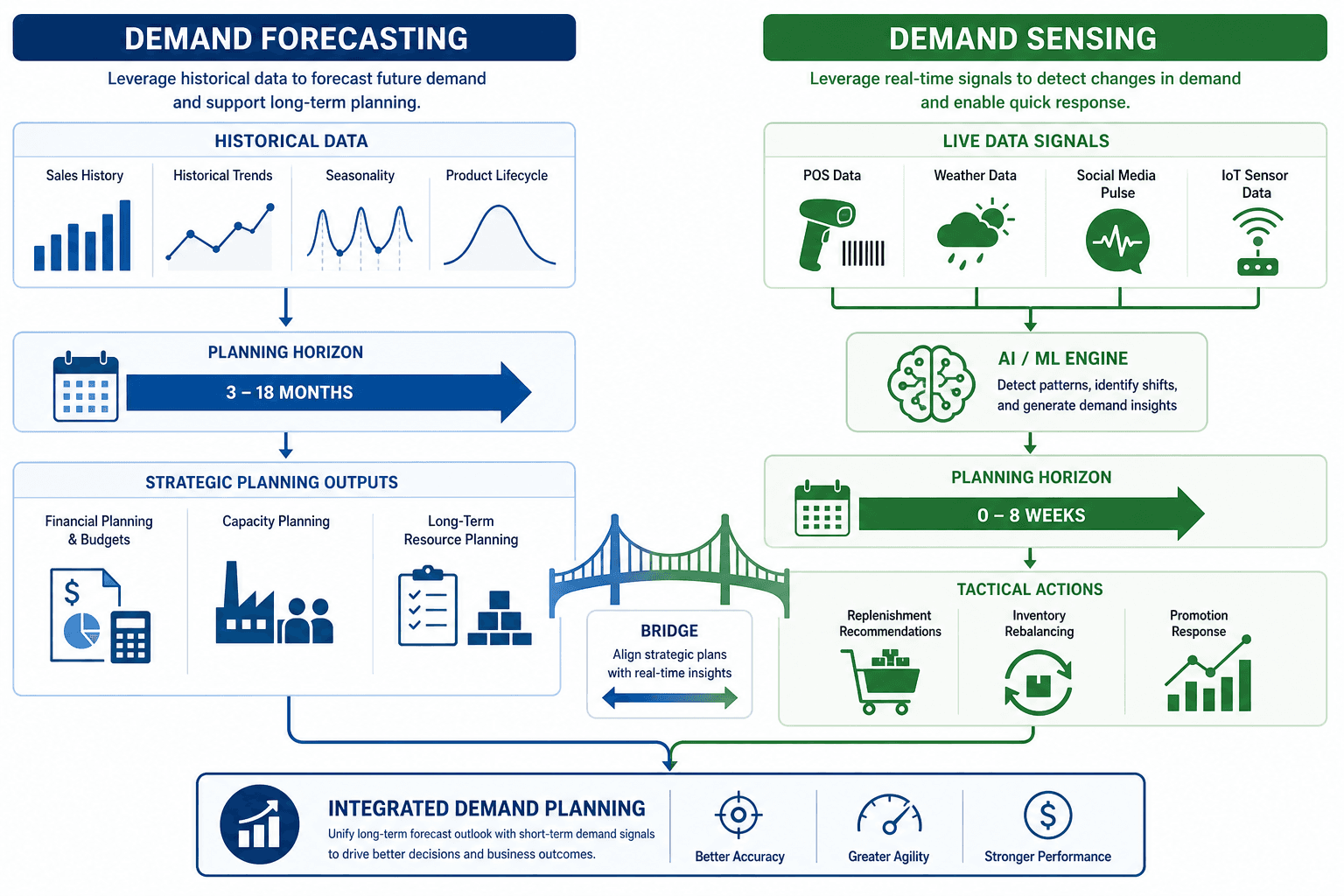
The Reactive-to-Proactive Journey
For years, the supply chain planning conversation has been trapped in a static binary: demand sensing versus demand forecasting. Executives treat them as two competing methods, when in reality they represent sequential rungs on a ladder from reactive to proactive demand intelligence. The question is not which one to pick, but how to move through the stages that build from one to the next.
This article lays out a four-stage maturity model — from traditional forecasting through AI-enhanced forecasting, demand sensing integration, and finally autonomous planning — so that supply chain leaders can locate their organization’s current position and chart a practical path forward. Each stage demands distinct data infrastructure, process design, and organizational readiness. Skipping stages is possible, but the risks compound.