
The short-squeeze setup around SpaceX’s AI supply chain starts in a procurement file, not a trading terminal. By July 22, 2026, the same Colossus infrastructure program that made xAI look unusually fast also made SpaceX stock unusually sensitive to operational news: GPU delivery clearance, HBM allocation, power approvals, and regulatory constraints now read like market-moving inputs because the public float is thin and the short base is large.
That does not make a squeeze guaranteed. It does make the setup more structurally interesting than a simple bullish or bearish argument about AI earnings. Colossus turned scarce physical capacity into visible evidence of execution. Once SpaceX became a public stock in June 2026, those same scarcity signals began to matter to lenders, short sellers, index funds, and analysts trying to price a company whose operating fundamentals were still settling.

Colossus Made Availability Legible
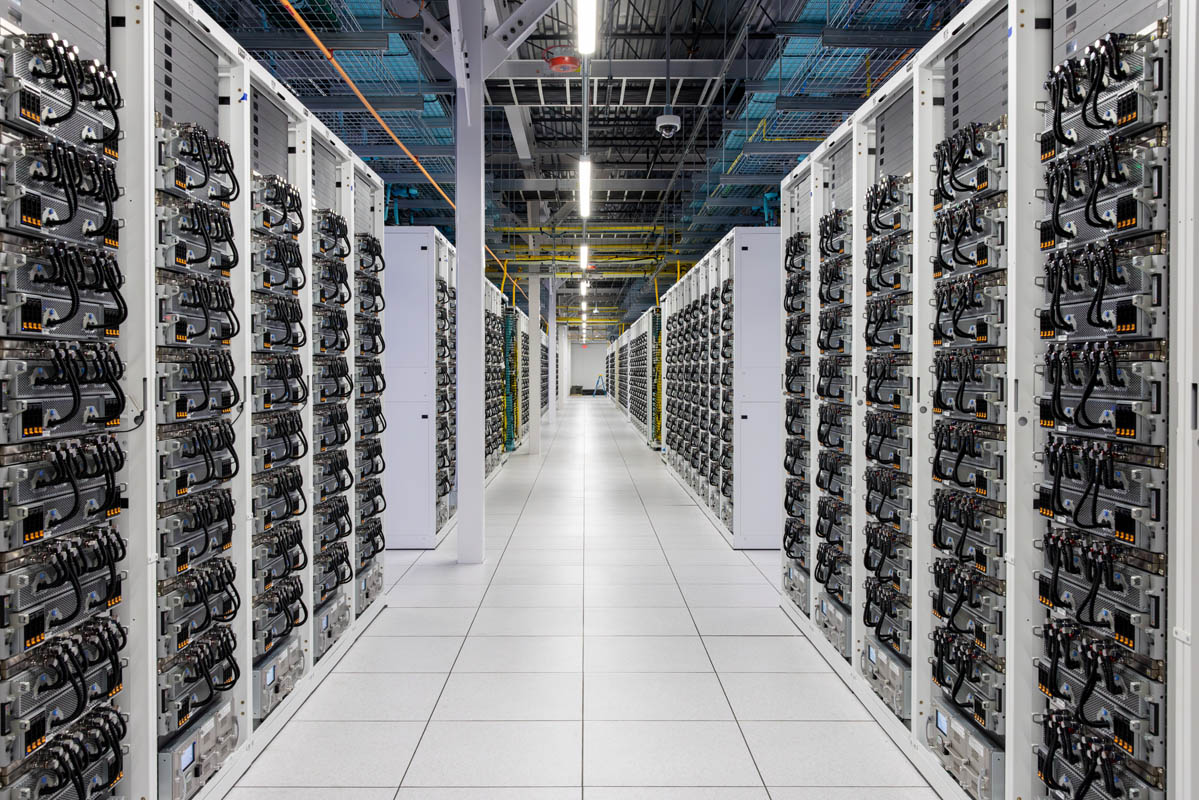
The headline number is hard to ignore: Klover.ai’s 2026 infrastructure analysis describes more than 555,000 GPUs deployed, roughly 2 GW of power secured, about $18 billion in hardware, and more than $40 billion in total compute infrastructure committed in under two years across the xAI and SpaceX-linked buildout.[1] Those numbers should be treated carefully. Klover.ai is a detailed independent analysis, not a substitute for checking company filings line by line. But as a map of the procurement chain, it captures the real issue: Colossus was not one big purchase order. It was a synchronized grab for chips, advanced memory, packaging capacity, power, cooling, buildings, batteries, and delivery windows.
Colossus 1 was reportedly deployed in 122 days, a timeline Klover.ai frames as roughly 3–5x faster than typical hyperscaler build schedules.[1] The useful lesson is not that every enterprise should ask its data center team to move three times faster. Most cannot. The useful lesson is that speed came from controlling constraints before they showed up as constraints. A GPU allocation is only useful if the high-bandwidth memory is already spoken for. A rack plan is only real if the power path exists. A power path is only financeable if the regulatory window is still open when the project needs it.
That is why Colossus matters beyond SpaceX. It forced a supply chain truth into public view: in AI infrastructure, availability is not a binary status from a supplier portal. It is a chain of interdependent claims on scarce capacity, each with its own lead time and its own failure mode.
The Bottleneck Was Memory Before It Was Compute
GPU counts get the attention, but high-bandwidth memory is where the procurement clock starts earlier. EnkiAI’s 2026 review says HBM3E supply was effectively sold out through 2026 before Colossus 2 broke ground, with only three major suppliers globally: SK Hynix, Micron, and Samsung.[2] Fusion Worldwide also describes GPU and HBM supply as constrained by CoWoS, HBM, and leading-edge node capacity through 2027.[3]
That timing changes the sourcing conversation. If HBM supply has to be locked 12–18 months before GPU delivery, the buyer is no longer simply ordering accelerators. The buyer is reserving a place in a memory, packaging, and board-level production sequence that competitors also need. By the time an AI project reaches formal approval, the decisive capacity may already be gone.
This is where ordinary “pre-commit earlier” advice becomes too casual. A large enterprise can pre-commit and still lose if it lacks supplier leverage, balance-sheet tolerance, forecast credibility, or executive willingness to absorb stranded capacity risk. xAI and SpaceX had affiliated-company advantages and an unusually aggressive risk posture. Smaller buyers see the same bottleneck, but they do not see the same allocation desk.
For more context on why these bottlenecks now span far beyond GPUs, see ChainSignal’s analysis of AI data center supply chain bottlenecks and AI chip supply chain investment trends.
Power Was the Other Allocation
Power procurement is becoming the part of AI infrastructure where euphemisms go to die. Goldman Sachs has estimated that U.S. data center power demand will exceed supply by about 10 GW annually through 2028, and that figure belongs in the same conversation as GPU allocation because an undeliverable megawatt can strand an otherwise successful hardware buy.[4]
Colossus moved through that problem with a workaround most companies should not mistake for a playbook. Klover.ai describes the buildout as relying on mobile trailer-mounted gas turbines, Tesla Megapacks for load smoothing, and pre-negotiated Nvidia allocation.[1] The mobile turbine path was especially time-sensitive: the regulatory window was later restricted by EPA action, making it an arbitrage that was available at a particular moment rather than a durable sourcing method.[1]
Megapacks matter here not because batteries solve the whole power problem, but because they can help buffer load and smooth grid interaction while the larger power stack catches up. The procurement implication is blunt: AI infrastructure sourcing now has to coordinate semiconductor supply, utility interconnection, backup generation, storage, permitting, and public scrutiny on overlapping timelines. A delay in any one of those lanes can consume the advantage won in another.
| Constraint | Why it mattered for Colossus | Why it matters to markets |
|---|---|---|
| GPU allocation | The buildout required early access to large Nvidia capacity. | Confirmed deliveries can be read as evidence that execution is still on schedule. |
| HBM supply | HBM3E had to be committed well before GPU delivery. | Memory allocation becomes a forward signal, not a back-office detail. |
| Power access | The project needed enough deliverable power to make the hardware usable. | Permits, turbines, grid approvals, and battery deployment can affect perceived capacity. |
| Regulatory timing | Mobile turbines were useful while the window was open. | A rule change can turn an operating workaround into a stranded assumption. |
| Affiliated-company leverage | Tesla, SpaceX, xAI, and supplier relationships created options most buyers lack. | Markets may price those advantages even when they are not broadly replicable. |
The Non-Replicable Part Is the Point
Colossus is tempting to package as a managerial-speed story. That misses the procurement mechanics. The faster timeline was not produced by a universal method that any CIO can copy with enough urgency. It depended on unusual supplier access, a willingness to commit capital early, affiliated-company infrastructure, regulatory timing, and a tolerance for operational ambiguity that would make many public-company governance teams pause.
This matters because the financial market does not have to believe the playbook is replicable. It only has to believe SpaceX can keep exploiting its own version of it. A procurement advantage that is not generalizable can still be tradable if it is visible, scarce, and tied to a company with limited available shares.
That is also where lazy “AI bubble” commentary fails. There may be hard questions about monetization, depreciation, utilization, and future earnings; Forbes reported in June 2026 that SpaceX’s AI wing was already casting a cloud over IPO and earnings expectations in the eyes of some experts.[5] Those questions are real. But a squeeze setup can operate partly independent of whether the long-term business case is settled. It is a market-structure problem interacting with an operating-supply problem.
The Float Turned Supply Chain News Into Trading Fuel
The squeeze mechanics are fresh and should be date-stamped. SpaceX had only traded publicly since June 12, 2026, so short interest, lending conditions, and float estimates were still moving quickly as of July 22, 2026. Reuters reported on July 16 that short sellers had booked $8.7 billion in paper profits as SpaceX shares slipped toward the IPO price, citing Ortex data.[6] Those shorts are not theoretical positions waiting in a model. They are already part of the stock’s market structure.
The short-interest figures need precision because the definitions differ. Ortex put the figure at about 49% of free float loaned out, while S3 Partners put short interest at about 29% of public float, according to CNBC’s July 16 coverage.[7] Those are not interchangeable measures, but both point in the same direction: a large bearish position sitting against a constrained supply of tradable shares.
The most useful crossover number is Ortex’s estimate that every $1 move in SpaceX shares changes short-seller profit and loss by about $300 million.[6] That is the bridge from procurement to market pressure. If a cleared GPU delivery, HBM agreement, power permit, or regulatory win moves the stock by even a few dollars, the consequence is not just a price chart. It is a direct mark-to-market event for crowded short positions.
This does not require the market to become irrational. It requires a limited float, a large short base, and operational news that investors can interpret quickly. Colossus provides that news stream because the bottlenecks are concrete. Either memory is allocated or it is not. Either power access progresses or it does not. Either a regulatory constraint tightens or it loosens. Supply chain milestones become cleaner trading signals than many early-stage earnings debates.
Index Buying Adds a Mechanical Buyer
The float constraint matters even more once passive buying enters the frame. Yahoo Finance reported in July 2026 that SpaceX joined the Nasdaq-100, triggering passive fund buying.[8] That kind of demand is not the same as discretionary conviction from an active manager. Index funds buy because their mandates require exposure.
The founder lock-up extends the supply side of that pressure. A 366-day founder lock-up constrains available shares into mid-2027. Paired with a small public float and forced index demand, the lock-up means the market can face buying pressure without an immediate increase in available supply.
That is where the short squeeze prediction becomes structural rather than promotional. A squeeze does not need a perfect earnings story. It needs a mismatch between who must buy, who can sell, and who is exposed if the stock moves against them. In SpaceX’s case, the physical supply chain adds a fourth element: a steady set of operational catalysts that can change how investors judge execution before reported financials have time to mature.
What Procurement Leaders Should Actually Take From This
The wrong lesson is that enterprises should imitate SpaceX’s loopholes. The turbine window was time-limited. The supplier leverage is not normally available. The affiliated-company stack is unusual. The capital tolerance is not a standard sourcing capability.
The right lesson is that AI infrastructure procurement has become externally legible. A sourcing team may still think in terms of allocations, lead times, permits, and buffers. Markets are learning to read the same items as proof of execution or evidence of constraint.
- HBM allocation now deserves board-level attention because it can precede GPU delivery by 12–18 months.
- Power access should be treated as a procurement dependency, not only a facilities or utility issue.
- Supplier concentration risk is amplified when only a few vendors control the scarce component class.
- Regulatory timing can create temporary execution advantages that disappear before peers can copy them.
- Public-market exposure turns operational milestones into signals for lenders, index funds, and short sellers.
That last point is the uncomfortable one. Procurement leaders are used to being measured after something fails: the rack is late, the transformer queue slips, the memory allocation is insufficient, the power approval stalls. In the AI infrastructure cycle, those facts can move ahead of quarterly results. They can affect financing assumptions, counterparty confidence, and stock behavior while the business case is still being argued.
The Q3 2026 Lens
As of Q3 2026, SpaceX’s Colossus buildout is best read as a stress test, not a template. It shows what happens when a company with unusual leverage pulls GPU allocation, HBM commitments, power workarounds, battery buffering, and regulatory timing into one accelerated infrastructure program. It also shows how quickly those same operating signals can become market structure when the stock has limited float, heavy short exposure, passive index demand, and locked-up insider supply.
For supply chain leaders, the practical watchlist is not separate from the analyst watchlist anymore: HBM allocation, GPU delivery clearance, power approvals, regulatory constraints, and index-driven buying now belong in one connected system. Colossus did not prove that AI infrastructure economics are easy. It proved that procurement scarcity can become visible enough to trade.
References
- xAI / SpaceX IPO: Infrastructure Economics of Compute Supply Chain [In-Depth Analysis] [2026], Klover.ai, 2026
- HBM Supply Crisis 2026: The Bottleneck Redefining AI, EnkiAI, 2026
- Why GPU and HBM Supply Is Still Broken in 2026 — CoWoS, 2nm, and What's Next, Fusion Worldwide, 2026
- Goldman Sachs' Insane SpaceX AI Forecast Has One Clear Winner: Micron Technology, 24/7 Wall St., July 12, 2026
- SpaceX's AI Wing Casts Cloud Over IPO And Future Earnings, Experts Say, Forbes, June 8, 2026
- Short sellers notch $8.7 bln profit as SpaceX shares dip to IPO price, Reuters, July 16, 2026
- Short sellers load up against SpaceX as stock drops below IPO price, CNBC, July 16, 2026
- SpaceX joins Nasdaq-100 index, triggering passive fund buying, Yahoo Finance, July 2026
Comments
Join the discussion with an anonymous comment.