
Reliance Industries’ Q1 FY27 O2C result does not read like a company that merely waited out a supply shock. During a Strait of Hormuz blockade that cut roughly 10 million barrels per day of global supply, drove Dubai crude to $168, and impaired an estimated 40-50% of normal Middle East crude flows, RIL reported that refinery throughput still held at 96-97% utilization. Its oil-to-chemicals business posted 17.2% year-over-year EBITDA growth on Q1 FY27 revenue of ₹2.02 lakh crore, according to July 17 results coverage from Moneycontrol and LiveMint.[1]
That is the useful starting point for any serious discussion of Reliance Industries’ earnings and AI-enabled supply chain agility. The question is not whether a large refinery owner can mention AI in an earnings call. The question is how a physical system that normally depends heavily on Middle East crude keeps furnaces fed, units balanced, freight arranged, insurance absorbed, and domestic fuel obligations met when a chokepoint breaks.
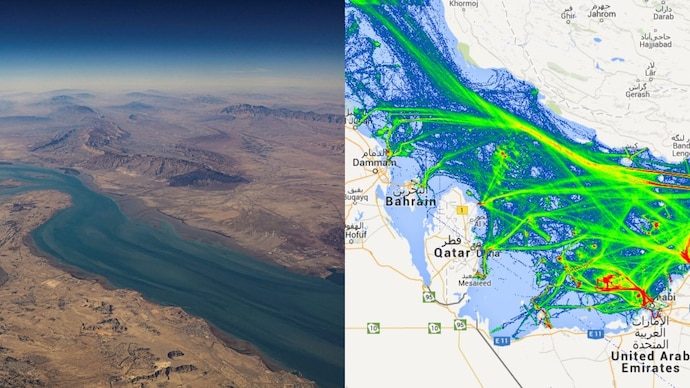
RIL’s own management framed the disruption in unusually blunt terms. In the company’s Q4 FY26 earnings discussion, CFO Srikanth Venkachari described the event as “the largest energy shock,” and pointed to agile sourcing, refinery flexibility, and digital tools as the operating response.[3] The phrasing matters because it places the performance claim inside a chain of work: crude availability changed, alternatives had to be evaluated, barrels had to be procured from farther and more complex routes, and the refinery system had to process those slates without giving up too much margin.
The Earnings Protection Came From a Workflow, Not a Dashboard
The cleanest way to read the quarter is as an operating workflow. First came the disruption: Middle East availability fell sharply as the Hormuz blockade removed a large block of seaborne crude from normal movement.[2] Then came feedstock substitution: RIL had to identify crude grades that were technically processable and economically sensible. Then came commercial execution: suppliers in the United States, Russia, Venezuela, Brazil, and Mexico had to be engaged fast enough to matter. Then came logistics: tankers, routes, insurance, port timing, inventory sequencing, and refinery scheduling had to line up. Only after those steps does the EBITDA number have operational content.
| Operating pressure | RIL response described in available materials | Earnings relevance |
|---|---|---|
| Hormuz blockade cut roughly 10 million bpd of global supply | Reduced dependence on impaired Middle East flows and sourced from non-Middle East regions | Kept crude moving into the refining system instead of forcing deep throughput cuts |
| Normal Middle East crude flows impaired by 40-50% | Used feedstock optimization across a large crude universe | Protected unit utilization and crude economics under constrained supply |
| Freight costs surged 10-15x and insurance moved from thousands to millions of dollars | Used owned/time-charter fleet and digital logistics platform to manage routing and sequencing | Dampened logistics cost impact while avoiding avoidable delays |
| Domestic market needed LPG during crisis conditions | Increased LPG supply fourfold to the domestic market | Showed capacity was redirected under stress, not only defended for export margins |
The table is deliberately unglamorous. It is where the AI claim either earns its place or does not. A planning model that cannot change procurement choices, vessel plans, refinery runs, or product allocation is just another reporting layer. In RIL’s case, management tied the digital capability to actual re-sourcing and maintained throughput, while the reported O2C result shows why investors cared.[1][3]
Why Feedstock Optimization Was the Center of the Case
Crude substitution is not grocery substitution. A refinery cannot simply replace one missing barrel with another cheaper barrel and expect the same output. Each crude grade changes yields, unit constraints, sulfur handling, residue balance, product quality, energy consumption, and the economics of what the refinery eventually sells.
RIL has said its proprietary AI-driven feedstock optimization tool can evaluate optimal blends across more than 200 crude grades.[3] That number should be read carefully because it is a company-reported capability, not an independently audited benchmark. Still, it is central to the case. A universe that large creates a combinatorial problem: the answer is not one replacement crude but a changing set of blends that must satisfy physical constraints and commercial spreads at the same time.

That is where an AI-enabled optimization layer can matter. It can shorten the cycle between a market shock and a technically acceptable crude slate. A human team can judge supplier credibility, vessel risk, and refinery behavior; the optimization tool can keep recalculating blend economics and unit constraints as price, availability, freight, and insurance inputs move. In a disruption of this scale, the value is not a prettier forecast. It is reducing the time between “these barrels are unavailable” and “this alternate slate can run.”
The practical significance is visible in RIL’s sourcing geography. Management materials cited agile crude sourcing from the United States, Russia, Venezuela, Brazil, and Mexico during the crisis.[3] Those are not interchangeable origins. They imply different voyage times, freight exposure, quality profiles, sanctions and compliance considerations, financing frictions, and blending consequences. The feedstock model could not make those complications disappear; its value was in helping the organization decide which complications were worth accepting.
This is also the point where the software-only version of the story breaks down. Jamnagar’s hardware flexibility, the experience of refinery operators, and decades of crude relationships were not incidental. A less complex refinery with fewer units, thinner inventories, and weaker supplier access could run the same class of optimization software and still have nowhere near the same room to maneuver. In RIL’s quarter, AI appears to have accelerated choices inside a system already built for optionality.
The Logistics Problem Was Almost as Important as the Crude Slate
Selecting a replacement crude is only useful if the barrel can be secured, insured, shipped, received, and sequenced into the refinery at the right time. During the crisis, RIL said freight costs surged 10-15x and insurance costs moved from thousands of dollars to millions.[3] Those numbers turn logistics from a back-office function into a margin event.
RIL’s owned and time-charter fleet gave it a physical hedge against a spot freight market that was repricing violently. Its digital logistics platform then mattered because vessel optionality still has to be converted into schedules. If crude is arriving from Brazil, Mexico, Russia, Venezuela, and the United States instead of normal Middle East lanes, the refinery is no longer solving one procurement problem. It is solving a moving queue of laycans, voyage risk, tank availability, port slots, crude compatibility, and unit feed requirements.
That sequencing is where many resilience claims become vague. A company can have alternative suppliers on paper and still miss the operating window if cargoes arrive in the wrong order, at the wrong quality, or against unavailable tankage. The available RIL materials do not disclose every scheduling decision, but the reported 96-97% refinery throughput indicates that procurement and logistics decisions were close enough to the refinery schedule to keep utilization near full levels during the shock.[1][3]

There is a useful parallel with other chokepoint planning problems, including AI visibility tools used to monitor Bab al-Mandab disruption. The lesson is not that every strait closure is the same. It is that route visibility, freight repricing, supplier substitution, and production scheduling have to be handled as one decision system when the bottleneck is geopolitical rather than mechanical.
Throughput Was the Bridge Between Operations and Earnings
The 96-97% throughput figure is the bridge between the operating story and the earnings story.[1][3] It does not prove AI alone produced the 17.2% O2C EBITDA growth. It does show that RIL avoided the most damaging version of the crisis: a refinery system starved of suitable crude, forced into lower utilization while fixed costs and market volatility worked against it.
In refining, high utilization during a supply shock is not automatically good if the crude slate destroys margin or produces the wrong product mix. That is why the feedstock and logistics pieces need to be read together. The company was not simply buying any available barrel to keep units running. It was trying to hold a technically viable, economically defensible slate while freight and insurance were moving against everyone exposed to the same chokepoint.
The fourfold increase in LPG supply to the domestic market is an important detail for the same reason.[3] It shows that the crisis response was not only a margin-defense exercise inside the refinery fence. Product allocation changed under stress. Capacity was redirected toward domestic supply needs while the company was also defending O2C earnings. That is a harder operating claim than saying a model improved forecast accuracy.
What the Public Record Supports—and What It Does Not
The strongest supported claim is bounded: RIL’s AI-driven feedstock optimization, digital logistics platform, fleet access, refinery flexibility, supplier relationships, and operator expertise together enabled rapid re-sourcing and near-full refinery utilization during the Strait of Hormuz crisis. The reported Q1 FY27 O2C EBITDA growth then gives that operating response financial relevance.[1][3]
The weaker claim would be that AI independently created the earnings increase. The public materials do not support that. O2C earnings move with cracks, product demand, crude differentials, inventory effects, operating rates, and portfolio choices. The AI claim becomes credible only when it is attached to specific decisions: evaluating alternate crude blends, accelerating sourcing from non-Middle East regions, coordinating logistics during a freight and insurance spike, and keeping refinery throughput close to full utilization.
It is also too easy to turn RIL into a universal template. A company without refinery complexity, long-term supplier relationships, shipping access, and experienced schedulers cannot replicate this result by buying a planning tool. The more useful benchmark is organizational: can the commercial desk, refinery scheduler, freight team, risk function, and executive decision process act on the same repricing signal quickly enough to change the physical plan?
Broader supply chain research has been moving in the same direction: AI supply chain value is increasingly tied to decision speed, exception handling, and cross-functional execution rather than static forecasting alone.[4] RIL’s case is sharper because the disruption was not a mild planning variance. It was a chokepoint shock large enough to push crude, freight, insurance, and sourcing decisions into the earnings discussion.
The Executive Benchmark After RIL’s Quarter
RIL’s Q1 FY27 performance is credible evidence that AI-enabled supply chain agility can materially protect earnings during geopolitical disruption when it is embedded in physical optionality, commercial relationships, logistics control, and experienced operations. The evidence does not justify a clean software victory lap. It does justify a more demanding question for energy, manufacturing, and logistics executives.
The relevant test is no longer whether AI can improve planning in normal conditions. It is whether the system can reprice, re-source, route, insure, schedule, and execute fast enough when the chokepoint breaks.
References
- Q1 FY27 results coverage, Moneycontrol/LiveMint, July 17, 2026
- Ambani Flags Supply Chain Dislocation, Bloomberg, April 24, 2026
- Reliance Industries financial reporting and earnings materials, Reliance Industries Limited
- 2026: The age of the AI supply chain, Supply Chain Management Review
Comments
Join the discussion with an anonymous comment.