
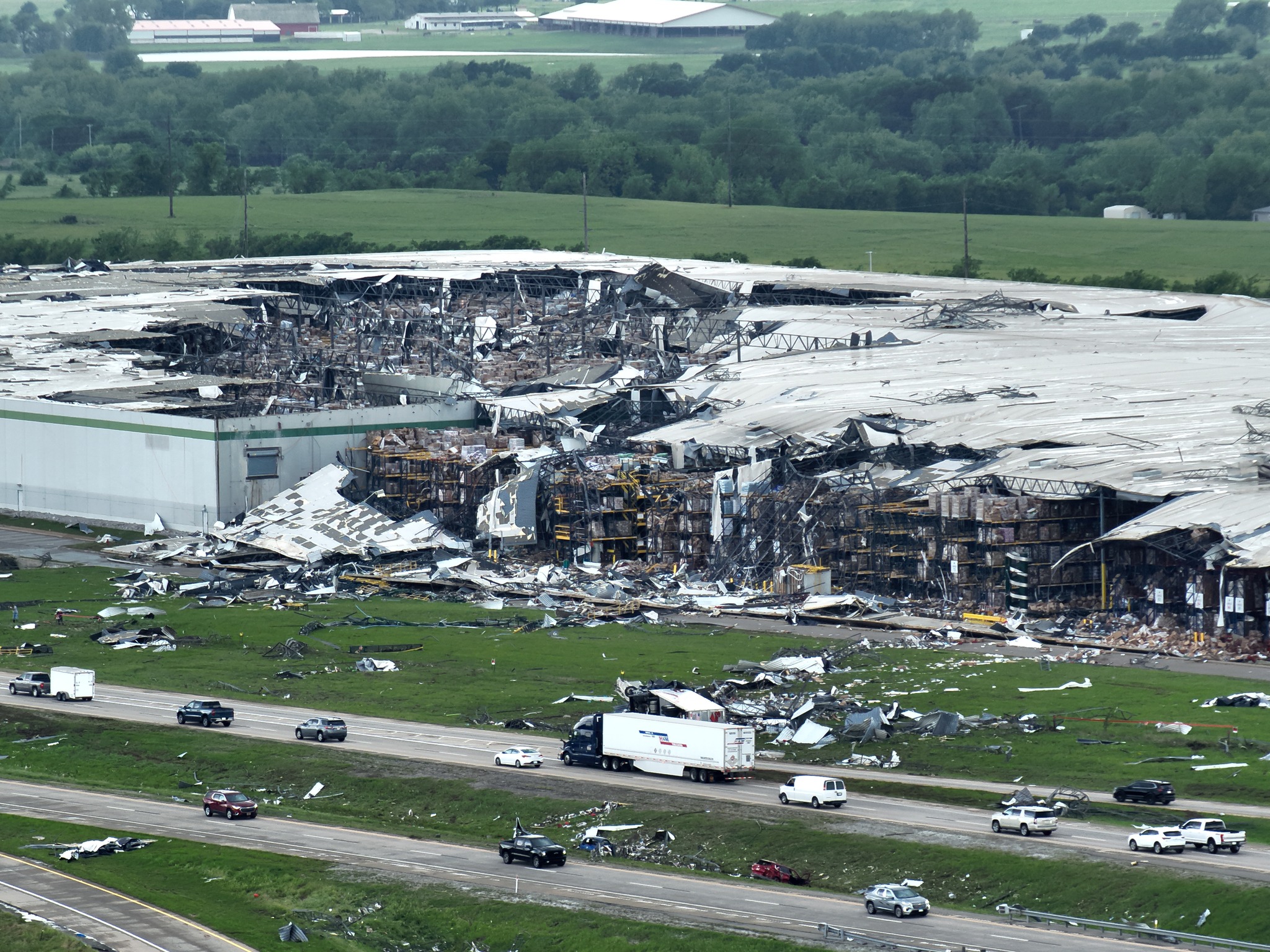
When a tornado hits a distribution node, the issue is no longer whether the forecast looked clean on a dashboard. It is whether the facility can keep receiving, whether trucks need to stop, and whether anyone can move inventory before the building is out of play. Dollar Tree’s Marietta, Oklahoma distribution center shows the scale of that problem: an EF-4 tornado destroyed the 1 million square foot facility in April 2024, displaced 456 associates, and forced a manual multi-day network repivot across more than 600 stores [1].
The harder reminder is that tornado disruption is not only a service-level problem. In December 2021, an EF-3 tornado collapsed Amazon’s Edwardsville DC and killed six people [2]. That is why tornado planning has to start with the minutes between warning and impact, not with a broad discussion of extreme weather in general.
Some business-facing alerting tools do buy time. AccuWeather For Business says SkyGuard provides 16 minutes of average tornado advance notice versus 8 minutes from standard sources [3]. Those extra minutes are not enough to make the storm go away, but they are enough to freeze replenishment, clear a dock, hold a truck, or pull people off the floor.
The three-layer stack
| Layer | What it changes | What is real now |
|---|---|---|
| Prediction | Tries to see tornado formation sooner on radar-derived patterns | MIT Lincoln Laboratory’s TorNet work uses 200K+ radar images and reports 85%+ classification accuracy for EF-2+ tornadoes at 5-, 10-, and 15-minute lead times [4] |
| Exposure mapping | Shows which nodes, suppliers, and lanes sit in the storm path | Everstream says it monitors 30K+ data sources and maps multi-tier exposure; interos says its model mapped 94.5M businesses at risk from extreme weather in 2025, up 48% year over year [5][6] |
| Response orchestration | Turns a probabilistic warning into inventory moves and reroutes | ClimateAi’s FICE model focuses on demand spikes, supply suppression, and optimal inventory positioning; AccuWeather’s earlier warning window supports the same decision point [7][3] |
Prediction is the ceiling
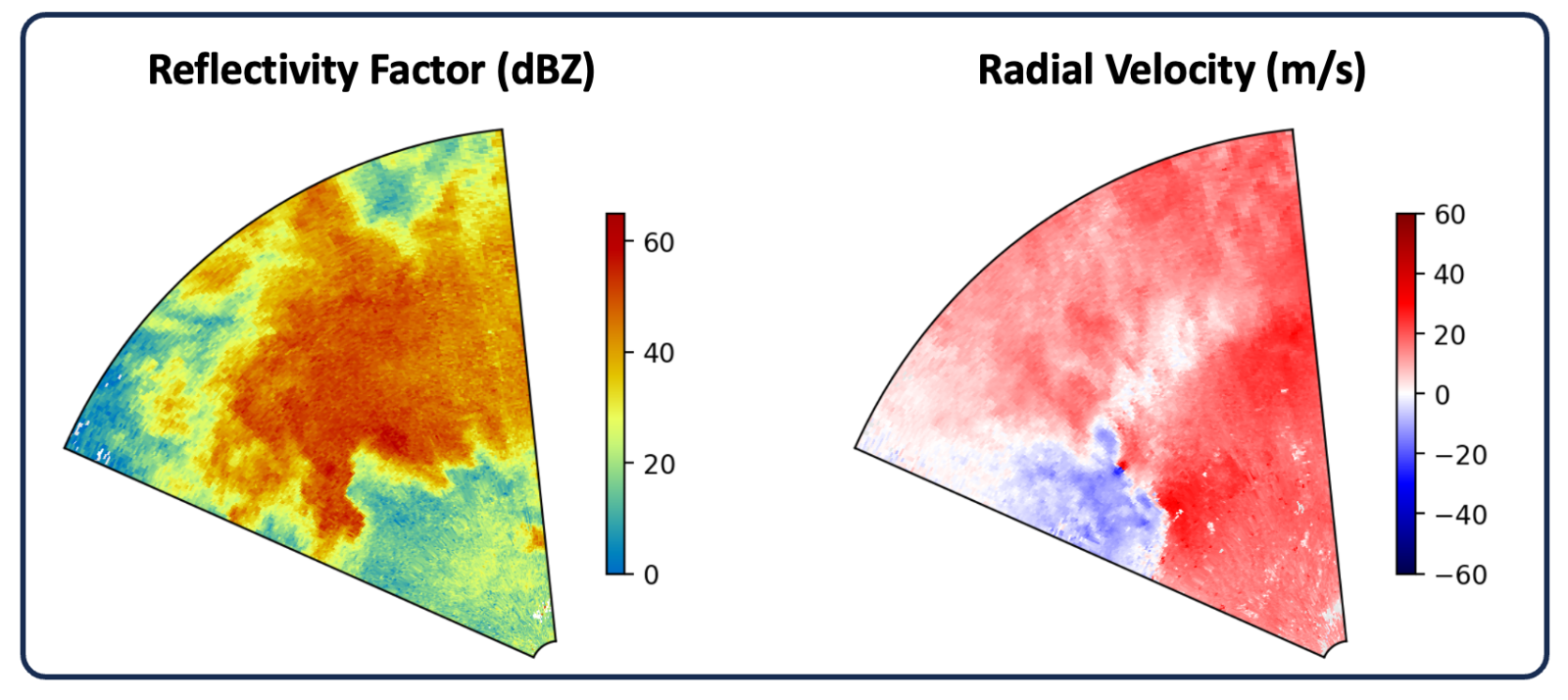
MIT Lincoln Laboratory’s TorNet work is the technical ceiling here. The open-source dataset includes more than 200,000 radar images, and the research reports deep-learning models that can classify EF-2+ tornadoes with 85%+ accuracy at 5-, 10-, and 15-minute lead times [4]. That matters because it is the closest thing in this space to a model that tries to see the tornado itself instead of only describing what is exposed after the fact. It is still research-stage, not a packaged enterprise supply chain product.
The commercial platforms are useful, but they are doing a different job. Everstream’s value is broad threat monitoring plus multi-tier exposure mapping; interos emphasizes sub-tier supplier visibility at scale; ClimateAi pushes further into business impact and inventory positioning [5][6][7]. None of that means these tools are shipping TorNet-class tornado prediction today. It means they are the deployable layer that can turn a weather signal into a queue of affected facilities, suppliers, and lanes.
What the dock actually needs
In practice, AI for supply chain disruption from tornado is useful when it shortens the path from warning to action. That means freezing replenishment on the exposed lane, flagging alternate DCs, holding or rerouting trucks while the route is still viable, and giving the site leader a cleaner safety call. The Dollar Tree case is the right mental model: if the network can pre-position inventory and auto-activate an alternate node before the strike, the manual repivot gets smaller [1].
The weak points are familiar, but they matter more in a tornado window. False alarms create fatigue. Sub-tier mapping still has coverage gaps. Data quality breaks when the clock is moving faster than the integration layer. That is why human-in-the-loop validation still matters here: someone has to decide whether the alert is real enough to stop receiving, pull labor, or lock a route. A model can help with the call, but it should not be the only thing making it.
So the practical answer is narrow. AI can materially improve tornado preparedness, exposure visibility, and rerouting speed today. It is not yet a fully integrated tornado prediction-and-response system, and the current commercial stack still depends on human judgment to keep false comfort from becoming a bad decision.
References
- Dollar Tree tornado response update — Dollar Tree corporate press release, April 2024
- 2021 Edwardsville tornado — Wikipedia
- SkyGuard for Business — AccuWeather For Business
- TorNet tornado prediction research — MIT Lincoln Laboratory
- Extreme weather intelligence — Everstream Analytics, 2026
- Catastrophic risk model — interos.ai, 2025
- FICE model — ClimateAi
Comments
Join the discussion with an anonymous comment.