
Google Cloud’s AI growth is now too large to wave away as background hyperscaler momentum. In Q1 2026, Google Cloud passed $20 billion in quarterly revenue, grew 63% year over year, reported 800% year-over-year AI revenue growth, and carried a $462 billion backlog; Google also said growth was capacity-constrained, meaning demand exceeded what it could fully serve at the time.[1][2][3]
That revenue anchor matters for supply chain leaders, but it does not settle the question. Google does not report supply chain-specific AI revenue. The 800% figure covers enterprise AI solutions broadly, not demand planning, inventory, logistics, manufacturing, or procurement separately. So the useful question is narrower: where does supply chain show up inside the surge, and is the evidence operational enough to influence a platform roadmap?
The Clearest Evidence Starts With Demand Forecasting
The strongest supply chain proof point is OTTO, because the case connects Google Cloud tooling to a core planning outcome rather than to a generic AI pilot. OTTO used Google Cloud’s TiDE model and Vertex AI to improve demand forecasting accuracy by up to 30%, with direct inventory cost implications.[4]
That is the sort of result supply chain executives can actually interrogate. Forecast accuracy is not a vanity metric if it changes replenishment decisions, safety stock assumptions, markdown exposure, or warehouse capacity pressure. It still does not prove Google Cloud’s supply chain revenue share, but it gives the revenue discussion a functional center of gravity.
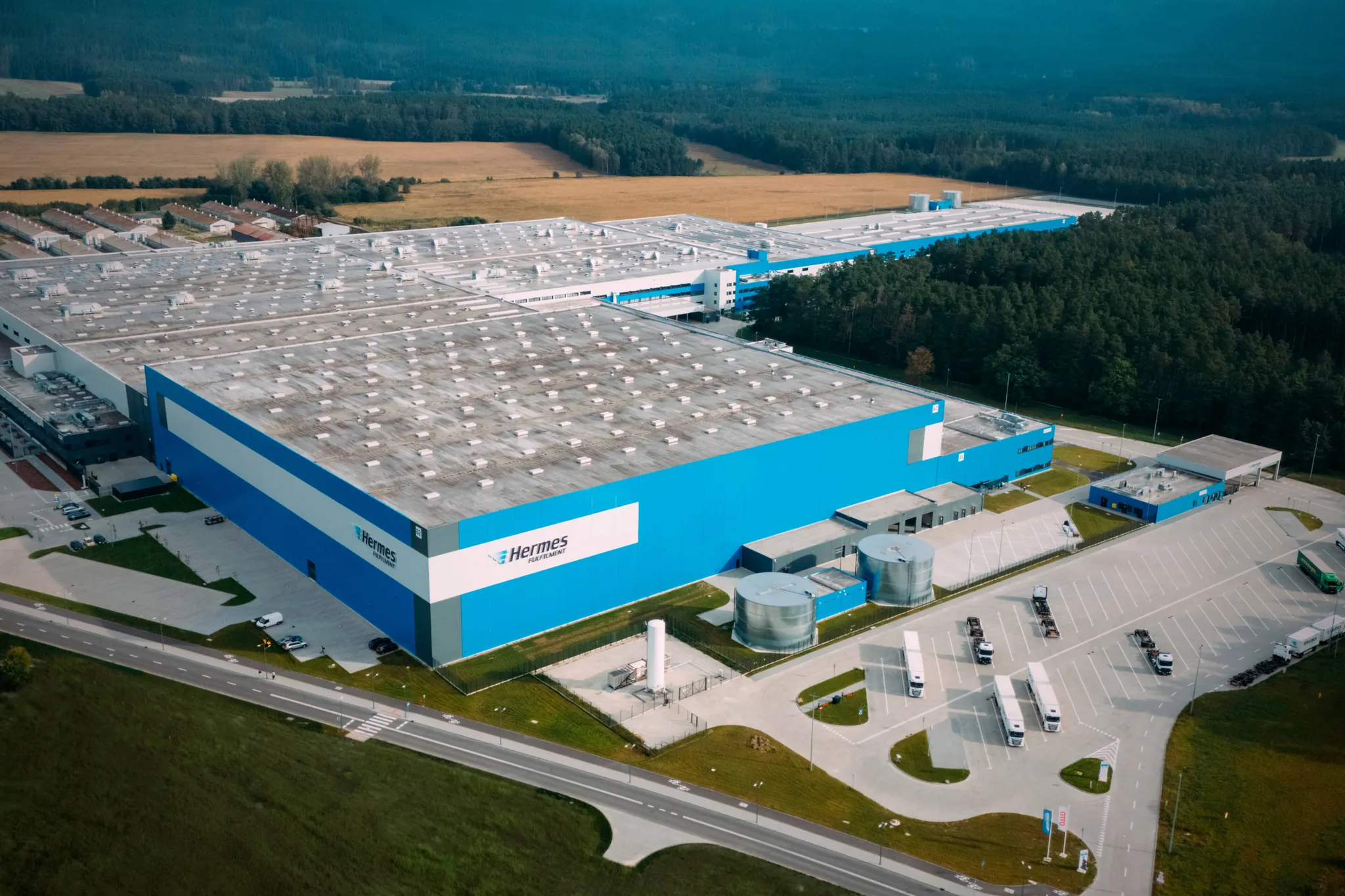
OTTO also matters because it sits close to the demand signal. Retail and commerce supply chains are unforgiving environments for forecasting claims: too much inventory ties up working capital, too little creates missed sales and service issues, and both mistakes compound across fulfillment and transportation. A model that improves the forecast is not automatically a transformed supply chain, but it is materially closer to operational value than a chatbot adoption statistic.
The Pattern Extends Beyond One Retailer
OTTO is the cleanest case, not the only one. Capgemini describes work with a global conglomerate to build a generative AI demand forecasting engine on Google Cloud, giving the same functional category an enterprise-scale corroboration point outside a single retailer.[5] The useful inference is not that all forecasting deployments perform like OTTO’s. It is that Google Cloud is repeatedly appearing in the demand-planning layer, where supply chain AI spending has a clear business owner and a measurable decision cycle.
The evidence also moves beyond forecasting. C3 AI and Google Cloud announced a partnership around a supply chain suite intended to bring enterprise AI into planning and logistics optimization.[6] Renault’s use of Google Cloud digital twin tooling for logistics and manufacturing adds another angle: the manufacturing-side supply chain, where constraints are physical, interdependent, and expensive to discover late.[7]
| Supply chain function | Evidence in the public record | What it shows |
|---|---|---|
| Demand forecasting | OTTO used Google Cloud's TiDE model and Vertex AI; Capgemini built a generative AI forecasting engine on Google Cloud for a global conglomerate. | Google Cloud is present in planning work where forecast quality can affect inventory and service decisions. |
| Inventory optimization | OTTO's forecasting improvement is tied to inventory cost implications. | The value case is not limited to prediction; it reaches working-capital and stock-position consequences. |
| Planning and logistics | C3 AI and Google Cloud partnered on an enterprise AI supply chain suite covering planning and logistics optimization. | The platform story broadens from model hosting into application-layer supply chain workflows. |
| Logistics and manufacturing digital twins | Renault used Google Cloud digital twin tooling for logistics and manufacturing. | Google Cloud's supply chain relevance includes operational modeling of physical networks, not only planning analytics. |
This is not enough evidence to quantify revenue contribution. It is enough evidence to reject the lazy version of the story, where Google Cloud’s AI growth is treated as unrelated to supply chain operations unless Google publishes a neat revenue line. Named deployments now cover demand forecasting, inventory implications, planning, logistics, and digital twin use. For a CSCO deciding whether Google belongs in the evaluation set, that breadth is hard to ignore.
Executive Language Is Catching Up To The Use Cases
The public customer evidence is reinforced by Google’s own supply chain emphasis. A Google executive said supply chain uses of generative AI are “flourishing,” a broad statement, but one that matters because it names the vertical directly rather than burying it inside a generic enterprise AI narrative.[8]
That phrasing should still be handled carefully. A vendor executive saying usage is flourishing is not independent proof of effectiveness. It is a signal about where Google sees demand, where it is likely directing sales attention, and why supply chain examples are appearing with more specificity. The evidentiary weight comes from the triangulation: revenue momentum, named customer outcomes, product assets, and executive emphasis all point in the same direction.
The Product Stack Is No Longer Just Generic Cloud Infrastructure
The more important shift for platform evaluation is product specificity. Google Cloud’s supply chain and logistics materials describe capabilities such as Supply Chain Twin and Supply Chain Pulse, while its data-and-AI supply chain materials point to Vertex AI Forecast and optimization-oriented workflows.[9][10] That does not make Google a traditional supply chain planning suite vendor. It does mean the platform now has named supply chain constructs rather than asking buyers to assemble everything from raw compute, storage, and model APIs.
Supply Chain Twin is the clearest example of the difference. A digital twin framework changes the conversation from “can this cloud run AI models?” to “can this platform represent the messy operating network those models need to reason about?” In supply chain, that distinction matters. A model without a reliable view of suppliers, sites, lanes, inventory positions, and constraints can become an elegant forecast generator with no credible path into execution.
Supply Chain Pulse sits closer to monitoring and exception management. That is a different buying problem than long-horizon forecasting. It raises questions about latency, data quality, workflow integration, and who acts when the system detects a risk. The value of placing Pulse beside Twin and Vertex AI is that Google is not presenting supply chain AI as a single-use forecasting story.
There is also a branding wrinkle buyers need to read correctly. Older case studies may reference Vertex AI because that was the product language at the time. By Q3 2026, Google’s go-to-market language is increasingly oriented around Gemini agents and enterprise agent workflows. That evolution does not invalidate earlier Vertex AI deployments, but it does mean buyers should map old references to the current product architecture instead of assuming the name on a case study is the name that will appear in a new proposal.
Why Google Has Reason To Prioritize This Vertical
The market context explains why this vertical is attracting cloud-platform attention. OpenSky Group reported the supply chain AI market at $9.94 billion in 2025 and projected significant growth from there.[11] The exact market size varies by methodology across analyst sources, so the number should not be treated as consensus. Its practical use is simpler: supply chain is large enough, data-intensive enough, and fragmented enough to justify dedicated cloud-platform investment.
Supply chain is also an unusually good test of whether enterprise AI is becoming operational. It contains recurring prediction problems, network optimization problems, document-heavy procurement work, and exception-management workflows. It also contains the part vendors often underestimate: accountability. If a forecast is wrong, a warehouse fills up or a customer waits. If a logistics recommendation fails, cost and service absorb the error. That makes named deployments more meaningful than broad adoption claims.
What The Revenue Surge Can And Cannot Prove
Google Cloud’s revenue growth, AI acceleration, and supply chain adoption are related but not identical claims. The first is reported. The second is reported at the enterprise AI level. The third is inferred from customer evidence, product focus, and executive statements. Keeping those layers separate is not pedantry; it is the difference between a defensible platform argument and vendor echo.
The responsible conclusion is that supply chain AI adoption is a substantial and visible contributor to Google Cloud’s AI momentum, not that public filings prove a precise supply chain revenue share. OTTO’s forecasting outcome gives the story operational weight. Capgemini, C3 AI, and Renault broaden the pattern across enterprise forecasting, planning, logistics, and digital twin work. Google’s supply chain product suite and executive commentary show the company is treating the vertical as more than an incidental use case.
For supply chain leaders in Q3 2026, that is enough to change the evaluation posture. Google Cloud can no longer be treated as merely horizontal AI infrastructure that sits outside the supply chain roadmap conversation. It has enough customer proof, product focus, and executive emphasis to warrant inclusion. The caveat is just as important: buyers still need function-specific validation before treating broad AI growth as proof of fit for their planning, logistics, procurement, manufacturing, or inventory problems.
References
- Google Cloud surpasses $20B, but says growth was capacity constrained, TechCrunch, April 29, 2026.
- Google Cloud Next: Big moment, Fortune, April 21, 2026.
- AI turned Google Cloud from also-ran into Alphabet's growth driver, Reuters, October 31, 2025.
- OTTO, Google Cloud.
- Generative AI delivers better supply chain management for global conglomerate, Capgemini.
- C3 AI and Google Cloud partner to optimize supply chains with enterprise AI, C3 AI.
- Google launches digital twin tool for logistics and manufacturing, VentureBeat.
- Google executive says supply chain uses of generative AI flourishing, FreightWaves.
- Supply chain and logistics solutions, Google Cloud.
- Drive supply chain efficiency and optimization using data and AI, Google Cloud.
- Supply Chain AI Statistics, OpenSky Group.
Comments
Join the discussion with an anonymous comment.