
ServiceNow AI agents are already doing measurable work in enterprise supply chain operations, but the clearest evidence sits in a narrower place than the phrase usually suggests. The strongest production signals are not from transportation routing, demand sensing, or warehouse automation. They are from source-to-pay work: supplier onboarding, procurement cycle time, manual intake, and the handoffs that sit between requesters, procurement teams, suppliers, and approvers.
That distinction matters because the numbers are concrete enough to take seriously. Kellton reported a 2026 ServiceNow deployment of six autonomous AI agents that accelerated supplier onboarding by 40–60% and reduced manual procurement effort by 50% within the first deployment cycle.[1] Protiviti reported that Dropbox cut procurement cycle time by 50% through ServiceNow AI agents.[2] SDCExec reported that Nomura Research Institute achieved 50% faster supplier onboarding using ServiceNow Source-to-Pay Operations.[3]
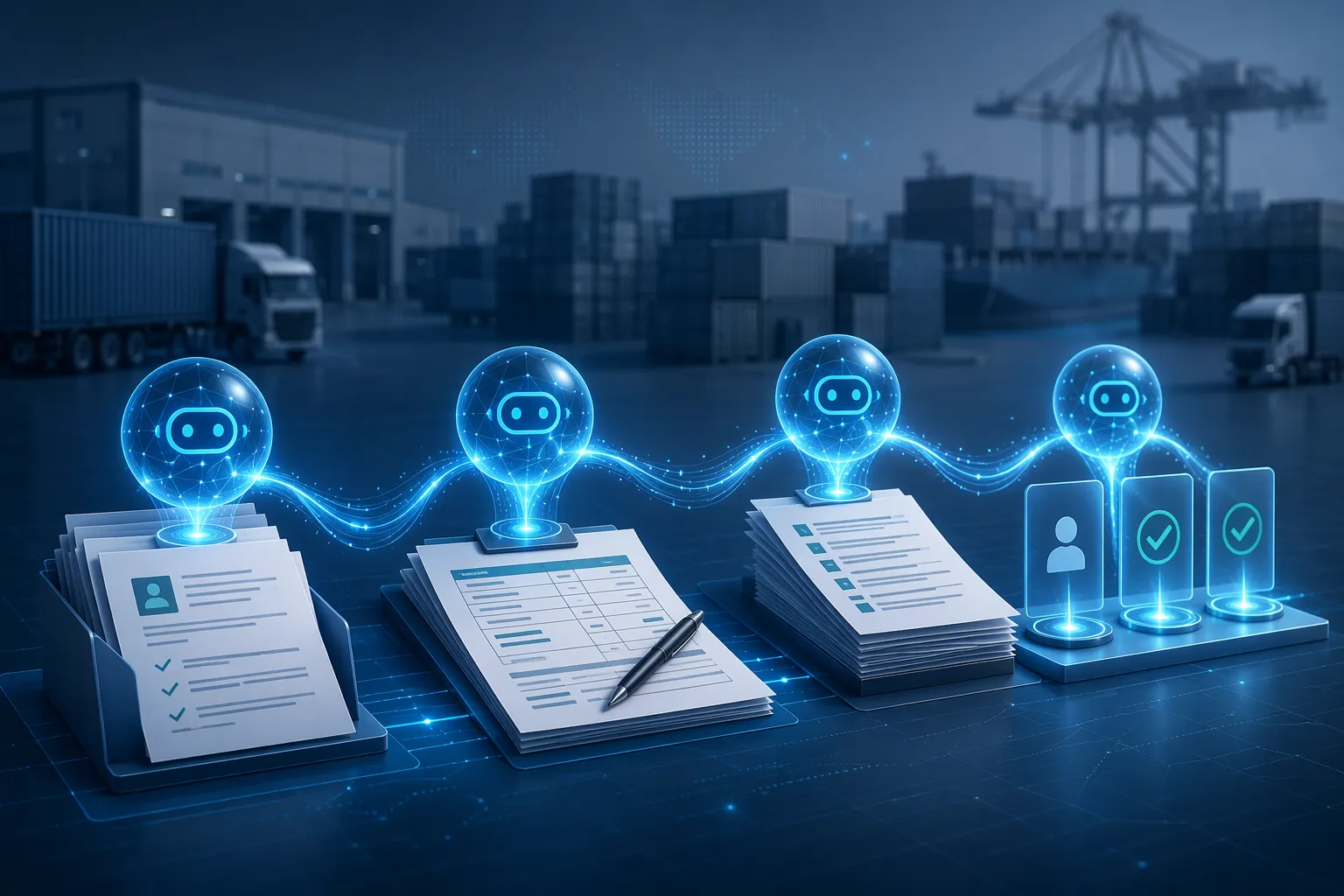
Those are not universal benchmarks. Kellton is a ServiceNow partner, Protiviti is writing about ServiceNow AI agent outcomes, and the Nomura figure appears in coverage of ServiceNow’s autonomous procurement launch. The useful reading is more modest and more operational: in specific deployments, ServiceNow AI agents have shortened procurement queues and supplier setup flows by attacking the manual interpretation layer that sits inside enterprise workflows.
The Procurement Evidence Is Stronger Than the Broader Claim
The Kellton case deserves the most attention because it gives the richest operational shape. The deployment involved six autonomous AI agents on ServiceNow, not a single chatbot bolted onto a portal. The reported outcomes were concentrated in procurement execution: faster supplier onboarding and lower manual procurement effort in the first deployment cycle.[1]
That combination points to a familiar bottleneck. Supplier onboarding is rarely delayed by one dramatic decision. It is delayed by missing forms, duplicate supplier records, tax and compliance checks, routing to the wrong reviewer, unclear status, and manual follow-up. A 40–60% acceleration in that process, if achieved in a comparable environment, means fewer supplier records waiting for human triage and fewer requesters asking procurement where the file is.[1]
The 50% reduction in manual procurement effort is equally important because it describes labor removed from the process rather than only elapsed time. In source-to-pay operations, manual effort often hides in interpretation: reading a request, extracting supplier or quote data, deciding which policy applies, checking whether a purchase order needs exception handling, and pushing the item to the next queue. When an agent takes over part of that interpretation, the workflow does not simply move faster; the shared-services team stops being the system integration layer.
| Deployment evidence | Reported outcome | How to read it |
|---|---|---|
| Kellton ServiceNow deployment | Six autonomous AI agents; 40–60% faster supplier onboarding; 50% lower manual procurement effort in the first deployment cycle | Client-specific evidence that agentic workflows can remove procurement handoffs and reduce manual interpretation |
| Dropbox via Protiviti | 50% procurement cycle reduction | Corroborating signal that cycle-time reduction is appearing outside one reported deployment |
| Nomura Research Institute via SDCExec | 50% faster supplier onboarding using ServiceNow Source-to-Pay Operations | Another supplier onboarding result, still best treated as a reported case rather than a benchmark |
Dropbox and Nomura Research Institute matter because they show the same pattern from different angles. Dropbox’s reported 50% procurement cycle reduction is broad enough to suggest impact across request-to-approval movement, not just one supplier master data task.[2] Nomura’s reported 50% faster supplier onboarding reinforces the narrower onboarding theme.[3] Together, the three cases make a practical case for ServiceNow in procurement operations, even if they do not support a sweeping claim about the whole supply chain stack.
What the Agents Are Actually Doing
The useful question is not whether an enterprise has “agentic AI.” It is whose queue changes. In ServiceNow’s strongest supply chain-adjacent use cases, the agent sits inside a workflow that already has a record, a policy path, an approver, and an audit trail. That is why procurement request fulfillment, supplier onboarding, quote parsing, purchase order exception management, and supplier visibility are better fits than open-ended planning problems.
In procurement request fulfillment, the agent can interpret what the requester is asking for, match it to policy or catalog logic, and route it without waiting for a buyer to clean up the request. In supplier onboarding, it can collect documents, detect missing information, initiate checks, and keep the request moving across legal, tax, compliance, procurement, and business-owner reviews. In quote intake, it can extract fields from supplier responses and reduce the need for a buyer to manually compare or rekey information before the next step.
Purchase order exceptions are another natural target. A late acknowledgment, mismatched quantity, missing confirmation, or policy-triggered exception can sit in a queue until someone reads the record and decides who owns it. An agent that classifies the exception and routes it to the right owner does not solve supplier performance by itself, but it can remove dead time from the workflow.
The common thread is not “supply chain AI” in the broad sense. It is structured enterprise work where the decision path can be governed. ServiceNow has an advantage here because many enterprises already use it as workflow plumbing. If the purchasing request, supplier record, approval task, exception, and service case already live in or pass through the platform, an AI agent has somewhere operationally useful to act.
Agent Studio and Control Tower Belong in the Architecture Conversation
ServiceNow’s AI Agent Studio matters because it gives teams a way to build custom agent workflows using natural language without code, extending beyond prebuilt agents.[4] For procurement teams, that is not a decorative feature. Local policy variation is the rule: different supplier types, spend categories, approval thresholds, risk flags, regional documents, and escalation paths. A no-code or low-code agent-building layer can shorten the distance between a central platform team and the procurement operators who know where the work actually stalls.
Governance is the other half of the architecture. Aelum Consulting’s Knowledge 2026 recap described ServiceNow’s AI Control Tower as embedded by default across all ServiceNow products, organized around five dimensions: Discover, Govern, Secure, Observe, and Measure.[5] Procurement leaders need exactly that kind of control plane before they allow autonomous systems to touch suppliers, purchase requests, and exceptions. The issue is not only whether the agent can act; it is whether the business can see what it did, apply policy, measure outcomes, and stop unsafe behavior.
The adoption gap also explains why these capabilities are arriving in workflow-heavy functions first. Kanini’s Knowledge 2026 recap cited ServiceNow keynote data that only 16% of enterprises had embedded AI into workflows and processes.[4] Procurement is a reasonable proving ground because success can be measured in cycle time, manual effort, exception volume, and onboarding status. Those metrics are less glamorous than autonomous planning, but they are easier to defend in a steering committee.
Visibility Is Expanding, but Proof Is Still Thin
The FedEx-ServiceNow collaboration announced in May 2026 is the clearest sign that ServiceNow wants to push procurement workflows closer to live supply chain context. The companies said the new AI-powered supply chain solution would embed real-time logistics intelligence from FedEx Dataworks into ServiceNow procurement workflows, including Supplier Insights, Supplier Visibility, and Success Indicators. The announcement also stated that FedEx Dataworks uses more than 2 PB of daily data.[6]
The direction is sensible. A procurement user working a supplier issue benefits from seeing relevant delivery, performance, and logistics context without leaving the workflow. Supplier Insights can help frame the supplier relationship; Supplier Visibility can reduce status-chasing; Success Indicators can give teams a shared signal for whether the process is improving. This is where ServiceNow’s workflow position could become more valuable: not by replacing logistics execution systems, but by bringing external operational signals into the queue where a human or agent must decide what happens next.
It is too early to treat the FedEx collaboration as an outcome case. The announcement describes architecture and intended capability; detailed production results were not available in the research materials. That makes it a forward-looking extension of the source-to-pay story, not evidence that ServiceNow AI agents are optimizing end-to-end logistics.
Where ServiceNow Fits in the Supply Chain Stack
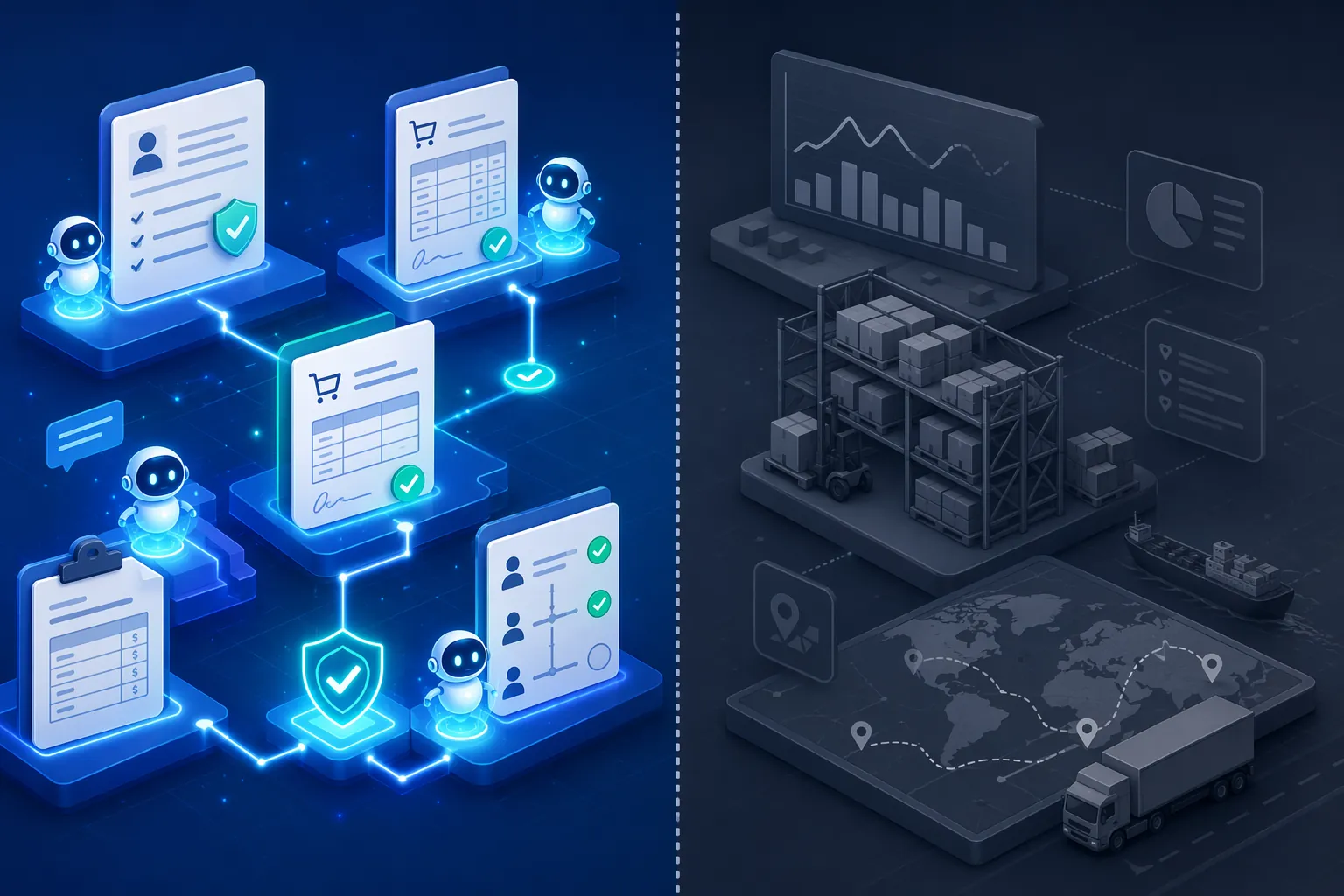
For an enterprise evaluating ServiceNow AI agents for supply chain operations, the fit is strongest when the business problem has four characteristics: the work is record-based, the handoff is repetitive, the policy path can be defined, and the outcome can be measured in cycle time, manual effort, visibility, or compliance. Supplier onboarding meets those conditions. Procurement request routing usually does. Quote intake often does. Purchase order exception triage often does.
- Strong fit: supplier onboarding, procurement request fulfillment, quote intake, approval routing, PO exception classification, supplier case management, and procurement status visibility.
- Conditional fit: supplier performance visibility and logistics intelligence surfaced inside procurement workflows, especially where external data is used to inform a human or agentic workflow decision.
- Weak fit: demand forecasting, inventory optimization, transportation route optimization, warehouse robotics, and other planning or execution domains that require specialized supply chain engines.
That boundary is not a criticism of the platform. It is the difference between workflow orchestration and supply chain optimization. A procurement agent can shorten the time it takes to onboard a supplier. It cannot, on the evidence available here, replace a demand planning model, decide optimal safety stock, build a transportation plan, or control warehouse automation. Those systems have different data models, optimization logic, and operational constraints.
Nor is there enough evidence to make a clean head-to-head comparison with specialized supply chain management platforms. The research materials do not include direct benchmarks against Blue Yonder, SAP IBP, Kinaxis, transportation management systems, warehouse management systems, or planning suites. The more defensible comparison is architectural: ServiceNow is credible where supply chain work behaves like governed enterprise workflow; specialized SCM platforms remain necessary where the work depends on planning, optimization, and physical execution.
What Buyers Should Validate Before Scaling
The reported outcomes make ServiceNow worth a serious look, but procurement and supply chain leaders should validate the unit of improvement before extrapolating. A 50% cycle-time reduction is meaningful only after the team knows which cycle was measured, what the baseline was, which steps were automated, and whether upstream or downstream work increased. If a requester gets a faster answer but supplier risk review receives a larger backlog, the queue has moved rather than disappeared.
The best pilot candidates are not the most ambitious. They are the workflows where the current state is visible and painful: supplier onboarding stuck in document review, quote intake requiring manual rekeying, purchase order exceptions waiting for classification, or procurement requests bouncing between business users and buyers. Those areas give teams a fair test of whether agents can remove interpretation work without weakening governance.
- Ask which queue gets shorter: requester intake, buyer review, supplier setup, compliance review, PO exception triage, or supplier support.
- Ask which handoff disappears: manual data extraction, policy lookup, document completeness check, routing decision, or status follow-up.
- Ask which system still decides: ERP, procurement suite, supplier risk tool, logistics platform, planning engine, or ServiceNow workflow.
- Ask how governance works: who can create agents, who approves workflow changes, how agent actions are logged, and how performance is measured.
The final question is scope discipline. ServiceNow AI agents have crossed into enterprise supply chain operations, but the evidence supports a specific layer of that claim. The platform is credible for automating source-to-pay workflows, reducing procurement cycle time, accelerating supplier onboarding, and adding governed agentic workflows around supplier operations. It is not the system to choose for demand forecasting, inventory optimization, transportation routing, or warehouse robotics. Its leverage is in the workflow-heavy procurement layer, where enterprise supply chain work already looks like records, approvals, exceptions, and accountable handoffs.
References
- Autonomous AI Agents Use Cases Leveraging ServiceNow, Kellton, 2026.
- From Insight to Action: How ServiceNow AI Agents Are Reshaping Business Operations, Protiviti, Oct. 28, 2025.
- ServiceNow Unveils Autonomous Procurement, Supply & Demand Chain Executive, Oct. 2025.
- ServiceNow Knowledge 2026 Key Takeaways, Kanini.
- ServiceNow Knowledge 2026 Key Highlights, Aelum Consulting.
- FedEx and ServiceNow Expand Strategic Collaboration with New AI-Powered Supply Chain Solution, ServiceNow Newsroom, May 2026.
Comments
Join the discussion with an anonymous comment.