
AI dynamic pricing in concert tickets and supply chains starts from the same machinery: predictive demand forecasting, real-time signal ingestion, automated price optimization, and inventory-linked triggers. The mistake is to treat that shared stack as proof that the same objective function belongs everywhere. Digonex's co-pilot framing gets this right by making AI the fast layer for data prep, modeling, and recommendations, while deterministic rules and human approval still decide what gets published [1]. A 2025 systematic review treats AI dynamic pricing as a cross-industry field, which is useful precisely because the algorithms travel more easily than the constraints do [2].
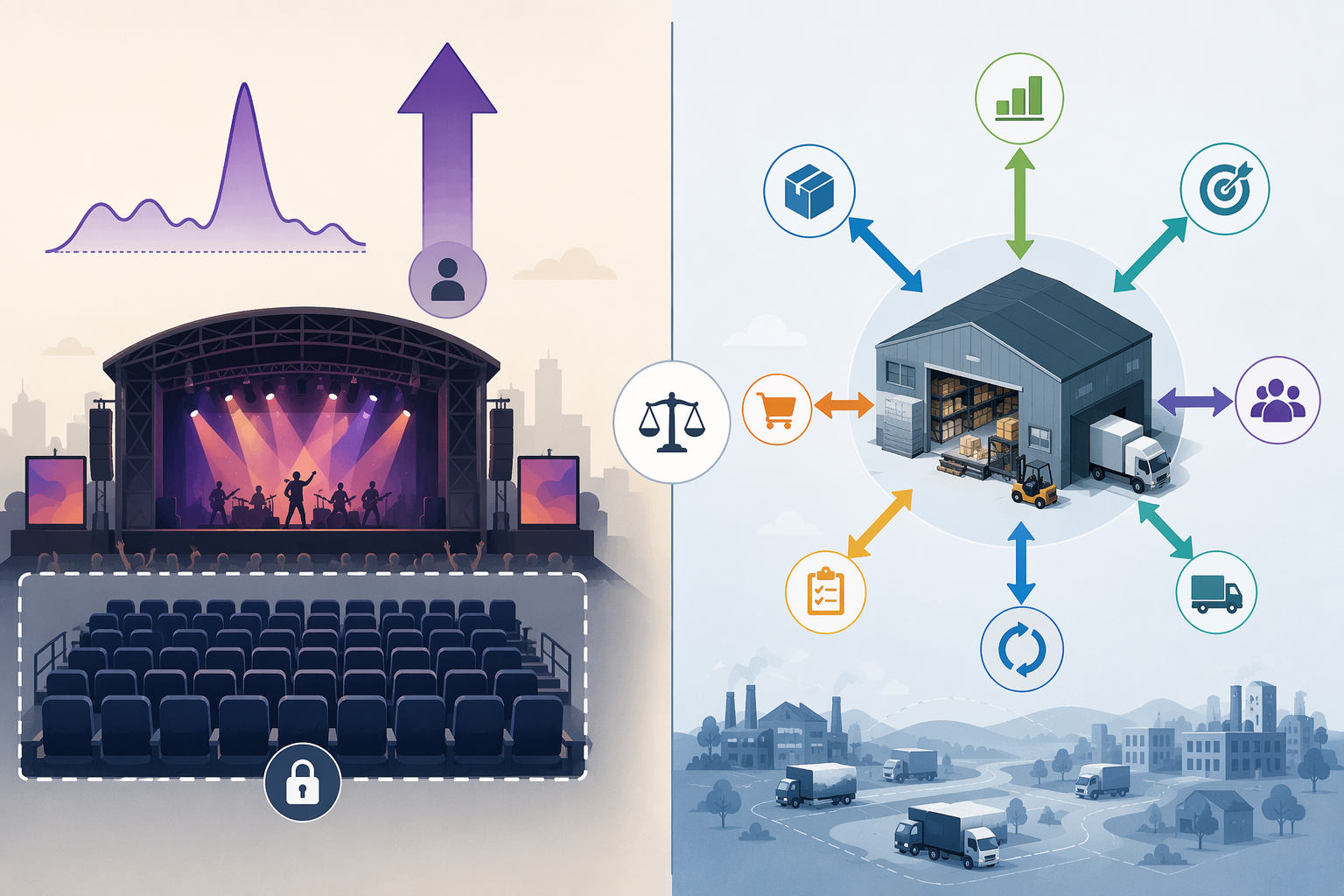
The ticketing case looks cleaner because the inventory is cleaner
Concerts, matches, and games have capped seats, a finite on-sale window, and no replenishment option if demand outruns supply. That makes price optimization legible: the system is trying to extract the most value from a seat that disappears whether or not it sells. Playbook Sports' vendor-reported examples are useful here because they show how aggressively the model can work inside that box. It says the Golden State Warriors' system analyzes 50+ variables, predicts demand with 92% accuracy, and delivers 27% revenue gains on high-demand games, while Real Madrid reportedly makes roughly 3,000 price adjustments per match and saw a 29% revenue lift [3].
Those figures should be read as directional vendor claims, not audited proof. Still, they illustrate the basic point: when inventory is fixed and the window is short, faster re-pricing can be rational without becoming administratively messy. The model is free to optimize revenue per unit because there is no warehouse downstream waiting to be stuck with the consequences.
Supply chains have a wider problem to solve
Supply chains do not live inside that geometry. Inventory is elastic, replenishment is possible, and the price decision is entangled with volume throughput, margin targets, warehouse stock, channel commitments, and turnover. If a pricing model raises rates when demand spikes, it may improve margin on paper and still create dead stock, slow movement, or channel friction later. That is why 'what ticketing does' is usually the wrong reference point when the business is trying to clear inventory rather than ration a sold-out venue.
| Constraint | Ticketing | Supply chain |
|---|---|---|
| Inventory | Capped seats | Replenishable stock |
| Optimization horizon | Finite on-sale window | Recurring cycles and replenishment |
| Primary objective | Revenue per unit | Margin, volume, and turnover |
| Failure mode | Unfilled seat | Dead stock, missed volume, or channel strain |
Stormy AI's 2026 discussion of inventory-linked pricing points in this direction, claiming that synchronizing warehouse stock data with pricing engines can improve margins by 5% to 15% and reduce year-end overstock [4]. The claim is directionally interesting, but it comes from a vendor blog that cites secondary sources, so the number should stay in the 'promising but not planning-grade' category until the original attribution is traceable.
Governance is what makes the model usable
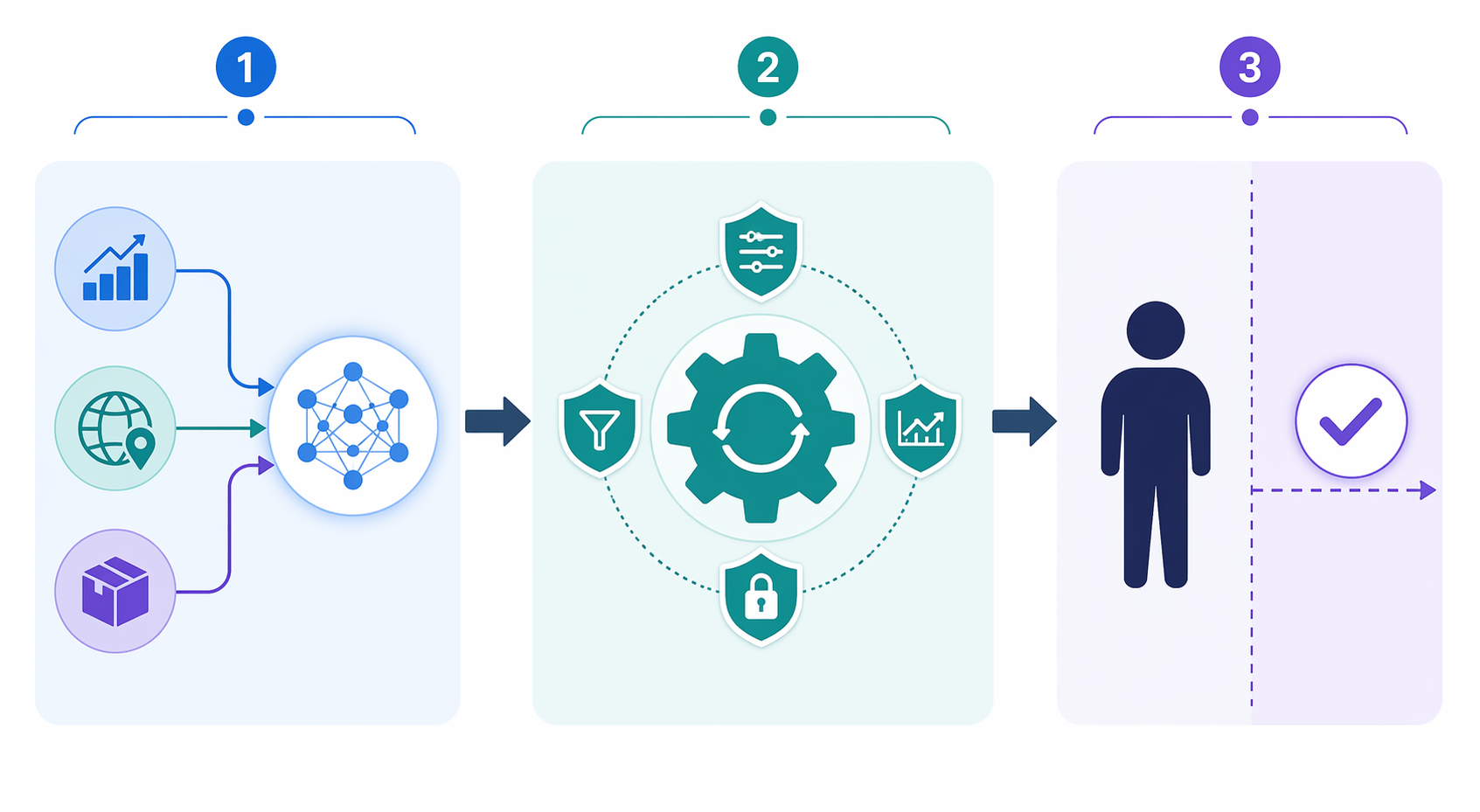
The most practical bridge between ticketing and supply chain is not full automation; it is a co-pilot setup. Digonex describes AI as handling the data prep and recommendation layer, with deterministic pricing logic, thresholds, and human approval still governing price changes [1]. That arrangement matters in both domains because the machine can move faster than the organization can absorb if guardrails are missing.
ITPro's discussion of dynamic pricing is helpful because it focuses on caps, bias prevention, and transparent communication rather than pretending ethics is a separate meeting [5]. UNSW's consumer-facing treatment makes the same point from the buyer's side: the moment people can see prices changing, the mechanism itself becomes part of the product experience [6].
For supply chains, that means the real question is not whether AI can react to market signals. It can. The question is whether the system's thresholds, approval paths, and exception handling match the business that will have to absorb the price move afterward.
The lesson worth borrowing from ticketing is speed, signal ingestion, and a willingness to let software do the repetitive math. What should not be borrowed wholesale is the ticketing objective function. A sold-out venue can optimize revenue per seat; a supply chain usually has to optimize across volume, margin, replenishment, warehouse stock, and turnover at once. If the model is judged only on how much price it captured, it is probably being asked the wrong question.
References
- Digonex, AI in Dynamic Pricing: What It Can Do (and What Still Needs Guardrails) (2026).
- Taylor & Francis, Artificial intelligence and dynamic pricing: a systematic literature review (2025).
- Playbook Sports, Top 5 AI Strategies for Dynamic Ticket Pricing.
- Stormy AI, Inventory-Linked AI Dynamic Pricing: The 2026 Strategy (2026).
- ITPro, Dynamic pricing's AI revolution is here, but can ethics exist alongside profits? (2026).
- UNSW Newsroom, The rise of dynamic pricing: should AI decide what you pay? (Sept. 2025).
Comments
Join the discussion with an anonymous comment.