
§ 41 — Use-case analysis
AI Traceability Gaps in Foodborne Outbreak Investigations
This analysis examines why AI traceability tools fail to accelerate convergence in multi-source, multi-jurisdiction foodborne illness outbreaks, using the July 2026 Cyclospora iceberg lettuce outbreak as a case study. It reveals the gap between vendor claims and real investigative conditions.
- Function
- traceability
- AI technique
- predictive modeling
- Failure pattern
- data fragmentation
- Evidence source
- FDA Cyclospora outbreak investigation (July 2026)
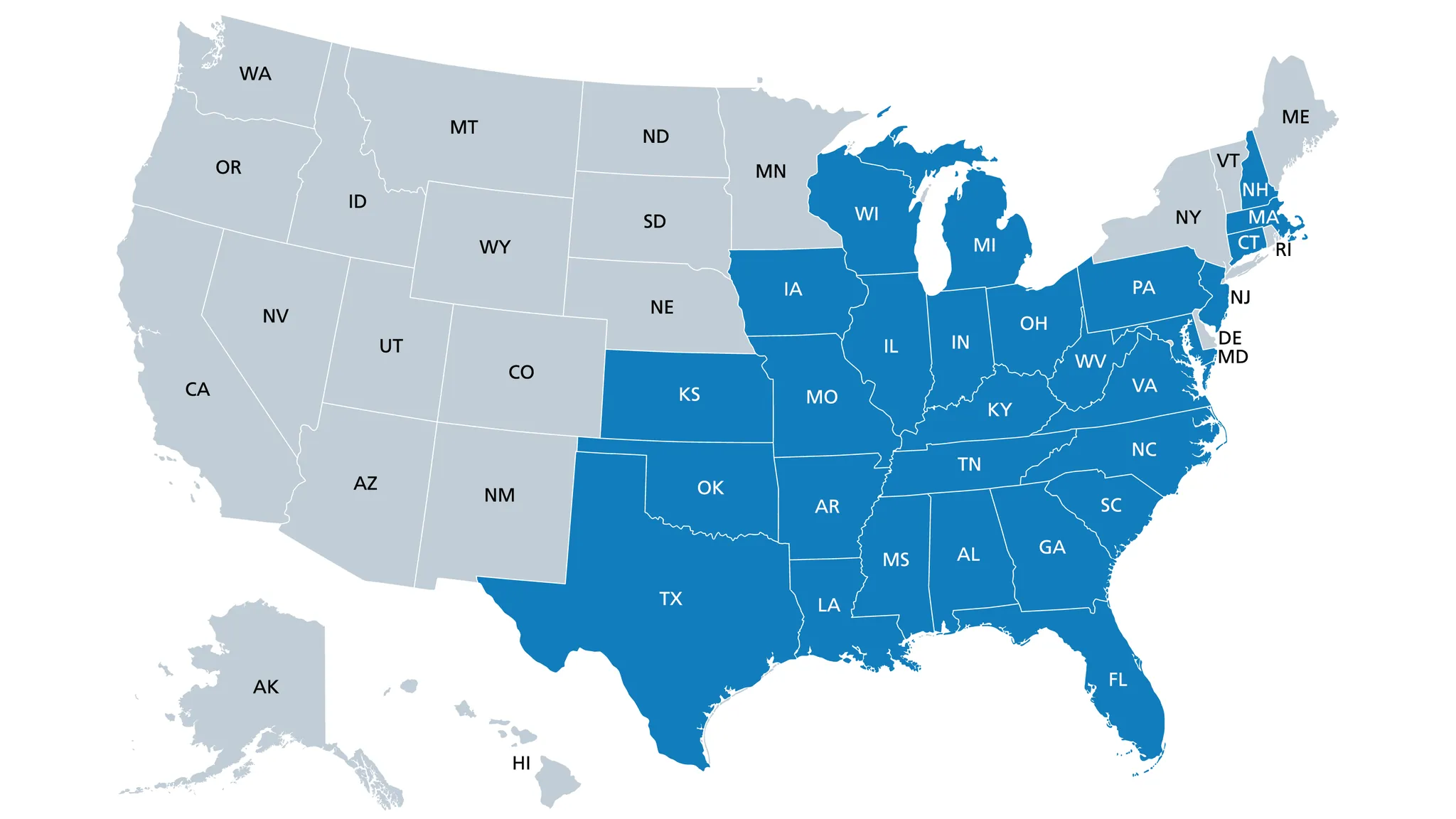
The July 2026 Cyclospora outbreak is the kind of file that separates AI supply-chain traceability claims from outbreak work. FDA’s public investigation page reported 1,644 confirmed illnesses and 94 hospitalizations across five states, with epidemiological interviews and FDA traceback linking illnesses to shredded iceberg lettuce supplied by Taylor Farms de Mexico and served at Taco Bell locations.[1] That is already a very different problem from clicking a lot number in a recall demo.
The investigation also had a detail that should make buyers pause before accepting clean-dashboard stories too quickly: FDA said product samples initially tested positive for Cyclospora but required re-review, and the agency later characterized those initial positives as false positives.[1] In a live outbreak, a lab signal can narrow the path, but it can also add another reconciliation loop. Someone has to decide whether the product result, the patient interviews, the purchase records, the distribution records, and the supplier documents are telling the same story.
As of Q3 2026, the public record does not show that AI traceability accelerated convergence in this outbreak. That does not prove no private tool was used by a company, distributor, or regulator. It does mean the visible source identification still rests on the conventional machinery: interviews, epidemiological comparison, retail records, distribution tracing, supplier records, and FDA traceback.
The Benchmark Is Not a Perfect FDA Process
FDA traceback is not elegant. The agency describes it as a reconstruction from points of service or purchase back through distribution, processing, packing, and harvest, using records, interviews, invoices, shipping documents, and supplier information.[2] The work is slow because the food system is slow to line up. A restaurant may have partial purchase records. A distributor may have records split between systems. A supplier may send a spreadsheet after the first wave of calls. Lot codes may exist, but not in the same format that downstream partners captured.
That is the benchmark AI traceability has to beat. Not a static chain of custody inside one company. Not a blockchain proof-of-concept where every participant knows the exercise is happening. The useful comparison is whether a tool gets investigators and FSQA teams faster from scattered illness reports and plausible exposure points to a defensible source when several jurisdictions, suppliers, distributors, and record systems are involved.
The Cyclospora file matters because it contains the ordinary mess: many cases, multiple states, a restaurant channel, a named produce source, and a laboratory signal that needed re-review. It is not an argument against digital traceability. It is an argument against treating recall lookup speed as outbreak-investigation speed.
Where the Records Start to Break
The first failure mode is usually not algorithmic. It is record convergence. iFoodDS described familiar outbreak-investigation breakdowns in 2026: traceability data spread across multiple systems, inconsistent lot-coding formats, manual reconciliation, and missing or delayed supplier data.[3] Those are not minor clerical annoyances. They decide whether a promising path can be tested in hours or whether an investigator waits for another file, another contact, another translation between systems.
| Demo condition | Outbreak condition |
|---|---|
| Known product and clean lot identifier | Illness reports first point to meals, stores, dates, and possible exposures |
| Single-enterprise or pre-connected partner records | Supplier, distributor, retail, restaurant, and public-health records arrive from different systems |
| Structured data captured for the exercise | Late spreadsheets, inconsistent lot codes, partial records, and manual corrections |
| Success measured by lookup time | Success measured by defensible convergence on a source |
A traceability platform can absolutely help with the left side of that table. If it standardizes receiving records, preserves lot relationships, and lets a company answer the first set of FSQA questions without a phone tree, it has value. The gap appears when that same evidence is presented as if it proves performance on the right side.
In a multi-state outbreak, the product path is only one side of the case. Investigators are also comparing illness onset windows, menu items, purchase dates, distribution timing, and laboratory results. If one supplier file is missing, if a lot code was truncated at a distribution center, or if a restaurant record shows a case of product but not the upstream lot, the AI layer may still be waiting on the same human reconciliation that slows conventional traceback.
Rare Outbreak Signals Are Not Just a Data-Volume Problem
The harder constraint is statistical. A 2026 systematic review in npj Science of Food reviewed 161 papers on AI in food safety and found severe class imbalance across the literature: most training data reflects safe or normal conditions, while the high-risk events that matter most are rare.[4] That is not a cosmetic modeling issue. It means a system can look strong on ordinary data and still struggle to recognize the sparse, messy pattern that matters during an outbreak.

Food-safety AI is often trained on the world as it usually behaves. Outbreak investigation is about the world when it briefly behaves badly, incompletely, and unevenly across jurisdictions. More transactions help only if the rare cases are represented well enough, labeled accurately enough, and connected to the right context. A larger haystack does not automatically make the needle easier to classify.
The review’s literature cutoff was April 2024, so it should not be read as a freeze-frame of all 2026 capabilities.[4] But class imbalance is structural, not a temporary feature release gap. Produce outbreaks, contamination events, and multi-state illness clusters are infrequent compared with ordinary shipments and ordinary meals. That imbalance is exactly why polished performance metrics from normal operations do not settle the outbreak question.
Opacity and Skills Still Matter After the Dashboard Finds a Pattern
A 2025 Trends in Food Science & Technology review identified three barriers that are especially relevant here: black-box opacity, data availability and quality constraints, and specialized skill requirements.[5] Those barriers are not abstract if a traceback recommendation has to survive regulatory, legal, and commercial scrutiny. A model output that says one supplier path is more likely than another is not the same as a documented source conclusion.
Outbreak work needs explanation, not just ranking. Why did the model downweight one distributor? Did it infer a missing handoff, or did it ignore that file because the lot format was unfamiliar? Did a restaurant’s corrected receiving record overwrite an earlier version? Was the lab re-review incorporated as a reversal, or did the system continue treating the first result as a positive signal? These are the points where an FSQA manager, epidemiologist, or regulator has to defend the path.
That does not make AI useless. It changes the procurement test. A tool that gives a cleaner starting point, flags missing supplier records, clusters likely exposure windows, or shows contradictory lot paths may save real time. But if the vendor cannot show how the system behaves when data is late, contradictory, jurisdiction-crossing, or later corrected, the buyer has not seen an outbreak tool. They have seen a traceability interface.
FDA’s Own AI Agenda Is Ambitious, Not Yet a Traceback Replacement
FDA is not ignoring AI. Its Human Foods Program 2026 priority deliverables include developing a plan for AI-predictive models using food supply-chain datasets, a proof of concept for facility inventory accuracy, and AI/ML work for import screening.[6] At IFT FIRST on July 23, 2026, FDA Deputy Commissioner Donald Prater said, “AI and machine learning is really a game changer for food safety,” while describing university and industry partnerships.[6]
Those are important signals of direction. They are not public evidence that FDA has replaced conventional traceback with operational AI during multi-jurisdiction outbreak investigations. The distinction matters because agency proof-of-concept work, import screening support, inventory accuracy, and predictive-model planning are adjacent to outbreak traceback, not equivalent to proving faster source convergence in a live outbreak.
For readers evaluating adjacent claims about detection and prediction, it is useful to keep those lanes separate. AI can be used to scan signals before an outbreak is confirmed, as discussed in ChainSignal’s coverage of AI food supply chain outbreak detection, and it can be evaluated as a future-facing prediction tool. But traceback performance during an active, multi-source illness investigation is a narrower and harsher test.
Controlled Successes Still Have a Place
There is no need to dismiss controlled traceability successes. Blockchain proofs of concept, mock recalls, and structured lot-level tools have shown that companies can reduce lookup time when product identity, partner participation, and data structure are already in place. That is useful for recall readiness, supplier accountability, and internal FSQA response.
The mistake is treating those metrics as transferable to outbreak convergence. A mock recall begins with a known item and asks how quickly the company can trace where it went. A foodborne outbreak may begin with patients, dates, symptoms, restaurants, menu items, and several plausible ingredients. The product identity is the thing being investigated, not the input to the exercise.
That distinction also explains why FSMA 204 readiness and outbreak investigation capability should not be collapsed into one buying question. Better key data elements and critical tracking events can improve the raw material investigators receive. They do not, by themselves, prove that an AI system can reconcile conflicting supplier records, epidemiological uncertainty, and cross-jurisdictional evidence faster than the existing process. For regulatory context, ChainSignal’s discussion of AI traceability and agricultural policy changes is the more natural frame.
Adoption Numbers Are Context, Not Proof
BCC Research estimated in 2025 that fewer than 30% of global food manufacturers had fully integrated AI-based traceability systems.[7] The figure should be handled carefully because the methodology is not independently audited in the materials available here. Still, it gives useful context: the installed base is not yet broad enough to assume that multi-enterprise outbreak data will arrive in a harmonized AI-ready state.
Low integration does not mean weak technology. It means that the network effect vendors need is still uneven. A buyer may digitize its own plants and still depend on supplier files, distributor exports, restaurant records, broker information, and regulatory requests that arrive outside the platform. During a live outbreak, the slowest unresolved record can matter more than the fastest connected node.
What Procurement Teams Should Ask Instead
The useful procurement question is not whether the vendor can trace a product. Many can. The question is whether the system can help a mixed team converge on a defensible source when the initial product is uncertain and the records do not agree.
- Ask for a multi-supplier traceback test where the implicated ingredient is not named at the start.
- Require missing-data scenarios: delayed supplier files, inconsistent lot codes, partial distributor records, and corrected lab or product results.
- Separate recall-readiness metrics from outbreak-investigation metrics; lookup speed is not source convergence.
- Ask how the system explains, audits, and revises its conclusions when new evidence contradicts an earlier path.
- Test jurisdiction-crossing workflows, including who reviews evidence, who can see records, and how regulatory requests are documented.
A vendor that performs well under those conditions deserves attention. A vendor that only shows a clean internal lot journey may still be useful, but the claim should be priced as recall readiness or record modernization, not as proven acceleration of multi-state outbreak investigation.
The Cyclospora investigation may receive later public updates, and private parties may have used tools that are not visible in FDA’s public file. Based on the public evidence available in Q3 2026, AI traceability can improve records and reduce some early FSQA friction, but it has not yet demonstrated reliable acceleration of real multi-source, multi-jurisdiction foodborne outbreak convergence.
References
- Investigation of 5-State Outbreak of Cyclospora Illnesses: Iceberg Lettuce (July 2026), FDA, July 2026.
- How the FDA Uses Traceback to Respond to Foodborne Illness Outbreaks, FDA.
- How Traceability Improves Outbreak Investigations, iFoodDS, May 2026.
- Artificial intelligence in food safety: A systematic review, News-Medical.net, 2026.
- Artificial intelligence in food safety: Opportunities, challenges, and future perspectives, Trends in Food Science & Technology, November 2025.
- Human Foods Program 2026 Priority Deliverables, FDA, 2026.
- AI-based Traceability Systems in Food Manufacturing, BCC Research, 2025.
§ 42 — Cited evidence
Flag an inaccuracy or submit a comparable account — Contribute or read how claims are verified in Methodology.