
The useful question about AI supply chain optimization at GE Aerospace is not whether an algorithm can make a better forecast in isolation. It is whether a shop visit plan gets committed earlier, whether a constrained part is visible before the engine arrives, and whether a grounded aircraft stops consuming cash while teams argue over material assumptions.
That standard is harsh because aerospace MRO is already harsh. A single commercial aircraft can contain up to 3 million parts, AOG costs are commonly cited at $10,000 to $20,000 per hour and can run higher, and inventory holding costs can reach 15% to 25% of part value per year.[1] On the engine side, Oliver Wyman’s 2026 MRO survey found narrowbody engine turnaround times now regularly exceeding 180 to 200 days, with tariff impacts reported by 90% of organizations and material cost inflation outpacing expectations by 100 to 200 basis points.[2]
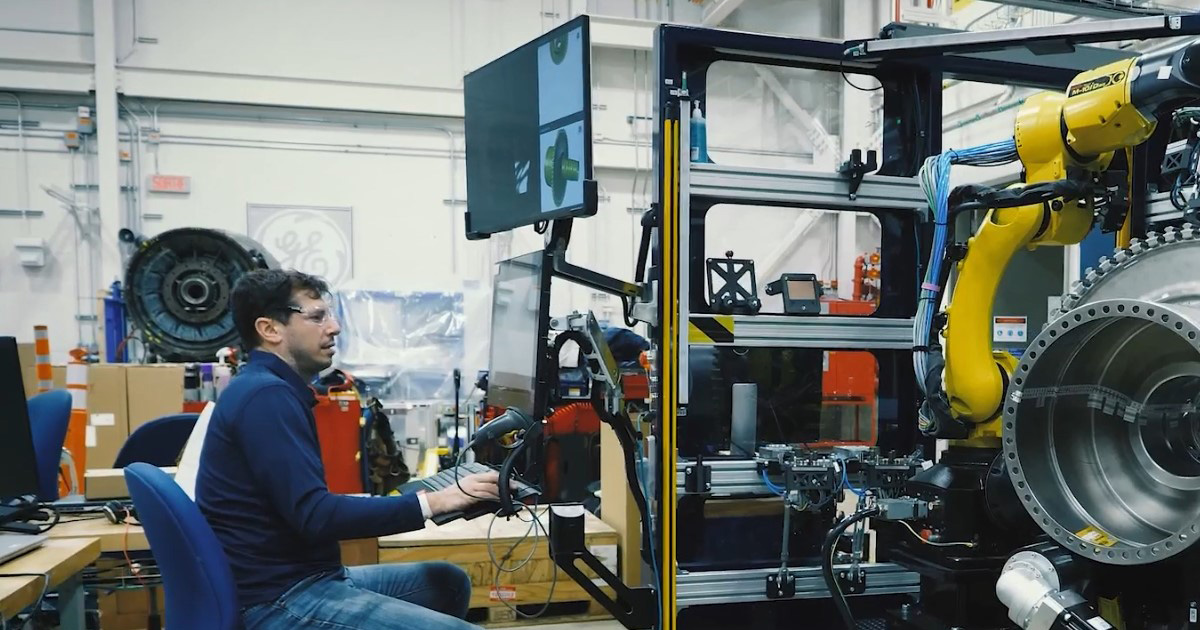
In that environment, a generic claim about AI adoption is not very interesting. A five-day reduction in an engine event is interesting. A better parts forecast is interesting only if it changes the purchasing, allocation, repair, or escalation decision before the missing part becomes the pacing item.
The expensive mistake happens before teardown
Engine MRO planning has always had an uncomfortable timing problem. The organization wants to reserve capacity, secure material, and give a customer a credible completion date before the shop has full teardown findings. But the most expensive surprises often appear after induction, when a life-limited part, blade set, module-level repair, or vendor process suddenly becomes the constraint.
That is why GE Aerospace’s AI Material Assistant matters. GE says the tool predicts needed parts months ahead of engine shop visits and has cut turnaround time by five to seven days per event.[3] The important part is not that a model forecasts demand. The important part is that the forecast enters the shop-visit planning window early enough to change material positioning, supplier action, and customer expectations.
| MRO pressure point | Why it hurts | What an early AI signal can change |
|---|---|---|
| Unknown parts need before induction | Material plans depend on assumptions that may fail after teardown | Earlier buying, repair routing, pooling, or allocation decisions |
| Long engine turnaround time | A few missed days compound across customer commitments and fleet availability | Fewer shop days lost to material discovery and expediting |
| High inventory carrying cost | Holding every possible part is financially unattractive | More selective stocking based on event-level probability |
| AOG exposure | A grounded aircraft turns delay into direct financial pressure | Earlier escalation before the aircraft is waiting |
The operational compression is easy to understate. Against a 180- to 200-day narrowbody engine turnaround environment, five to seven days may look small as a percentage.[2][3] In a real shop network, those days sit at the point where customer commitments, spare engine coverage, lease exposure, and expediting costs meet. They can also be the difference between a constrained part being a planned exception and a daily escalation.
A traditional forecast often works at the part-number or fleet level: how much will the network consume next quarter, next year, or across a program? The more valuable MRO question is narrower and harder: given this engine, this operator history, this workscope expectation, this configuration, and this shop visit timing, what material is likely to be needed early enough that someone can still do something about it?
That distinction changes the economics. If a planner knows months ahead that a part has a high likelihood of being needed, the response does not have to be “buy more inventory.” It may be to reserve a repaired unit, move a pool asset, trigger supplier follow-up, alter a slot plan, or warn a program team that the promised date rests on a fragile assumption. The model is valuable when it gives the organization time, not when it gives the organization a prettier dashboard.
The J85 case is closer to sustainment reality than a lab demo
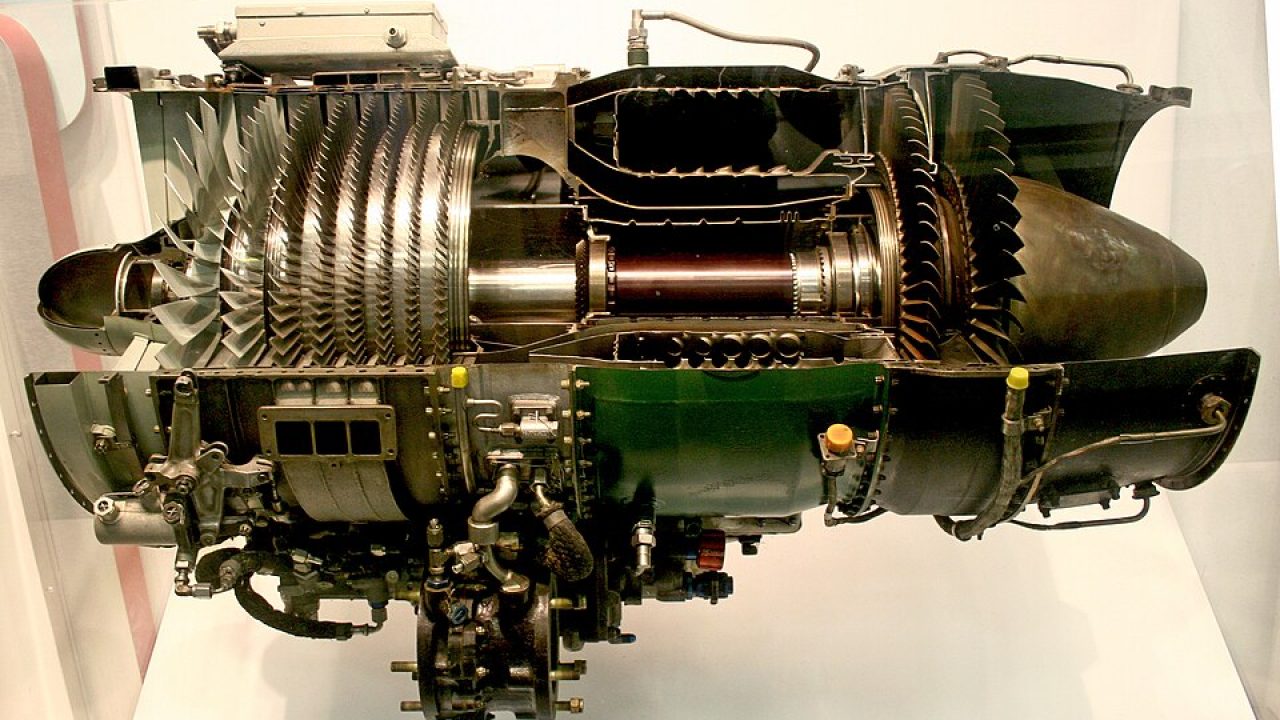
GE Aerospace’s Defense Logistics Agency contract for the J85 engine is a useful case because the scope is messy in the way sustainment is actually messy. GE says the effort uses AI to manage more than 6,000 parts across U.S. Air Force, DLA, and GE Aerospace enterprise data systems, with demand prediction and constraint identification intended to support proactive sustainment.[4]
That data span matters. A model trained only on one slice of the workflow may predict a need that cannot be acted on, or miss a constraint that sits outside the dataset. In a defense sustainment environment, the useful signal may require maintenance history, configuration, usage, stock posture, repair status, procurement lead time, and enterprise constraints to meet in one operating picture.
The J85 example should not be read as proof that any MRO organization can install an AI layer and get the same result. It should be read as evidence that when OEM, defense customer, logistics agency, and enterprise data are connected well enough, AI can move from analysis into sustainment planning. The difference is not semantic. It is the difference between identifying a risk and having enough trusted context to assign action against it.
Predictive maintenance only pays supply chain back when it changes timing
Digital twins and predictive maintenance are often discussed as engineering tools, but their supply chain value is in timing. GE reports 24x7 engine health monitoring, 60% faster issue identification, and a 50% reduction in on-wing blade inspection time from its AI-enabled systems.[3] It also reports 30% to 40% fewer unscheduled events tied to predictive maintenance capabilities.[3]
Those are company-reported figures, not independent industry benchmarks. Still, the workflow they point to is the right one. If an issue is identified earlier, the supply chain gets more choices. It can position material before a removal, align a slot before the work becomes disruptive, and decide whether an on-wing inspection, repair, or planned shop visit is the least costly path.
A 50% reduction in on-wing blade inspection time is not just a maintenance labor statistic.[3] It can reduce the inspection burden that holds an aircraft or engine in an uncertain state. Faster issue identification has the same effect: it narrows the period in which planners are forced to protect against too many possible outcomes at once.
The supply chain benefit is clearest when predictive maintenance moves work from the emergency lane to the planned lane. Fewer unscheduled events can mean fewer premium freight moves, fewer last-minute part substitutions, fewer customer escalations, and less inventory held simply because the organization does not trust its own visibility.
Where the evidence is strong, and where it is still thin
The strongest thing about the GE Aerospace examples is that they tie AI to named operating mechanisms: material prediction before shop visits, 24x7 engine monitoring, faster issue identification, shorter inspection time, and a large defense parts-management environment.[3][4] Those are better claims than broad statements about digital transformation because they can be tested against shop flow, part availability, event duration, and sustainment readiness.
The limitation is equally important. The five- to seven-day turnaround reduction, 60% faster issue identification, 50% inspection-time reduction, and 30% to 40% reduction in unscheduled events come from GE Aerospace’s own materials.[3] They are useful evidence of what GE says it is achieving, but they should not be treated as independent benchmarks for the entire MRO market.
Independent industry data still show an aftermarket under strain rather than one already transformed. Oliver Wyman’s 2026 survey found that 58% of organizations remain at the experimental AI stage, even as two-thirds report value meeting or exceeding expectations.[2] That gap is familiar: a tool can work in a defined lane before the enterprise has the data governance, process discipline, and cross-functional trust to scale it.
Certification and safety-critical decision paths add another brake. AI that influences maintenance and sustainment decisions in aviation cannot be treated like a retail replenishment model. The closer a system gets to safety-critical judgment, the more evidence, traceability, and human review it needs. That does not make AI unusable in MRO supply chains. It does mean the first durable gains often appear around planning, forecasting, inspection support, constraint detection, and prioritization rather than fully autonomous maintenance decisions.
The readiness test for other MRO organizations
The practical lesson from GE Aerospace is not “buy AI.” It is to identify the decision that is currently made too late, then ask whether the data exists to move that decision earlier. For engine MRO supply chains, the best candidates are usually material prediction, repair-or-buy timing, constrained-part escalation, unscheduled removal risk, and inspection planning.
- Can planners connect historical removals, configuration, workscope, consumption, repair status, and supplier lead times at the event level?
- Can the organization act on a forecast months ahead of induction, or does approval wait until teardown evidence is available?
- Are constrained parts visible across OEM, operator, MRO, defense, and enterprise systems where relevant?
- Does the AI output change an owned workflow, such as slot planning, material reservation, repair routing, or customer escalation?
- Are reported savings measured against turnaround time, AOG exposure, unscheduled events, inspection burden, or inventory carrying cost rather than model accuracy alone?
That last point is where many pilots become decorative. A high-confidence forecast that no buyer, planner, engineer, or program manager is authorized to use will not shorten a shop visit. A lower-glamour signal that triggers a material reservation six weeks earlier may be worth far more.
GE Aerospace shows that AI-driven MRO supply chain optimization has moved beyond proof-of-concept in mature, integrated environments. Its reported gains are specific enough to take seriously: parts predicted months ahead, turnaround reduced by five to seven days, issues identified faster, inspections compressed, and large sustainment parts sets managed proactively.[3][4] Oliver Wyman’s finding that most organizations remain experimental keeps the conclusion calibrated.[2] The benchmark for everyone else is not whether they have an AI initiative. It is whether their data and operating model let them make the material decision before the engine, aircraft, or customer is already waiting.
References
- Optimizing Aerospace Supply Chain With AI, Big Data, Aviation Week
- Aviation MRO Labor and Material Supply Chain Paradigm, Oliver Wyman, April 2026
- Artificial Intelligence, GE Aerospace, March 2026
- GE Aerospace Awarded Defense Logistics Agency Contract to Increase U.S. Air Force J85 Engine Readiness, GE Aerospace
Comments
Join the discussion with an anonymous comment.