
El Niño 2026 is testing AI supply chain disruption planning before the event has finished forming. As of July 23, 2026, the useful question is not whether any platform can declare the season solved. It is whether planners can see exposure earlier, rank the right exceptions faster, and act before a weather signal becomes a revenue event.
NOAA’s ENSO outlook gives this a hard operating edge: El Niño emergence by summer 2026 is estimated at 82–97%, with a 63% chance of a strong event by winter.[1] That makes the current quarter a live planning window, not a retrospective case study. The outcome evidence available now is uneven, but it is already useful if it is labeled correctly.
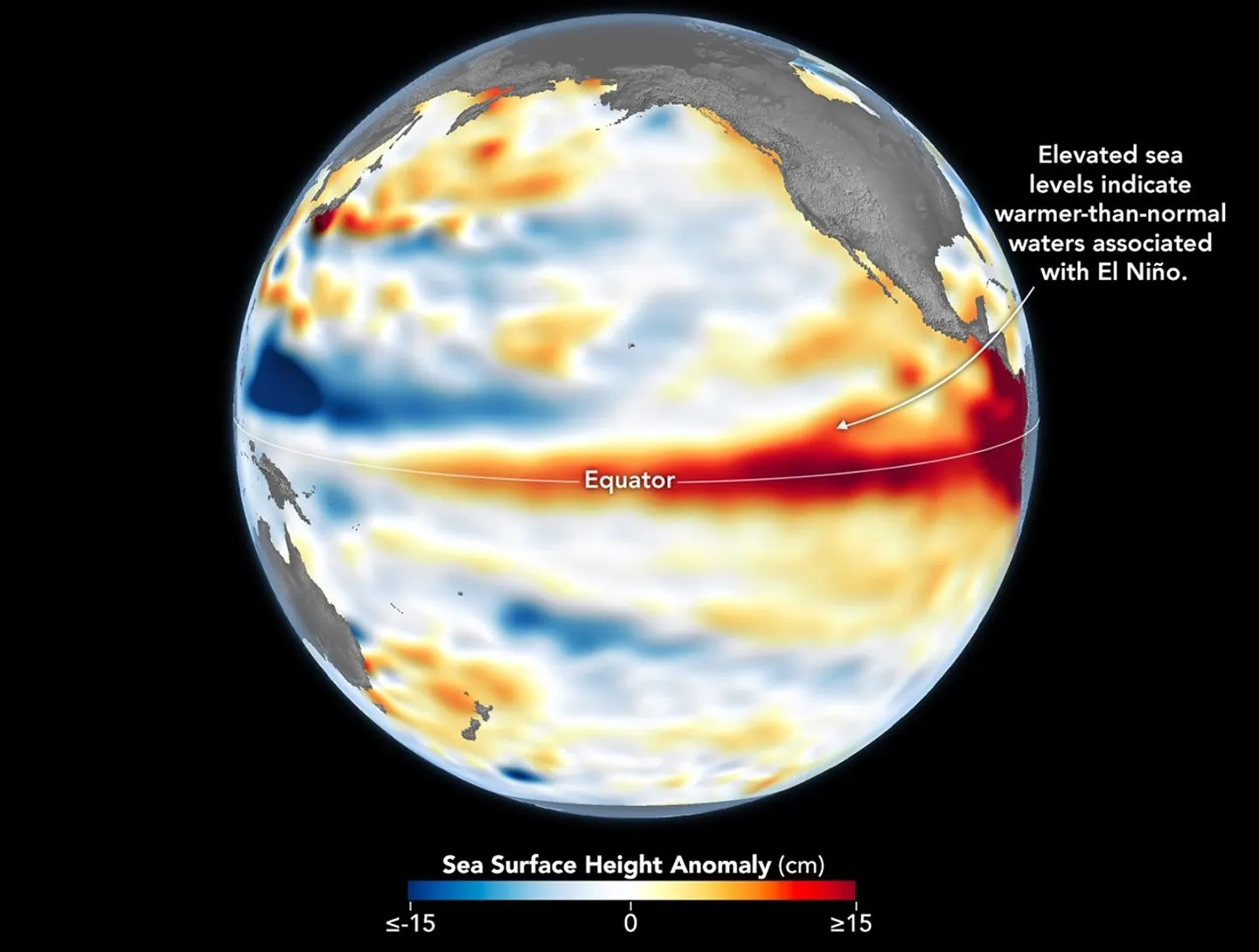
The planning problem is moving faster than the annual plan
El Niño does not create a single supply chain problem. It changes the probability and timing of several problems that planning teams already know how to model separately: canal restrictions, water-intensive production risk, agricultural yield pressure, port congestion, lane reliability, and commodity substitutions.
The exposure map is already crowded. Crisis24 identifies infrastructure and supply chain risks tied to the 2026–2027 El Niño period, including Panama Canal water constraints linked to Lake Gatun, Taiwan semiconductor water risk, Southeast Asian agricultural commodity exposure, and projected Pacific trade lane delays of about 35%.[2] PreventionWeb similarly flags the risk that a strong El Niño could pressure global supply chains through transport, food, and industrial input channels.[3]
Those are not clean laboratory variables. In the same planning cycle, teams may also be dealing with fertilizer restrictions around the Strait of Hormuz, Iran-related conflict risk, and tariff volatility. If revenue loss falls after an AI platform is deployed, it is still hard to isolate how much came from better El Niño sensing, better routing, better inventory posture, or a more disciplined operating cadence. That attribution problem does not make the tools irrelevant. It makes the evidence category matter.
| Evidence type | What it can support | What it cannot prove on its own |
|---|---|---|
| Observed client outcomes | Measured changes reported across implemented customers | Universal performance across weaker planning environments |
| Pilot outcomes | Concrete results in a bounded use case | Enterprise-wide readiness for autonomous disruption management |
| Forward-looking planning guidance | Useful ranges for stress testing buffers, sourcing, or capacity | Verified savings or service outcomes |
The strongest outcome claim is faster impact identification
Everstream’s client-reported data is the most relevant outcome set because it connects AI-enabled risk management to the two things disruption rooms usually care about first: revenue exposure and time to impact assessment. The company reports a 30% reduction in revenue losses from disruptions and 50–70% faster disruption impact identification for customers using its AI-supported supply chain risk management capabilities.[4]
The second number is more operationally interesting than it may look. Faster impact identification is not just an analytics metric. In an El Niño planning cycle, it can mean the difference between discovering a supplier exposure after a missed sailing and identifying it while there is still time to rank alternate suppliers, change a port pair, rebalance safety stock, or ask a customer-facing team which orders should be protected first.
Everstream’s El Niño-specific weather risk material frames the transition from La Niña to El Niño as a supply chain risk event that can affect transport routes, production regions, and commodity availability.[5] That matters because the value of AI disruption planning is not the weather alert by itself. Most companies can receive alerts. The harder task is matching a probabilistic climate signal to purchase orders, bills of material, tiered suppliers, inventory positions, route commitments, and customer promises.
A planner does not need a platform to say “Panama Canal risk is elevated” in isolation. The defensible output is narrower and more useful: which products depend on lanes exposed to canal restrictions, which orders have no practical substitute routing, which suppliers sit in drought-sensitive production zones, and which customers will feel the service failure first. If AI reduces the time needed to assemble that view by 50–70%, it changes the meeting from discovery to choice.[4]
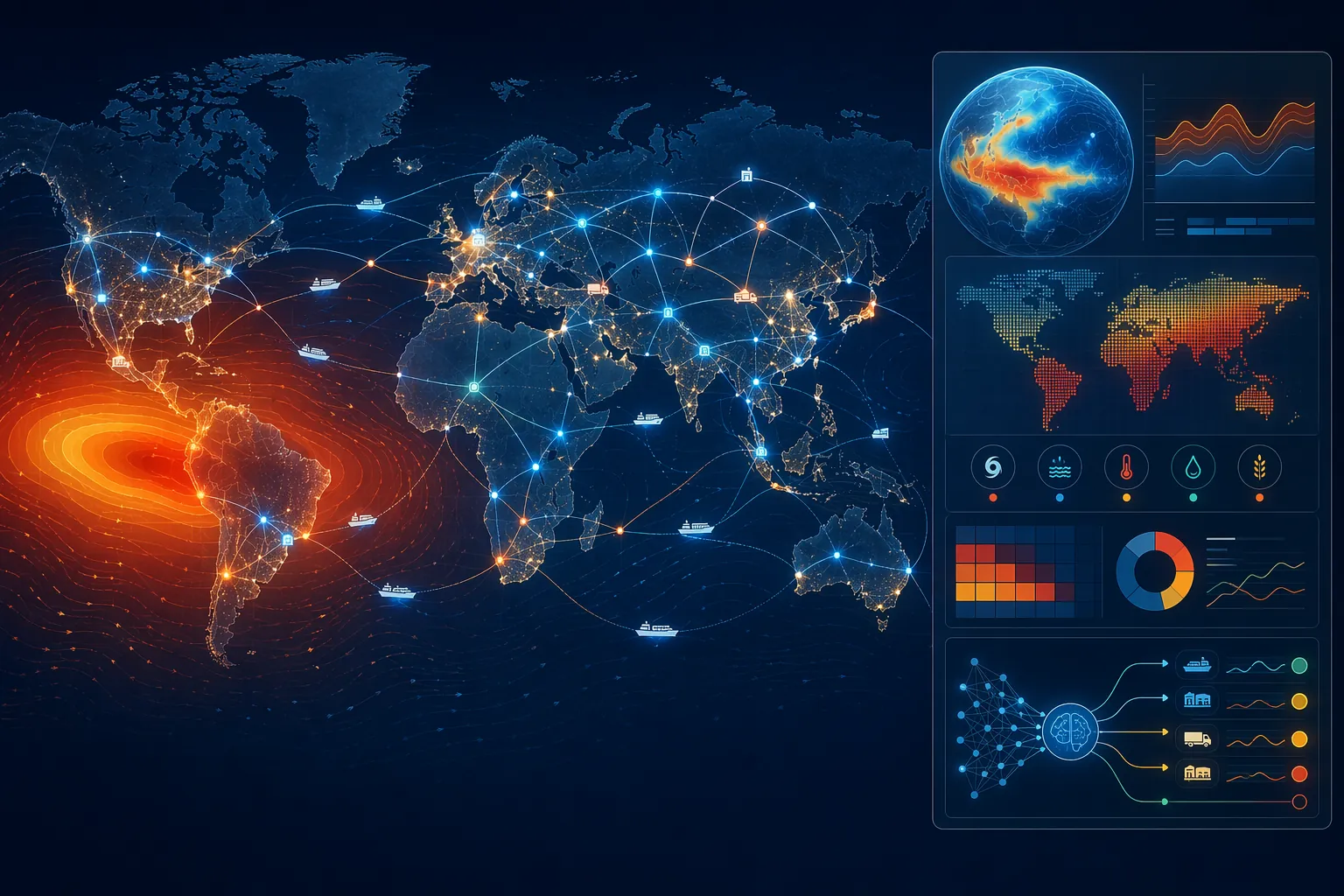
Revenue loss reduction is promising, but not portable by default
The 30% reduction in disruption revenue losses is a stronger business claim than faster assessment, and it should be treated with more caution for the same reason.[4] Revenue loss is downstream of many decisions: inventory policy, customer allocation rules, logistics contracts, supplier flexibility, executive escalation speed, and commercial tolerance for substitutions. AI may improve several of those decisions, but it rarely owns all of them.
The result is still worth attention. A risk platform that identifies exposure earlier can prevent planners from spending the first 48 hours of a disruption reconciling spreadsheets and arguing over which data is current. If the customer, supplier, inventory, and lane data is already connected, the system can push the team toward ranked exceptions instead of broad regional concern.
That “if” is where many AI pilots quietly break. BCG’s 2026 planning analysis warns that AI alone underperforms when it is placed on top of immature planning foundations.[6] This is not a generic technology caveat. It directly affects whether El Niño disruption planning outcomes are repeatable. A model can identify a drought-exposed supplier, but it cannot fix stale lead times, untrusted inventory records, unclear allocation rules, or a procurement process that requires three approvals after the alternative source is already capacity-constrained.
Where agentic AI is already easier to defend
The clearest automation evidence is narrower than the broad disruption-management story. Icron Technologies reports that an agentic AI pilot with Deloitte produced a 30% delivery time reduction and 12% fuel cost savings through autonomous re-routing.[7] That is a concrete logistics result, but it is still pilot evidence, not proof that autonomous AI should handle all high-consequence supply chain decisions during El Niño.
Re-routing is a better early home for agentic automation because the decision space can be bounded. The system can compare feasible routes, delivery windows, capacity constraints, fuel implications, and service requirements. A human team can define guardrails in advance: avoid sanctioned regions, protect temperature-controlled freight, cap incremental cost, preserve contracted carrier rules, or require approval when a customer commitment is at risk.
That is different from letting an agent decide which supplier should receive scarce allocation, which customer should be shorted, or whether a category should shift to a higher-cost source for a quarter. Those choices carry commercial, legal, and relationship consequences that usually exceed a routing optimization problem. The pilot result is encouraging precisely because it stays close to a decision type where the operating boundary can be written down.
The automation boundary is not a philosophical debate
Gartner forecasts that 60% of supply chain disruptions will be resolved without human intervention by 2031, while also cautioning that full automation today remains restricted to low-risk decisions.[8] That pairing is the right way to read the market in Q3 2026. The direction of travel is toward more autonomous resolution. The current operating state is supervised automation around selected decisions.
For El Niño planning, the boundary should be drawn around consequence, reversibility, and confidence. A system can automatically flag affected purchase orders, refresh estimated arrival risk, recommend a routing alternative inside approved cost limits, or raise safety stock review tasks. It should not silently lock in a supplier exit, override allocation priorities, or commit scarce inventory to one region unless the governance model already says who authorized that tradeoff.
This is where “autonomous” often becomes slippery. If a planner must spend the next morning cleaning up exception queues, reconciling bad master data, and explaining why a recommendation violated a sourcing constraint, the organization did not automate disruption management. It automated part of the analysis and moved the consequence elsewhere.
Buffer recommendations are planning guidance, not outcome data
Accio-AI’s El Niño planning guidance recommends dynamic safety stock modeling and cites 25–40% buffer increases for climate-vulnerable categories.[9] That range can be useful for stress testing, especially when a category has long replenishment lead times, single-region exposure, or limited substitution options. It should not be read as independently verified evidence that every company increasing buffers by that amount will improve service or margin.
The right use of that kind of recommendation is scenario design. A procurement team can model what happens if Southeast Asian agricultural inputs face disruption, if Pacific lanes slow, or if a water-sensitive supplier in Taiwan loses production flexibility. Then finance and operations can see which buffer increases protect revenue and which ones only convert uncertainty into working capital.
A good AI planning system should make that tradeoff visible. It should show the carrying cost, the service risk, the supplier constraint, and the timing of the decision. The recommendation is not “carry more inventory because El Niño exists.” The recommendation is “this exposure becomes expensive if the decision waits until the signal is confirmed.”
What supply chain leaders can reasonably expect in Q3 2026
The most defensible near-term outcome is faster assisted planning. Enterprises with connected supplier, inventory, logistics, and customer data can expect AI tools to shorten the time between climate signal and operational impact view. The Everstream client figures suggest that this can translate into materially faster impact identification and lower disruption revenue losses, but those results should be read as vendor-reported client outcomes rather than independently audited universal benchmarks.[4]
A second reasonable expectation is selective automation in logistics. The Icron/Deloitte pilot shows measurable gains from autonomous re-routing, and that decision class is easier to govern than sourcing, allocation, or inventory policy changes.[7] For many companies, the first real payoff will come from letting the system handle bounded logistics moves while escalating higher-consequence tradeoffs to planners.
A third expectation is better scenario discipline. El Niño-linked planning is full of overlapping risks, and some of the 2026 evidence is still projected rather than observed. AI can help teams maintain multiple scenarios without losing the thread: what changes if canal transit tightens, if a commodity supplier becomes unreliable, if a port pair slows, or if a geopolitical shock hits the same category at the same time.
The weak expectation is full autonomous disruption management. Gartner’s 2031 forecast may prove directionally right, but in July 2026 most enterprises still need human review for decisions that move margin, customer priority, supplier commitment, or regulated trade exposure.[8] El Niño is showing that AI can improve response speed and reduce losses when the planning foundation is mature enough. It is not yet showing that companies can hand the disruption room to the model.
References
- ENSO Diagnostic Discussion, NOAA Climate Prediction Center.
- El Niño 2026–2027: Global Weather, Supply Chain, and Infrastructure Risks, Crisis24.
- Impacts of Impending Super El Niño on Global Supply Chains, PreventionWeb.
- Artificial Intelligence's Role in Supply Chain Risk Management, Everstream Analytics.
- Weather Risk for Supply Chains: The Transition from La Niña to El Niño, Everstream Analytics.
- Supply Chain Planning 2026: Why AI Alone Isn't Enough, Boston Consulting Group.
- How Agentic AI is Shaping Supply Chain Planning in 2026, Icron Technologies.
- Gartner Predicts 60% of Supply Chain Disruptions Will Be Resolved Without Human Intervention by 2031, Gartner, March 18, 2026.
- Super El Nino 2026: Protect Your Supply Chain From Climate Chaos, Accio AI.
Comments
Join the discussion with an anonymous comment.