
The Apple-Nvidia AI chip supply chain competition now starts at TSMC’s loading dock, not in a product keynote. Analysts cited by CNBC project that Nvidia will generate about $33 billion of TSMC revenue in 2026, roughly 22% of the foundry’s total, while Apple is estimated at about $27 billion, or about 18%.[1] Those are analyst estimates, not customer-by-customer revenue figures disclosed by TSMC. Still, they describe a reversal that procurement teams cannot treat as a leaderboard change.

Apple spent years as the customer that could anchor advanced-node ramps, absorb volume, and give suppliers the confidence to invest ahead of demand. Nvidia’s ascent changes the basis of that priority. Its AI accelerators do not merely require leading-edge wafers; they also consume large die area, depend on advanced packaging, and pull high-bandwidth memory into the same planning conversation. A buyer waiting for AI servers is not just waiting for a GPU vendor to ship. That buyer is exposed to wafer starts, CoWoS slots, substrate readiness, HBM allocation, and the commercial leverage behind each of those queues.
That is why the Apple-Nvidia rivalry matters beyond either company’s earnings. It shows that the most important constraints in AI hardware supply have moved upstream and become political inside the supplier base. If Nvidia is the customer filling the biggest revenue line at the world’s most important advanced foundry, then every other customer’s lead-time model needs to account for a new hierarchy.
The Customer Ranking Is Only the Visible Part
TSMC’s mix had already been moving in this direction before the 2026 customer estimates made the shift hard to ignore. SemiAnalysis, drawing on TSMC earnings disclosures, reported that high-performance computing rose from 36% of TSMC revenue in Q1 2020 to 58% in Q4 2025, overtaking smartphones as the primary driver.[2] That is the more durable signal. Nvidia did not simply take a seat that Apple used to occupy; the category underneath the seat changed.
Smartphone silicon has always been demanding. Apple’s chips helped push node transitions, process discipline, and manufacturing scale. But an AI accelerator cluster pulls the supply chain in a different shape. It concentrates demand into large compute dies, packaging capacity, memory stacks, power delivery, server integration, and data-center deployment windows. A delay in any one layer can hold back the finished system.
For a device OEM, the practical discomfort is that strong historical standing with a foundry no longer guarantees the same relative priority when the foundry’s growth engine has moved toward AI infrastructure. For a cloud or enterprise buyer, the discomfort is less visible but more direct: the server quote may look like a negotiation with an OEM or accelerator supplier, while the real scarcity sits several tiers upstream.
| Constraint | Why It Now Matters More |
|---|---|
| Advanced-node wafer starts | AI accelerators compete with premium mobile silicon for leading-edge capacity, while often using larger die area per unit. |
| CoWoS and advanced packaging | Accelerators need packaging capacity that traditional mobile processors historically did not require in the same way. |
| HBM and DRAM allocation | Memory suppliers are shifting capacity toward AI servers, affecting pricing and availability for other categories. |
| Multi-year reservations | Supplier commitments can lock priority before downstream buyers enter the purchasing cycle. |
Wafer Capacity Is No Longer the Whole Answer
A familiar semiconductor question is whether enough advanced-node capacity exists. In AI hardware procurement, that question is necessary but incomplete. A finished accelerator does not leave the supply chain when the wafer is processed. It must be packaged with adjacent memory and interconnect structures that can support the bandwidth and power profile expected in training and inference systems.
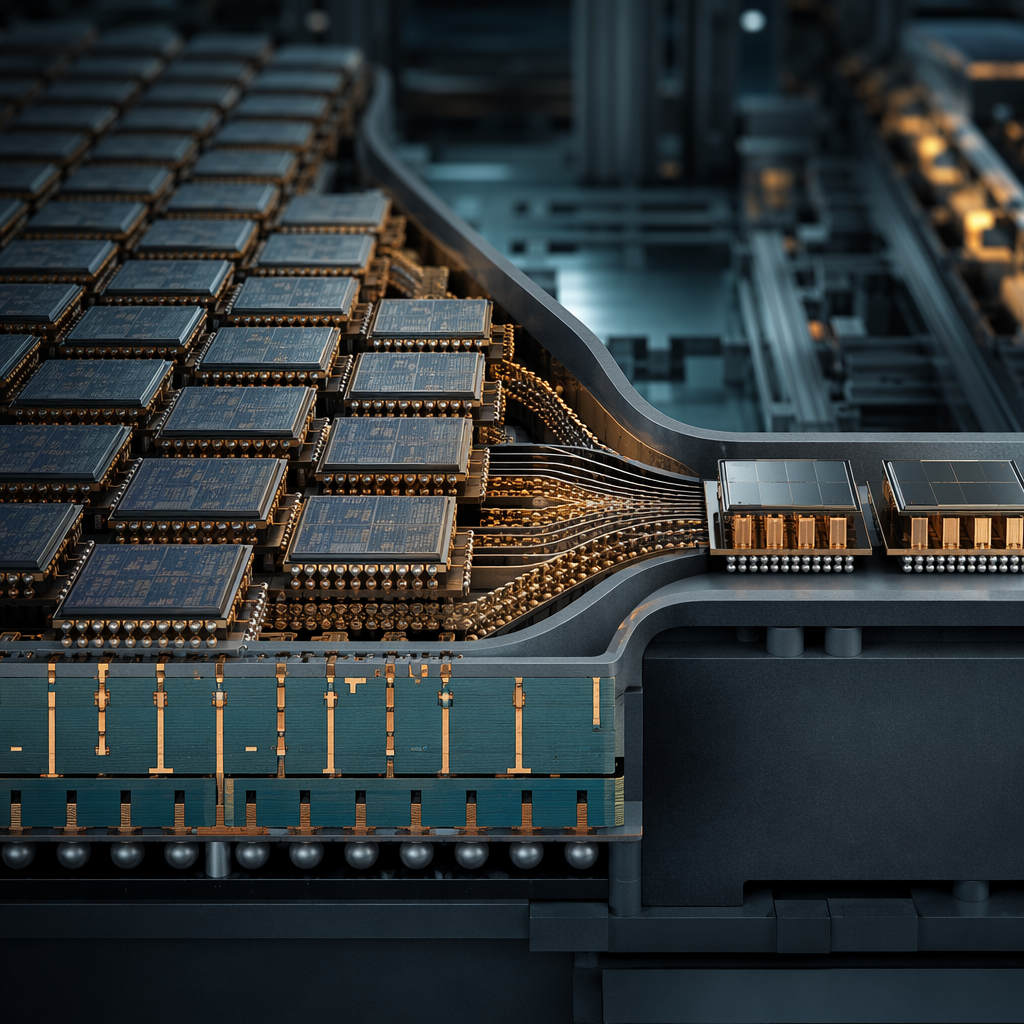
This is where the Nvidia shift becomes operationally different from a normal customer reshuffle. CNBC reported in April 2026 that Nvidia had reserved a majority of TSMC’s CoWoS advanced packaging capacity through multi-year agreements.[3] If a supplier has already committed the scarce packaging lane, an available wafer slot does not automatically convert into an available product shipment.
That distinction matters for anyone building a bill of materials around AI accelerators. A sourcing team can receive a plausible statement that leading-edge wafer capacity is improving and still face slippage because the package cannot be completed at the required rate. In practical terms, packaging capacity becomes a separate line item in supply assurance, not a footnote under foundry capacity.
The squeeze is not confined to Nvidia’s own products. Oplexa reported that Google cut its 2026 TPU production target by about 25%, from roughly 4 million units to roughly 3 million units, because of the AI chip packaging bottleneck.[4] That claim should be read with caution because it comes from a secondary intelligence source rather than a direct Google or TSMC disclosure. Even with that caveat, it illustrates the procurement problem cleanly: a buyer can choose a non-Nvidia accelerator architecture and still run into the same packaging choke point.
This is the part of the supply chain that punishes lazy diversification. Replacing one accelerator vendor with another may reduce commercial dependency, but it does not necessarily reduce exposure to the same packaging provider, the same interposer capacity, the same substrate limits, or the same HBM supply. Diversification that stops at the logo on the accelerator card is often too shallow.
Memory Allocation Has Joined the Same Fight
The AI supply constraint is also pulling memory away from older planning assumptions. Business Insider reported in January 2026 that DRAM and HBM capacity was being reallocated toward AI server customers, driving up pricing and squeezing smartphone and PC margins.[5] The important detail is not simply that memory is expensive. It is that memory suppliers are choosing where scarce capacity earns better returns.
For procurement teams, that changes the meaning of a server delivery commitment. The accelerator may be the named component, but HBM availability can determine whether the product exists in shippable form. Commodity DRAM, server memory, and high-bandwidth memory do not all behave identically, yet the capacity and capital-allocation decisions behind them are increasingly influenced by the same AI infrastructure demand.
The spillover is easiest to miss in organizations that buy finished systems. A cloud infrastructure team may see a delayed rack. An enterprise AI lead may see a pushed-out delivery window. A device planner may see pressure on component margins. Underneath those symptoms, suppliers are triaging wafer economics, packaging priority, and memory return on capacity. The negotiation surface is downstream; the allocation decision is upstream.
Apple’s Hedges Are a Signal, Not a Side Plot
Apple’s responses are useful here because they show how a sophisticated buyer behaves when old leverage becomes less absolute. The company has been associated with exploratory foundry diversification, reported AI server-chip work, and broader domestic chip-supply commitments. Those moves should not be overstated as a clean break from TSMC or as confirmation of large alternative production volumes. They are better read as contingency planning by a customer that understands how expensive dependency becomes when another buyer commands the growth category.
The most concrete public commitment is Apple’s July 2026 announcement that it would increase spending with Broadcom to produce billions more U.S.-made chips, with the companies describing a commitment of more than $30 billion.[6] That announcement does not solve advanced-node foundry concentration by itself. It does show that Apple is willing to secure important pieces of its semiconductor supply chain through long-term commercial commitments rather than relying only on annual purchasing power.
Reported work on Apple’s own AI server silicon belongs in the same category. If Apple builds more of the silicon used to train or serve its AI models, it may reduce dependence on merchant accelerators for some workloads. But if that silicon still needs advanced wafers, advanced packaging, and high-performance memory, it enters the same capacity politics rather than escaping them. Vertical integration changes who designs the chip; it does not automatically create the bottleneck capacity required to manufacture it.
That is the procurement lesson hidden inside the Apple story. A large buyer can have strong supplier relationships, world-class silicon teams, and vast purchasing scale, and still need hedges when the supply base reprioritizes around AI infrastructure. Smaller buyers should not assume their allocation position is safer simply because they are buying through a server OEM or cloud provider.
What Buyers Need to Ask Differently in Q3 2026
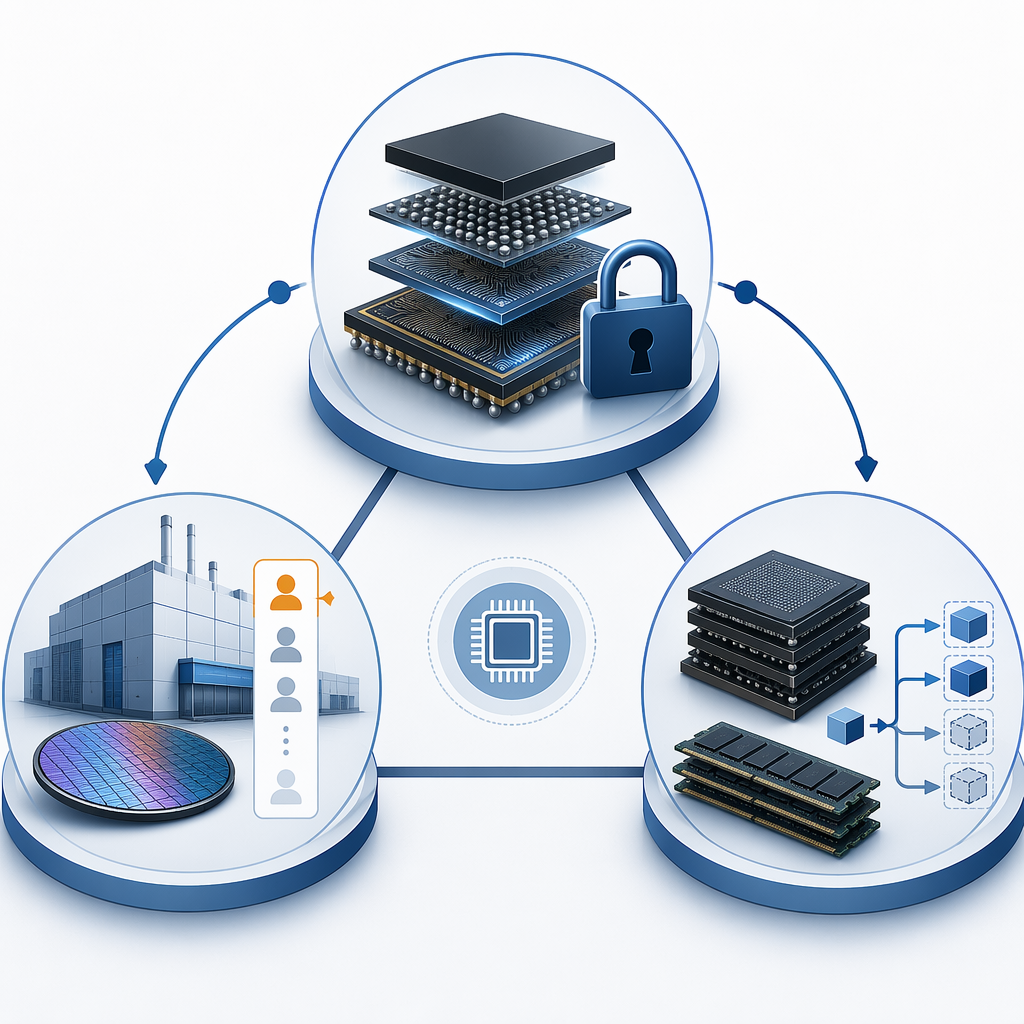
The procurement response should start by separating the supply chain into constraints that suppliers often blend together in sales conversations. A commitment on accelerator availability is not the same as a commitment on packaged accelerator availability. A foundry relationship is not the same as reserved packaging capacity. A memory price quote is not the same as protected HBM allocation across the delivery window.
- Ask suppliers which part of the commitment is backed by wafer capacity, which part is backed by packaging capacity, and which part depends on memory allocation that has not yet been secured.
- Model CoWoS and other advanced packaging lead times separately from wafer-node lead times instead of rolling both into one generic semiconductor lead-time assumption.
- Request allocation language that covers finished, usable systems rather than only component-level shipment promises.
- Treat HBM exposure as a primary supply risk for AI systems, not as a memory category that can be solved late in the build plan.
- Check whether alternative accelerator suppliers still depend on the same foundry, packaging path, substrate supply, or HBM source.
The uncomfortable question for an enterprise buyer is not whether a preferred GPU, TPU, or custom accelerator has the best benchmark. It is whether the supplier can translate that design into delivered capacity during the required deployment window. A technically inferior option with secured packaging and memory may beat a superior part that sits behind a locked queue.
The same discipline applies to cloud commitments. If an organization signs a multi-year AI capacity contract, it should understand whether the provider has protected upstream accelerator supply or is assuming future availability. The buyer may not be able to audit every wafer and package reservation, but it can require clearer language around delivery remedies, substitution rights, regional capacity constraints, and the consequences of upstream allocation shortfalls.
Diversification Has to Reach Below the Vendor Name
A useful diversification plan maps dependencies by manufacturing layer. Two accelerator vendors may look diversified in a sourcing spreadsheet while sharing the same foundry node, the same packaging technology, and the same memory supplier exposure. Conversely, a split that looks narrow at the system level may still reduce risk if it moves some demand onto a different package type, a different memory profile, or a different deployment schedule.
The buying organization does not need perfect visibility to improve its position. It needs enough visibility to avoid false comfort. Supplier questionnaires should ask for constraint-specific risk, not broad assurances. Forecast reviews should include packaging and memory assumptions. Finance teams should expect that capacity reservations may carry value even when they look inefficient in a normal inventory model.
That last point is where many procurement models lag the market. In a constrained AI hardware cycle, the cheapest nominal quote can become expensive if it lacks priority. The premium embedded in a longer-term reservation, a committed supplier relationship, or a more flexible architecture may be the price of not waiting behind a larger customer’s capacity block.
The Constraint Has Moved Upstream
Nvidia’s projected move ahead of Apple at TSMC is not a tidy story about one technology company beating another. It is a supply-chain warning that the most valuable customer relationships in semiconductors are being repriced around AI infrastructure. The winner in that repricing gets more than prestige. It gets earlier access, stronger reservation power, and better odds of turning scarce wafers, packages, and memory into finished hardware.
In Q3 2026, organizations buying AI hardware cannot model supply risk only around GPU vendor choice or advanced-node wafer access. They need to treat foundry priority, CoWoS commitments, and HBM or DRAM allocation as primary procurement variables. The Apple-Nvidia reversal shows where the real constraint now sits: upstream, before the purchase order reaches the buyer’s desk, and inside allocation decisions that only the strongest customers can shape directly.
References
- Nvidia set to supplant Apple as TSMC's largest customer, CNBC, January 26, 2026.
- Apple & TSMC: The Partnership That Built, SemiAnalysis.
- TSMC, Nvidia advanced packaging report, CNBC, April 8, 2026.
- AI Chip Packaging Bottleneck 2026, Oplexa.
- Apple losing grip tech supply chain TSMC Nvidia Foxconn 2026, Business Insider, January 2026.
- Apple to increase spend with Broadcom to produce billions more U.S. chips, Apple Newsroom, July 2026.
Comments
Join the discussion with an anonymous comment.