
The acceleration signal is no longer subtle. Third-party involvement in breaches doubled year over year from 15% to 30%, described in a secondary analysis of Verizon DBIR data as the largest single-year shift in that report's history. The same synthesis, citing IBM's 2025 Cost of a Data Breach Report, puts supply chain compromises at 267 days to identify and contain, the longest lifecycle among breach vectors, with an average cost of $4.91 million. It also cites IBM for the finding that 30% of breach incidents involving AI models stem from supply chain compromise. Sonatype data cited there adds another pressure point: more than 454,000 new malicious open-source packages in 2025, up 75% year over year.[1]
Those figures should be read carefully. Several are reported through secondary sources rather than direct report text, so procurement, security, and audit teams should verify them against the originating Verizon, IBM, and Sonatype publications before using them in formal risk scoring. But the direction is hard to dismiss: the breach surface that already worries boards — third parties, software dependencies, slow containment — is now intersecting with AI models, training data, public registries, fine-tuning workflows, and release systems.
That is why AI model supply chain risk cannot be treated as a niche model-red-team issue. Traditional software supply chain controls still matter: SBOMs, dependency scanning, access control, vulnerability management, signed builds, and vendor incident reporting remain necessary. They are incomplete, however, when the purchased or embedded asset includes model weights, pretraining or fine-tuning data, external model registries, agent tooling, prompt libraries, vector stores, and CI/CD systems that can change model behavior without changing the visible application interface.
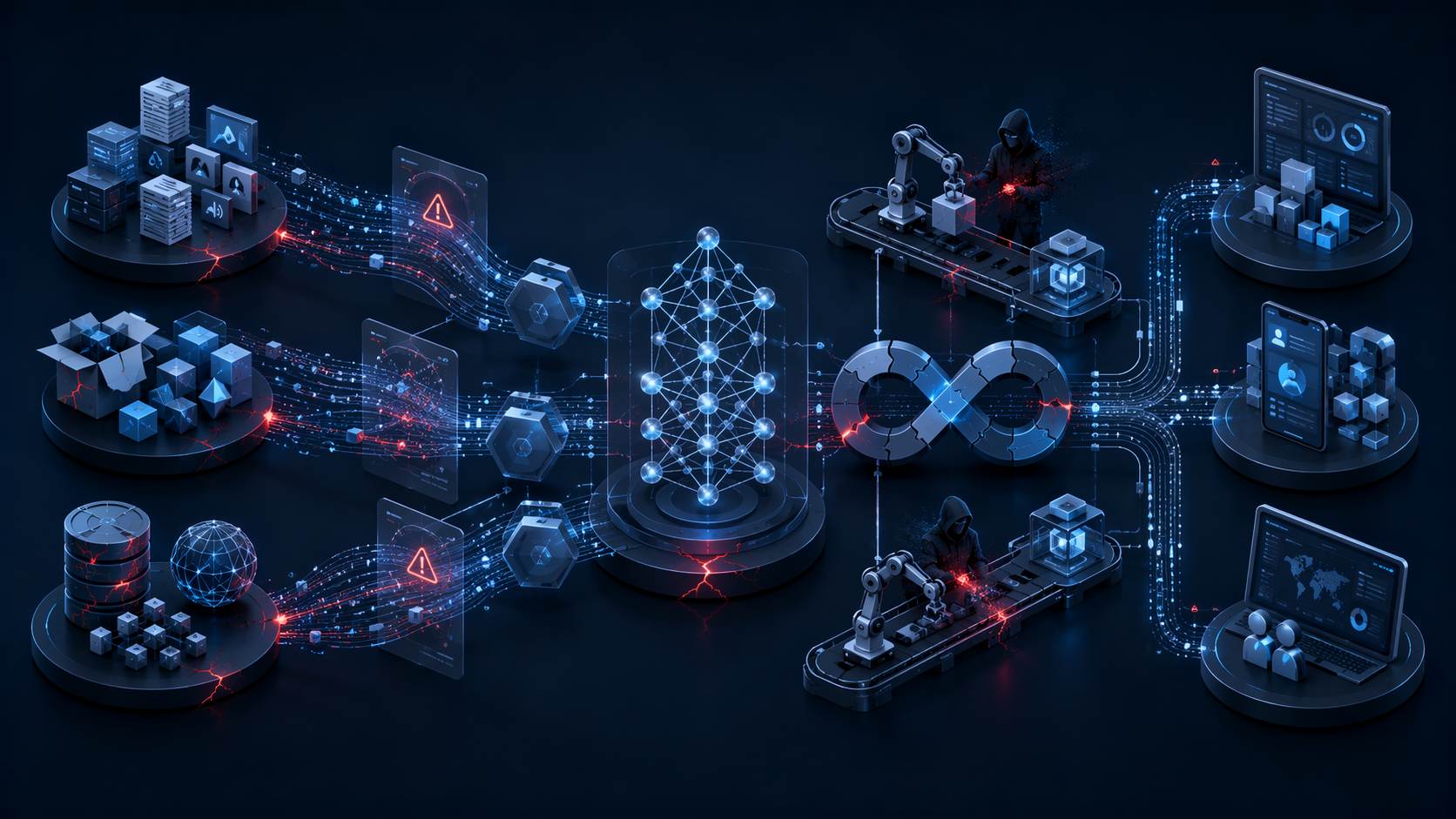
The Risk Enters Through Different Doors
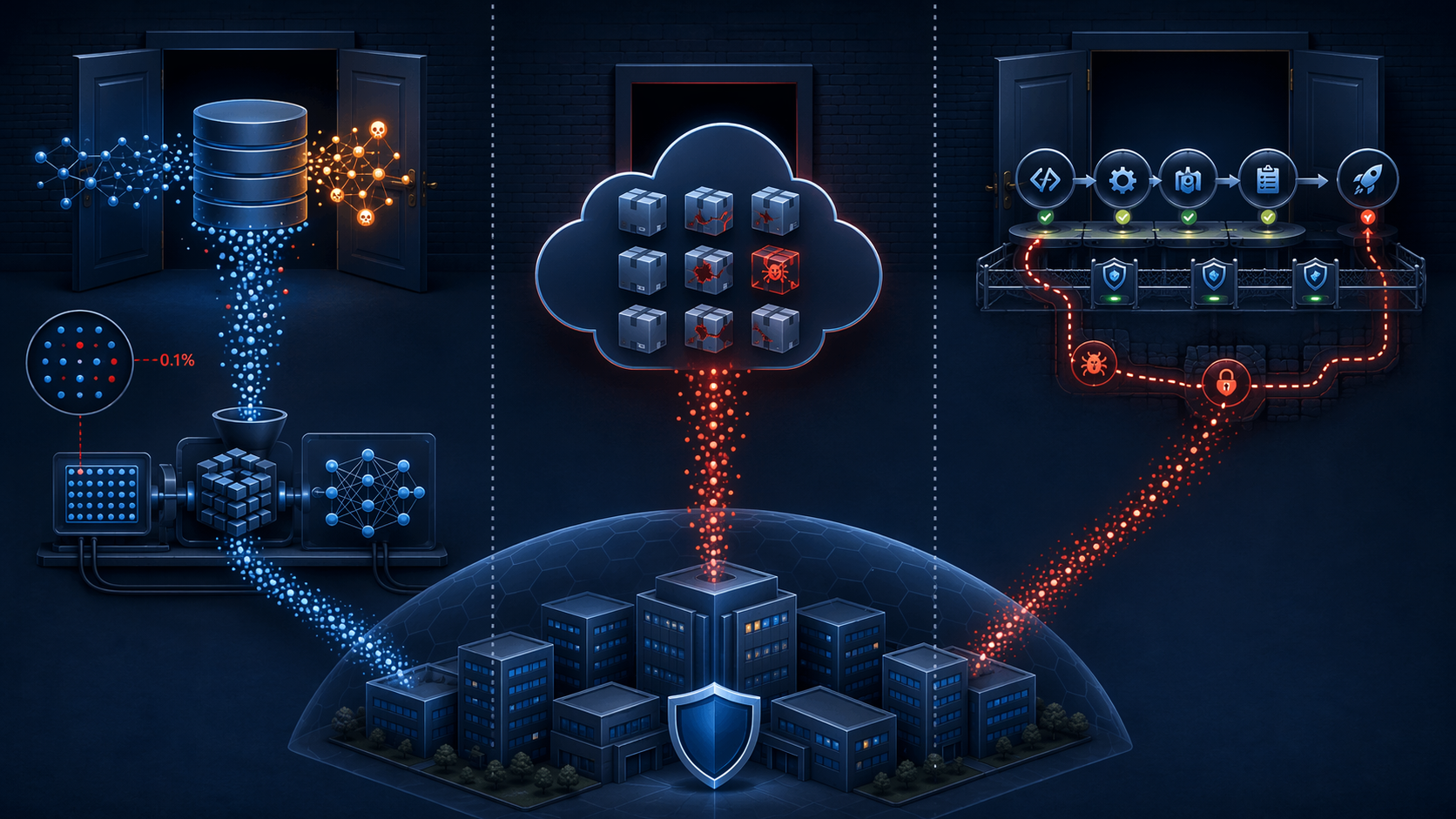
A poisoned dataset, a malicious public model, and a compromised release pipeline may all end up producing an unsafe AI system. They do not enter the enterprise the same way. That distinction matters because a vendor questionnaire that asks only whether the vendor performs penetration testing, encrypts data, and monitors vulnerabilities may miss the specific point where the compromise occurred.
| Risk class | How it enters | What ordinary controls may miss |
|---|---|---|
| Data or model poisoning | Training, pretraining, fine-tuning, reinforcement learning, or retrieval data is manipulated before or during model development. | Standard data quality checks may confirm formatting, completeness, and duplicates while missing targeted behavioral manipulation. |
| Compromised third-party models and dependencies | Teams or vendors pull models, packages, adapters, or tooling from public registries and open-source ecosystems. | Software dependency scanning may not prove model origin, training lineage, weight integrity, or unsafe embedded behavior. |
| Release-pipeline compromise | Attackers alter build, deployment, package publishing, or dependency systems around the AI product. | Model red teaming may test the model's responses while leaving the systems that ship and update it outside the test boundary. |
The control question changes with the entry point. Data poisoning calls for chain-of-custody evidence. Public model use calls for provenance, scanning, isolation, and approval gates. Release-pipeline compromise calls for software supply chain hardening that extends into AI-specific build and deployment paths. Grouping all three under a broad AI security heading makes the risk look more manageable than it is.
Poisoned Data Is a Chain-of-Custody Problem, Not Just a Data Quality Problem
Data poisoning is uncomfortable for supply chain leaders because it does not always look like bad data. The record can be valid. The file can pass schema checks. The label can appear plausible. The model can perform normally on clean benchmark tests. Yet a small inserted pattern can teach the model to fail under a narrow condition that only appears later, in production.
CMU Software Engineering Institute has argued for chain-of-custody controls because, in its discussion of data poisoning, as little as 0.1% of training data can be altered to achieve an attack.[2] Obsidian Security, in a vendor-authored analysis, describes research in which a poison rate below 1% can produce near-perfect target misclassification while maintaining normal performance on clean data.[3] The important point is not that every enterprise model will be compromised at that exact threshold. It is that low-volume contamination can be operationally meaningful and difficult to see through aggregate accuracy.
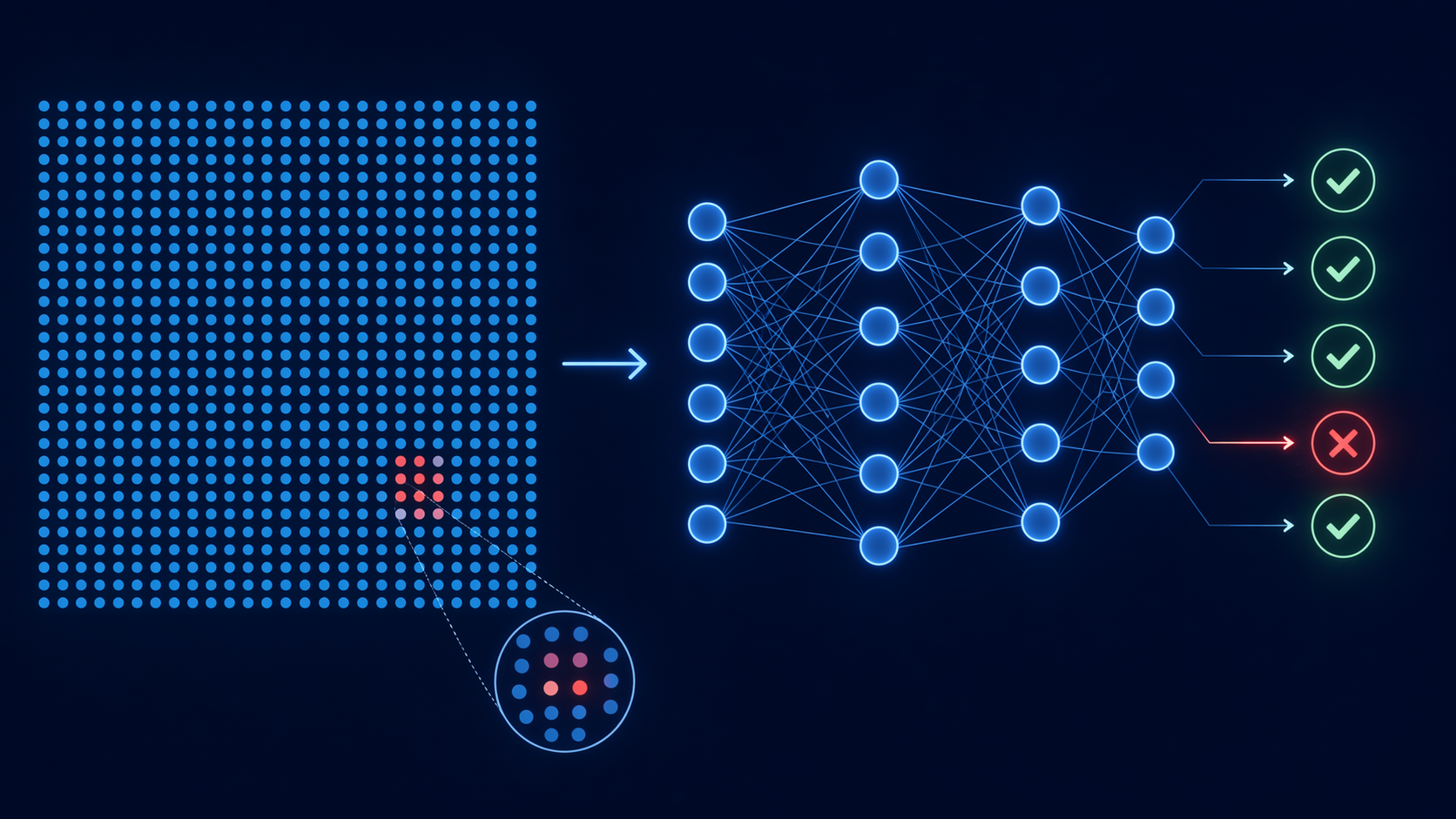
For a supply chain planning system, the dangerous version is not a cartoonish model that fails everywhere. It is a model that appears useful during acceptance testing, then behaves incorrectly for a particular supplier profile, region, SKU pattern, shipment exception, or procurement recommendation. If the model is embedded inside forecasting, sourcing, logistics, or warehouse workflows, that targeted failure can be interpreted as a business decision rather than a security incident.
That is why provenance controls need to be stronger than ordinary data hygiene. A vendor saying it validates data quality is not the same as proving where training and fine-tuning data came from, who had access to it, when it changed, how labels were generated, which external datasets were merged, and whether checkpoints were tamper-resistant. Data quality asks whether the data is usable. Chain of custody asks whether the data is what the vendor claims it is.
The distinction also affects accountability. If a model starts producing harmful recommendations after deployment, a customer may need to reconstruct whether the issue came from its own data, the vendor's foundation model, a fine-tuning run, an external dataset, a model update, or a retrieval source. Without preserved lineage, signed checkpoints, and change records, that reconstruction becomes a forensic exercise performed after the business process has already been disrupted.
Public Registries Have Become Part of the Vendor Boundary
The second risk class is easier for procurement teams to recognize because it resembles open-source software risk. The difference is that model artifacts carry behavior, weights, training assumptions, and sometimes executable components or unsafe deserialization paths, not just conventional application code.
VentureBeat reported that 53% of organizations pull AI models directly from public registries such as Hugging Face, and cited JFrog's identification of 495 malicious AI models.[4] Those numbers do not prove that public registries are unusable. They do show that public model sourcing has moved from lab convenience into enterprise supply chains, often faster than procurement and security review practices have adjusted.
A supply chain leader evaluating an AI planning, procurement, or warehouse optimization vendor therefore has to ask about the vendor's upstream model sources. Did the vendor train the model? Fine-tune a foundation model? Pull an open model from a registry? Use adapters, embeddings, packages, notebooks, or agent frameworks maintained by third parties? Are those artifacts pinned, scanned, signed, mirrored, and approved before use? Can the vendor reproduce the model build from known inputs?
The practical failure mode is familiar: an internal team or vendor prototype works, a public model or package becomes embedded in the product path, and the temporary shortcut becomes production infrastructure. Later, when a malicious model, dependency, or compromised maintainer account is discovered, the customer has to determine whether the artifact ever touched its environment or decisions. A conventional SOC 2 report rarely answers that question with enough specificity.
Release Pipelines Can Carry AI Risk Even When the Model Is Not Attacked
The third class is the corrective to a model-centered view of AI security. In January 2026, VentureBeat reported four AI supply-chain attacks over 50 days affecting OpenAI, Anthropic, and Meta. Its central point was that none of the incidents targeted the model itself; the exposure traveled through release surfaces, dependencies, and deployment systems that model red teams typically do not cover.[4]
That matters for vendor evaluation because many AI security conversations stop at model behavior: prompt injection tests, jailbreak tests, harmful output evaluation, bias testing, and data leakage checks. Those tests are useful, but they may not examine who can publish a package, alter a build, modify a model-serving container, push an update, change a dependency lockfile, rotate a registry token, or approve a deployment.
In enterprise supply chain operations, release-path compromise can be especially damaging because AI systems are often connected to planning calendars, purchase recommendations, supplier communications, shipment exception handling, inventory allocation, or labor scheduling. The model may be only one component in a workflow that includes orchestration code, APIs, data pipelines, vector databases, connectors, and business-rule layers. An attacker does not need to poison the model if the deployment system can be used to ship a malicious update around it.
This is where traditional software supply chain discipline has to meet AI governance. Signed builds, protected branches, least-privilege release roles, dependency pinning, artifact verification, reproducible builds, and monitored package publishing remain relevant. The missing step is applying those controls to AI artifacts and the systems that produce, fine-tune, evaluate, package, and serve them.
Two Incident Patterns Show the Business Consequence
The Mercor breach is a useful proof point because the reported fallout moved beyond technical remediation. Forbes reported in May 2026 that 4TB of data was exfiltrated, Meta froze its partnership, and the incident led to a class action lawsuit.[5] Whether a company is buying AI labor-market tooling, planning software, freight intelligence, or procurement automation, that is the consequence procurement teams are trying to price: not only whether a vendor can be breached, but whether the customer inherits operational, legal, partnership, and reputation exposure after approving the vendor.
The TanStack incident shows a different shape of risk: cascading dependency compromise. Snyk reported that compromised TanStack npm packages were hit by a Mini Shai-Hulud-style worm and that the spread reached organizations including Mistral AI and UiPath.[6] Forbes also cited the TanStack worm in its broader discussion of AI-era supply chain cyber risk.[5] The lesson is not that every dependency incident is an AI model incident. It is that AI companies and AI-enabled products sit inside the same package ecosystems as everyone else, and compromise can propagate through those ecosystems before a customer understands its exposure.
These cases should not be stretched into universal frequency claims. They do not prove that most AI vendors are compromised or that any specific registry is unsafe. They do show why a procurement file that contains only financial viability, privacy posture, hosting location, and general security certification is thin evidence for an AI vendor that depends on external models, packages, or deployment automation.
Controls Are Starting to Standardize
The control language is no longer improvised. OWASP's Gen AI Security Project includes LLM03:2025 Supply Chain as a top LLM risk category and explicitly includes training data poisoning within the supply chain frame.[7] The Coalition for Secure AI describes a four-layer framework and six critical controls, beginning with data provenance tracking and cryptographic model signing.[8] IS Partners' analysis of NIST AI RMF 2025–2026 updates points to sector-specific profiles and implementation resources, though that should be treated as third-party analysis rather than a substitute for checking NIST publications directly.[9] Google Cloud's SLSA-for-AI guidance argues that AI supply chain security is both similar to and different from traditional software supply chain security, with dataset maturity called out as a gap.[10]
For executives, the value of these frameworks is not that they create another compliance binder. It is that they validate a more precise vendor conversation. If a vendor says it follows secure SDLC practices, that is a starting point. It does not answer whether model checkpoints are signed, whether training data lineage is preserved, whether public model intake is gated, whether fine-tuning outputs can be reproduced, or whether release pipelines for AI artifacts have been red-teamed.
What to Add to AI Vendor Evaluation
The procurement conversation should become more specific before contract signature, not after an incident. A supply chain leader does not need to personally inspect every model artifact, but the organization should know what evidence the vendor can produce and who will review it.
- Ask for an AI-BOM or ML-BOM that documents model provenance, upstream models, training or fine-tuning sources, major dependencies, evaluation artifacts, and serving components.
- Require evidence of data chain of custody, including source records, access history, labeling process, dataset versioning, and tamper-resistant checkpoints for material model changes.
- Confirm whether model weights, datasets, containers, and release artifacts are cryptographically signed and verified before deployment.
- Separate model red teaming from pipeline red teaming: ask whether the vendor tests CI/CD, package publishing, registry access, deployment approvals, and dependency update paths.
- Define incident notification expectations for supply chain compromise, including malicious packages, registry compromise, model provenance failure, poisoned data discovery, and unauthorized release activity.
- Clarify whether public models, open-source packages, adapters, plugins, and agent tools can enter the product without customer notification or renewed review.
The answers should not live only in a security questionnaire. They affect contract terms, audit rights, acceptable use of customer data, change notification, model update approvals, cyber insurance representations, and the internal owner who decides whether a vendor can connect to operational workflows.
AI model supply chain risk is already measurable, and the available 2025–2026 evidence suggests it is accelerating through the same third-party and dependency channels that enterprises already struggle to govern. Treating it as a standard vendor-risk appendix will miss the places where models, data, registries, and pipelines can be poisoned or compromised. The better response is narrower and more practical: keep the traditional software controls, then add the provenance, signing, pipeline-testing, and notification evidence that AI systems now require.
References
- Supply Chain Attack Statistics for 2026 — Third-Party Breaches, Swif.ai, link
- Data Poisoning in AI Models: The Case for Chain of Custody Controls, CMU SEI, link
- AI Data Poisoning: How Corrupted Data Undermines Trust in Agents, Obsidian Security, link
- Four AI supply-chain attacks in 50 days, VentureBeat, January 2026, link
- The Growing Cybersecurity Risks To The Supply Chain In The AI Era, Forbes, May 2026, link
- TanStack npm Packages Hit by Mini Shai-Hulud, Snyk, link
- LLM03:2025 Supply Chain — OWASP Gen AI Security Project, OWASP Gen AI Security Project, link
- The AI Supply Chain Security Imperative, Coalition for Secure AI, link
- NIST AI RMF 2025–2026 Updates, IS Partners, link
- Same same but also different: Google guidance on AI supply chain security, Google Cloud, link
Comments
Join the discussion with an anonymous comment.