
The gap is not ambition; it’s readiness
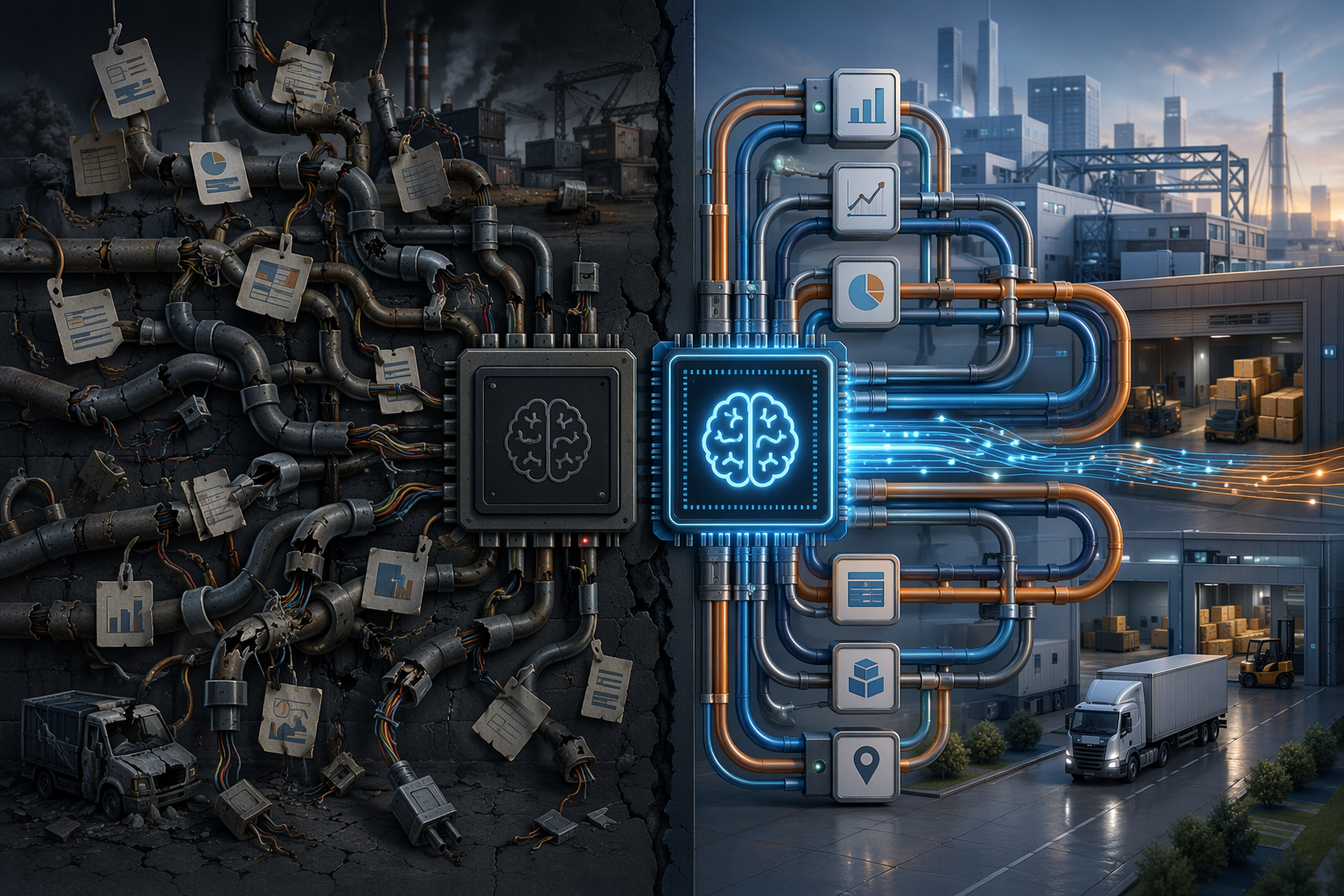
Supply chain teams are not short on AI interest. Gartner found that 94% of supply chain organizations had AI intent, but only 23% had a formal AI strategy [1]. That gap matters because the hardest part is rarely getting agreement that AI sounds useful. It is the part where planners, IT, and operations discover that master data is fragmented, supplier identities are duplicated, and item records do not line up across systems.
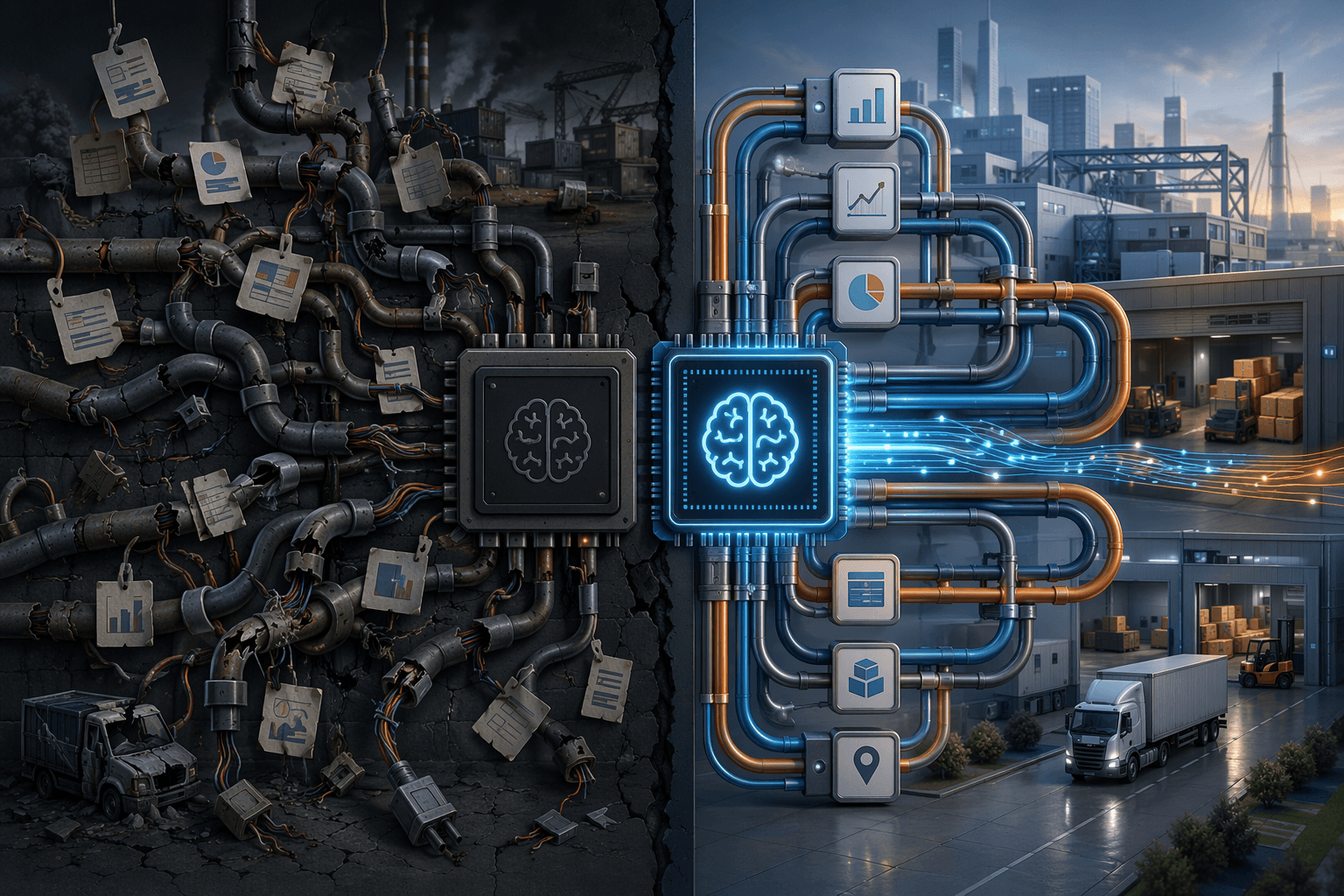
TraxTech puts a blunt number on what happens next: it attributes 70% of AI project failures to data quality issues and says poor data quality costs organizations an average of $12.9M a year [2]. The pattern behind that number is familiar. A team funds a model, the pilot looks promising, then the rollout runs into BOM inconsistencies, duplicate suppliers, or broken item histories. More model tuning follows, but the expensive remedial work keeps landing on the people closest to the process. That is how a data problem gets misdiagnosed as a model problem.
What data-first really changes
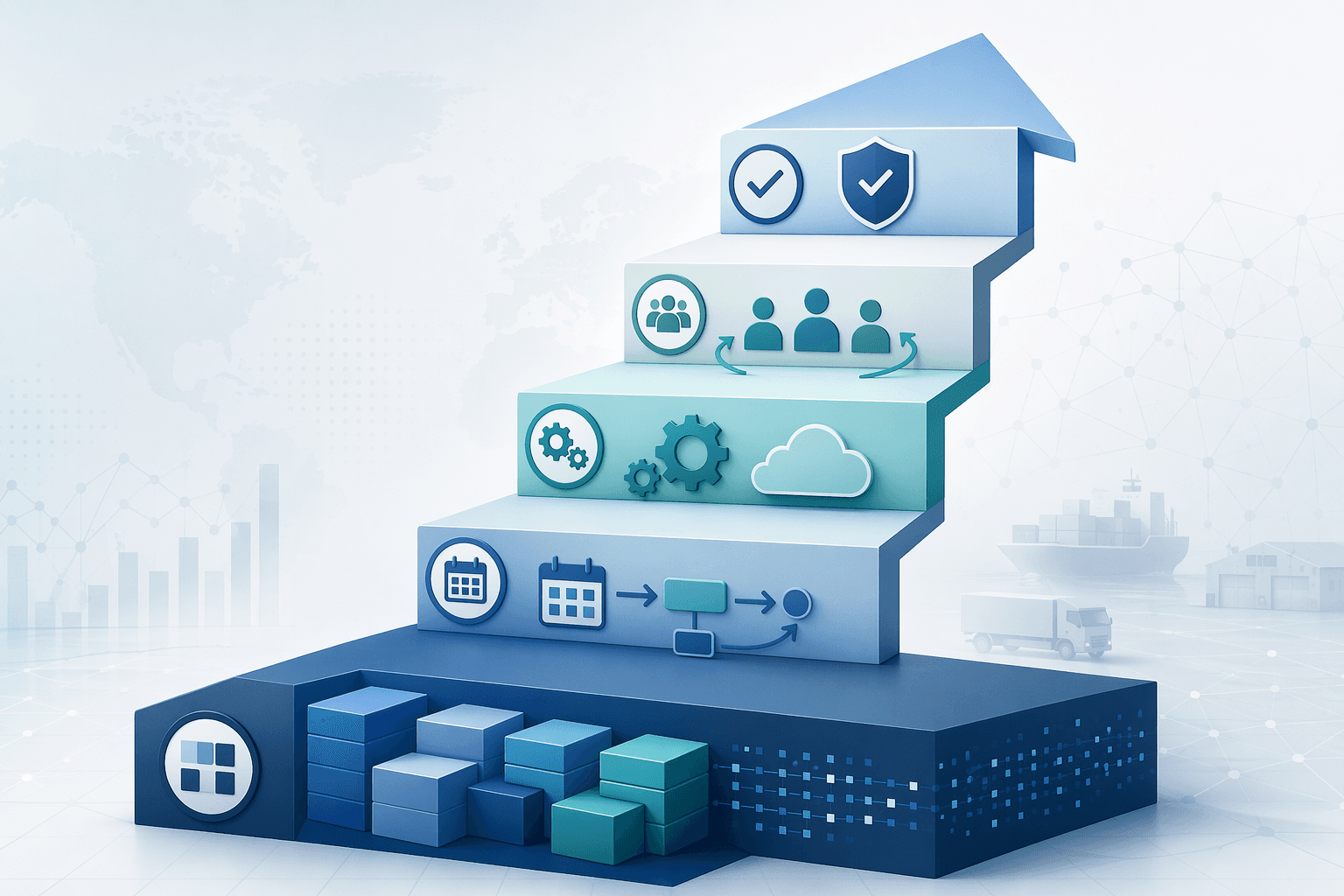
RELEX’s AI-to-ROI framework is useful because it does not treat data quality as a warm-up exercise. It starts with data foundation, then moves through planning processes, tech platforms, people and change, and governance [3]. That sequence is the real test. If the foundation is weak, every downstream layer inherits the same uncertainty. If the foundation is solid, the organization can actually trust automated decisions instead of spending every week repairing them.
| Stage | What it has to settle before AI can help |
|---|---|
| Data foundation | Whether item, supplier, and inventory records are accurate enough to automate against |
| Planning processes | Whether forecasting, replenishment, and exception handling use the same facts |
| Tech platforms | Whether systems move clean data reliably instead of creating new mismatches |
| People and change | Whether planners and operators know when to override, correct, or escalate |
| Governance | Who owns data quality, thresholds, and exception rules |
RELEX also says companies that invest in data infrastructure first can achieve 3x better AI ROI than those that rush into algorithmic fixes [3]. That should not be read as a promise that every project triples returns. It is a narrower point and a more useful one: the highest leverage often sits before the model, because every optimization depends on whether the underlying facts can be trusted.
Bünting Group chose restraint first
The Bünting Group case is the clearest example of why restraint can outperform haste. The company did not switch on automated replenishment while the underlying records were still unstable. It corrected balance errors first, then moved to automated ordering across all fresh categories [3]. The reported result was +2% sales and -43% balance errors [3]. The sequence matters more than the headline numbers. The gain came from refusing to automate uncertainty.
Once the pipeline is fixed, the gains are real
Metro Shipping gives a shorter but useful reinforcement. After fixing the data pipeline, its ML-powered customs clearance work delivered a 40% improvement in turnaround time and 99% data accuracy [4]. That does not mean every supply chain AI project should copy the same use case or expect the same numbers. It does show that once the data is trustworthy and the workflow is designed around it, the model can spend its time doing the job instead of compensating for chaos.
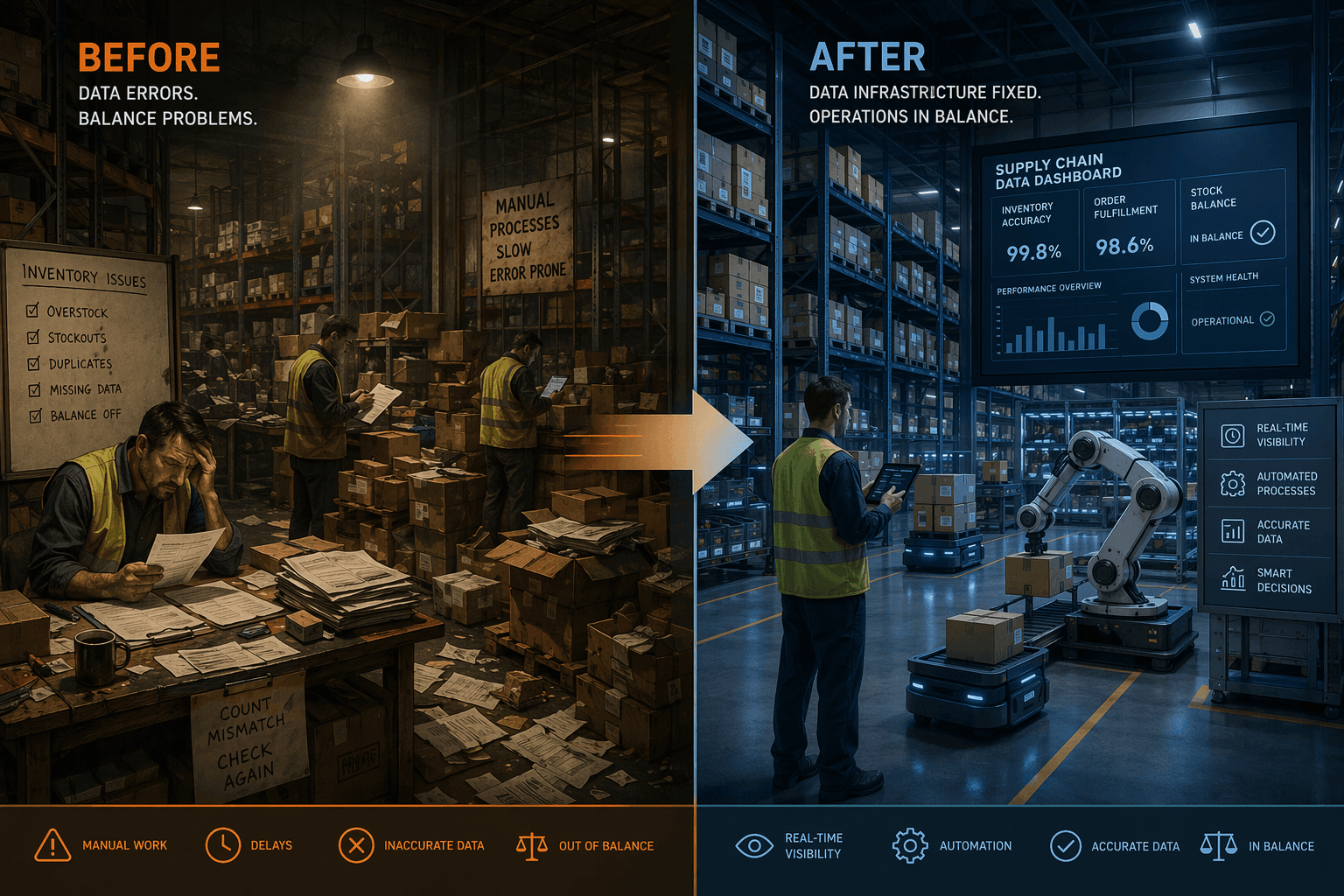
These are vendor-published case studies, so they should be read as documented examples rather than neutral benchmarks [3][4]. The direction is still consistent with the operational failures seen in practice: the expensive work is often not the model itself but the cleanup required to make the model usable.
TraxTech’s 70% figure should be treated as a warning sign, not an audited universal law [2]. Even so, the practical judgment is hard to miss: before writing more ML code, decide whether the data foundation is trustworthy enough to support automation. If duplicate suppliers still need manual reconciliation, if balance errors keep reappearing, or if item and BOM records do not agree across systems, the project is not ready for more AI.
References
- Gartner Survey Shows Just 23% of Supply Chain Organizations Have a Formal AI Strategy — Gartner, 2025-06-11
- Why Supply Chain AI Projects Fail: The $100M Data Quality Problem — Trax Technologies
- The AI-to-ROI framework for supply chain leaders — RELEX Solutions
- AI in Supply Chain: A Real-world Case Study on Unleashing Potential — ELEKS
Comments
Join the discussion with an anonymous comment.