
The useful audit question after the Live Nation antitrust trial is not whether every AI pricing tool has become unlawful. It is narrower and more operational: does the tool use competitor information, make or discipline price decisions, prevent real human deviation, or connect rivals through the same pricing architecture? For supply chain teams, those four questions are a better starting point than vendor assurances about “optimization.”
The April 2026 Live Nation jury verdict made the issue harder to dismiss, but it did not settle the law for supply chain AI. Live Nation is pursuing a new-trial motion as of July 2026, and the remedy phase remains ongoing. The case is a signal, not a finished compliance manual. The more usable manual, for now, comes from the DOJ’s RealPage settlement and from the boundaries courts and states are beginning to draw around algorithmic pricing systems.
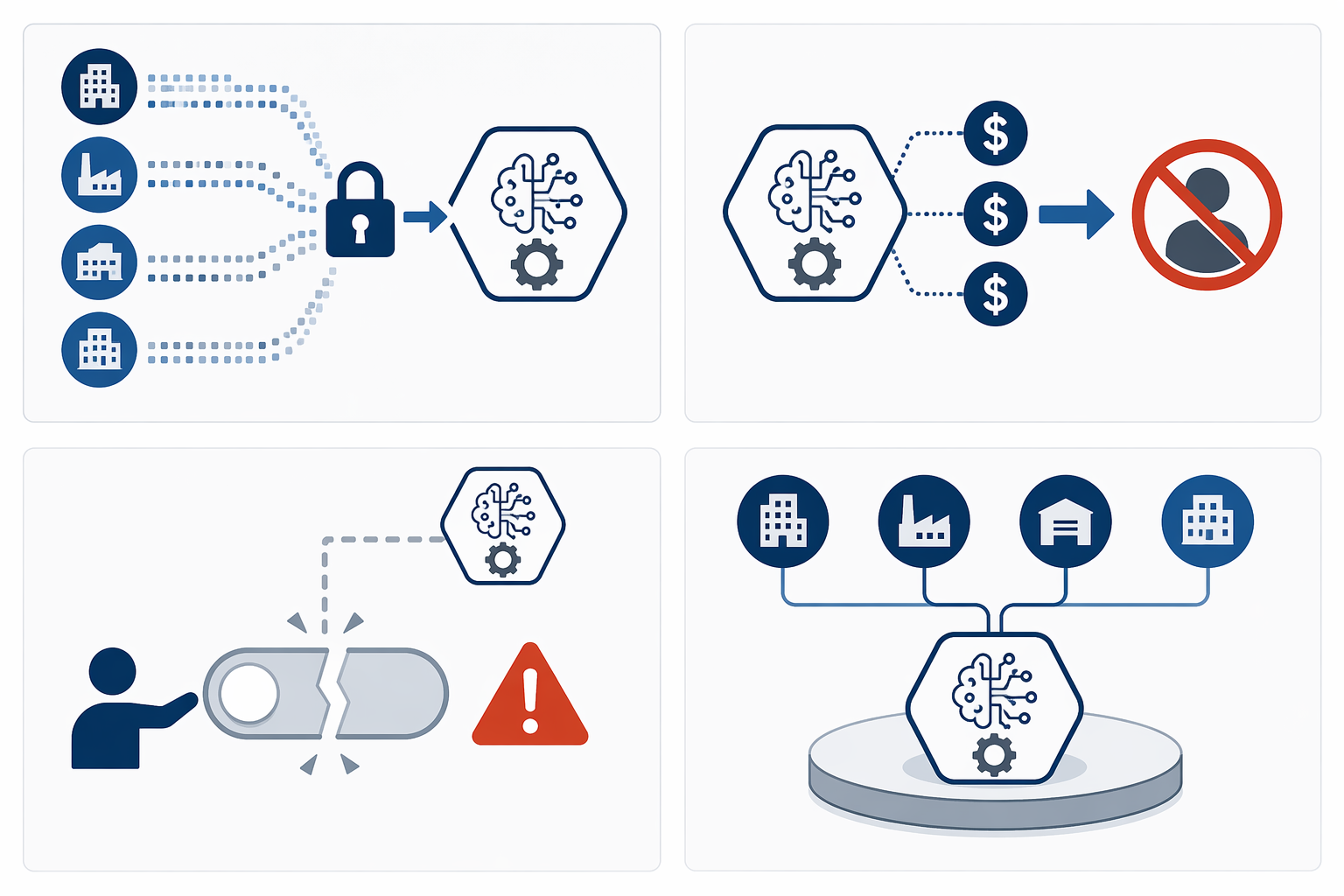
The four factors worth auditing first
A pricing, procurement, or revenue-management system becomes more exposed when several of these features appear together:
- Nonpublic competitor data enters the model or runtime decision process.
- The organization delegates pricing authority to the algorithm rather than using it as one input among several.
- Human override exists in the contract or user interface but is not meaningful in practice.
- Multiple competitors license or operate through the same vendor platform, especially where the platform aggregates market-sensitive information.
None of those factors, standing alone, automatically answers the legal question. A forecasting model can be algorithmic without being conspiratorial. A shared software vendor can serve rivals without creating an agreement among them. But the stack matters. A freight-rate engine that estimates next month’s lane volatility from public fuel indexes and a shipper’s own tender history is a different system from a platform that ingests current contracted rates, rejection behavior, and capacity data from competing shippers and then pushes recommended charges across the same network.
That difference is where supply chain teams need to spend their review time. The legal risk is less about whether a model uses AI and more about whether the model turns shared, nonpublic market intelligence into coordinated pricing behavior.
What Live Nation actually adds
The Live Nation verdict matters because it puts a jury finding next to the practical mechanics of price-setting. The DOJ complaint cited Ticketmaster’s in-house pricing team adjusting face values based on demand. The jury found overcharges of $1.72 per ticket across 22 states, with aggregate damages estimated below $150 million before trebling to under $450 million. Live Nation CEO Michael Rapino was quoted describing algorithmic pricing expansion as a “multiyear opportunity to continue to grow our top line/bottom line.” Internal messages cited in coverage included an employee calling prices “outrageous,” referring to customers as “so stupid,” and boasting about “robbing them blind, baby.”[1]
Those facts are uncomfortable because they make pricing automation look less like passive analytics and more like an operating strategy. Still, the lesson for supply chain AI is not that the Live Nation trial has created a universal rule for algorithmic pricing. The verdict is under challenge, and the market-share arguments remain contested: state attorneys cited 86% for major concert venues, while Live Nation has argued for about 44% when smaller venues are included.[1]
For a supply chain operator, the more durable point is evidentiary. Regulators and plaintiffs will not stop at model labels. They will look for who controlled the price, what data fed the system, whether users were expected to follow the recommendation, and whether internal communications show that people understood the tool was moving prices in a coordinated or excessive direction.
RealPage is the compliance blueprint
The RealPage settlement is more directly useful for audit design because it turns antitrust concern into product constraints. The DOJ alleged that RealPage’s software used nonpublic information from competing properties, including actual rents paid, occupancy rates, and records of lease transactions. The settlement required RealPage to stop using nonpublic competitor data for runtime pricing, limit model training to data aged at least 12 months, remove features that limited price decreases or aligned pricing between competing users, and accept a court-appointed compliance monitor for three years.[2]
That is a clearer operational signal than a broad warning about AI. Runtime data matters. Training data age matters. Product features that dampen price cuts matter. Monitoring after the fact matters. These are design and governance questions that procurement, logistics, and revenue-management teams can actually test.
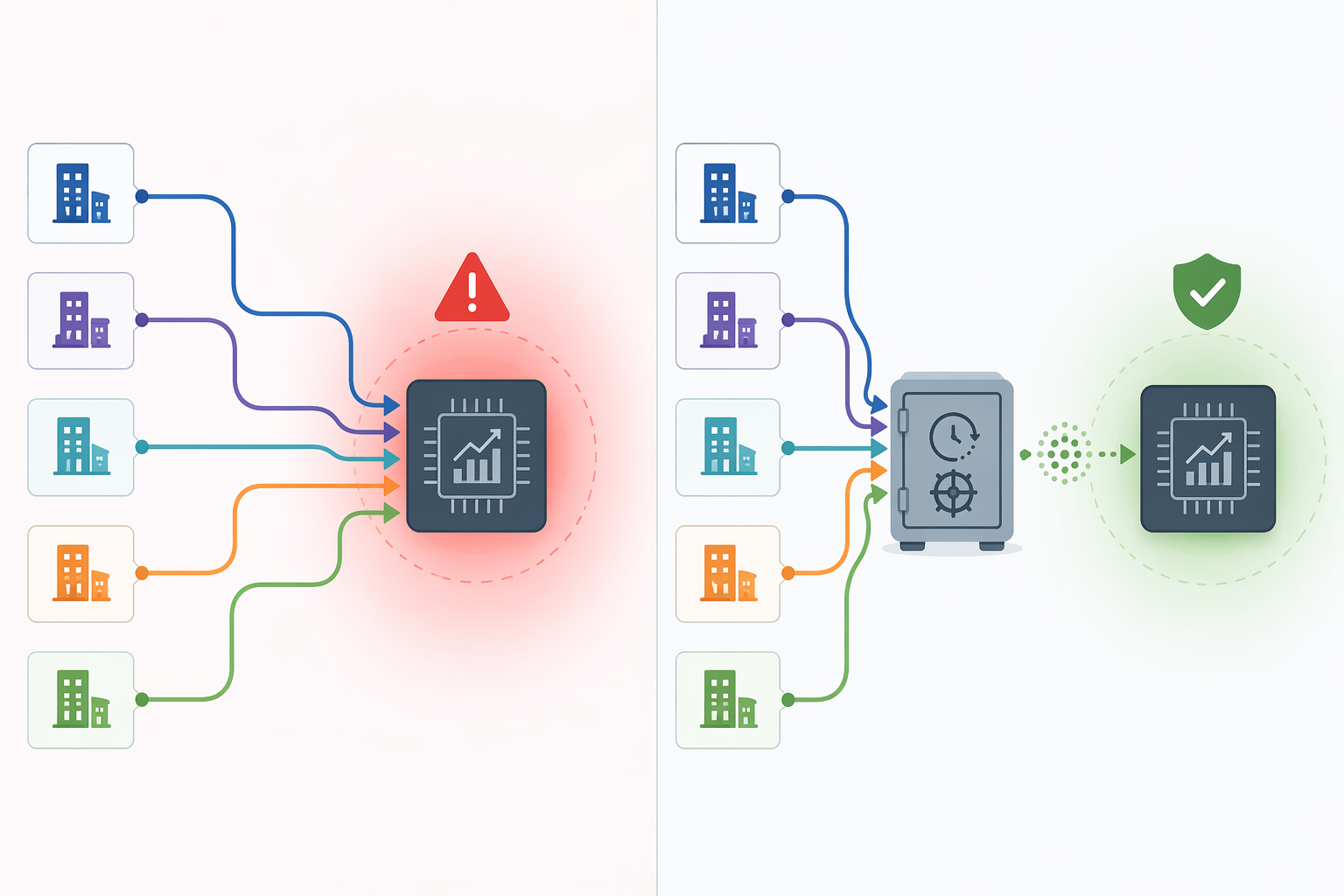
In a freight-rate benchmarking tool, the RealPage logic would push reviewers to ask whether current carrier bids, shipper-specific contracted rates, tender acceptance behavior, or lane-level transaction records from competing shippers are used to generate live pricing recommendations. If they are, aggregation alone may not be the comfort people think it is. The next question is whether the system can recommend or enforce a rate today using competitors’ current behavior.
In procurement bid aggregation, the audit should separate market intelligence from bid coordination. A tool that helps a buyer normalize supplier quotes against its own historical spend is one thing. A platform that pools current bid data across competing buyers and then suggests target prices, walk-away thresholds, or supplier negotiation bands to all of them is a different proposition. The risk is sharper if the tool discourages price concessions or standardizes recommended responses across users.
Commodity forecasting presents a quieter version of the same issue. A model using public commodity indexes, macro indicators, weather signals, or a company’s own purchase history is not the same as a system trained or run on current nonpublic procurement positions from rivals. The compliance question is not whether the output is called a forecast. It is whether the forecast is a pathway for one buyer’s confidential market behavior to influence another buyer’s pricing or purchasing decisions.
| Audit point | Question to ask | Why RealPage makes it matter |
|---|---|---|
| Runtime inputs | Does the model use current nonpublic competitor prices, transactions, occupancy, utilization, bids, or rates when producing live recommendations? | The settlement required RealPage to stop using nonpublic competitor data for runtime pricing. |
| Training data | Is competitor data used for training, and if so, how old is it before entering the model? | The settlement limited model training to data aged at least 12 months. |
| Product constraints | Does the tool cap discounts, resist price decreases, or align recommendations across competing users? | The settlement required removal of features that limited price decreases or aligned pricing. |
| Post-settlement style monitoring | Can the company evidence data lineage, recommendation logic, override rates, and user behavior after deployment? | RealPage accepted a court-appointed compliance monitor for three years. |
Factor 1: nonpublic competitor data
Nonpublic competitor data is the first place to look because it changes the character of the system. Public market indices, published tariffs, fuel prices, weather data, port congestion data, and a company’s own transaction history usually raise different issues from current confidential information supplied by rivals on the same platform.
For supply chain AI, the sensitive categories are easy to underestimate. Current lane rates, carrier acceptance patterns, warehouse utilization, spot-market quotes, supplier bid responses, contract renewal positions, and inventory-driven willingness to pay can all reveal commercial strategy. If those signals flow from one competitor into a vendor’s pricing engine and then influence another competitor’s recommendation, the tool no longer looks like a neutral calculator.
A useful audit does not stop at the vendor’s data dictionary. It traces the data path: source, user, timestamp, aggregation method, retention rule, training use, runtime use, and output destination. The RealPage settlement’s distinction between runtime use and aged training data gives compliance teams a concrete way to frame that review, even outside real estate.[2]
Factor 2: delegated pricing authority
The second factor is whether the organization has handed the price decision to the system. A dashboard that presents multiple scenarios for a human pricing analyst is different from a tool that automatically posts freight rates, adjusts warehouse fees, rejects supplier offers, or changes marketplace prices unless someone intervenes.
Delegation can be contractual, technical, or cultural. The contract may call the output a recommendation, while the workflow treats it as mandatory. The system may allow manual edits, but require so much approval friction that users rarely deviate. Managers may score teams against adherence to the tool’s price guidance. Each of those details matters because antitrust scrutiny often turns on behavior, not interface labels.
In dynamic logistics pricing, delegated authority can appear when a platform reprices capacity in real time across shippers, brokers, or carriers. In procurement, it can appear when an automated agent sets target bids or counteroffers without a buyer reviewing the competitive context. In revenue management, it can appear when the system updates accessorial charges, storage fees, or delivery premiums based on platform-wide signals.
Factor 3: no meaningful human override
Human oversight is only useful if it changes outcomes. A procurement manager who can technically override an AI recommendation but receives no explanation, no time, no authority, and no protection from performance penalties is not a meaningful control. The same is true for a logistics pricing analyst who can adjust a rate but cannot see which market inputs drove the recommendation.
The audit should look for evidence, not policy language. Override rates, escalation logs, rejected recommendations, approval timestamps, and post-override pricing outcomes will tell a more reliable story than a slide saying “human in the loop.” If no one ever overrides the system, the next question is whether the recommendation is always sound or whether the organization has made deviation impractical.
This is also where internal communications become dangerous. Live Nation’s internal messages were not supply chain evidence, but they show why companies should assume that casual comments about price extraction, customer weakness, or “everyone following the model” will be read against the tool’s actual design.[1]
Factor 4: shared-platform architecture
The fourth factor is the hardest for software buyers because shared platforms are normal in supply chain technology. Transportation management systems, procurement networks, rate benchmarks, supplier intelligence tools, logistics marketplaces, and warehouse platforms all gain value by connecting many participants. The antitrust question is what the platform does with competitively sensitive information once those participants are connected.
A shared platform that gives each user tools to analyze its own data is not the same as a platform that collects nonpublic data from competitors and turns it into aligned pricing recommendations. The architecture review should identify whether data is segregated by customer, whether model weights are influenced by competitor submissions, whether recommendations are personalized from rival behavior, and whether competing users receive similar suggested actions because they are drawing from the same confidential pool.
Vendor independence does not end the inquiry. A company can license software independently and still create risk if the software operates as the hub through which rivals’ nonpublic pricing information affects each other. That does not mean every shared SaaS product is suspect. It means the architecture has to be legible enough for legal, compliance, and business owners to understand where rival data goes and what it can change.
Where Gibson v. Cendyn draws a boundary
Gibson v. Cendyn is a useful brake on overstatement. In August 2025, the Ninth Circuit held that independently licensing the same hotel pricing software, without an agreement to follow the software’s recommendations, did not violate Section 1 of the Sherman Act.[3]
That distinction matters for supply chain software. Parallel use of a common tool is not automatically an agreement. A court still needs a legally sufficient theory connecting the users’ conduct. If five warehouse operators license the same revenue-management package, that fact alone should not be treated as proof that they agreed to coordinate storage prices.
But Gibson should not be read as a blanket clearance for algorithmic pricing vendors. The DOJ has argued in statements of interest across RealPage, Yardi, and Cendyn matters that sharing nonpublic competitor data through a common algorithm may constitute an unlawful agreement even without direct communication between competitors.[4]
The practical boundary is therefore narrower than either side of the slogan. A common pricing tool is not automatically unlawful. A common pricing tool that turns rivals’ nonpublic data into pricing discipline across the user base is where the review becomes serious.
State laws are tightening the review even before federal guidance lands
Federal doctrine is still moving, and no enforcement action has yet specifically targeted a supply-chain AI pricing platform as of July 2026. That gap should not be mistaken for a safe harbor. State laws are already changing the compliance environment.
California AB 325, effective January 1, 2026, amended the Cartwright Act to prohibit using or distributing a common pricing algorithm as part of a conspiracy, and it applies across industries operating in California. New York’s Algorithmic Pricing Disclosure Act, effective November 2025, requires conspicuous disclosure when personal data is used for algorithmic pricing. Maryland’s Protection from Predatory Pricing Act, effective October 1, 2026, bans large food retailers and delivery platforms from personalized dynamic pricing. Connecticut’s omnibus privacy law, effective October 2026, pairs New York-style disclosure with a ban on surveillance pricing.[5]
These laws do not all target the same conduct. Some focus on conspiracy through common algorithms. Some focus on disclosure. Some focus on personalized or surveillance pricing. For national supply chain systems, that patchwork still has a simple consequence: a tool that dynamically prices logistics, fulfillment, delivery, or marketplace access across state lines can no longer be reviewed only under an old federal antitrust playbook.
The federal agencies are also revisiting the guidance environment. The DOJ and FTC launched a joint inquiry on February 23, 2026 to develop new Collaboration Guidelines addressing algorithmic pricing and AI. The prior 2000 guidelines had been withdrawn in December 2024, leaving firms without the kind of safe-harbor guidance many compliance teams would prefer.[6]
There is also a criminal signal. Acting Deputy Assistant Attorney General Daniel Glad has publicly stated that criminal antitrust liability can arise where competitors knowingly agree to use software that relies on nonpublic data to set prices, potentially as a criminal per se violation.[7]
How to run the supply chain AI audit
The first audit artifact should be a system map, not a policy memo. For each AI pricing, procurement, benchmarking, or revenue-management tool, identify the users, competitors who may also use the platform, data sources, data age, model inputs, outputs, automation level, override process, and monitoring owner.
| Use case | Main antitrust question | Control to test |
|---|---|---|
| Freight rate benchmarking | Are current nonpublic rates or tender behavior from competing shippers used to recommend live prices? | Separate public benchmarks and aged aggregates from current customer-specific competitor data. |
| Procurement bid aggregation | Does the platform pool current bid or negotiation data across competing buyers? | Restrict cross-customer bid visibility and document whether recommendations rely only on the buyer’s own data or permitted market inputs. |
| Commodity price forecasting | Does a forecast incorporate confidential purchasing positions or supplier terms from rival buyers? | Trace data lineage and distinguish public market indicators from competitor-submitted confidential data. |
| Dynamic warehouse pricing | Does the tool adjust rates across competing warehouse operators using shared occupancy or transaction data? | Review whether recommendations align price moves or limit discounts across users. |
| Logistics marketplace pricing | Does the marketplace set or discipline price terms for multiple competing participants? | Measure actual user autonomy, override frequency, and whether platform rules penalize deviation. |
The second artifact should be a vendor questionnaire that avoids abstract comfort language. Ask whether nonpublic customer data is used in any model serving another customer. Ask whether training data is aged, aggregated, anonymized, or excluded. Ask whether the model can limit price decreases, recommend common price floors, enforce adherence, or rank users by compliance with recommendations. Ask which competitors use the same product, what data is commingled, and what technical segregation exists.
The third artifact should be an operating-control file. It should include override logs, exception approvals, user training, model-change records, data-retention rules, pricing committee minutes where relevant, and escalation paths for legal review. If the company ever has to explain the system to regulators or plaintiffs, screenshots of a theoretical override button will not be enough.
One practical test is to describe the tool without using the words “AI,” “optimization,” or “recommendation.” If the plain-language description becomes “we send current confidential market data from multiple competitors into a shared system that sets or strongly disciplines prices,” the review should move out of routine procurement and into antitrust counsel’s queue.
The stopping point
Supply chain teams do not need to freeze AI pricing work because of Live Nation, RealPage, Cendyn, or new state laws. They do need to stop treating algorithmic pricing review as a generic AI governance exercise.
If a tool uses nonpublic competitor data, centralizes pricing discretion, suppresses real human intervention, or runs on a shared platform across competitors, it should be treated as a live antitrust review issue. The organization should examine the data flows, the pricing authority, the override evidence, and the platform architecture now, before a complaint or regulator forces that work under worse conditions.
References
- Live Nation trial evidence — AP News, TIME, DOJ case page.
- RealPage settlement terms — U.S. Department of Justice, November 2025.
- Gibson v. Cendyn — Ninth Circuit, August 2025.
- DOJ statements of interest in RealPage, Yardi, and Cendyn — U.S. Department of Justice.
- State algorithmic-pricing law advisories — Arnold & Porter; Freshfields; JD Supra.
- DOJ/FTC joint inquiry on Collaboration Guidelines — U.S. Department of Justice and Federal Trade Commission, February 23, 2026.
- Criminal antitrust liability statements on algorithmic pricing — Freshfields; Arnold & Porter.
Comments
Join the discussion with an anonymous comment.