
IBM gave supply chain technology buyers a useful, uncomfortable signal on July 22: AI demand can be strong and still fail to protect software and consulting budgets. The company reported Q2 revenue of $17.2 billion, up 1% year over year, but $660 million below consensus; the stock closed down 25%, described as IBM’s worst single-day drop ever.[1]
That is the useful signal for supply chain tech: enterprise AI appetite has not disappeared, but the next marginal dollar is being pulled toward the physical and platform layers needed to run AI. For a VP of Supply Chain or IT procurement leader trying to defend an H2 2026 roadmap, the earnings miss makes the budget tradeoff harder to ignore.

The segment map matters more than the stock chart
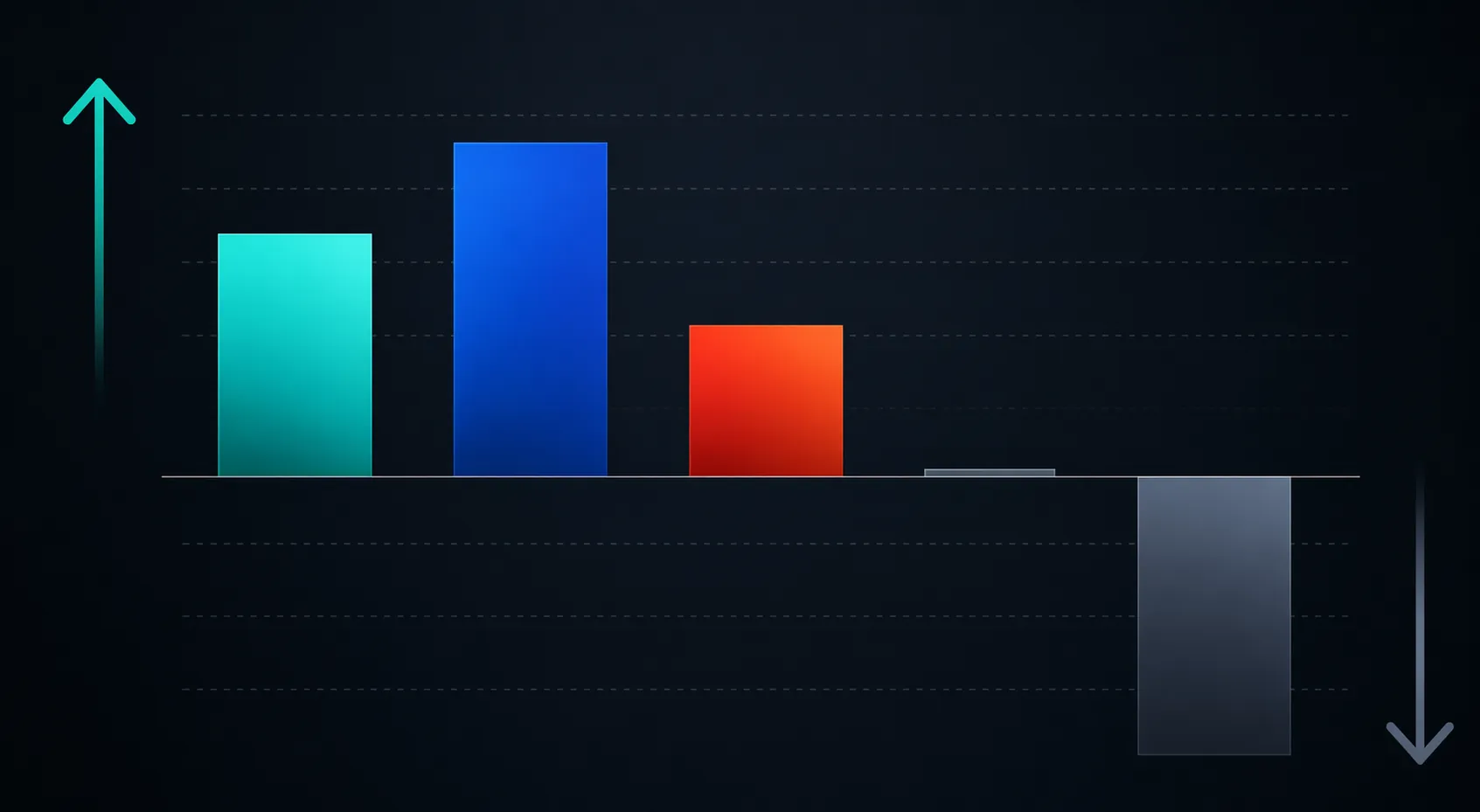
The useful part of IBM’s quarter is not the one-day market reaction. It is the way the company’s growth separated into layers. Data and watsonx grew 19%, Distributed Infrastructure grew 37% with a $500 million order backlog, and Red Hat grew 11%. Consulting was nearly flat at 0.2% growth, while IBM Z mainframe revenue fell 42%.[2]
| IBM Q2 2026 signal | Reported movement | Supply chain technology read |
|---|---|---|
| Data and watsonx | +19% | Enterprises are still funding AI platform and data-layer work. |
| Distributed Infrastructure | +37%, with $500M order backlog | Compute, storage, and memory capacity are absorbing budget share. |
| Red Hat | +11% | Buyers continue to value multi-cloud and deployable AI foundations. |
| Consulting | +0.2% | Broad advisory-led transformation work is easier to delay or narrow. |
| IBM Z | -42% | Legacy transaction environments remain exposed as AI layers modernize around them. |
This is not a clean supply-chain-only data set. IBM does not break out how much of watsonx, Red Hat, or infrastructure growth came from supply chain customers. The earnings release is also only one day old, so analyst interpretations will keep shifting. Still, the segment divergence is strong enough to matter for buyers making Q3 and Q4 allocation decisions.
The pattern is familiar inside budget reviews. AI remains the priority slide. Infrastructure becomes the approved purchase order. Application software and consulting then have to prove that they are not simply another claim on the same AI budget.
Why infrastructure is winning the next dollar
Supply chain AI is moving from pilots into operating environments that need data pipelines, integration, security, storage, model governance, and resilient compute. Those requirements are not glamorous, but they are what make a planning assistant, exception-management agent, or inventory optimization model usable outside a demo.
That explains why watsonx-style platform growth and Red Hat’s multi-cloud signal are more relevant to supply chain leaders than a generic “AI boom” story. Enterprises are still buying foundations. They are just becoming more selective about what sits above those foundations.
The hardware pull is also not happening in a vacuum. Gartner forecast in April 2026 that supply chain management software with agentic AI would grow from under $2 billion in 2025 to $53 billion by 2030, a more than 25-fold expansion.[3] That forecast points to a much larger software opportunity, but it also implies an execution burden: agentic systems need data access, orchestration, monitoring, and compute capacity before they can safely touch workflows such as allocation, replenishment, supplier follow-up, or transport exception handling.
Capital committees are responding to that burden. A Prologis/Harris Poll from October 2025 found that 75% of companies ranked AI as their No. 1 capital investment priority for 2026.[4] The caveat is timing: that survey predates IBM’s earnings event. It shows intention and priority, not proof that buyers will protect every AI software line item when infrastructure invoices arrive.
The constraint may last longer than a procurement cycle. Business Insider’s coverage of IBM’s earnings cited Micron’s CEO saying memory chip supply constraints extend beyond 2027.[5] That is a single-source signal and should be treated carefully, but it fits the buying environment supply chain teams are already facing: the cost of AI readiness is not confined to model subscriptions.
Platform spend now has the cleaner approval story
For H2 2026, the safest AI approvals are likely to be the ones that make existing infrastructure and data assets more usable. That includes governed data layers, integration between planning and execution systems, model management, security controls, and platforms that can run across the cloud footprint the enterprise has already funded.
This is where IBM’s stronger Data/watsonx and Red Hat results matter. They suggest that large buyers still want deployable AI foundations, especially when those foundations can sit across hybrid and multi-cloud environments. A supply chain organization with ERP, TMS, WMS, supplier portals, data lakes, and legacy transaction systems rarely has the luxury of building AI on a clean architectural sheet.
The weaker consulting number says something different. Consulting growth of 0.2% does not prove enterprises have rejected transformation work.[2] It does suggest, however, that advisory-heavy programs are more vulnerable when finance asks what must be bought now and what can be delayed until after the platform, cloud, or infrastructure bill is covered.
That distinction matters for supply chain teams because “AI transformation” can mean too many things at once. A project to clean item, supplier, and lane data so an agent can recommend replenishment actions is easier to defend than a broad operating-model redesign whose benefits arrive after multiple quarters of workshops. The first creates an asset that other AI use cases can reuse. The second may still be valuable, but it has to survive a tougher approval test.
Application vendors face a different competitor now
Supply chain AI software vendors used to compete mainly against other software vendors inside the same functional budget: planning versus visibility, procurement analytics versus supplier risk, warehouse optimization versus transport automation. IBM’s quarter points to a sharper comparison. Application-layer AI now has to compete against infrastructure claims on the same AI capital pool.
That changes the ROI burden. A vendor promising better forecast accuracy, fewer expedites, faster scenario planning, or improved inventory positioning needs to show how quickly those gains appear, which systems must be integrated, and whether the buyer needs new compute or can use already-funded capacity. “AI-native” positioning is not enough when the alternative investment is a server, storage, cloud, or platform purchase that multiple departments can use.
IBM’s own Institute for Business Value has argued that organizations with higher AI investment in supply chain achieve a 61% revenue growth premium and that 90% expect AI assistants in supply chain by 2026.[6] Those figures are useful directional evidence, but they are IBM’s self-published research rather than independent proof that any one application category will deliver that premium for a specific buyer.
The practical approval question is narrower: does this application reduce a cost, decision cycle, service failure, or working-capital drag before the next budget reset? If the answer depends on a new data platform, a new cloud migration, and a large consulting program, finance will see the application as only the visible tip of a much larger spend.
Agentic AI makes the sequencing problem harder
Gartner’s June 2026 supply chain technology trends list includes agentic AI, domain-specific LLMs, physical AI, and collaborative multiagent systems.[7] Those are not cosmetic upgrades to dashboards. In supply chain settings, they imply systems that can interpret exceptions, coordinate with other agents, recommend actions, or eventually trigger workflow steps under controls.
That makes sequencing more important. A procurement agent that drafts supplier follow-ups is a different risk profile from an agent that changes allocation priorities during a constrained supply event. A planning copilot that summarizes scenario differences is different from a multiagent workflow that negotiates between demand, inventory, and logistics constraints. The more autonomy buyers want, the more the platform, data, audit, and integration layers matter.
For build-versus-buy decisions, this pushes approval toward platforms and applications that can demonstrate value within infrastructure the enterprise already owns or has already budgeted. If a vendor’s best use case requires a fresh compute request, a new data architecture, and outside advisors before value appears, it will be competing against the very foundation spending that IBM’s segment results show is already gaining priority.
Legacy systems remain part of the bill
IBM Z’s 42% decline is not just a mainframe footnote.[2] Many supply chain transaction environments still depend on older systems for order management, inventory records, finance handoffs, manufacturing transactions, or customer commitments. AI layers may be new, but they still need accurate, timely access to those transaction sources.
That split environment creates a common budget trap. Leaders approve an AI planning or exception-management tool, then discover that integration, data quality, and governance consume more time and money than the model itself. IBM’s quarter does not prove every legacy modernization project should move ahead, but it does argue against treating legacy connectivity as a minor implementation detail.
In H2 2026, a better test is whether a proposed AI investment reduces friction between the systems that run the business and the AI layer that is supposed to improve decisions. If it only adds a new interface on top of unresolved transaction-data problems, the ROI case will be fragile.
A buying stance for Q3 and Q4 2026
IBM’s earnings miss should not cause supply chain leaders to pull back from AI. It should change the approval order.
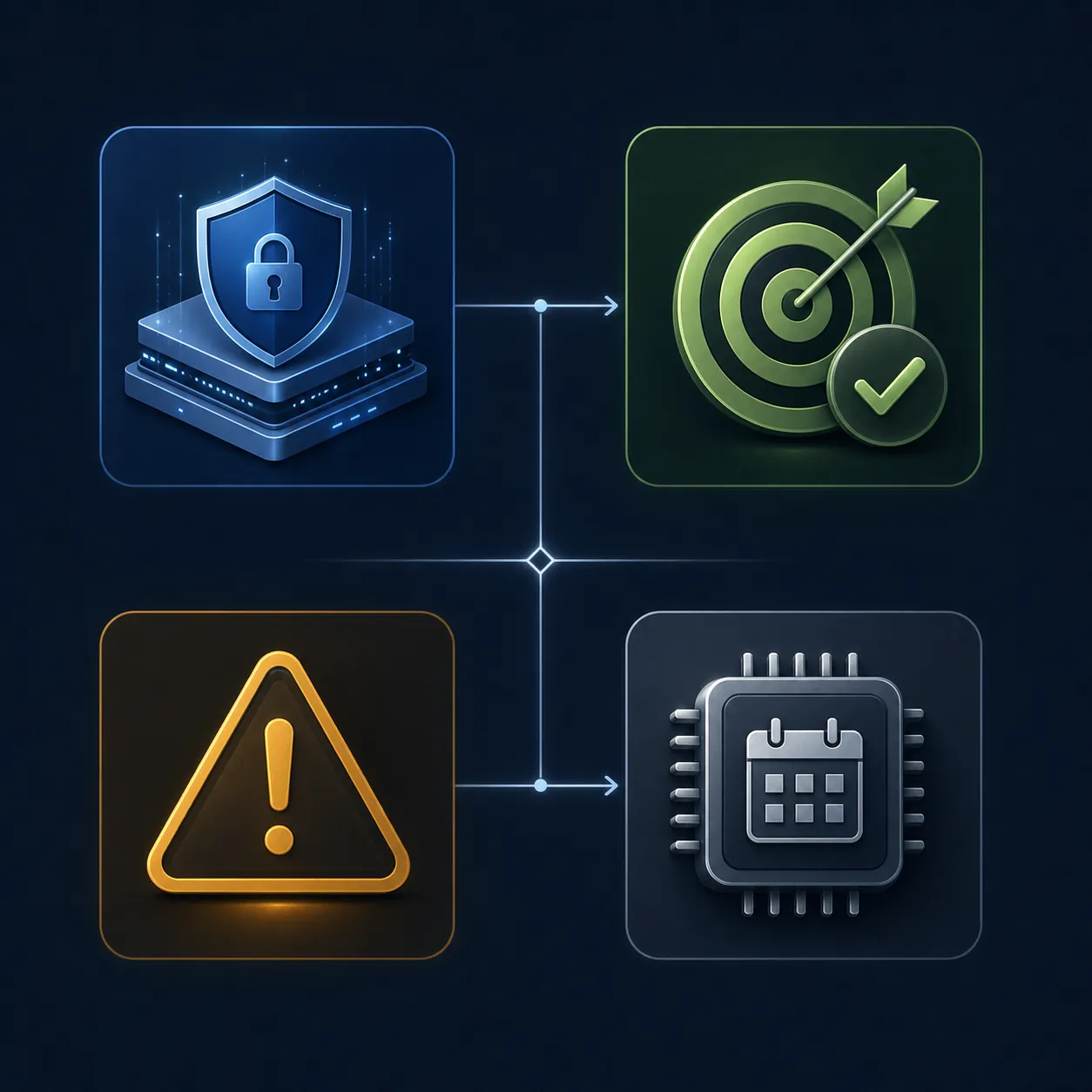
- Prioritize AI platform, data, integration, and governance investments that make existing or already-funded infrastructure more productive.
- Ask application vendors to show near-term operating impact, not only model capability or long-range transformation potential.
- Be cautious with large advisory-led supply chain AI programs unless they are tied to specific workflows, measurable milestones, and reusable data assets.
- Treat compute, storage, memory, and cloud capacity as continuing constraints into planning cycles beyond 2026, not as one-time setup costs.
- Separate adoption evidence from effectiveness evidence when reviewing vendor claims, especially for agentic AI.
The supply chain AI market can still grow rapidly while individual software and consulting proposals get harder to approve. That is the budget reality IBM exposed. Buyers who sequence foundation work first, demand faster proof from applications, and avoid unfunded infrastructure dependencies will be in a stronger position when finance asks why the AI roadmap is already costing more than the original slide implied.
References
- IBM warns AI boom squeezing software budgets; shares sink in sector rout, Reuters, July 22, 2026
- IBM Q2 2026 press release, IBM via PRNewswire, July 2026
- Gartner Forecasts Supply Chain Management Software with Agentic AI Will Grow to $53 Billion in Spend by 2030, Gartner, April 2026
- Prologis/Harris Poll, Prologis and Harris Poll, October 2025
- Business Insider coverage of IBM earnings and Micron CEO comments, Business Insider, July 2026
- The intuitive, AI-powered supply chain, IBM Institute for Business Value
- Gartner 2026 supply chain technology trends press release, Gartner, June 2026
Comments
Join the discussion with an anonymous comment.