
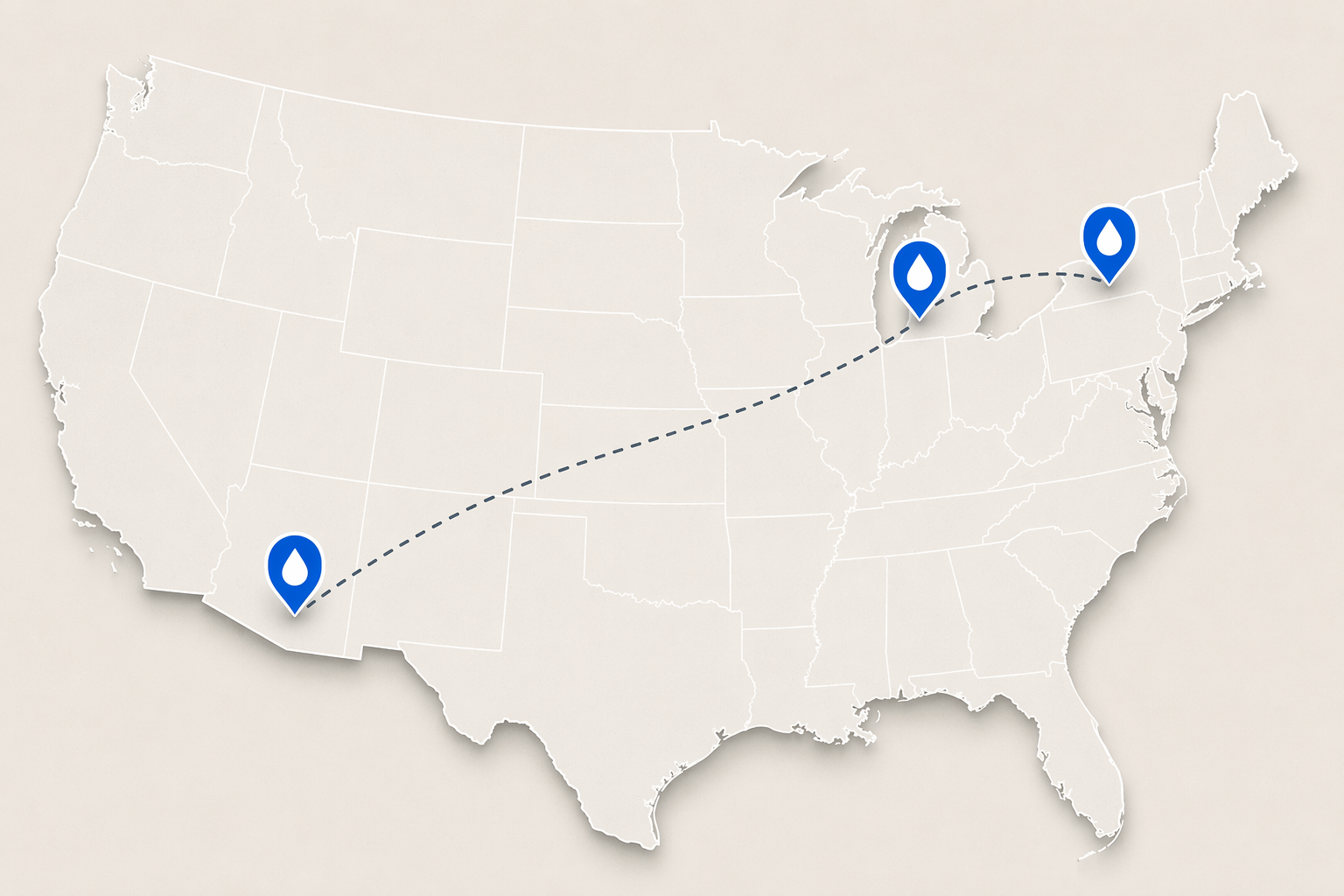
Coca-Cola’s July 16, 2026 SEC filing did not read like a completed postmortem. It said an unauthorized third party had accessed Fairlife systems, including “production-related systems,” and that Fairlife had halted production across its U.S. facilities in Coopersville, Michigan; Goodyear, Arizona; and Webster, New York. The company also said “the full scope, nature and impacts of the incident are not yet known” and that it had not determined whether the incident would have a material impact.[1]
That uncertainty matters. The Fairlife cyber attack does not need a named ransomware crew, a leaked ransom note, or a confirmed data-theft claim to be operationally serious. The disclosed facts already put this in a different category from a back-office outage: every U.S. Fairlife production site was stopped at the same time, and the system access described by the company reached production-related systems.
The Filing Put Production, Not Just Data, In View
The most important phrase in the disclosure is not “unauthorized third party.” It is “production-related systems.” That wording does not prove, by itself, that programmable logic controllers, SCADA servers, line controls, quality systems, or plant-floor networks were directly compromised. It does, however, move the incident close enough to production that the operational response was a nationwide halt rather than a quiet password reset or a contained corporate IT cleanup.[1]
For a dairy processor, a production halt is not a neutral pause. Milk keeps arriving or has to be redirected. Finished goods already in the cold chain have to be counted against retail commitments. Production schedules that looked efficient on paper become questions about what can still be run, what must wait, and what cannot be recovered. The filing did not quantify those consequences, so they should not be turned into a pretend loss estimate. But the operating problem is visible before the accounting number is.
Coca-Cola’s caution is also understandable. In the first days after an intrusion, legal, security, operations, and finance teams often do not yet agree on the perimeter of the event. The filing’s admission that the full scope, nature, and impacts were not yet known is not a throwaway line. It means the company was still trying to establish what had happened while production capacity was already offline.[1]
The Scale Made The Halt A Network Event
Fairlife was not a small regional label when the incident hit. The brand said in February 2022 that it had surpassed $1 billion in annual retail sales.[2] Newsweek later reported Fairlife sales of about $4 billion in 2024.[3] Coca-Cola also invested $650 million to expand the Michigan facility, according to the Atlanta Journal-Constitution.[4]
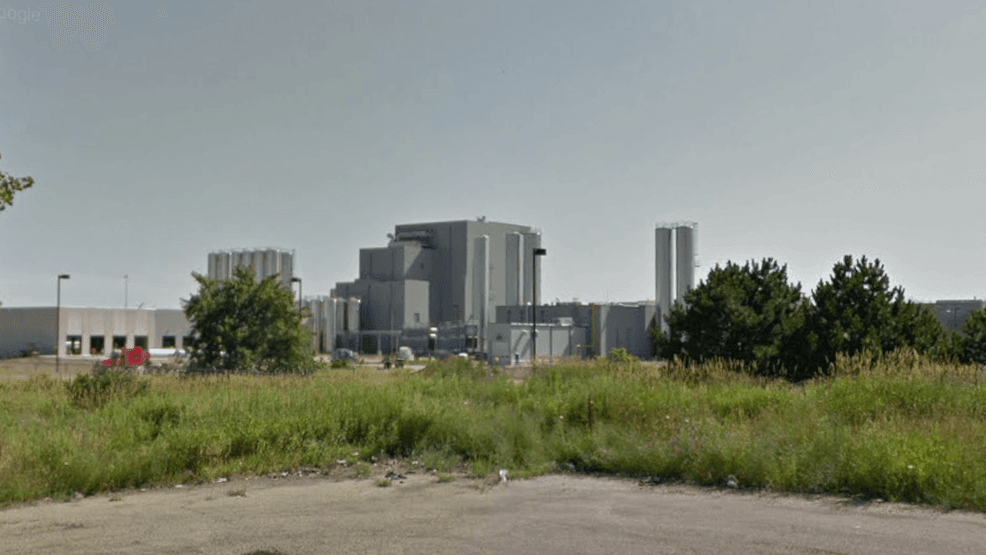
Those figures should be used for sizing, not drama. They do not tell us how much product was lost, how long retail replenishment was affected, or whether customer orders were missed. They do show that the halted assets were supporting a large national business, not an isolated production line. When all three U.S. sites are paused, the question shifts from whether one plant can catch up to whether the network has enough separable capacity, inventory, and alternate routing to absorb a synchronized stop.
That is the part many cyber incident summaries miss. A plant outage can sometimes be handled as a local exception: shift volume elsewhere, reassign labor, protect priority SKUs, and call transportation partners. A three-state halt removes the easy valve. The teams left holding the schedule have to decide which inbound flows to slow, which orders to protect, which cold-storage positions to consume, and when to tell customers that normal replenishment assumptions no longer apply.
What “Production-Related Systems” Allows Us To Infer
Food and beverage plants have spent years connecting plant-floor systems to enterprise systems because the business wants real-time production visibility, yield data, maintenance alerts, inventory status, and faster planning decisions. That connectivity is useful. It also means the line between information technology and operational technology is no longer a clean wall in many facilities.
Sector security analysis has repeatedly warned that food and beverage OT environments often include legacy PLCs and SCADA systems that were not originally designed around modern cyber threats, while business networks increasingly connect to production environments for monitoring and control visibility.[5][6] In that setting, an intrusion does not have to begin on the plant floor to become a plant-floor problem.
Fairlife’s disclosure fits that concern, but only within the limits of the words available. “Production-related systems” may refer to systems that directly run equipment, systems that schedule or monitor production, systems that support quality release, or other technology that production needs before it can safely continue. The phrase is broad enough to justify a shutdown and narrow enough that outside observers should avoid pretending they know the exact technical path.
From a continuity perspective, the exact label matters less than the dependency it exposes. If a production site cannot run because a digital system is untrusted, encrypted, unavailable, or under investigation, then the supply chain has lost physical capacity. The downtime starts before the root-cause diagram is finished.
Dairy Makes Recovery Time Less Forgiving
Manufacturing ransomware recovery benchmarks are useful only if they are kept in their lane. ORDR has reported an average manufacturing ransomware recovery time of 26 days and an average cost of $2.41 million.[7] That does not mean Fairlife will be down for 26 days, nor does it estimate Fairlife’s cost. It simply gives a directional reminder that ransomware recovery in manufacturing is often measured in weeks, not hours.
Dairy compresses that timeline. A parts manufacturer may be able to protect work in process, delay some shipments, and restart with a backlog. Dairy has inbound perishability, sanitation constraints, cold-chain capacity, and retailer shelf expectations pressing on the same calendar. Even when raw milk can be diverted, diversion is not free; it requires capacity somewhere else, transport availability, and commercial decisions about who receives product and who waits.
That is why the first operational question is not whether the incident was embarrassing. It is whether the company can see, quickly enough, which plants are safe to run, which production systems can be trusted, which inbound and outbound flows are exposed, and which customers will feel the shortage first. A cyber team can investigate indicators of compromise; the supply chain team still has to keep a perishable network from making the damage larger.
Fairlife Is Not The First Food Cyber Incident To Become A Supply Problem
The closest comparison is Schreiber Foods. In 2021, ransomware forced a five-day shutdown of dairy processing and distribution, and the disruption contributed to national cream cheese shortages.[8] The lesson is not that every dairy ransomware event produces the same shortage. It is that dairy processing and distribution can be interrupted long enough for retail and foodservice markets to notice.
Other food categories have already shown the same pattern. JBS paid an $11 million ransom after a 2021 attack that disrupted roughly 20% of U.S. meat supply.[9] Dole reported a $10.5 million total cost from its 2023 cyber incident.[10] Meat, produce, and dairy do not share the same operating model, but they do share a basic exposure: production and distribution networks now depend on digital systems whose loss can quickly become a physical supply constraint.
Sector-level data makes the Fairlife incident harder to dismiss as a one-off. Food and agriculture ransomware attacks rose from 40 in Q1 2024 to 84 in Q1 2025, with 265 incidents reported for full-year 2025, according to Food & Ag-ISAC data reported by Cybersecurity Dive. The same reporting said ransomware accounted for 53% of all threat actors targeting the sector, with Qilin and Akira among the most active groups.[11]
None of that identifies the actor behind the Fairlife incident. It should not be used to guess at one. The value of the sector data is more practical: food and beverage manufacturers are being targeted often enough that cyber disruption now belongs inside supply continuity planning, not in a separate binder owned only by security.
The Continuity Work Starts Before The Next Filing
The Fairlife case points to a short list of planning gaps that food and beverage manufacturers can test without waiting for a perfect forensic report. The useful question is not “could this happen to us?” The useful question is how long production would stay stopped if a system needed by multiple plants became untrusted at the same time.
- Map production dependencies by plant, including systems used for scheduling, batching, quality release, sanitation records, warehouse movement, and shipment execution.
- Separate IT and OT incident-response decisions so teams know who can authorize isolation, manual operation, partial restart, and continued shutdown.
- Test whether one compromised identity, vendor connection, monitoring platform, or shared production application could affect multiple facilities at once.
- Build perishable-flow playbooks that specify where inbound milk or other time-sensitive inputs can be redirected, slowed, stored, or rejected.
- Connect cyber incident status to customer allocation, transportation planning, cold-storage capacity, and retail replenishment decisions early, not after the technical team has finished its investigation.
Segmentation is part of the answer, but not the whole answer. A well-segmented plant can still be operationally fragile if no one knows which production records are reliable, which manual procedures are acceptable, or how to restart safely without violating quality and food-safety controls. The same is true for visibility tools: dashboards help only if they connect the cyber event to plant capacity, inventory exposure, and customer commitments fast enough for operators to act.
Fairlife’s public facts are still incomplete. No ransomware group has been confirmed, no ransom amount has been disclosed, and Coca-Cola has not confirmed data theft. But the supply chain lesson does not depend on those missing details. A digital intrusion reached systems close enough to production that Fairlife stopped every U.S. facility, and that is the continuity threshold food manufacturers should care about.
Cyber resilience for food and beverage now has to cover production segmentation, IT-OT incident response, plant-level disruption visibility, and perishable-flow contingency planning. A ransomware event can become a physical supply chain halt before its digital facts are fully known.
References
- Coca-Cola SEC 8-K Filing, The Coca-Cola Company, July 16, 2026, link
- Fairlife Surpasses $1 Billion in Annual Retail Sales, Fairlife, February 2022, link
- Fairlife sales reporting, Newsweek, link
- Fairlife Michigan facility expansion reporting, Atlanta Journal-Constitution, link
- Cybersecurity in the Food Sector, TXOne Networks, link
- The Big One, FoodNavigator, March 2026, link
- Manufacturing ransomware recovery data, ORDR, link
- Schreiber Foods ransomware shutdown reporting, link
- JBS ransomware attack reporting, link
- Dole cyber incident cost reporting, link
- Food & agriculture ransomware attack data, Cybersecurity Dive, February 2026, link
Comments
Join the discussion with an anonymous comment.