AI Supply Chain Risk Management in the 2026 Oil Price Spike
This analysis maps how AI planning platforms from o9, Kinaxis, C3 AI, and Resilinc performed during the three phases of the 2026 Strait of Hormuz oil crisis, and identifies which capabilities mattered most—and which gaps remained.
In the first 48 hours of the 2026 Strait of Hormuz oil shock, the useful signal was not a supplier email saying a plant would miss a shipment. It was the faster, dirtier evidence: fuel surcharges changing, spot freight rates moving, and logistics providers repricing lanes before procurement teams had clean disruption reports. o9’s vendor-authored Hormuz analysis argues that companies watching those cost signals early had a 3–4 week lead-time advantage over companies waiting for supplier-reported disruption data; it also describes freight-rate and surcharge movements of 10–20% within days.[1]
That distinction matters for AI supply chain risk management during oil price spikes because the first decision window is not a forecasting contest. It is an authorization problem under partial information. Someone has to decide whether to accept a temporary freight premium, pull forward inventory, re-price customer commitments, or wait. The model can put the shock on the screen. The business still has to know who is allowed to act.
The 2026 event was large enough that treating it as routine volatility would have been a category error. Published analyses describe a 10.1 mb/d supply disruption, more than double the peak disruption associated with the 1973 crisis, while Brent moved from roughly $70 to above $119 per barrel in under three weeks and flows through the Strait of Hormuz fell from about 20 mb/d to 3.8 mb/d.[2][3][4]
The Three Decision Windows
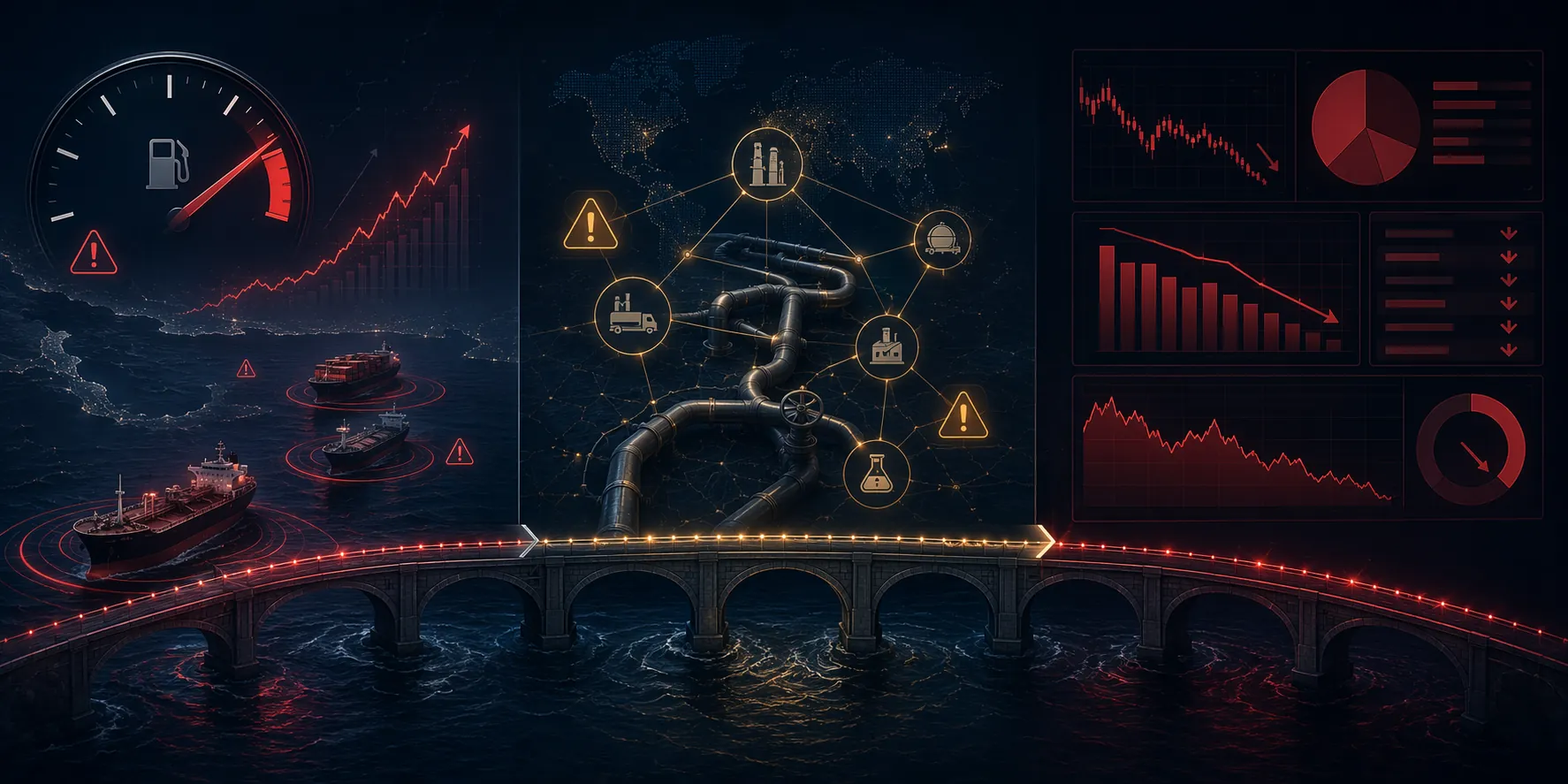
The cleaner way to read the Hormuz shock is not by vendor category. It is by decision window. The first window was cost detection. The second was supply and feedstock exposure. The third was P&L damage, where the operational choices made earlier started appearing as margin compression, customer risk, and quarter-level exposure.
| Window | Primary Question | Capability That Mattered | Weak Point |
|---|---|---|---|
| Day 0–2 | Which cost signals are moving before supplier disruption reports arrive? | Real-time monitoring of fuel, freight, and commodity signals | Dashboards without emergency-buy or routing authority |
| Day 3–30 | Which materials, suppliers, and production plans are exposed to oil-linked repricing or scarcity? | Scenario simulation across feedstocks, tiers, plants, lanes, and inventory | Supplier maps that exist but are not tied to substitute decisions |
| Day 30–90 | Which revenue, margin, and customer commitments are now at risk? | Integrated planning that translates operational scenarios into financial exposure | C-suite reviews that arrive after the quarter is already damaged |
That sequence also explains why older planning stacks struggled. SDCE’s e2open analysis argued that traditional planning systems were built for a more predictable environment where past trends and separate teams were sufficient.[5] A Brent move from roughly $70 to above $119 in under three weeks is not the kind of signal a siloed, backward-looking planning cadence handles gracefully.
The Dallas Fed’s macro finding adds a useful caution. It concluded that the U.S. economy was less vulnerable to geopolitical oil shocks than in the past, estimating only a 0.3 percentage-point reduction in GDP, far below 1980-era sensitivity.[4] That does not mean individual companies were protected. Macro resilience can coexist with severe margin compression inside a chemicals business, airline supplier, consumer-goods manufacturer, or distributor with fuel-indexed freight.
Day 0–2: Cost Signals Moved Before Clean Disruption Data
The first window favored platforms that could see market repricing faster than enterprise workflows could certify it. Fuel surcharges, spot freight premiums, bunker costs, and expedited transport quotes are not perfect proxies for physical disruption. They are, however, early evidence that carriers and suppliers are changing behavior.
o9’s Hormuz article is useful here because it frames the crisis as a progression from cost shock to supply shock to P&L exposure, rather than as one undifferentiated disruption.[1] The caveat is important: this is vendor-authored analysis, not an independent benchmark of o9 customers during the event. Still, the Day 0–2 lesson is operationally sound. Waiting for verified supplier disruption reports can be too slow when the market has already repriced the lanes that keep production moving.
In that window, the best planning system is the one that shortens the distance between a cost signal and an allowed response. A transportation lead may need authority to lock capacity above a normal tolerance. Procurement may need permission to advance a buy before the next S&OP cycle. Finance may need a provisional exposure view that is good enough for action, not polished enough for a board packet.
This is where visibility often gets overpraised. A dashboard showing freight cost inflation is a condition, not an outcome. The useful test is whether that signal triggers a pre-agreed play: which lanes can be protected, which products can absorb premium freight, which customers get allocation protection, and which exceptions require CFO approval.
Day 3–30: The Shock Reached Feedstocks, Suppliers, and Production Choices
By the second window, the question had changed. The issue was no longer just whether fuel was more expensive. It was which bills of material carried oil-linked exposure, which Tier-2 or Tier-3 suppliers depended on petrochemical inputs, which plants could run substitute specifications, and which customers would be affected if the plan changed.
Resilinc belongs in this layer, but with careful wording. Its CommodityWatchAI materials describe time-series forecasting designed to predict commodity price fluctuations and supply constraints more than three months out.[6] That is directly relevant to petrochemical feedstock repricing. It is not, by itself, independent evidence that Resilinc predicted the Hormuz shock or that a specific customer avoided margin damage because of it.
For a planner, the practical value of that kind of commodity monitoring is in the questions it can tee up before the monthly cycle catches up: which resin families are exposed, which packaging inputs should be repriced, which suppliers need a capacity check, and which substitute materials are commercially acceptable. The forecast matters less than the decision it forces onto the table.
Kinaxis is relevant for a different reason. ARC Advisory Group’s Logistics Viewpoints coverage says ExxonMobil selected Kinaxis because oil and gas supply chains require simultaneous visibility across upstream, midstream, and downstream operations.[7] That is not a Hormuz performance proof either; it is an analyst-reported account of platform selection. But it points to a real requirement in the Day 3–30 window: upstream constraints, midstream logistics, downstream commitments, and inventory positions cannot be planned as separate problems.
Concurrent planning earns its keep when several answers have to be compared at once. If one plant gets a substitute feedstock, another loses allocation. If a company pays to protect one shipping lane, a lower-margin product line may no longer justify premium freight. If procurement buys early, working capital moves before finance has a final margin view. Sequential planning turns these into handoffs. During the Hormuz window, handoffs were where time disappeared.
Multi-tier visibility also had a prerequisite problem. Everstream Analytics reports that its clients achieved a 50–70% reduction in the time required to identify and assess disruption impact, but the benefit depended on pre-mapped multi-tier supplier visibility rather than ad hoc crisis mapping.[8] That distinction is easy to miss in platform evaluations. The crisis does not wait while a team discovers which supplier makes the supplier’s supplier vulnerable.
The Substitute Decision Was a Governance Test
The harder Day 3–30 decisions were not just analytic. A scenario may show that a substitute input protects service levels at a higher unit cost. Another may show that moving volume to a different plant protects margin but delays a strategic customer. A third may show that buying constrained material now reduces later stockout risk but increases inventory exposure if prices normalize.
Those are not decisions a planning engine can approve on behalf of the company unless the company has already defined the boundary. Who can accept a substitute specification? Who can authorize a premium buy? Which customer commitments outrank gross-margin protection? Which changes require regulatory, quality, or engineering review? If those answers start from scratch on Day 12, the system is doing visibility work while the organization is still negotiating authority.
Day 30–90: The Crisis Became a Margin Problem
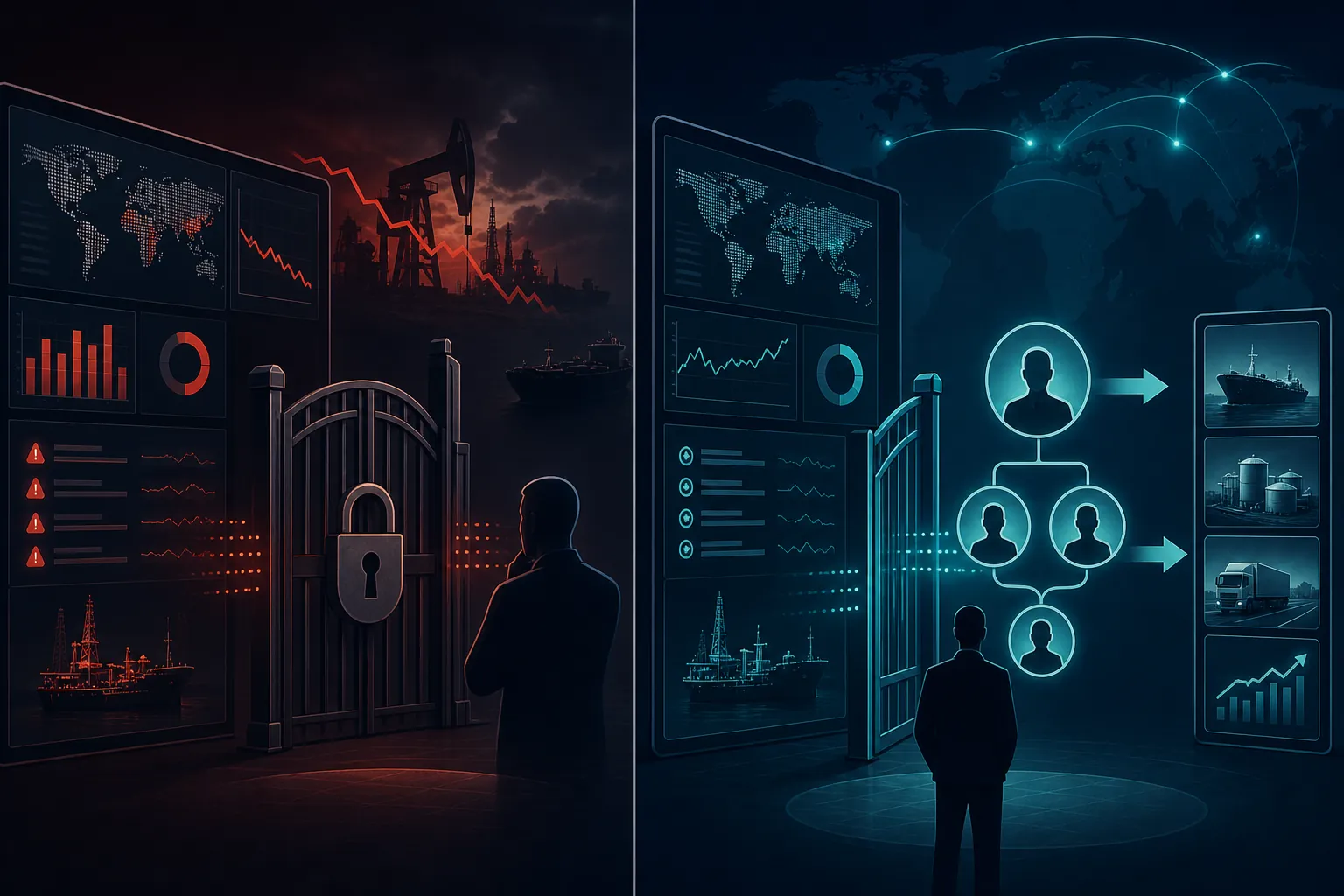
By the third window, the oil shock had moved out of the operations room and into the financial forecast. Premium freight that looked tolerable on Day 2 could become margin leakage by Day 45. A feedstock buy that protected service levels could force a price conversation with customers. A delayed substitute approval could show up as missed revenue, not just production inconvenience.
o9’s IBP materials describe decision architecture that translates what-if scenarios into margin impact for executive review.[9] Again, the source is vendor-authored. The capability claim should not be read as a universal proof that o9 customers managed Hormuz exposure better than everyone else. But the architecture addresses the right failure mode: finance, procurement, and operations need to look at the same exposure number before the quarter is already impaired.
This is where integrated business planning changes the conversation from “What is disrupted?” to “What can we afford to protect?” A business may decide to preserve supply for high-margin contracts, accept lower service on less strategic SKUs, or pass through part of the cost increase where contracts allow it. The useful planning platform does not make those tradeoffs painless. It makes them explicit early enough that executives can own them.
C3 AI enters this phase through execution modeling rather than oil-specific evidence. Its tariff-resilience material describes digital twins that ingest geopolitical feeds, shipping data, and commodity indices, then use agentic AI to support rerouting or inventory reallocation.[10] Those capabilities are transferable to oil-price-spike scenarios, but the cited case is about tariffs, not a documented Hormuz oil shock deployment.
That caveat does not make the capability irrelevant. It simply keeps the claim in bounds. A continuously updated model can help when the exposure keeps changing: a ship is delayed, a lane is repriced, a supplier requests a surcharge, a customer pushes back on a price increase. The question for buyers is whether automated recommendations are connected to execution authority, exception thresholds, and audit trails. Without those, “agentic” becomes another word for a recommendation that waits in a queue.
Why No Platform Covered the Whole Shock Equally
The temptation is to turn Hormuz into a platform ranking. That would be too neat. o9 has the most directly relevant vendor-authored crisis framing and a strong IBP margin translation story. Kinaxis fits the simultaneous upstream, midstream, and downstream balancing problem. Resilinc fits commodity and multi-tier supplier exposure monitoring. C3 AI fits digital-twin execution and automated scenario response, though the cited evidence comes from tariff resilience rather than oil disruption.
None of those capabilities replaces commodity hedging. None removes the need for contract terms that define surcharge pass-throughs. None solves quality approval for substitute materials after the fact. What they can do is compress the time required to quantify exposure and compare responses, which can support earlier hedging decisions, faster procurement action, and cleaner executive reviews.
Readers looking for a broader retrospective on the same event may want the companion analysis, What the 2026 Oil Crisis Revealed About AI Planning. For buyers comparing these systems across tariff scenarios as well as oil shocks, How Five AI Platforms Compare for Tariff Scenario Planning is the closer parallel.
The Buyer Question Is Authority, Not Just Accuracy
The sharpest finding in o9’s Hormuz analysis is not that companies needed better visibility. It is that COVID-era supply chain mapping investments produced no speed advantage unless companies had also pre-agreed decision rights: who could approve emergency buys, reroute production, or accept substitute specifications without a two-week sign-off chain.[1]
That is the part many AI planning business cases underweight because it is harder to demo. A vendor can show an elegant scenario tree. It can show commodity feeds, supplier graphs, digital twins, and margin bridges. It can show an executive dashboard moving from red to amber. The missing object is often the decision charter that says what happens when the dashboard turns red at 7:30 on a Tuesday morning.
An enterprise evaluating o9, Kinaxis, C3 AI, Resilinc, Blue Yonder, or adjacent platforms for oil-price-spike risk should therefore ask a narrower set of questions than the usual AI demo encourages:
- When fuel or freight signals move in the first 48 hours, which roles receive the alert and what are they authorized to change?
- Which supplier tiers, feedstocks, lanes, plants, and customer commitments are already mapped before the crisis starts?
- Can the platform show margin exposure by product, customer, lane, and time window quickly enough for a live executive decision?
- Which substitute specifications, emergency buys, and production reroutes are pre-approved, conditionally approved, or prohibited?
- Does the workflow record who approved the response, which scenario they accepted, and which tradeoff they rejected?
The 2026 Hormuz shock rewarded faster signals and better scenario models. It rewarded integrated planning more than siloed forecasting. But the durable lesson is less glamorous: the companies in the best position were the ones that had already decided who was allowed to respond when the model saw the shock.
References
- The Hormuz Rollercoaster: What Supply Chain Leaders Learn from the Back-and-Forth, o9 Solutions, July 20, 2026
- Oil Price Surge: What It Means for Supply Chains, Logistics and Procurement, Bramwith Consulting
- Global Oil Shock 2026: What It Means for Your Business, Gedeth Network
- U.S. economy less vulnerable to geopolitical oil price shocks than in the past, Federal Reserve Bank of Dallas
- War, Oil Shock, and the End of Predictable Supply Chains, SDCE / e2open
- 5 Models of AI for Supply Chain Risk Management—And Why They Matter, Resilinc
- ExxonMobil and Kinaxis: Creating a Next Gen Supply Chain Management Solution for Oil & Gas, Logistics Viewpoints / ARC Advisory Group
- Artificial Intelligence's Role in Supply Chain Risk Management, Everstream Analytics
- The Decision Architecture: How IBP Transforms Volatility into Competitive Advantage, o9 Solutions
- How to Build Tariff-Resilient Supply Chains, C3 AI
Cited evidence
- What the 2026 Oil Crisis Revealed About AI Planning
An analysis of how o9, Kinaxis, and Blue Yonder AI planning platforms performed during the 2026 Hormuz oil price shock, based on vendor-reported data and public evidence, revealing that while concurrent planning enabled rapid scenario re-evaluation, data integration gaps limited broader effectiveness.
- OpenAI Frontier Agents in Supply Chain: Where They Excel
An analysis of OpenAI Frontier's six confirmed launch customers — including HP's demand forecasting and inventory management deployment — shows that Frontier agents excel at structured cross-system coordination and exception management, not at the strategic planning tasks handled by specialized platforms like o9, Blue Yonder, or Kinaxis.
- What Trump's Ratepayer Pledge Means for AI Data Center Supply Chains
The Ratepayer Protection Pledge shifts grid upgrade costs but lands on a supply chain already crippled by transformer shortages, tariff exposure, and multi-year lead times—forcing enterprise AI buyers to plan for higher costs and delays through at least 2028.
Ready to check your own team's readiness for this pattern?
See the procurement readiness checklist →Spotted something inaccurate or incomplete in this entry? ChainSignal reviews corrections and additional evidence before publishing an update — this is not a public comment thread.
Flag an inaccuracy / submit evidence for this entry →