
§ 41 — Use-case analysis
Why Your Supply Chain Needs Both Wintermute and Neuromancer
The two complementary AI intelligences from Neuromancer — Wintermute and Neuromancer — map directly to the agentic versus generative bifurcation in 2026 supply chain AI. Organizations that invest in only one track risk hitting the failure ceiling Gartner forecasts for over 40% of current agentic AI projects.
- Function
- procurement-automation
- AI technique
- generative-ai
- Failure pattern
- single-track-architecture
- Evidence source
- Gartner, ICRON, RELEX, Deloitte
Supply-chain AI in 2026 is being sold as if it were one thing. It is not. One track is agentic: software that can pursue a goal, coordinate tasks, make bounded decisions, and push work through planning, procurement, transportation, or ERP workflows. The other is generative and analytical: software that can explain an exception, model alternatives, summarize trade-offs, and help a human reframe a broken plan. The useful question behind Neuromancer AI concepts for supply chain innovation is not whether a vendor has attached an AI label to both. It is whether the architecture can act, interpret, adapt, and escalate without pretending those are the same capability.
The market is already separating along those lines. ICRON, citing Mordor Intelligence, places the agentic AI supply-chain market at $8.67 billion in 2025, while RELEX reports that 71% of organizations plan to invest in generative AI over the next three to five years.[1][2] Those are not interchangeable signals. The first points toward execution systems that can move work. The second points toward language, analysis, and decision-support systems that help people reason through the work.
That split matters because evaluation teams are being asked to compare tools that sit at different layers of the operating model. A control-tower agent that recommends or initiates a transportation change is not the same animal as a copilot that explains why an allocation rule failed. A demand-planning assistant that writes a scenario narrative is not the same as an execution agent that updates replenishment parameters under constraints. The agentic vendor landscape is moving quickly, as recent supply-chain AI agentic automation market developments make clear, but speed does not erase the architecture split.

Wintermute Is the Execution Layer
William Gibson’s Neuromancer gives supply-chain evaluators a better metaphor than most product decks because its two artificial intelligences are not redundant. Wintermute is the goal-seeking operator, the intelligence trying to maneuver through constraints and assemble the conditions for action. Neuromancer is the other half: personality, memory, imagination, and a different kind of interpretive depth. The novel’s conceit is not that one intelligence automates everything. It is that each is incomplete without the other.[3]
In a supply-chain stack, Wintermute maps to agentic execution AI. This is the layer that watches demand signals, inventory positions, supplier constraints, production capacity, freight options, and service commitments, then pushes an operational sequence forward. It does not merely answer a prompt. It checks a goal against constraints, selects a next action, calls tools or systems, and updates the workflow.
The most credible Wintermute-style systems are not magic decision engines. They are bounded actors. They may reschedule a production sequence, propose a transfer, open an exception case, trigger a procurement workflow, or recommend a freight mode change. Their value depends on whether they can work inside the unglamorous plumbing: master data, business rules, user permissions, approval thresholds, ERP latency, and the political reality of who is allowed to override whom.
That is why the strongest examples are operationally specific. ICRON describes a food and beverage case in which agentic AI reduced expedited freight by 35%, and a chemical manufacturing case in which agentic AI improved plant utilization by 12%.[1] Those results matter because they are tied to execution outcomes, not generic productivity language. Expedited freight falls when fewer plans break late or when the system catches the break earlier. Plant utilization improves when constraints, sequence choices, and available capacity are managed with less idle time or fewer avoidable conflicts.
The caveat is not decorative. The same case material points to human oversight for exceptions.[1] That should not be read as a weakness of agentic AI. It is closer to a design requirement. In a real planning environment, the agent can close routine loops only if someone has already decided which loops are safe to close, which exceptions require review, and which trade-offs are too consequential to bury inside automation.
Neuromancer Is the Interpretive Layer
Neuromancer maps less neatly to a workflow box because its supply-chain role is not simply “chatbot.” The useful version is generative and analytical intelligence: scenario explanation, exception reasoning, policy interpretation, risk narrative, and creative recombination when a planning assumption stops matching the world.
This layer becomes valuable when the plan does not fail in a clean, pre-modeled way. A supplier misses a shipment, but the shortage affects a customer segment with contractual penalties. A weather event does not merely delay a lane; it changes which inventory buffers are politically acceptable to consume. A promotion forecast misses, but the real question is whether to protect margin, service level, shelf availability, or a strategic account. These are not only optimization problems. They are interpretation problems.
Generative systems are well suited to that interpretive work when they are connected to governed data and constrained by domain logic. They can summarize why a plan changed, compare scenarios in language a commercial leader can understand, draft exception narratives for review, or expose a hidden assumption in a forecast conversation. Their weakness appears when they cannot initiate action or close the loop. A beautiful explanation that leaves the planner to swivel-chair the same updates into three systems is not an execution architecture.
This is where Gibson’s Dixie Flatline becomes a useful warning without needing to take over the metaphor. The construct can respond, advise, and preserve a pattern of expertise, but it is not the same as an intelligence that initiates its own campaign. Many supply-chain LLM deployments are closer to that reactive model: useful when prompted, impressive in a demo, but dormant until a person knows what to ask.
| Capability | Wintermute-style execution AI | Neuromancer-style generative and analytical AI |
|---|---|---|
| Primary motion | Initiates or advances bounded operational work | Explains, reframes, compares, and generates alternatives |
| Typical supply-chain role | Replenishment action, production adjustment, transport exception, workflow trigger | Scenario narrative, root-cause explanation, policy interpretation, exception briefing |
| Main failure mode when isolated | Rigid execution, brittle edge-case handling, integration drag | Reactive advice, no closed loop, manual follow-through |
| Human role | Set constraints, approve exceptions, monitor consequences | Judge trade-offs, validate reasoning, decide escalation |
Trust Data Favors the Merge, Not Full Autonomy
The industry’s trust data does not support the fantasy that supply-chain leaders are ready to hand critical decisions to unsupervised systems. RELEX reports that only 10% of leaders trust AI for critical unsupervised decisions, while 54% prefer a hybrid human-in-the-loop approach.[2] That is not anti-AI sentiment. It is a fairly rational reading of where supply-chain accountability sits.
A missed purchase order, an unnecessary expedite, a production freeze, or a poor allocation decision does not land on “the model” in the Monday review. It lands on the planning team, the operations owner, the commercial lead, or the IT group that approved the integration. The person evaluating AI architecture therefore has to ask a different question from the one a demo encourages: when the system acts, who can see why; when it explains, who can make it act; and when both are uncertain, who is forced into the escalation path?
The hybrid preference also explains why a two-track architecture is more credible than either pure autonomy or pure copiloting. Execution AI without interpretive support becomes hard to trust at the edge. Generative AI without execution authority becomes easy to admire and easy to ignore. The practical middle is not a vague “human plus AI” slogan. It is an architecture in which routine bounded decisions can move faster, ambiguous exceptions become more legible, and consequential decisions remain reviewable.
Governance then becomes part of the architecture rather than a compliance appendix. If an AI agent changes a supply plan, the organization needs traceability around the constraint set, the data used, the approval threshold, and the fallback path. For teams operating in or selling into Europe, that governance discussion increasingly intersects with vendor due diligence around the EU AI Act; the same logic behind checking o9, Blue Yonder, and Kinaxis for EU AI Act compliance applies to any agentic or generative layer that affects planning decisions.
Where Execution-Only AI Hits Its Ceiling
The case for execution agents is strong, but an execution-only architecture has a hard ceiling. Gartner predicts that more than 40% of current agentic AI projects will be scrapped by the end of 2027, citing cost, integration complexity, and unclear business value.[4] That is a forecast, not a completed failure count. It should be treated as a warning about project shape, especially for buyers who are being promised autonomy before the integration model is clear.
Cost and integration drag are not side issues in supply chain. They are often the project. An agent that needs to observe demand, read inventory, understand constraints, trigger workflow, and write back to an ERP or planning system has to cross the boundaries where enterprise software gets messy. If the agent can recommend but not transact, the value case depends on user adoption. If it can transact but not explain, the risk case escalates. If it can neither handle exceptions nor route them cleanly, it becomes another queue.
Wintermute-only systems struggle most when the exception is real but the policy is incomplete. A preapproved rule can say when to expedite. It may not capture whether a customer relationship justifies burning scarce capacity. A scheduling agent can optimize a plant sequence. It may not know that a maintenance workaround changed the practical constraint on the floor. An inventory agent can rebalance stock. It may not understand that finance is temporarily prioritizing working capital over service on a nonstrategic line.
Those are the moments when a generative and analytical layer earns its keep. It does not replace the execution agent; it gives the exception enough context to be reviewed, challenged, or converted into a revised rule. Without that layer, organizations risk mistaking routine closure for adaptive intelligence.
This is also why the path from pilot to production matters more than the demo. Procurement and planning teams often discover that AI value depends less on the initial model and more on process ownership, system integration, and exception governance. The patterns in how procurement teams move AI from pilot to production are a useful companion to the Gartner warning because they expose where promising systems lose operational sponsorship.
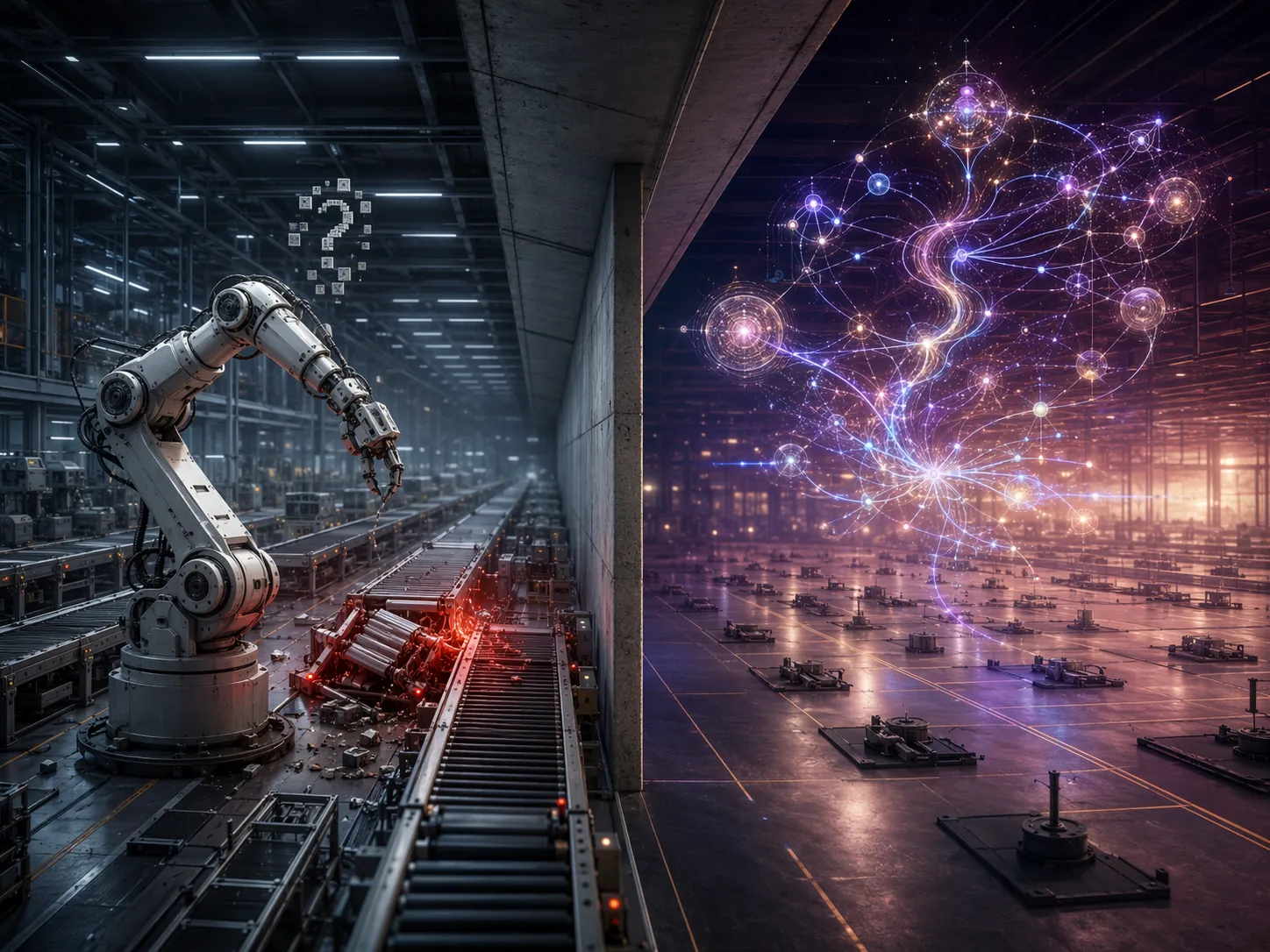
Where Generative-Only AI Stalls
The opposite failure is quieter. A generative-only system can feel transformative because it improves the language layer of work. It can summarize a supplier issue, draft a mitigation note, compare demand scenarios, or help a planner prepare for an S&OP meeting. Those are useful capabilities. They reduce cognitive friction. They can make expertise more available across a team.
But if the system cannot initiate tasks, call planning tools, update a workflow, or monitor whether the recommended action happened, it remains reactive. The planner still has to know when to ask, what to ask, which answer to distrust, and where to execute the decision. In a high-pressure exception environment, that means the copilot may improve the memo while the operational bottleneck remains untouched.
This distinction is especially important in control-tower settings. A useful control tower does not merely narrate disruption after the fact. It detects, prioritizes, recommends, routes, and in some bounded cases initiates action. The practical use cases in control tower AI applications with proven ROI show why execution authority and analytical explanation have to meet in the same operating loop.
A Neuromancer-only deployment also risks creating a misleading sense of modernization. Leaders see fluent answers and assume the organization has gained decision velocity. Planners may experience the opposite: another interface to consult before doing the real work in the system of record. The gap between explanation and action becomes labor, and that labor usually returns to the same people the AI project was supposed to help.
The Vendor Question Is Architectural Sufficiency
A serious vendor evaluation should not begin with whether the product uses the word agent, copilot, generative, autonomous, or orchestration. Those terms are now too elastic. The better test is architectural sufficiency: does the system have an execution layer that can act under constraints, an analytical layer that can explain and reframe exceptions, and a governance layer that decides when humans remain in the loop?
For an execution claim, the evaluator should look for the verbs that touch systems of record: observe, decide within policy, call tools, create tasks, update plans, trigger approvals, monitor completion, and escalate exceptions. A vendor that can only recommend is not necessarily weak, but it should not be evaluated as if it closes the loop. A vendor that can act but cannot produce a reviewable explanation is asking the organization to trust the least inspectable part of the stack.
For a generative claim, the evaluator should look for the nouns that carry context: constraints, policies, scenarios, assumptions, trade-offs, source data, approval history, and uncertainty. A system that produces fluent supply-chain prose without grounding in the planning model can still be useful for drafting or training. It should not be treated as exception intelligence.
For the governance claim, the evaluator should look for how the system behaves when confidence is low, data is stale, constraints conflict, or business priorities shift. Escalation is not a failure path. In supply chain, escalation is often the correct product behavior. The RELEX trust numbers make that explicit: most leaders do not want critical decisions to disappear into unsupervised automation, even as they continue investing in AI.[2]
Deloitte’s AI investment findings add a useful brake to the conversation. It found that 85% of executives increased AI investment, while only 6% saw ROI in under a year.[5] That does not argue against supply-chain AI. It argues against buying a partial architecture and expecting quick, compounding returns. The organizations still investing through 2026 are not necessarily irrational; the better reading is that many are learning AI has to be absorbed into operating models, not sprinkled over them.
That is also why the “AI winter” framing is too blunt for planning technology. Investment can remain real while bad architectures get cut. The distinction matters in the current market, where supply-chain planning is not facing a simple AI winter in 2026, but buyers still have to separate durable capability from demo-grade AI surface area.
Buying Half an Intelligence
The 2026 supply-chain AI decision is not a choice between agents and copilots. It is a choice about how execution, interpretation, and governance fit together. A credible strategy needs Wintermute-like machinery that can act inside operational constraints. It also needs Neuromancer-like analytical depth that can explain exceptions, model alternatives, and help humans revise the frame when the old plan no longer fits. Around both, it needs a governance layer because trust in unsupervised critical decisions remains limited.
Gibson’s metaphor is useful only if it stays disciplined. The danger is not that supply-chain teams choose the wrong science-fiction reference. The danger is that they buy half an intelligence and expect it to behave like a whole one.
References
§ 42 — Cited evidence
Flag an inaccuracy or submit a comparable account — Contribute or read how claims are verified in Methodology.