
§ 41 — Use-case analysis
Which Supply-Chain AI Platform Worked for Hurricane Fausto?
A structured comparison of five supply-chain AI risk platforms—o9, Resilinc, Everstream, ClimateAi, and Kinaxis—examining how each performed during Hurricane Fausto's approach to Hawaii in July 2026, and the trade-offs their architectural choices exposed.
- Function
- supply-chain-risk-management
- AI technique
- predictive-modeling
- Evidence source
- ClimateAi (2023) Hurricane Ian case study
As of July 25, 2026, Hurricane Fausto was not a clean laboratory test for supply-chain AI. It was a moving Pacific storm with a live forecast window, an uncertain track toward Hawaii, and a practical question that had to be answered before the forecast finished changing: which goods should be protected, advanced, delayed, or rerouted while there was still time to act? Hawaii News Now reported on July 24 that Fausto was moving westward on a track toward the Hawaiian Islands, while Newsweek’s July coverage framed the same threat through path-map and warning-forecast updates for Hawaii impact risk.[1][2]
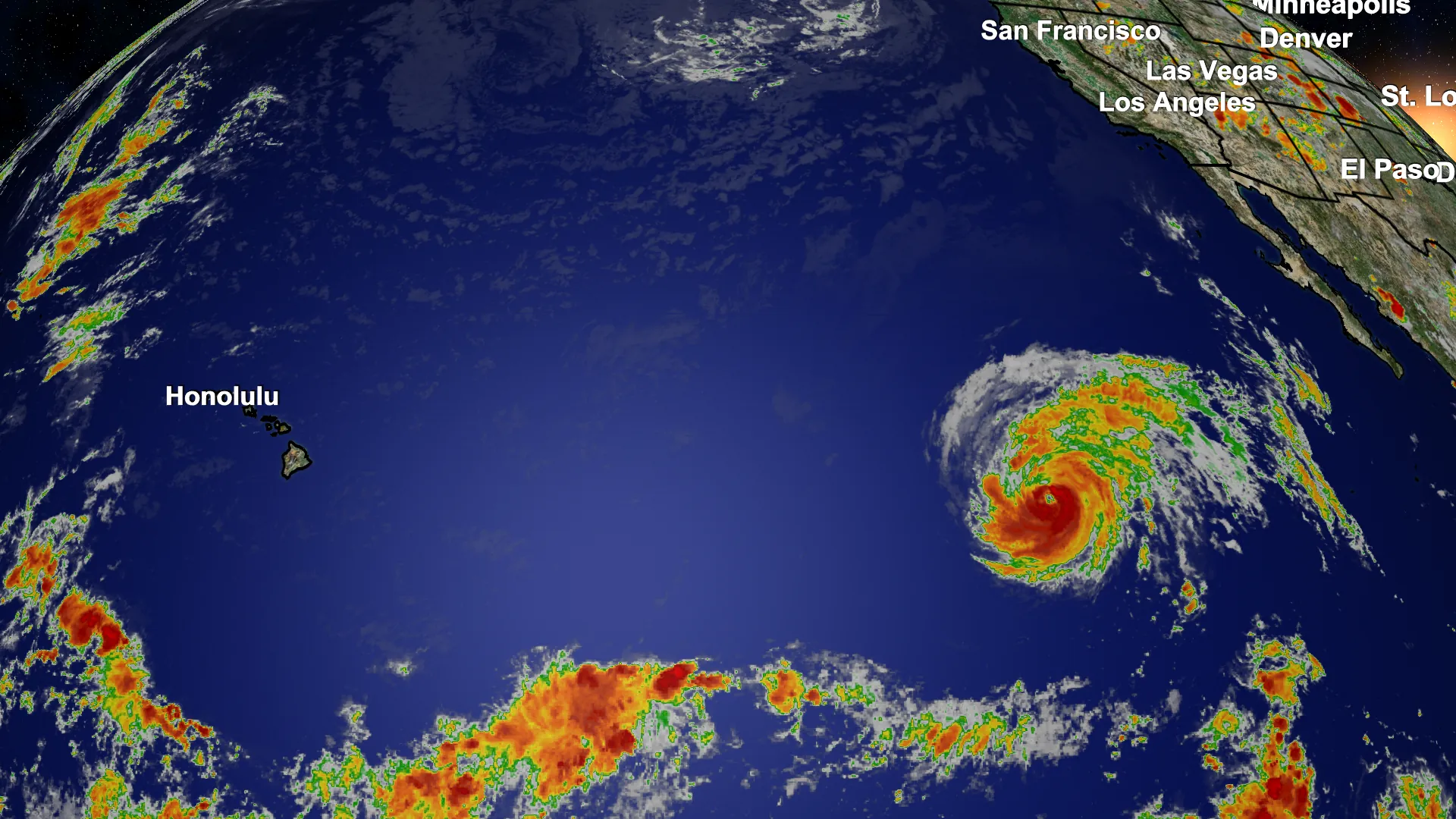
That matters because Hawaii is not just another demand region on a planning map. Hawaii Transfer describes the state as about 80% dependent on imports and notes that local supply-chain resilience discussions often include safety-stock horizons of three or more months.[3] In that setting, a hurricane track is not merely a weather overlay. It can collide with ocean freight timing, supplier-tier opacity, port dependence, shelf-life constraints, and the awkward reality that “nearby alternate source” is often a mainland assumption.
No published source reviewed here connects Hurricane Fausto directly to o9, Resilinc, Everstream, ClimateAi, or Kinaxis deployments. So this is not a retrospective scoreboard claiming that one platform demonstrably “worked” during Fausto. It is a stress test: take the live Fausto approach window, place it against Hawaii’s supply-chain structure, then ask what each platform’s documented architecture would likely contribute before, during, and after the disruption signal hardened.
The Useful Window Was Narrower Than the Forecast Window
A hurricane forecast can update for days. A procurement decision may have less room than that. If a mainland supplier has not yet shipped, a planner may still change allocation. If a container is already on the water, the question shifts to arrival timing, port congestion, and downstream prioritization. If a Hawaii warehouse is already thin, the decision becomes less elegant: hold inventory for critical accounts, substitute SKUs, expedite what can still move, or accept service failures.
That timing split is the first filter for judging supply-chain AI during Hurricane Fausto. A platform that sees a higher hurricane-risk season months ahead can support stocking policy and supplier diversification. A platform that detects a named storm approaching supplier, lane, or port nodes can support escalation. A platform that runs scenario simulations can help compare trade-offs once human teams know which options are still physically available. Those are different jobs, and claiming strength in one does not automatically solve the others.
| Fausto response moment | Decision pressure | AI capability that matters most |
|---|---|---|
| Early risk buildup | Whether to raise inventory, alter allocations, or pre-book capacity before the storm threat becomes urgent | Weather-risk forecasting tied to demand, inventory, and geography |
| Storm approach and watch period | Which suppliers, lanes, sites, and customer commitments are exposed | Event detection, supplier mapping, and impact scoring |
| Operational triage | What to move, protect, substitute, or expedite within remaining lead times | Scenario planning, inventory visibility, and workflow activation |
| Post-impact recovery | Which orders, suppliers, and transport nodes recover first | Validated status updates and exception management |
o9: Strong Digital-Twin Logic, Thin Fausto-Specific Proof
o9’s strongest claim for a Fausto-like event is not a storm alert. It is the idea that weather-driven disruption can be sensed inside a broader digital twin before the disruption shows up as a late shipment or an angry customer email. Dallas Innovates reported in October 2022 that o9’s supply-sensing platform was positioned to help predict weather-driven supply-chain disruptions up to 12 months ahead.[4]
For Hawaii, that kind of architecture is attractive in theory. A digital twin can connect demand, supply, inventory, transportation, and capacity assumptions in one planning model. If a business has Hawaii-dependent nodes, long replenishment cycles, and seasonal weather exposure, a planning system that can surface risk before the named-storm window opens is more useful than a dashboard that only lights up after the National Hurricane Center track is already circulating through email threads.
The evidence gap is equally important. The October 2022 o9 material is a capability claim, not an independently validated test of Pacific hurricane performance, Hawaii freight constraints, or Fausto-specific prediction. The platform may be very useful if the customer has already modeled supplier tiers, Hawaii demand nodes, ocean-freight lead times, and safety-stock policies at enough granularity. If those inputs are missing or stale, the digital twin can still produce a polished answer while the planner is forced back into manual triage.
In a Fausto response, o9 would be most credible before the operational scramble: identifying exposed product families, testing inventory-buffer assumptions, and showing where the Hawaii network has brittle dependencies. It is less proven, from the published material available, as a named-storm response engine that can confirm which specific supplier, port, carrier, or lane is already impaired.
Resilinc: The Best Fit Once the Event Becomes Concrete
Resilinc’s case is different. It is less about long-range climate anticipation and more about knowing when a disruption event has actually touched the supply base, then pushing the organization into a response workflow. In January 2026, Resilinc said disruption notifications increased 38% year over year in 2025 and described EventWatchAI and a new Disruption Agent built on more than 16 years of supplier-validated event data.[5]
The Disruption Agent claim is operationally relevant for Fausto because Resilinc describes automated validation, impact scoring across supplier tiers, and autonomous WarRoom launch.[5] Those are not decorative features when a Hawaii-focused planner is staring at a storm track. The hard part is not merely knowing that a hurricane exists. The hard part is identifying which supplier sites, sub-tier dependencies, logistics lanes, and committed orders deserve attention first.
This is where Resilinc’s architecture would likely beat a generic weather-risk dashboard. If its network includes the relevant Hawaii-dependent nodes, and if supplier relationships have been mapped beyond direct vendors, it can reduce the time between external event and internal action. A notification that is already tied to affected parts, suppliers, revenue, and open orders is more useful than a storm polygon pasted beside a procurement spreadsheet.
The qualifier is not small. Resilinc’s strength depends on coverage. Hawaii’s exposure often sits in the interaction among ocean lanes, mainland suppliers, local distributors, and downstream demand. If the relevant nodes are outside the mapped supplier network, the platform may detect the storm but miss the dependency that matters. Its published evidence supports a strong reactive and response-activation position; it does not prove complete visibility into every Hawaii-specific bottleneck that Fausto could expose.
ClimateAi: The Clearest Pre-Positioning Example, With a Geography Caveat
ClimateAi has the most concrete published hurricane inventory case among the five platforms reviewed. In a March 2023 case study, ClimateAi said a building-materials company used ClimateLens forecasts showing 30% to 50% above-normal hurricane risk before Hurricane Ian, pre-positioned inventory, and generated $15 million in incremental sales.[6]
That example matters because it describes an action before impact. The company did not merely receive an alert; it moved inventory in advance of demand and disruption. For a Hawaii-dependent supply chain watching Fausto, that is exactly the kind of timing advantage that can change the outcome. Once vessels, warehouses, and island distribution constraints are locked in, the number of good choices falls quickly.
Still, the claim needs its label. It is a vendor-published case study, not an independently verified benchmark. It concerns Hurricane Ian, not Hurricane Fausto. It concerns a building-materials context, not every product category that Hawaii imports. The useful inference is therefore narrow: ClimateAi has documented a hurricane-risk forecasting use case tied to inventory pre-positioning, and that is highly relevant to Fausto-style planning. The published material does not prove that ClimateAi would correctly forecast, prioritize, or operationalize every Hawaii-specific supplier or logistics constraint.
In the Fausto window, ClimateAi would look strongest before the storm became a direct operational emergency. It would be most valuable if its forecasts were integrated into replenishment planning, allocation rules, and logistics capacity decisions early enough to change physical positioning. If it stayed as a climate-risk layer outside ERP, TMS, or planning workflows, the forecast could be right while the response still arrived late.
Everstream: Useful Risk Framing, Less Evidence of Fausto Action
Everstream’s strongest contribution is context. Its 2026 Annual Supply Chain Risk Report ranks extreme weather as the number two global supply-chain risk, and its extreme-weather analysis cites EM-DAT data showing tropical cyclones as the most costly weather category since 2000.[7] For executives deciding whether hurricane risk deserves budget and integration effort, that is not trivial.
But macro-risk credibility is not the same as Fausto response proof. Everstream can help a company justify why extreme-weather intelligence belongs inside supply-chain risk management. The available material does not show a published Fausto-specific analysis, a Hawaii hurricane deployment, or a measured operational result comparable to ClimateAi’s Hurricane Ian inventory case.
For a Hawaii-dependent network, Everstream would likely be more useful in the planning and executive-risk layer than in the last-mile triage layer unless the customer had already connected its risk feeds to supplier, lane, order, and inventory data. Without that integration, a high-quality risk signal can still leave procurement asking the same practical question: which supplier or shipment is now first in line for intervention?
Kinaxis: Relevant Scenario Language, Missing Hurricane Evidence
Kinaxis belongs in the comparison because scenario planning is a real need during a storm approach. When Fausto’s track shifts, planners may need to compare expedited freight, allocation changes, substitution rules, order promising, inventory protection, and delayed replenishment. A context-aware agentic system that helps generate and evaluate scenarios could be useful, especially when the operations team is working across planning, procurement, logistics, and customer-service functions.
The evidence boundary is clear, though: the reviewed material did not provide hurricane-specific efficacy evidence for Kinaxis. Scenario simulation can be relevant without being validated for this event type. In a Fausto setting, Kinaxis would be most defensible as a decision-support layer after the organization has reliable inputs about exposure, inventory, demand, and transport constraints. It would be less defensible as the source of record for whether a supplier site, ocean lane, or Hawaii distribution node is actually disrupted.
Where Each Platform Would Have Helped During Fausto
| Platform | Most useful Fausto job | Evidence strength | Main limitation |
|---|---|---|---|
| ClimateAi | Early hurricane-risk anticipation and inventory pre-positioning | Concrete vendor-published Hurricane Ian case with 30% to 50% above-normal risk forecasts and $15 million incremental sales claim.[6] | Self-published case, different hurricane, geography, and product context; not Fausto validation |
| Resilinc | Validated disruption detection, supplier-tier impact scoring, and response workflow activation | January 2026 material citing 38% YoY disruption-notification growth, 16+ years of supplier-validated event data, and Disruption Agent capabilities.[5] | Depends on whether the supplier-event network covers the Hawaii-dependent nodes that matter |
| o9 | Integrated digital-twin modeling of weather, supply, demand, inventory, and planning assumptions | October 2022 capability claim for up to 12-month-ahead weather-driven disruption prediction.[4] | No independent Pacific hurricane or Fausto-specific validation in the reviewed sources |
| Everstream | Executive risk framing and extreme-weather prioritization | 2026 risk-report context ranking extreme weather #2 globally and citing cyclone cost data since 2000.[7] | Macro context does not prove operational response performance for Fausto |
| Kinaxis | Scenario simulation once exposure and constraints are known | Relevant positioning in reviewed materials, but no hurricane-specific efficacy evidence found | Needs reliable upstream event, supplier, logistics, and inventory data to make scenarios useful |
The ordering changes if the question changes. If the job is to anticipate weather-linked demand and position inventory before a storm affects Hawaii, ClimateAi has the clearest published hurricane example. If the job is to detect, validate, score, and coordinate a supplier-tier disruption after the event begins to materialize, Resilinc has the strongest operational response architecture in the available evidence. If the job is to model the broader network and expose brittle assumptions before the season turns active, o9 is compelling, but its Fausto relevance depends heavily on customer data coverage and model validation.
Everstream and Kinaxis should not be dismissed, but they should not be overclaimed. Everstream helps make the weather-risk case legible at management level; Kinaxis helps think through trade-offs when choices remain open. Neither, from the materials reviewed, provides published evidence that it would have detected or mitigated Fausto-specific Hawaii supply-chain impacts on its own.
The Integration Question Is Not Secondary
For procurement and IT teams, the uncomfortable question is not which platform has the best hurricane slide. It is whether the platform is attached to the data that matters before the storm clock starts. Hawaii’s import dependence means lead time is not a footnote. A system that sees a supplier but not the lane, sees a lane but not the inventory policy, or sees inventory but not customer criticality will push work back to people at the worst moment.
That is where Fausto exposes the difference between architecture and certainty. A predictive model can warn early and still miss a sub-tier constraint. An event-intelligence platform can validate a disruption and still lack coverage of a local dependency. A scenario engine can compare options and still be fed bad availability data. A risk-intelligence provider can be right about the category and still not tell the buyer which purchase order to chase.
The most defensible Hawaii setup would combine capabilities rather than crown one vendor. Use climate-risk analytics to move the decision window earlier. Use supplier-event intelligence to validate what is actually happening. Use a planning model to connect exposure to inventory, demand, and service commitments. Use scenario simulation only after the available options are real enough to compare.
So which supply-chain AI platform worked for Hurricane Fausto? Based on published evidence available as of July 25, 2026, none can be credited with a demonstrated Fausto deployment. ClimateAi looks strongest for weather-risk anticipation where forecasts can trigger pre-positioning. Resilinc looks strongest for validated disruption detection and supplier-tier response once events materialize. o9 is compelling for integrated modeling but under-validated for this specific Pacific hurricane use. Everstream supports risk framing more than proven Fausto action. Kinaxis remains relevant for scenario simulation without hurricane-specific proof.
For a Hawaii-dependent supply chain, the practical answer is less satisfying and more useful: insist that every vendor claim be labeled by date, source, and evidence strength, then test it against the actual response job. Fausto is a reminder that the platform that predicts earliest, the platform that detects most reliably, and the platform that helps planners choose under constraint may not be the same platform.
References
- Hurricane Fausto moving westward on track toward Hawaii, Hawaii News Now, July 24, 2026, link
- Hurricane Fausto Path Map: Hawaii Impact Warning Forecast, Newsweek, July 2026, link
- Understanding Supply Chain Resilience in Hawaii, Hawaii Transfer, 2023, link
- o9 Solutions Targets Supply Chain Disruptions With New Supply Sensing Platform, Dallas Innovates, October 2022, link
- Supply Chain Disruption Is Accelerating: Why 2026 Demands a New Response, Resilinc, January 2026, link
- Accurate Hurricane Forecasting Helps Roofing Materials Producer, ClimateAi, March 2023, link
- The Impact of Extreme Weather on the Supply Chain, Everstream Analytics, 2026, link
§ 42 — Cited evidence
Flag an inaccuracy or submit a comparable account — Contribute or read how claims are verified in Methodology.