§ 41 — Use-case analysis
Comparing AI Supply Chain Platforms for Hurricane Disruptions
A vendor-neutral comparison of how Blue Yonder, o9, Kinaxis, RELEX, and Anaplan apply AI to hurricane-induced supply chain disruptions, showing which architectural approach best matches different risk profiles—concentrated port risk, sub-tier supplier exposure, or demand volatility.
- Function
- disruption planning
- AI technique
- optimization
- Evidence source
- Forbes (June 2026)
A Category 4 hurricane approaching a Gulf Coast or Southeast port cluster does not create one tidy “supply chain disruption.” It creates several different problems at once. The transportation team is watching port closures and inland lane constraints. Procurement is trying to find whether an exposed plant, warehouse, or component supplier sits under a critical product family. Planners are testing whether inventory can be pulled forward, shifted, or protected without breaking service commitments somewhere else. Commercial leaders want to know which orders can still be promised without pretending the storm track is more certain than it is.
That is the useful way to compare AI supply chain platforms for hurricane disruption planning. The question is not which vendor has the most polished AI language. It is which decision becomes faster, less blind, or easier to defend while the evidence is still incomplete.
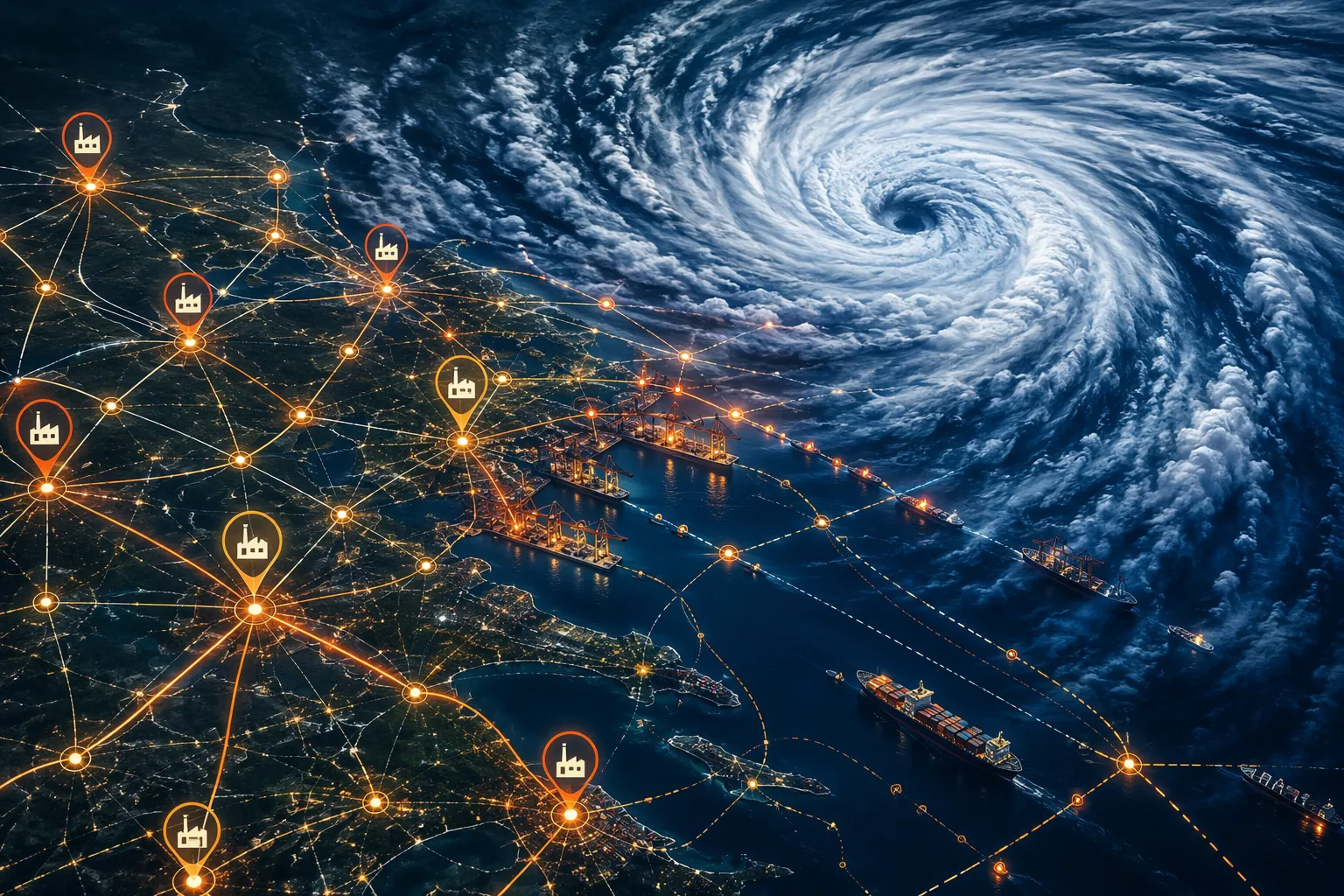
The economic reason to care is not abstract. NOAA and National Hurricane Center materials put 2022 U.S. severe-weather costs at $165 billion, with Hurricane Ian alone accounting for $112.9 billion in losses.[1] In 2024, the U.S. recorded 27 climate disasters exceeding $1 billion each.[2] Interos also reported 94.5 million businesses at risk, up 48% year over year, in its business-risk exposure analysis.[3] Those numbers do not prove that one planning platform will outperform another in a hurricane. They explain why a platform comparison should be grounded in the actual disruption profile, not in generic resilience claims.
The Comparison Starts With the Disruption Shape
In a hurricane response room, the first split is usually not “AI or no AI.” It is where uncertainty is concentrated. A retailer with stores in the storm path may care most about demand spikes and replenishment timing. A manufacturer with a critical component moving through a coastal logistics node may need to identify the constrained node before the bill of materials turns into a production stop. A global industrial company may discover that the supplier at risk is not Tier 1 at all, but a sub-tier producer sitting underneath an otherwise healthy-looking supplier record.
| Primary hurricane problem | Platform fit that looks strongest | Why the architecture matters | Caveat |
|---|---|---|---|
| Concentrated port, logistics, or network-node exposure | Blue Yonder | Agentic risk alerts tied into network operations can help identify constrained nodes and affected BOM relationships | Public evidence describes reported and demonstrated capabilities, not an independently audited live-hurricane outcome |
| Supplier exposure hidden below Tier 1 | o9 | Multi-tier supplier network visualization is better aligned to finding sub-tier risk before it becomes a production surprise | Available material is primarily vendor-published |
| Many competing sourcing, inventory, and service scenarios | Kinaxis | Concurrent planning supports parallel what-if modeling without forcing a fully sequential planning cycle | Scenario quality still depends on planning discipline and assumptions |
| Storm-driven demand spikes and replenishment volatility | RELEX or Anaplan | Demand sensing and inventory optimization are better fits when the hardest problem is demand movement rather than supplier-network discovery | Accuracy and capability claims are vendor-sourced indicators, not hurricane-wide proof |
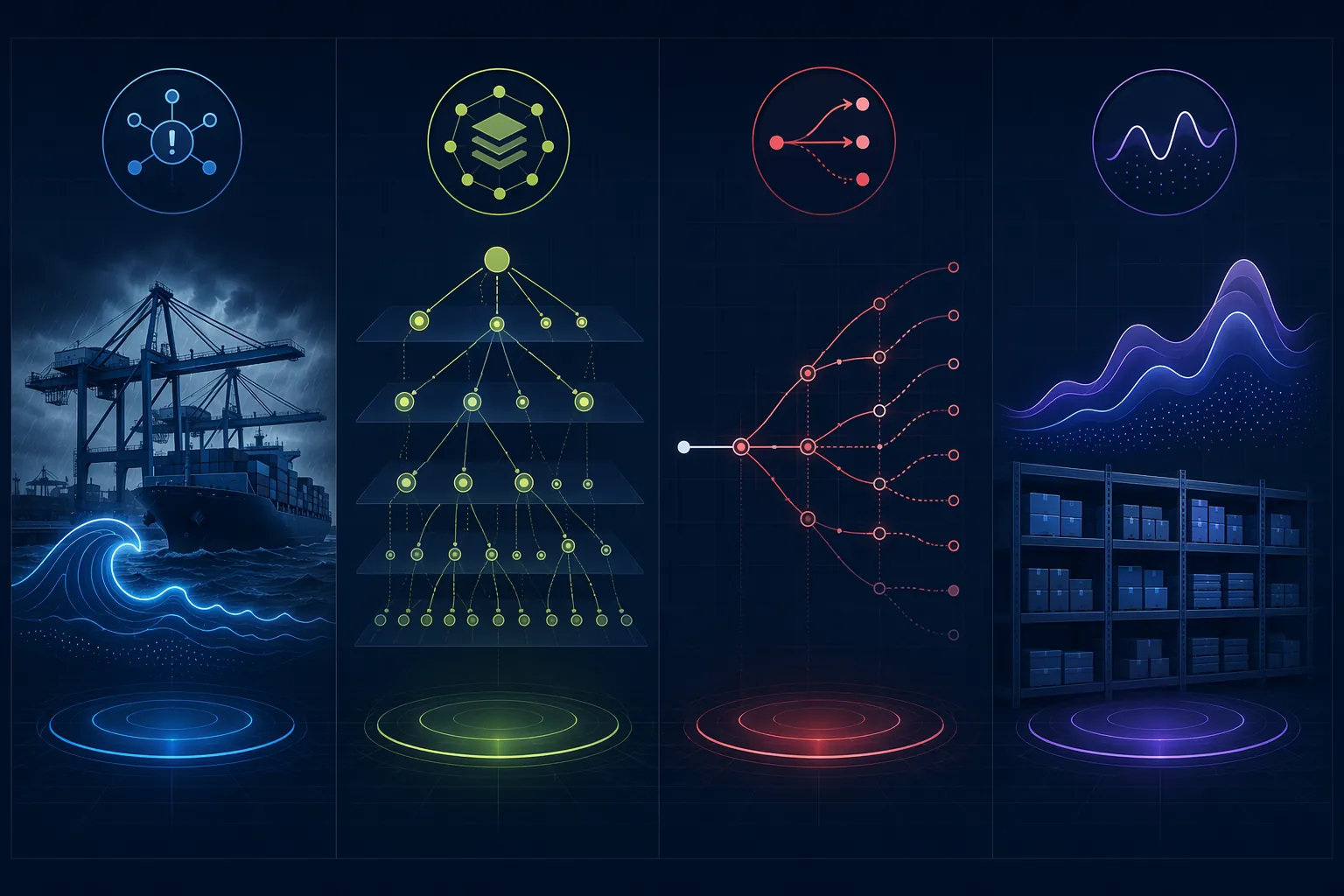
This is also why a universal ranking would be misleading. A platform that is strong at demand sensing may not be the best tool for discovering a hidden sub-tier supplier. A concurrent planning engine can run serious what-if work, but it still needs planners to define the scenarios worth testing. An agentic alert can make a constrained node visible sooner, but the value depends on whether the alert connects to the right product, supplier, and fulfillment consequences.
Blue Yonder: Strongest When the Problem Is a Constrained Node
Blue Yonder becomes interesting in hurricane planning when the storm threatens a concentrated logistics or supply node and the organization needs to connect a risk alert to operational consequences quickly. Steve Banker’s June 2026 Forbes reporting describes Blue Yonder’s network operations agent as ingesting real-time risk alert data and deriving imputed category bills of material to identify constrained nodes.[4] That mechanism matters because it is closer to the actual question in the response room: which node, item family, supplier path, or customer promise is now constrained?
The same Forbes piece ties the capability to Blue Yonder’s ICON announcements and a four-year, $2.5 billion technology-stack rebuild.[4] Blue Yonder’s own 2026 resilience material frames the broader direction around multi-enterprise visibility and agentic AI.[5] Those are vendor and vendor-adjacent signals, not an independent technical audit. Still, the architectural direction is concrete enough to compare: Blue Yonder is not merely saying that AI will “improve resilience”; the reported mechanism connects risk data, network operations, and BOM-level constraint discovery.
In a hurricane scenario, that matters most when exposure is geographically concentrated. If a Gulf Coast port, cross-dock, contract manufacturer, or distribution node sits near the projected path, the planning director does not need an elegant weather dashboard. They need a narrowed list of products, suppliers, inventory positions, and service commitments that could become unsafe. Blue Yonder’s fit looks strongest where the alert-to-node chain is the bottleneck.
The caveat is important. Public materials found for this comparison do not include an independently verified post-mortem showing Blue Yonder’s agentic network operations capability under a named live hurricane. That should not disqualify the platform, but it should keep the claim at the right altitude: the architecture appears well aligned to constrained-node identification; public evidence does not prove live-hurricane superiority.
o9: Better Aligned to the Supplier You Cannot See From Tier 1
Hurricane plans often overweight the nodes the company directly controls: ports, warehouses, lanes, stores, and Tier 1 suppliers. The more awkward failure appears underneath that layer. A Tier 1 supplier may look safe because its headquarters, account manager, and contracted shipping lane are outside the storm zone, while a sub-tier material source, packaging supplier, or specialty component producer is exposed.
That is where o9’s Digital Brain risk-management positioning is more naturally aligned. In its July 2024 material, o9 describes multi-tier supplier network visualization, scenario planning, and impact assessments designed to help companies steer supply chains through disruption.[6] For hurricane response, the multi-tier part is the differentiator. The value is not just seeing that a supplier exists; it is seeing how an exposed supplier several levels down could flow into products, plants, and customer commitments.
A procurement lead trying to find hidden hurricane exposure needs a different kind of system behavior from a planner moving inventory between regions. The supplier graph has to surface relationships that are not obvious from purchase orders alone. If o9’s model has the necessary supplier-network data, its architecture fits the “what is underneath this supplier?” problem better than a platform optimized mainly around demand sensing or top-level logistics rerouting.
The limiting phrase is “if the model has the data.” Multi-tier visibility is only as useful as the supplier mapping, onboarding, and maintenance behind it. The available source is also vendor-published; it supports o9’s architectural fit for sub-tier exposure assessment, not an independently measured hurricane-response win rate.
Kinaxis: The Advantage Is Concurrent Scenario Work, Not Automatic Judgment
Kinaxis is strongest when the response problem is not simply finding the exposed node, but comparing many possible actions before the planning cycle freezes. A hurricane may force planners to evaluate whether to pre-build inventory, qualify alternate sourcing, shift allocation rules, protect strategic customers, expedite inbound materials, or accept temporary service degradation in selected channels. Those choices interact. Moving inventory toward one region can weaken another. Preserving one customer promise can consume capacity needed for a later recovery wave.
The Kinaxis case rests on concurrent planning. Published comparison material aggregating vendor claims reports 40% to 60% faster planning cycles and a 33% inventory reduction associated with RapidResponse, while noting that Maestro adds AI agents for what-if simulation.[7] Those figures should be read as vendor-reported metrics in a comparison context, not independent hurricane-specific evidence. Still, the architectural point is relevant: concurrent planning is designed to let multiple parts of the plan update together instead of forcing planners through a slow sequence of disconnected recalculations.
That can be decisive in the days before landfall. A planning team can test a scenario where the port closes for a short period, another where inland freight capacity tightens, and another where demand spikes in adjacent regions. The advantage is not that the software knows which storm track will materialize. The advantage is that planners can compare the consequences of several plausible response paths while the business still has time to act.
Kinaxis also has the most obvious human-discipline dependency in this comparison. What-if power does not remove the need to design good scenarios, define decision thresholds, and keep executive trade-offs visible. A planning organization that has not agreed how to value service, margin, strategic customers, and recovery speed can run many simulations and still avoid the hard call. The architecture helps preserve optionality; it does not replace judgment.
RELEX and Anaplan Fit the Demand-Volatility Side of the Storm
RELEX and Anaplan belong in the comparison, but they should not be stretched into complete hurricane-response platforms on the evidence available here. Their stronger fit is the demand side: storm-driven spikes, replenishment pressure, short-term forecast movement, and inventory positioning. That is a real hurricane problem, especially for grocery, home improvement, pharmacy, fuel-adjacent retail, and regional distribution networks.
RELEX’s Atria materials cite 98.1% weekly forecast accuracy, a vendor-sourced figure that points to demand-sensing strength rather than proving end-to-end disruption superiority.[8] In a hurricane context, the relevant question is narrower: can the system distinguish a temporary demand surge from a durable trend, recommend inventory moves before the window closes, and avoid overcorrecting after the storm passes?
Anaplan’s demand-sensing AI agent positioning is also relevant for disruption-related demand shifts and risk alerts.[9] Its value is easier to see when planners need demand signals incorporated into connected planning decisions, rather than when procurement is trying to uncover a sub-tier supplier dependency or logistics is trying to isolate a constrained port node.
For companies whose hurricane exposure is mostly consumer behavior and replenishment volatility, RELEX or Anaplan may deserve closer inspection than a supplier-risk-heavy platform. For companies whose exposure is buried in supplier tiers or constrained logistics nodes, demand sensing is necessary but insufficient.
What the Platforms Actually Change in the Response Room
The practical comparison is easiest to see by following the handoffs.
- When the weather or risk signal appears, Blue Yonder’s reported network operations agent is most relevant if it can translate that signal into constrained nodes and affected product relationships.
- When procurement asks whether the exposed supplier is hidden below the contracted supplier, o9 has the more natural architectural fit because multi-tier visualization is central to the use case.
- When planning must compare several inventory, sourcing, allocation, and service scenarios at the same time, Kinaxis has the strongest claim because concurrent planning is built around simultaneous impact analysis.
- When demand shifts faster than the normal forecast cycle, RELEX and Anaplan become more relevant because the main pain is replenishment and inventory positioning, not supplier discovery.
None of these handoffs is glamorous. That is partly why they matter. A hurricane response does not fail only because no one saw the storm. It fails when the risk signal does not connect to the supplier graph, the supplier graph does not connect to the plan, the plan does not connect to customer promises, or the demand signal arrives after inventory has already moved.
A Fit-by-Risk-Profile Answer
If the enterprise’s hurricane risk concentrates around a few exposed logistics nodes, Blue Yonder’s alert-to-constrained-node architecture looks best aligned. The reported mechanism is specific enough to matter, especially where a port, plant, warehouse, or product-family constraint needs to be surfaced quickly.
If the risk hides under Tier 1 suppliers, o9 is the more natural fit. Its multi-tier supplier visibility speaks to the procurement blind spot that often becomes visible only after the storm has already interrupted production.
If the planning team must compare many sourcing, inventory, allocation, and service scenarios quickly, Kinaxis carries the advantage. The value is concurrent scenario simulation, provided the organization has the discipline to define scenarios and act on the trade-offs.
If the largest pain is volatile demand and replenishment during storm-driven spikes, RELEX or Anaplan deserve closer inspection. They fit the demand-sensing problem better than the supplier-exposure problem. That is not a weakness; it is the boundary that keeps the comparison honest.
References
- U.S. Billion-Dollar Weather and Climate Disasters, NOAA National Centers for Environmental Information
- 2024 U.S. billion-dollar weather and climate disasters in historical context, NOAA Climate.gov
- Interos Annual Global Supply Chain Report, Interos
- Blue Yonder's Supply Chain Agents Are Getting Really Smart, Forbes, June 2026
- Building supply chain resilience through multi-enterprise visibility and agentic AI, Blue Yonder, 2026
- Advanced Risk Management: Steering Supply Chains Safely Through the Storm, o9 Solutions, July 2024
- Kinaxis vs Anaplan vs o9: Supply Chain Planning Software Comparison, Leverage.ai
- RELEX Atria, RELEX Solutions
- Anaplan AI Agents, Anaplan
§ 42 — Cited evidence
Flag an inaccuracy or submit a comparable account — Contribute or read how claims are verified in Methodology.