
§ 41 — Use-case analysis
The State of AI for Last-Mile Delivery Heat Safety
Fleet operators evaluating AI heat-safety investments can learn from real-world deployments by Amazon, UPS, and niche vendors — including outcomes, costs, and structural gaps that vendor marketing often omits.
- Function
- last-mile delivery
- AI technique
- generative-ai
- Failure pattern
- subcontractor coverage gap
- Evidence source
- Amazon 2026 disclosure, UPS ORION, SlateSafety/Benchmark Gensuite
By Q3 2026, the practical question for AI heat safety in last-mile delivery is no longer whether software can notice hot weather. It can. The harder question is whether the system changes the route, the dispatch plan, the work-rest decision, or the supervisor's response before a driver is already in trouble.
The clearest deployments now sit in three different lanes. Amazon is disclosing large-scale heat mitigation tied to its Wellspring generative AI routing system, weather monitoring, hydration infrastructure, and a 24/7 Contingency Response Center. UPS has long-running route optimization through ORION, with documented mileage and cost savings, though those savings should not be treated as heat-safety ROI. Wearable and predictive systems from vendors such as SlateSafety, BeeInventor, Samsung SDI, and IBM occupy a different layer: worker physiology, pre-shift warning, or geospatial heat prediction rather than carrier-wide route economics.

That distinction matters in procurement. A routing platform can reduce miles and shift workloads. A wearable can warn that one worker's body is approaching a dangerous threshold. A weather-indexed dispatch rule can delay or resequence work. A geospatial model can identify heat islands before a route is built. Calling all of that "AI heat safety" makes the market sound more mature than it is.
What Has Actually Been Deployed
Amazon's 2026 disclosure is the largest concrete heat-safety package in the current evidence set. The company said it had invested more than $100 million in heat-related retrofits, installed reflective roof film on 9,000 vans with a target of 15,000 by the end of 2026, spent $29 million on hydration stations, and used Wellspring to produce more than 114 million minutes of route reductions in 2025. It also described a Contingency Response Center that monitors weather and safety conditions around the clock.[1]
Those figures are useful because they are operationally specific. Roof film is capital spend. Hydration stations are physical infrastructure. Route reductions change planned work. A monitoring center creates a staffed response function. The caveat is just as important: the numbers are company-disclosed and combine several safety and heat-mitigation activities. They show scale and intent; they do not, by themselves, prove how much of any incident reduction came from AI rather than equipment, staffing, policy, route mix, or weather variation.
UPS offers a different kind of evidence. Its ORION dynamic routing system is mature enough to have published business economics: roughly 2 to 4 miles saved per driver, more than 100 million miles avoided annually, and $300 million to $400 million in annual savings tied to route optimization.[2]
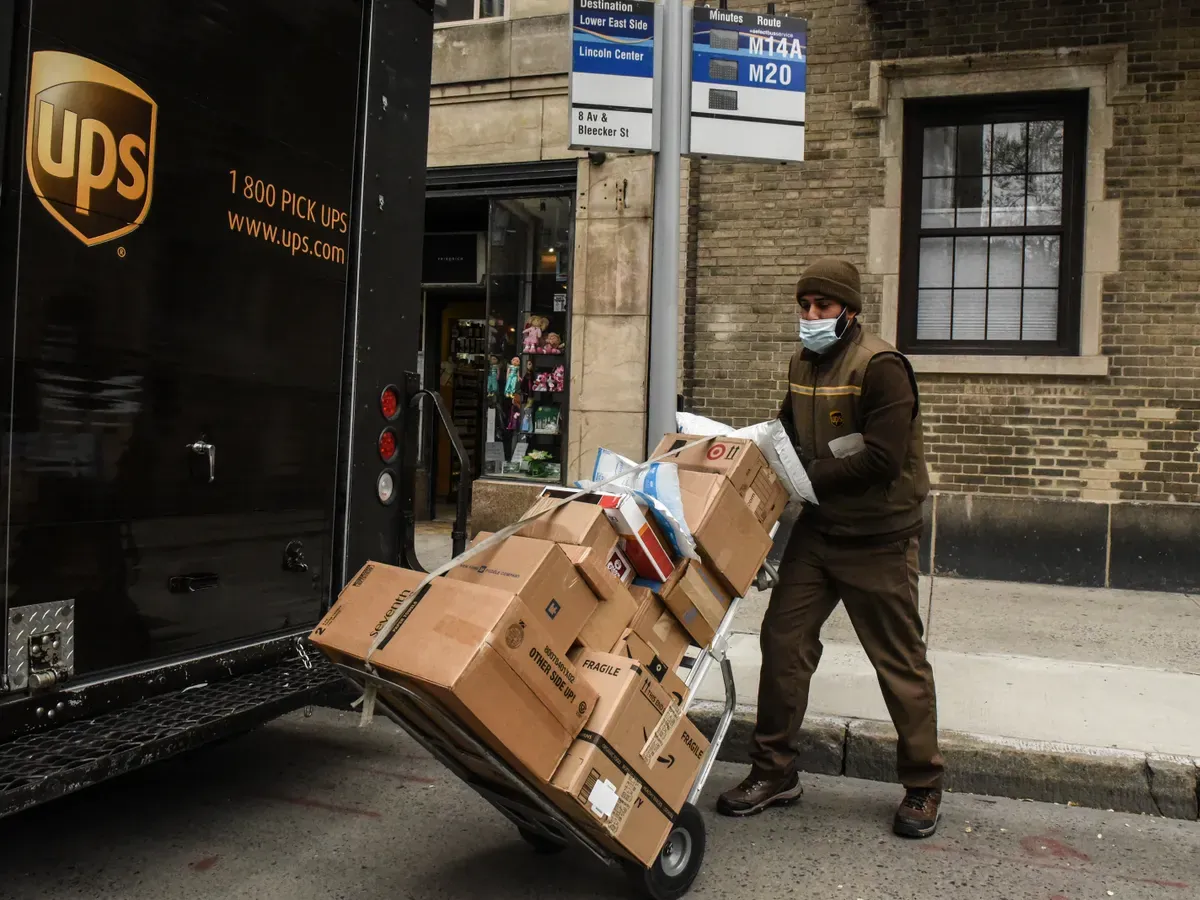
For heat safety, the ORION figures should be handled carefully. Avoided miles can reduce exposure, vehicle time, walking distance, and dispatch pressure, depending on route design. But the cited savings are total route-optimization savings, not a heat-specific clinical or safety outcome. A procurement team that books the full ORION-style savings as "heat ROI" would be mixing a transportation productivity metric with an occupational safety claim.
| Technology layer | What it changes | What the evidence can support |
|---|---|---|
| Route optimization | Miles, stop sequence, workload distribution, dispatch timing | Can show operational savings; heat-safety effect must be measured separately |
| Weather-indexed dispatch adjustment | Start times, breaks, delays, route reductions, escalation rules | Can reduce exposure when tied to enforceable protocols and staffing |
| Wearable physiological monitoring | Individual alerts based on body strain or biometric signals | Can support early intervention if supervisors respond and workers are covered |
| Geospatial heat prediction | Identification of hotter zones, facilities, yards, or neighborhoods | Can improve planning, but does not protect workers unless linked to routing or work rules |
Routing AI Reduces Exposure Only When the Dispatch Plan Changes
The most credible heat-safety role for fleet-owned routing systems is not mystical prediction. It is reducing the amount of hot work assigned, moving work out of the worst hours, or adding slack where heat slows the route. That requires the algorithm to have authority in the dispatch plan, not merely appear as a dashboard after the route is already committed.
Amazon's Wellspring numbers are significant because route reductions are expressed in minutes, not just model accuracy. If a system removes planned work during dangerous conditions, a dispatcher can see the changed load. A driver can feel the difference. A safety manager can audit whether the reduction happened in the routes that faced the highest heat. The open question is attribution: Amazon's disclosure does not separate the effect of generative AI from the effect of heat protocols, vehicle retrofits, hydration access, or centralized weather monitoring.[1]
UPS shows why a mature routing system cannot automatically be treated as a heat-safety system. ORION's avoided miles and annual savings are real operating achievements, and fewer miles can be valuable during a heat wave. But unless the carrier reports heat-indexed route changes, heat-related incident rates, break compliance, or exposure-time reduction, the safety claim remains an inference layered on top of a productivity metric.[2]
This is where many AI sales decks get loose. A routing engine that saves fuel, miles, or paid hours may also help with heat. It may also compress routes, increase stop density, or shift effort from driving to walking. The safety value depends on how the saved capacity is used. If avoided miles become more stops, the driver may not be safer. If avoided miles become shorter duty time, extra recovery, or reduced peak-hour work, the safety case gets stronger.
Wearables Move the Alert to the Worker, but the Response Still Belongs to Management
Wearable monitoring solves a problem routing software cannot: two workers on the same route do not experience heat the same way. Age, acclimatization, hydration, medication, pace, vehicle conditions, and load shape physiological strain. A wearable can catch that individual variation earlier than a route planner.
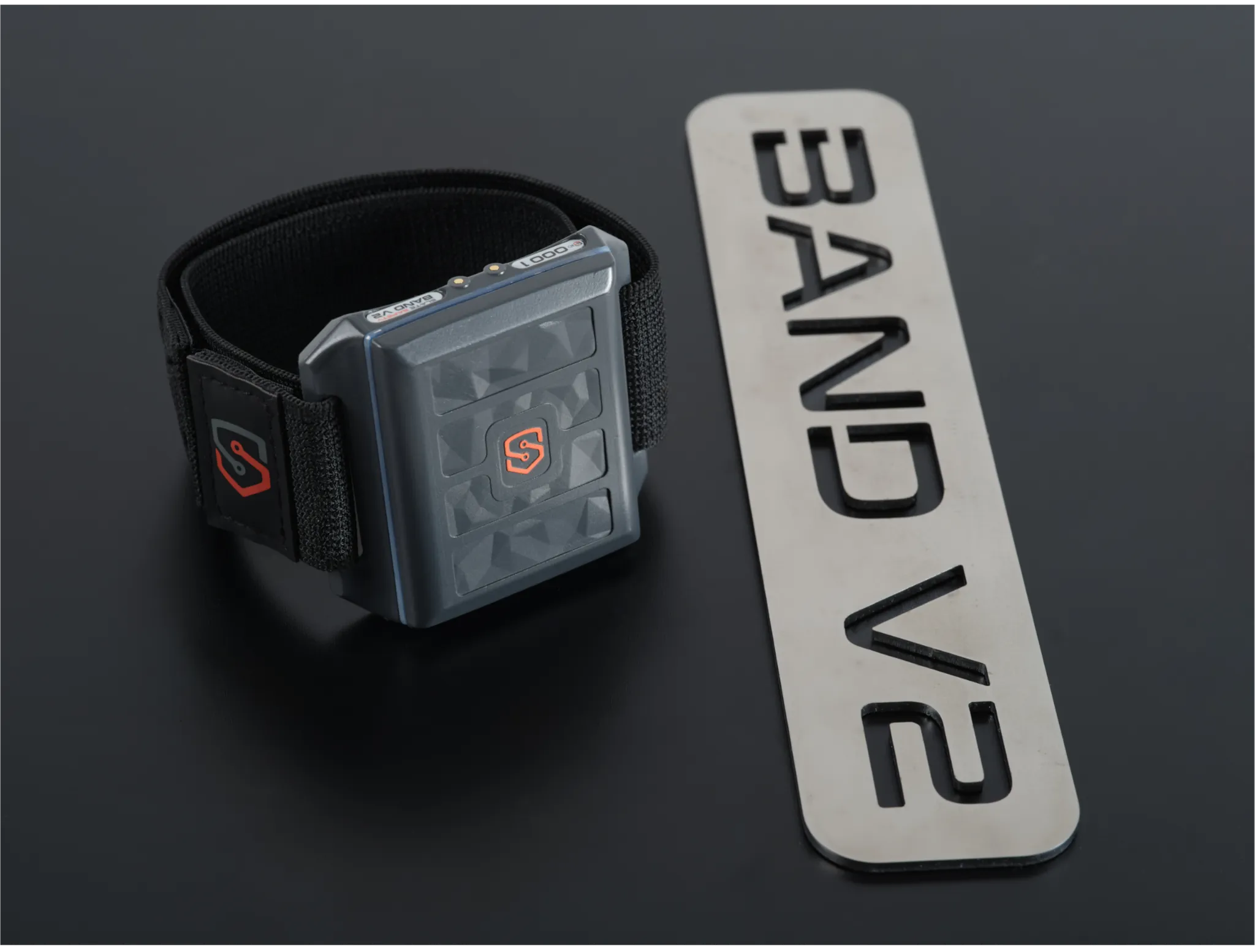
The SlateSafety BAND V2 and Benchmark Gensuite Risk AI deployment at Perrigo is one of the more concrete wearable examples in the briefed evidence. Reported outcomes include three heat incidents prevented per week during a pilot, more than 140,000 safe hours, and zero heat-related lost workdays over three years.[3]
That is promising, but it should be read with the right boundaries. Perrigo is not a last-mile parcel carrier. The source chain includes a case-study path that should be traced back to the original National Safety Council material before a buyer treats the result as procurement-grade evidence. The more defensible lesson is not that the same numbers will transfer to delivery routes; it is that wearable alerts become meaningful when they are tied to documented safe hours, incident prevention, and lost-workday outcomes.
BeeInventor's DasLoop smart helmet with SAS Viya AI sits in the same worker-level category, though the claims are earlier-stage. The system is described as predicting physiological strain index and was field-tested in Hong Kong and Japan. Reported claims include heat-stroke risk prediction 5 to 10 minutes before onset and a reduction in mortality from 80% to 10% with early cooling intervention.[4][5]
A 5-to-10-minute warning window would be operationally valuable on a delivery route only if someone can act inside that window. That may mean the driver stops, a dispatcher authorizes a break, a supervisor arranges pickup, or the route is reassigned. Without that workflow, a wearable alert can become another liability record showing that the employer knew the worker was in danger.
Samsung SDI's preventive safety system points to another pattern: pre-work screening and site-level intervention. The company describes a system that analyzes weather data and work details, issues alerts before outdoor work begins, and uses biometric kiosks and shelter buses as part of its response.[6]
For last-mile delivery, the equivalent would be a morning dispatch gate that changes the day's plan before vans leave the station. The useful question is not whether the AI flags heat. It is whether the flag can delay departure, reduce stops, add recovery time, change sequencing, or keep a worker out of the hottest route segment.
Prediction Is Not Protection Unless It Reaches the Route
Geospatial AI is useful upstream of the driver. IBM has described Earth Observation foundation models for characterizing urban heat islands, a planning use case that can help identify hotter neighborhoods, yards, facilities, and street-level operating zones.[7]
This kind of model belongs in route design, facility planning, and seasonal capacity modeling. It can tell a planner that two routes with the same number of stops may not carry the same heat burden. It can also help explain why a downtown route with less mileage may still be harder on a driver than a longer suburban route with more shade, shorter walks, or more air-conditioned handoffs.
The limitation is directness. A heat-island model does not cool a van, authorize a break, or remove packages. It becomes a safety tool only when connected to dispatch rules, staffing levels, vehicle specifications, or route caps. Otherwise it is a planning map with no operating consequence.
The Regulatory Floor Is Still Uneven
Federal heat regulation remains unsettled. OSHA published a notice of proposed rulemaking in August 2024, but the proposed rule was stalled as of mid-2026. The April 2026 National Emphasis Program update was the main federal action in place at that point.[8][9]
State rules diverge sharply. California, Oregon, and Washington have heat-safety rules, while Texas and Florida have blocked local heat protections.[8][9]
That matters for AI procurement because a routing or wearable system will be judged against different obligations depending on geography. In one state, alerts may need to support a formal heat illness prevention program. In another, the technology may be operating mostly against company policy, insurer expectations, customer pressure, or union scrutiny.
The economic case is real but should stay disciplined. OSHA has estimated an average cost of $79,000 per heat-related incident. NSC/BLS data cited in the brief show 48 work-related heat deaths in 2024 and 7,100 DART cases in 2023-2024, with the important caveat that BLS classification changed in 2023, making direct year-over-year comparisons unreliable.[10]
Those numbers support investment in prevention. They do not create a universal ROI calculator for AI. A carrier that avoids one severe incident may justify a program financially, but a vendor cannot responsibly turn that into a generic payback claim without showing baseline incident rates, worker coverage, route conditions, intervention rates, and who verified the outcome.
Fatalities Show Where Policy Memos Failed
Delivery-driver heat deaths are not an abstract climate-risk category. Reported cases include UPS driver Esteban Chavez in Palmdale in June 2022, UPS driver Christopher Begley in Texas in August 2023, USPS carrier Eugene Gates in Dallas in June 2023, and continued deaths involving Amazon DSP drivers.[11][12][13]
These cases matter because they expose the weak point in any AI system: the last decision before harm. Was the route reduced? Was the truck equipped? Could the driver stop without penalty? Did a supervisor know? Did anyone have authority to pull work back? A model can create an early warning, but the organization still decides whether the warning interrupts production.
Union contract terms make that authority more visible. The 2023 UPS-Teamsters agreement covered 340,000 workers and included air conditioning in new trucks, heat shields, fans, and cooling gear.[12]
Those are not AI features, but they are safety infrastructure. In a unionized fleet, the technology has to sit beside enforceable equipment and work-rule commitments. That makes auditing easier: if a route system says risk is high but the equipment obligations are not met, the gap is visible. If a wearable fires an alert but the contract requires cooling gear or a break process, there is a benchmark for response.
The Subcontractor Gap Is the Hardest Part to Benchmark
Integrated fleets are easier to evaluate because the same enterprise can own the routing platform, vehicles, staffing model, safety program, and incident reporting. The procurement team can ask one uncomfortable question and keep following it: when the heat alert fires, who has to change the route?
Subcontracted and gig-adjacent delivery networks break that chain. The company that benefits from delivery capacity may not be the same entity that buys vans, trains supervisors, maintains cooling equipment, pays the driver, or decides whether a route can be cut. Amazon's DSP structure sits directly in that debate, and news reporting has continued to document deaths and conflict around heat protections in that network.[13]
That does not mean AI cannot help in a subcontracted model. A platform operator can still set heat-indexed route caps, require vehicle retrofits, fund hydration infrastructure, audit DSP compliance, and provide centralized monitoring. The problem is proof. A fleet buyer should not accept a network-wide safety claim unless the deployment owner, covered worker population, subcontractor obligations, and response protocol are visible.
The first Amazon DSP union contract with the Brotherhood of Teamsters in April 2023 is important for that reason. It showed that labor terms can emerge inside a delivery network many observers had treated as structurally resistant to conventional bargaining.[14]
For AI heat safety, that is not a side story. Contract terms, subcontractor standards, and enforcement rights decide whether an alert is advisory or binding. A wearable on a DSP driver means little if the driver fears discipline for stopping. A route reduction means little if the subcontractor absorbs the service failure while the platform keeps the delivery promise intact.
Why ROI Claims Do Not Compare Cleanly
The current market evidence does not support a clean vendor ranking by ROI. Amazon's disclosed spending combines retrofits, hydration, routing, monitoring, and other heat-mitigation work.[1] UPS's ORION economics reflect route optimization, not heat-specific safety outcomes.[2] Wearable case studies may report safe hours or incidents prevented, but pilot conditions and source traceability matter.[3]
A serious evaluation has to separate the metric from the mechanism. Avoided miles are not the same as avoided heat illness. Hydration spend is not the same as biometric early warning. A pilot with zero lost workdays is not the same as a carrier-wide deployment across union, subcontractor, and peak-season temporary labor.
| Claim type | Useful procurement question |
|---|---|
| Route reductions | Were reductions targeted to high-heat routes, and did total workload fall or move elsewhere? |
| Avoided miles | Were the savings converted into shorter duty time, lower exposure, or more stops? |
| Wearable alerts | Who receives the alert, who can stop work, and how often did intervention occur? |
| Safe hours | What was the baseline, workforce type, environment, and independent verification path? |
| Heat-risk prediction | Was the prediction linked to dispatch, staffing, cooling access, or route redesign? |
The better buying posture is practical verification. A deployment should name the owner, date the source, describe the operating mechanism, define the measured outcome, and state the limitation. That standard does not punish early technology. It prevents a buyer from mistaking a pilot, a dashboard, or a blended safety budget for a proven heat-safety control.
What Credible AI Heat-Safety Investment Looks Like
Credible programs make the response visible. A route system reduces the day's work and logs why. A dispatcher can override service pressure when the heat index crosses a defined threshold. A wearable alert goes to someone with authority to pause work. A subcontractor contract specifies equipment, breaks, reporting, and penalties for noncompliance. A safety manager can compare incident records against routes, weather, and worker coverage.
The strongest evidence today comes from large integrated operators because they can deploy at scale and disclose operational numbers. Amazon's heat package gives the market a rare look at capital spend, routing reductions, hydration infrastructure, and centralized monitoring, even if the causal effect of AI remains blended with other controls.[1] UPS shows that routing optimization can produce major operating savings, even if those savings should not be relabeled as heat-safety outcomes without additional measurement.[2]
Worker-level systems add a different kind of value. SlateSafety-style wearables and BeeInventor-style physiological prediction can catch individual strain that a route model will miss.[3][4][5] Samsung SDI's pre-work alert model shows how weather, work details, biometrics, and shelter infrastructure can be joined before outdoor work begins.[6] IBM's geospatial heat modeling points to better planning for routes and facilities exposed to urban heat islands.[7]
None of these layers substitutes for the others. Route AI can lower planned exposure. Wearables can catch personal strain. Weather-indexed rules can force dispatch changes. Geospatial models can identify where the system is sending people into hotter work. The procurement mistake is buying one layer and letting the organization pretend the rest has been solved.
AI heat-safety investment is credible when the metric, deployment owner, worker coverage, and response protocol are visible. It is not comparable when route savings, hydration spending, biometric pilots, and broad safety budgets are blended into one clean return-on-investment story.
References
- Amazon heat mitigation investments, About Amazon, June 2026.
- UPS ORION dynamic routing, Supply Chain Dive / UPS investor materials.
- SlateSafety BAND V2 + Benchmark Gensuite Risk AI at Perrigo, Benchmark Gensuite / ABLEMKR.
- BeeInventor DasLoop smart helmet + SAS Viya AI, IIT press release.
- How AI and IoT can help prevent heat stroke, SAS Voices, July 24, 2025.
- Samsung SDI AI preventive safety system, Samsung SDI Newsroom.
- IBM Earth Observation foundation models, IBM Think.
- OSHA regulatory landscape, DLA Piper.
- Heat illness regulatory tracking, Fisher Phillips.
- Heat-related workplace deaths and DART cases, National Safety Council / Bureau of Labor Statistics.
- Delivery driver heat deaths, NBC News.
- UPS-Teamsters heat safety contract coverage, NPR.
- Amazon DSP delivery-driver heat safety reporting, The City Reporter, July 2026.
- First Amazon DSP union contract with BTS, news reporting, April 2023.
§ 42 — Cited evidence
Flag an inaccuracy or submit a comparable account — Contribute or read how claims are verified in Methodology.