§ 41 — Use-case analysis
How AI Recall Management Improves Food Safety Outcomes
This article examines measurable outcomes from AI-driven recall management deployments, including trace-speed reductions, recall-scope compression, and cost avoidance, while distinguishing verified claims from marketing assertions. It provides evidence to help supply-chain leaders evaluate AI investments for food safety.
In a live food recall, the first useful question is not whether the company has “AI.” It is whether the team can move from a suspected source to a defensible product list before the withdrawal becomes either too narrow for safety or too broad for the business.
The measurable food safety outcomes that matter in that room are usually three: trace speed, recall scope, and avoided cost from not pulling unaffected product. AI supply chain recall management is worth an enterprise investment case only when it changes one of those outcomes in a way the quality, supply chain, legal, and finance teams can defend.
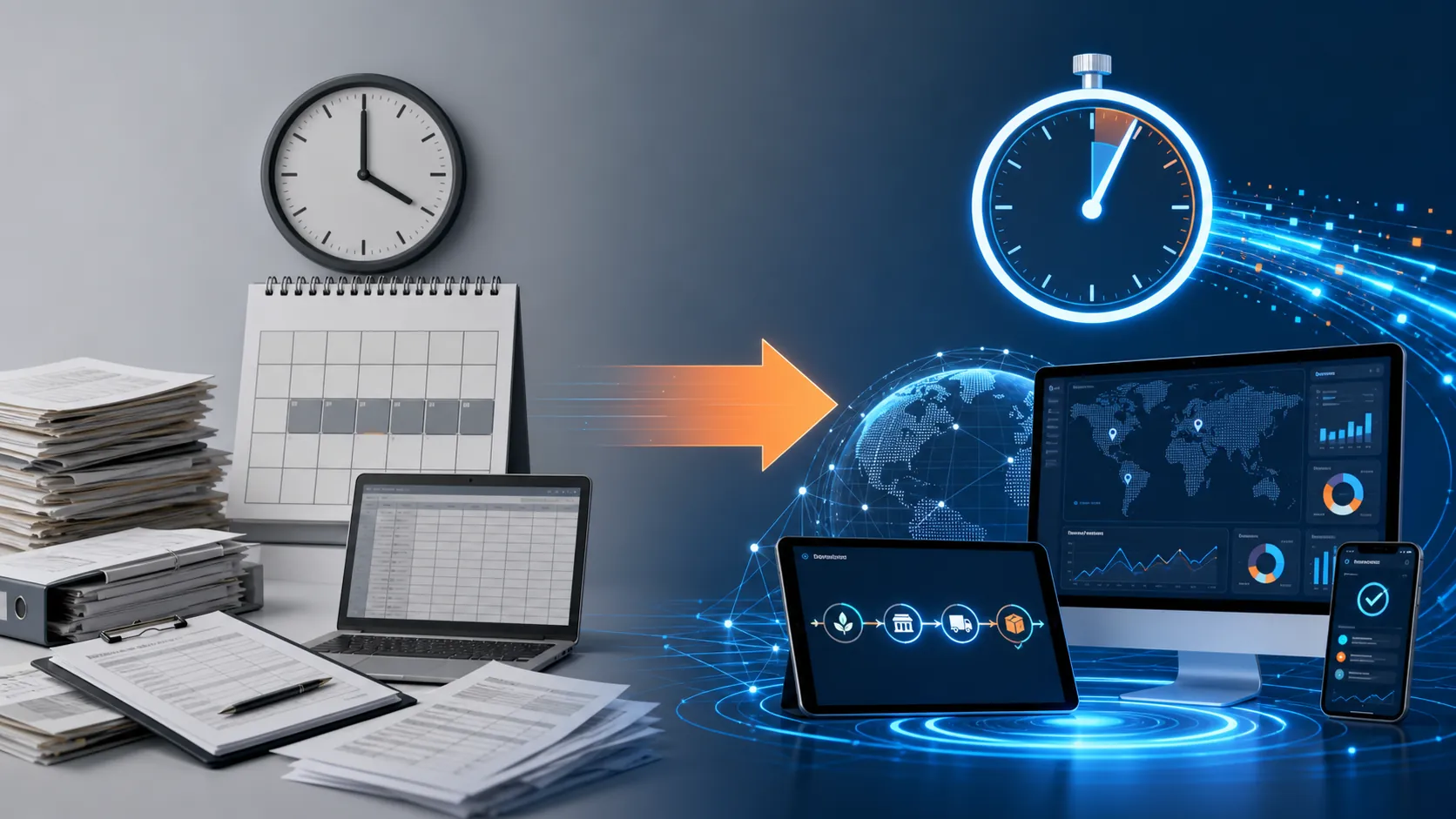
That is why the Walmart and IBM Food Trust mango example still gets attention. In the Hyperledger case study, Walmart traced mango provenance in 2.2 seconds after a process that previously took 7 days. The same case study says the work was verified across more than 25 products and 5 suppliers.[1]
That result is not a small dashboard improvement. Seven days to 2.2 seconds changes who is waiting in a recall room, how long retailers sit without confident instructions, and how much product may be held while the team reconstructs the chain of custody. It also gives buyers a clean example of what an outcome claim should look like: a named deployment, a before-and-after metric, a source, and a visible boundary.
The boundary matters. The Walmart benchmark originates from a 2018-2019 Hyperledger-era case study. It is strong as a trace-speed benchmark, but it should not be treated as current proof that the same performance exists across Walmart’s full supplier network, every product category, or every recall workflow today.[1]
What Counts As A Recall Outcome
A useful recall-management claim reduces uncertainty at the moment of action. “Better visibility” is not enough. The claim has to say what changed: fewer hours to trace an ingredient, fewer lots included in the withdrawal, fewer customers notified unnecessarily, or a smaller cost exposure because unaffected product stayed in commerce.
| Outcome | What It Measures | What A Buyer Should Ask |
|---|---|---|
| Trace-speed reduction | How quickly the team can identify source, lots, destinations, and exposure window | Was the result measured in a live deployment, a pilot, or a demonstration? |
| Recall-scope compression | How much the withdrawal narrows from facility, product family, or date range to affected batches | Does the system have lot-level, material-level, and destination-level data coverage? |
| Cost avoidance | Product, logistics, retailer, labor, disposal, legal, and brand costs avoided by not over-withdrawing | Is the estimate based on audited recall history or modeled savings? |
The strongest claims connect at least two of those rows. Fast traceability has safety value because contaminated product can be isolated sooner. It has financial value because the team can defend a narrower scope. The business case weakens when those links are assumed instead of shown.
This distinction is especially important in food because recall pressure is not theoretical. One 2025 FDA recall analysis counted 320 food and beverage recalls and reported a 232% surge in unit volume in Q1 2025.[2] CRC Group’s 2025 trend analysis reported that allergens and foreign objects accounted for 48% of food recalls in the trend set it examined.[3]
Those figures do not prove AI reduces recalls. They do explain why enterprises care about traceability depth before the incident. When a recall starts, the cost of poor records is paid in hours, product holds, retailer escalations, and uncomfortable scope decisions.
The Walmart Benchmark Is Strong, But Narrow
The mango case remains the cleanest public example because it reports a specific operational delta: 7 days to 2.2 seconds. The underlying problem was not glamorous. It was the familiar gap between product on a shelf and records scattered across suppliers, shipments, and intermediaries. Hyperledger-based traceability gave Walmart a faster way to retrieve provenance data across the tested network.[1]
That kind of trace-speed improvement can alter recall behavior before anyone talks about optimization. A team that can identify source and path in seconds can quarantine more precisely, brief retailers sooner, and avoid treating every plausible branch of the supply chain as equally suspect. In a produce investigation, that can be the difference between a targeted hold and a category-level commercial freeze.
ChainSignal has covered adjacent versions of this same operating problem in salmonella egg recall traceability, produce contamination detection, and romaine outbreak traceability gaps. The common issue is not whether the organization knows traceability is important. It is whether the data can be assembled quickly enough when the suspected product is already in distribution.
Still, the Walmart case should not carry more weight than it can bear. A mango provenance trace is not the same as a multi-product, multi-region recall command center integrated with supplier quality, ERP, warehouse, transportation, retailer notification, and claims workflows. It proves that dramatic trace-speed reduction is possible under the tested conditions. It does not prove that every enterprise can buy the same outcome by adding a traceability layer.

Scope Compression Is Where Safety And Finance Meet
Recall scope is where the food-safety case and the finance case stop being separate conversations. If the system can identify the affected lots, destinations, and exposure window with confidence, the company can protect consumers without pulling clean inventory only because the data is incomplete.
ThinkIQ’s food-safety traceability page reports “up to 95%” recall-scope reduction through material-centric traceability.[4] If achieved in a representative deployment, that would be a serious outcome. A 95% narrower scope can mean fewer retailers notified, fewer pallets held, less disposal, lower replacement cost, and a smaller public footprint for the incident.
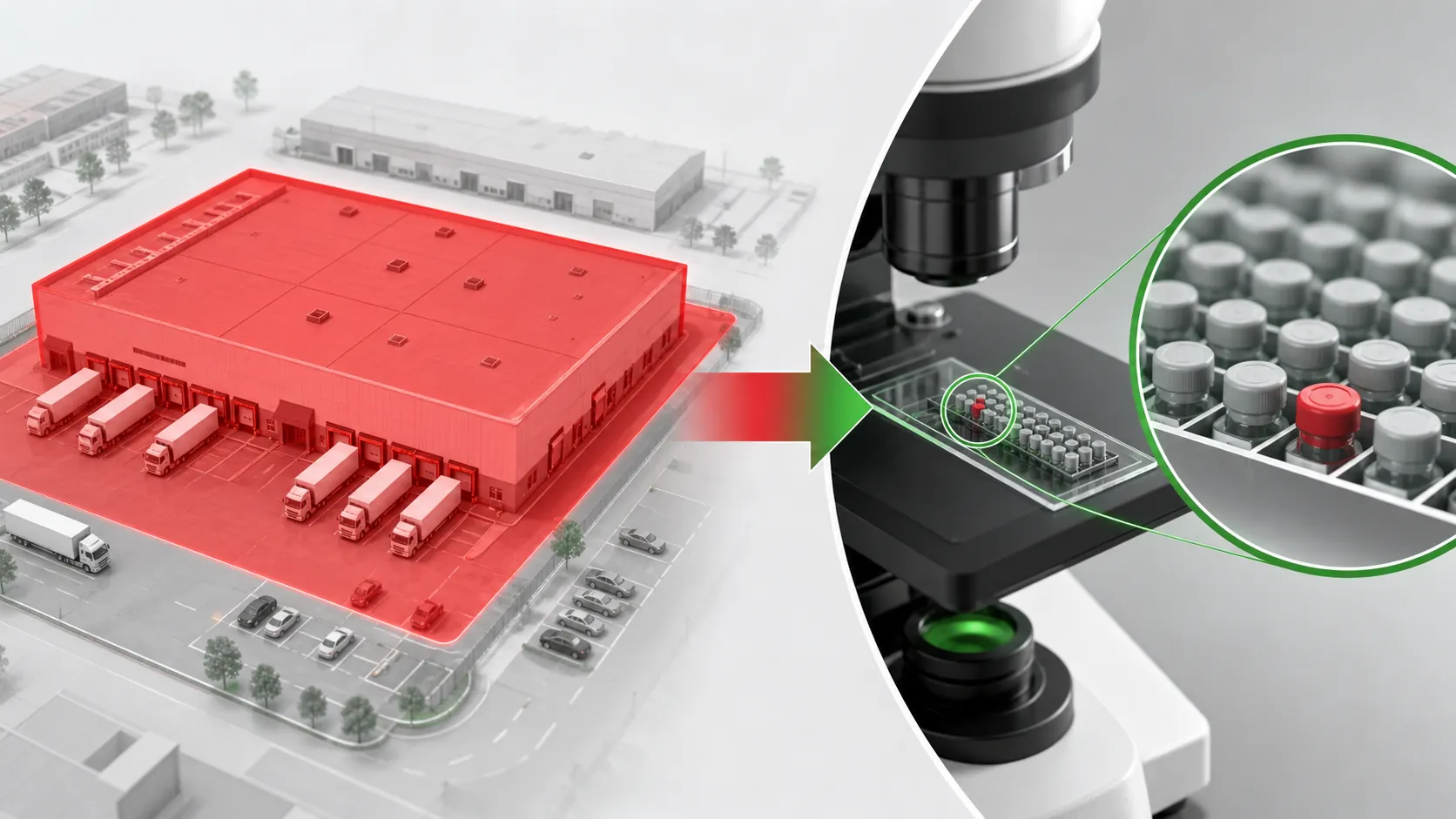
The problem is evidentiary, not conceptual. The ThinkIQ number appears as a vendor claim without an accompanying public methodology, customer deployment narrative, sample size, or third-party audit in the cited material.[4] It belongs in an investment case as a claim to investigate, not as a verified benchmark on the same footing as the Walmart mango tracing result.
A buyer should ask what “scope reduction” means in the claim. Was the comparison facility-wide to line-level, product-family to lot-level, or all shipments to a specific destination set? Did the system ingest supplier genealogy, production events, rework, hold-and-release decisions, sanitation windows, and outbound shipment data? Scope compression depends on data coverage. A model cannot narrow a recall around records it never received.
Cost Avoidance Needs More Discipline Than A Familiar Average
The often-cited direct cost of a food recall is approximately $10 million, and broader foodborne-illness cost estimates are commonly described in the tens of billions annually. Those figures are directionally useful, but they are not a substitute for company-specific recall economics. The original methodologies are not always carried through when the numbers appear in secondary market materials, so they should be used as framing assumptions rather than audited savings evidence.
For an enterprise business case, the better calculation starts with the company’s own recall and withdrawal history. The finance team will want to see product value, freight, warehousing, disposal, retailer chargebacks, overtime, outside counsel, testing, communications, insurance deductibles, and lost sales separated rather than compressed into one average.
AI recall management contributes to cost avoidance when it changes an action: fewer lots placed on hold, fewer DCs swept, fewer customer notifications, fewer finished-goods cases destroyed, or fewer days before release of unaffected inventory. The avoided cost is credible when it can be tied to a narrower decision record, not when it is inferred from a generic recall-cost average.
The regulatory direction supports that logic. FSMA 204 pushes companies toward better traceability records for high-risk foods, and the compliance case is closely connected to recall precision. ChainSignal’s FSMA 204 traceability analysis covers the compliance angle in more detail. For recall-management buyers, the practical point is narrower: regulatory traceability records can become operational recall data only if they are accessible, current, and connected to the systems that execute holds and customer notifications.
Quality Inspection Wins Are Related, Not Equivalent
AI inspection systems can reduce recall risk before product leaves the plant, but they should not be counted as recall-management proof unless the deployment shows a recall outcome. This is where otherwise impressive quality-control metrics need careful placement.
IONI AI reports that PepsiCo used computer vision for continuous in-line inspection and achieved up to 95% defect detection accuracy.[5] The same article reports that Nestlé AI vision systems in chocolate production delivered an 80% reduction in manual quality checks, citing secondary reporting.[5]
Those are useful signals for prevention and labor efficiency. They may reduce the chance that defective or contaminated product enters commerce. But they are not the same as a post-incident recall trace, scope, or cost outcome. The cited material is also secondary reporting rather than an original PepsiCo or Nestlé deployment post-mortem, so it should be weighted accordingly.[5]
This distinction matters because a prevention metric and a recall metric answer different executive questions. Inspection accuracy asks whether the plant catches more defects. Recall management asks whether the enterprise can isolate exposed product after a suspect event has already occurred. A strong food-safety platform may need both, but the evidence should not be blended.
Deployment Depth Decides Whether The Outcome Transfers
The hardest part of evaluating AI recall-management outcomes is not finding a promising case. It is deciding whether that case is transferable to a buyer’s own network.
A pilot trace of mango provenance, a material-centric traceability platform, an in-line computer vision system, and a regulatory traceability compliance program can all improve food-safety operations. They do not prove the same thing.
| Deployment Type | What It Can Prove | What It Does Not Automatically Prove |
|---|---|---|
| Product provenance trace | The team can retrieve source and chain-of-custody data much faster for covered products and partners | Recall execution is integrated across all categories, suppliers, warehouses, and retailers |
| Material-centric traceability | The organization may be able to narrow affected batches if genealogy data is complete | The reported scope reduction is independently verified or representative |
| In-line AI vision | Defect detection or manual inspection work may improve inside the plant | The enterprise can trace and execute a recall faster after shipment |
| FSMA 204 compliance tooling | Required traceability records may be captured more consistently | Those records are usable in a high-pressure recall workflow without manual reconciliation |
Transferability depends on integration coverage. Supplier master data, lot genealogy, production events, quality holds, lab results, warehouse movements, transportation records, customer shipments, and retailer contacts all become part of the recall decision. If one of those links sits outside the platform, the team may still be exporting spreadsheets while the dashboard shows a clean lineage map.
Data quality is just as important as model capability. AI can match entities, flag anomalies, infer likely connections, and speed retrieval. It cannot turn missing supplier lot codes or inconsistent rework records into reliable recall boundaries without human review and governance. In recall management, false confidence is a safety risk, not just an analytics defect.
The Vendor Evidence Gap Is A Market Signal
For ChainSignal readers, one absence matters. The available public evidence for direct recall-management outcomes does not currently come from the five major supply-chain planning platforms the site often tracks: o9, Blue Yonder, Kinaxis, RELEX, and Anaplan. Available public sourcing found no direct recall-management case studies from those named platforms.
That does not mean those vendors cannot support parts of a recall workflow. Planning, allocation, inventory visibility, supplier collaboration, scenario analysis, and financial impact modeling can all matter during a withdrawal. But the public outcome evidence for trace-speed reduction and recall-scope compression sits more visibly with food-safety-specific vendors and traceability platforms such as IBM Food Trust and ThinkIQ.
This should affect buyer evaluation. A planning-suite AI roadmap may be strong in forecasting, inventory, or scenario planning; ChainSignal’s AI demand forecasting maturity analysis is a useful benchmark for that broader category. Recall management needs a separate proof standard. The buyer should ask for named recall workflows, data coverage maps, incident simulations, time-to-trace evidence, scope-compression logic, and references from food-safety operations, not only supply-chain planning demos.
What Is Strong Enough For An Investment Case
A defensible business case can use the Walmart benchmark as proof that dramatic trace-speed reduction is operationally possible, while clearly marking its date, product scope, and network boundary. It can use ThinkIQ’s scope-reduction claim as a high-value hypothesis to validate in diligence, not as audited proof. It can use PepsiCo and Nestlé inspection examples as adjacent evidence that AI can improve quality operations, not as evidence that recall execution has been transformed.
The diligence questions should be concrete:
- Which products, suppliers, plants, warehouses, and customers are inside the traceability boundary on day one?
- How long does it take to identify source, affected lots, destinations, and exposure window using production data rather than demo data?
- What recall scope would the company have chosen under the old process, and what narrower scope can the system defend?
- Which records still require manual reconciliation, and who signs off when the system suggests a narrower withdrawal?
- How are savings calculated: avoided holds, avoided destruction, avoided freight, avoided retailer claims, or avoided labor?
- Has the vendor documented a real recall, mock recall, or regulatory trace exercise with dated before-and-after results?
The internal owner also needs to separate decision support from decision authority. AI can assemble evidence quickly, flag suspect links, and propose affected lots. The recall coordinator, food-safety leader, legal team, and executive decision-maker still need an auditable record of why the scope was selected. That record is what regulators, customers, insurers, and retailers will review after the event.
The current evidence supports a measured conclusion. AI recall management has credible proof of dramatic trace-speed improvement, especially in the Walmart and IBM Food Trust mango benchmark. It has a plausible economic case for recall-scope compression and cost avoidance, because narrower, faster decisions can prevent unnecessary withdrawals. But the strongest public proof is uneven, older in places, and often outside the major supply-chain planning platforms many enterprises already own.
References
- Walmart Case Study, LF Decentralized Trust / Hyperledger
- FDA Food and Beverage Recalls 2025, Esko
- Beyond the Label: What 2025’s Product Recall Trends Reveal About Emerging Risk, CRC Group
- Food Safety & Traceability, ThinkIQ
- How AI Is Transforming Food Safety, IONI AI
§ 42 — Cited evidence
Flag an inaccuracy or submit a comparable account — Contribute or read how claims are verified in Methodology.