Why Walmart's AI Didn't Automate the EnHomee Recall
This article examines why Walmart's self-healing inventory and blockchain traceability systems were not deployed in the EnHomee dresser recall, and what that capability-execution gap means for enterprises evaluating AI-driven returns and recall logistics solutions.
The most revealing line in the EnHomee dresser recall is not the hazard description. It is the remedy. Consumers with the recalled nine-drawer fabric dresser are told to stop using it, dispose of it, and email EnHomee a photo of the disposed dresser to receive a full refund. The recall covers 16,809 units sold on Walmart.com by Raybee-Direct, announced by the CPSC on July 23, 2026.[1]
That is a small, awkward workflow for a large digital marketplace: a customer proves destruction, a seller or manufacturer verifies the proof, someone reconciles the refund, and the record has to stand up if the CPSC asks whether the remedy is working. There is no returned product moving through a reverse-logistics center. There is no obvious chain-of-custody event after the consumer destroys the dresser. The control point becomes an inbox.
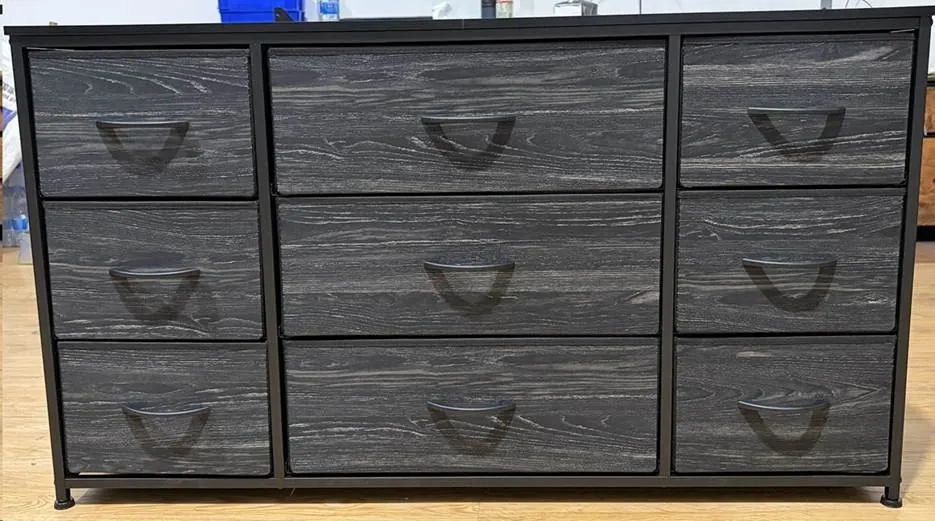
This was not the first time an EnHomee furniture remedy landed in that shape. A February 2025 CPSC warning involving about 3,300 EnHomee dressers and a September 2025 recall involving about 11,200 units both used the same basic consumer photo-and-email pattern.[2][3] The repetition matters less as a biography of one seller than as an operating baseline. By July 2026, the manual remedy was no longer a surprising edge case. It was the durable public process.
The Gap Is Not Whether Walmart Has Supply Chain AI
Walmart has spent years telling the market that it can use automation, data, and AI to make inventory behave better. In July 2025, Walmart described its Self-Healing Inventory work as having detected and rerouted overstock, producing more than $55 million in savings; that figure is Walmart’s own claim, not an independently audited benchmark.[4] Still, it is operationally specific enough to be useful. It describes a system that notices inventory in the wrong place and triggers corrective movement before the mistake becomes more expensive.
That is close to one of the first jobs in a recall: isolate the affected inventory, stop further movement, and prevent the item from being sold again through the wrong channel. A recall does not need an elegant model if affected stock keeps leaking through a marketplace listing, a third-party fulfillment path, or a customer-service exception. It needs a control layer that can identify the units, freeze the right nodes, and show who touched the exception.
Walmart also has a famous traceability proof point. In the Hyperledger Fabric mango traceability case, Walmart reduced the time needed to trace sliced mangoes from seven days to 2.2 seconds.[5] That case should not be stretched into a claim that the same system can trace every marketplace furniture unit to every household. Food traceability and marketplace furniture recalls are different operating environments. But the benchmark does show that Walmart has worked with technologies meant to answer the recall-adjacent question: where did this product come from, where did it go, and how quickly can the record be reconstructed?
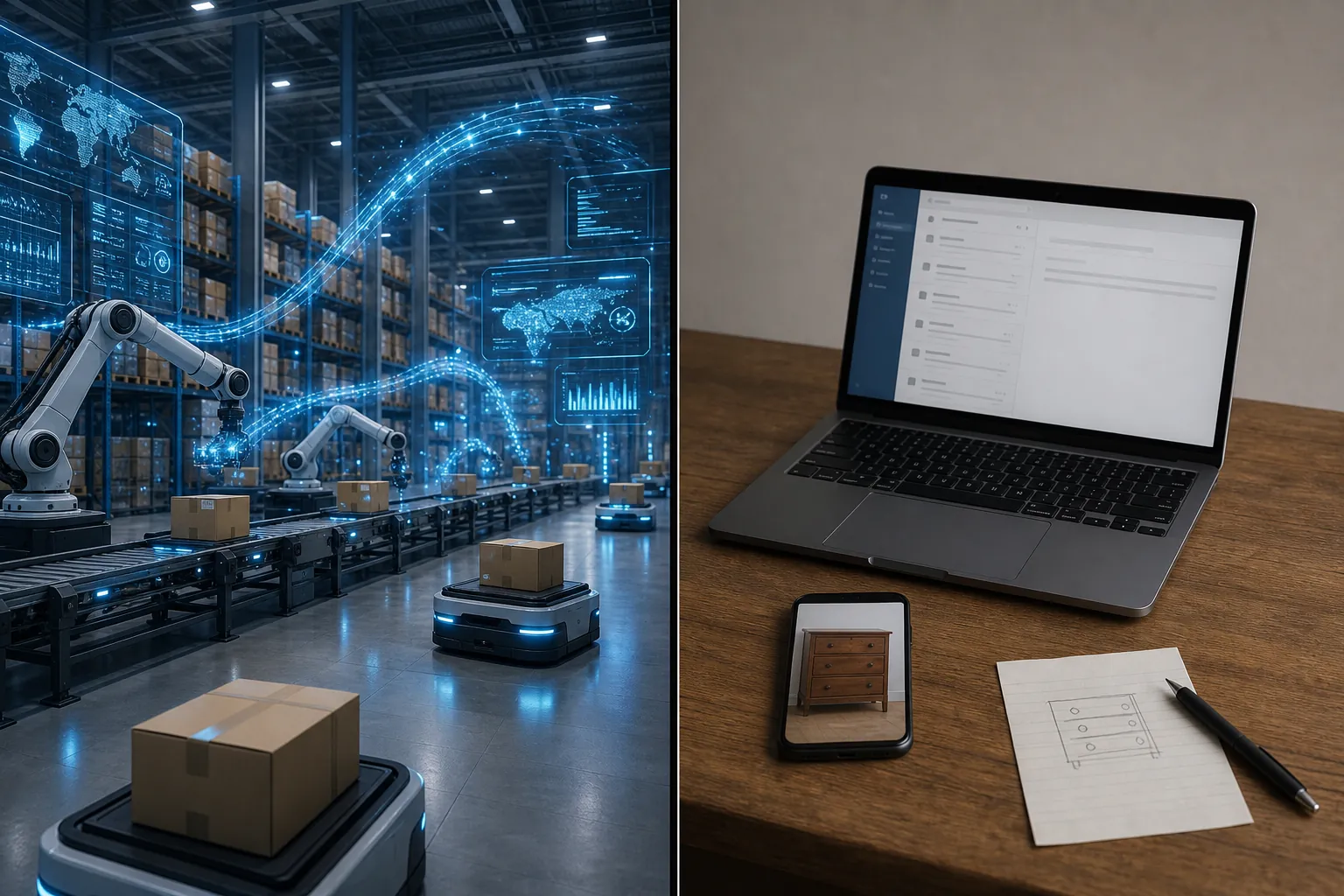
Put those two public capabilities beside the EnHomee remedy and the question becomes narrower and more uncomfortable: why did a company with relevant inventory and traceability capabilities still leave the consumer-facing remedy at “email us a photo after disposal”?
What Each Capability Could Have Helped With, and What It Still Would Not Solve
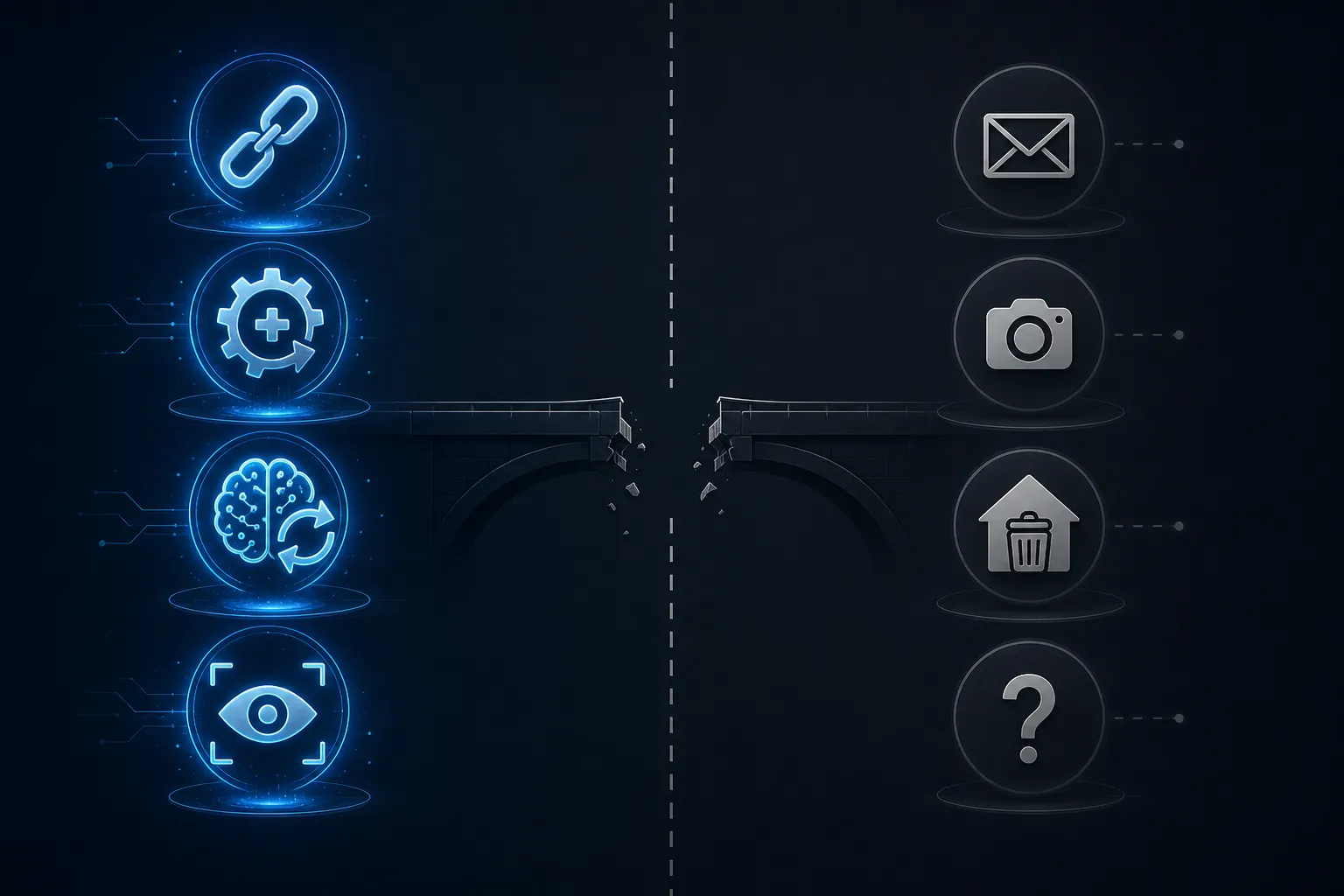
The cleanest way to read the EnHomee recall is not as proof that Walmart’s AI is hollow. It is proof that technical relevance and deployed recall execution are different things. The public material supports several plausible mappings, but not an end-to-end automated recall story.
| Public capability | Recall function it appears relevant to | What the EnHomee notice publicly shows |
|---|---|---|
| Self-Healing Inventory | Inventory isolation, movement control, and exception routing | The remedy described public consumer action, not automated inventory quarantine or seller coordination. |
| Hyperledger Fabric traceability | Product, supplier, and transaction trace reconstruction | The notice identified Walmart.com, Raybee-Direct, and EnHomee, but did not show automated consumer tracing or proof management. |
| AI returns disposition | Deciding whether goods should be resold, repaired, liquidated, recycled, or destroyed | The dresser was to be disposed of by the consumer, leaving no conventional return stream to optimize. |
| Computer vision quality control | Potentially verifying visual evidence in narrow cases | The available source material does not show that computer vision was used to validate disposal photos. |
The traceability point is the easiest to overstate. A blockchain record that can trace a mango through a controlled food supply chain does not automatically identify every dresser purchaser, authenticate every seller record, or collect legally sufficient evidence of disposal. Marketplace recalls have a different set of seams: the platform, the third-party seller, the named product brand, the manufacturer, the consumer, and the regulator. The CPSC notice names Walmart.com as the sales channel, Raybee-Direct as the seller, and Xuzhou Mingquanhe Household Products Co. Ltd. as the manufacturer.[1] That is already a multi-entity handoff before the customer even opens an email.
Self-Healing Inventory looks more directly relevant, but its public success story is about detecting and rerouting overstock, not about executing a regulated consumer product recall across third-party marketplace records.[4] A recall control layer would need to do more than stop inbound and on-hand movement. It would need to reconcile seller SKU data, marketplace order history, customer contact rules, replacement or refund eligibility, proof of disposal, and regulator-facing completion evidence. The AI may detect the exception. The organization still has to decide who owns every step after detection.
Returns disposition is the most tempting comparison because it is where the retail AI market has become loud. In an ordinary return, a system may decide whether a product should go back to stock, move to liquidation, be repaired, be donated, or be destroyed. In the EnHomee recall, the consumer was told to dispose of the dresser and send proof. That removes the product from the retailer’s physical returns network. The operational problem is no longer only “what should we do with this item?” It becomes “how do we verify that the customer did it, connect the evidence to the correct transaction, issue the right remedy, and preserve the audit trail?”
The Marketplace Handoff Is Where Automation Usually Gets Thin
The EnHomee notice does not prove that Walmart lacked internal recall tooling. It also does not prove that Walmart chose a manual remedy because its systems failed. Public records do not show the internal legal, contractual, or remediation-control reasons behind the process. The narrower point is enough: the public remedy available to the consumer did not look like an AI-enabled, platform-orchestrated recall flow.
That distinction matters because marketplace recalls are not controlled like private-label inventory sitting in a retailer’s own distribution network. The seller may hold parts of the product record. The manufacturer may be responsible for remedy funding. The platform may control customer messaging. The regulator cares about the recall plan and completion evidence. The customer is asked to perform the final physical act — in this case, disposal — outside the logistics network.
A clean AI demo usually assumes that the system has the necessary data rights and workflow authority. A live recall asks whether the platform can compel, coordinate, or at least reliably observe action across parties that do not sit inside one operating chart. That is where the vocabulary matters less than the actual sequence of work: identify the affected units, identify the customers, stop further sales, confirm the remedy, refund correctly, report progress, and keep evidence.
Where Returns AI Helps and Recall Logistics Starts
For enterprise buyers in Q3 2026, the EnHomee recall lands at an awkward moment. Returns software vendors are getting better at the economic problem. Blue Yonder’s January 2026 returns management enhancements include Smart Disposition, machine-learning-predicted resale value, bulk receipt, and an Optoro integration.[6] Those are serious feature areas for retailers trying to recover value from returned merchandise, especially during peak return periods.
The economic pressure is real. McKinsey estimated that U.S. retailers lost about $1 trillion in returned merchandise in 2024 and spent $200 billion on reverse logistics; it also reported that AI-boosted disposition can recover about 75 percent of product value, compared with about 50 percent without AI.[7] Those numbers should be used carefully. McKinsey’s survey base of 850 consumers and 30 supply-chain executives is useful, but it is not a recall-specific benchmark for regulated, hazardous, or consumer-destroyed products.[7]
SupplyChainBrain has also cited a 75 percent reduction in returns processing time from AI, which again points to real operational opportunity in ordinary reverse logistics.[8] Faster processing, better disposition, and higher value recovery are not the same as recall compliance. A product recall may intentionally destroy value in order to remove hazard exposure. The best commercial disposition choice can be the wrong compliance choice.
That is why Blue Yonder’s feature set should be read as a vendor opportunity, not a proven EnHomee-style recall answer. Smart Disposition may help decide where a returned item should go. Bulk receipt may reduce facility friction. An Optoro integration may improve the resale and recommerce path. None of the cited vendor material independently demonstrates an end-to-end marketplace recall workflow that verifies home disposal, coordinates a third-party seller, reconciles manufacturer responsibility, and packages regulator-ready evidence.
The Buyer’s Test Is Workflow Authority, Not AI Vocabulary
The CPSC’s revised 2025 Recall Handbook added a “Reverse Logistics Plan” section, a useful signal that recall operations are being judged not only by announcement quality but by the practical path for affected goods and remedies.[9] For buyers evaluating AI-driven recall and return logistics platforms, that should move the diligence conversation away from model labels and toward authority, evidence, and handoffs.
A vendor that can optimize ordinary returns may still fall short when the product cannot be resold, cannot be shipped back safely, or must be destroyed by the consumer. A planning platform that can forecast demand may not own customer notification. A traceability layer may know the upstream supplier path but not control seller remediation. A marketplace platform may have order data but not the manufacturer’s recall funding workflow.
The useful questions are operational:
- Can the system identify affected customers from marketplace, seller, and manufacturer records without manual reconciliation?
- Can it stop sales and isolate inventory across owned, marketplace, and third-party fulfillment locations?
- Can it route different remedies — return, repair, replacement, refund, destruction, or proof of disposal — without treating them as ordinary returns?
- Can it validate evidence, connect that evidence to the right order, and preserve an audit trail?
- Can it show recall completion status by seller, SKU, geography, customer segment, and remedy type?
- Can it produce regulator-ready reporting without a spreadsheet-and-inbox cleanup project?
Those questions do not require a buyer to be anti-AI. They require the buyer to separate three things that vendors often blend together: returns optimization, recall compliance workflow, and multi-entity marketplace execution. A platform can be strong in the first and weak in the second. It can support the second inside owned channels and still be unproven in the third.
What the EnHomee Recall Actually Proves
The EnHomee recall does not prove that Walmart’s AI systems are ineffective. It does not prove that Blue Yonder, Optoro, or any other vendor has the missing answer. It also does not prove that a fully automated remedy would have been legally preferable. The recall was announced one day before this writing, and public coverage may still be thin.
It does prove something narrower and more useful: AI capability in inventory, traceability, and returns does not automatically become recall execution capacity when ownership crosses a marketplace platform, a third-party seller, a manufacturer, a consumer, and a regulator. The hard part is not only predicting the right disposition or tracing a product quickly. It is making every handoff enforceable, observable, and auditable when the remedy leaves the warehouse and lands in a customer’s email outbox.
References
- EnHomee Dressers Recalled Due to Tip-Over and Entrapment Hazards; Violation of Federal Regulations for Clothing Storage Units; Sold Exclusively on Walmart.com by Raybee-Direct, CPSC, July 23, 2026, link
- CPSC Warns Consumers to Immediately Stop Using EnHomee Dressers, CPSC, February 2025, link
- EnHomee Dressers Recalled Due to Tip-Over and Entrapment Hazards, PRNewswire, September 2025, link
- 4 ways Walmart is scaling AI, Retail Dive, July 2025, link
- Walmart Case Study, Linux Foundation, link
- New returns enhancements help retailers capture value as peak returns begin, Blue Yonder, January 2026, link
- From cost center to competitive advantage, McKinsey & Company, February 2026, link
- SupplyChainBrain think-tank blog, SupplyChainBrain, link
- Recall Handbook, CPSC, revised 2025, link
Cited evidence
- Walmart’s Dresser Recall Exposes the Compliance Blind Spot in Logistics AI
Walmart’s 2026 Mainstays dresser recall (165,000 units, STURDY Act violation) reveals that its advanced supply chain AI—optimized for packaging defects and cost—did not inspect product safety compliance. This case helps retail leaders understand where logistics AI falls short on safety.
- Walmart and Kroger Show How AI Reduces Recall Costs
Drawing on Walmart's blockchain traceability and AI defect detection alongside Kroger's contrasting experience, this analysis quantifies how AI shifts recall economics from multi-million-dollar broad sweeps to targeted, preventable interventions. Procurement leaders can use these proxy-case numbers to build a business case for AI recall investments.
- How AI computer vision detects spoilage to prevent food recalls
This analysis of four computer vision deployments at Tyson Foods, Walmart, Kraft Heinz, and Nestlé shows that AI-powered inspection catches defect classes that manual methods miss, with clear recall-prevention implications. But the impact depends on upstream placement and is limited to visible-surface defects.
Ready to check your own team's readiness for this pattern?
See the recall logistics readiness checklist →Spotted something inaccurate or incomplete in this entry? ChainSignal reviews corrections and additional evidence before publishing an update — this is not a public comment thread.
Flag an inaccuracy / submit evidence for this entry →