Mapping Saudi Nuclear Deal Vulnerabilities with AI Risk Models
The US-Saudi nuclear deal creates four interdependent supply chain vulnerability layers that test the capabilities of AI geopolitical risk models. This case study evaluates how graph-based AI tools simulate these layers and where their outputs require manual verification, helping procurement leaders judge model strengths and limitations.
If the US-Saudi nuclear agreement signed on July 22, 2026 landed in a procurement risk platform, the first useful output would not be a red alert over “Middle East instability.” It would be a traceable map showing which supply-chain assumptions changed, which ones merely became more visible, and which ones remain unknowable because the public record is incomplete.
That distinction matters for anyone evaluating AI risk modeling around the Saudi nuclear deal. The deal touches nuclear fuel-cycle concentration, critical-mineral policy, AI infrastructure, chip-packaging capacity, high-bandwidth memory, and power availability. A single-country risk score will flatten those links. A good graph model can at least keep them in view.
| Vulnerability layer | Public signal | Planning implication |
|---|---|---|
| Enrichment concentration | US utilities still bought 20% of enrichment services from Russia in 2024; civil nuclear supply chains remain oligopolistic at multiple phases.[1] | Fuel-cycle exposure cannot be treated as a normal commodity substitution problem. |
| Critical minerals | The cooperation framework signed alongside the 123 Agreement covers uranium, metals, permanent magnets, and critical minerals.[2] | Nuclear cooperation sits beside industrial inputs needed for magnets, defense systems, grid equipment, and AI hardware. |
| AI-chip infrastructure | Saudi Arabia’s $1 trillion investment pledge targets Nvidia-linked AI infrastructure; advanced packaging and HBM are identified bottlenecks in the AI chip supply chain.[3] | Compute commitments create upstream exposure to packaging, memory, substrates, and allocation decisions outside Saudi Arabia. |
| Energy constraints | Saudi data center market growth is reported at 29% CAGR through 2030, while AI data centers are turning electricity into a strategic supply-chain constraint.[4] | Power availability becomes a capacity-planning input, not only a facilities or utilities issue. |
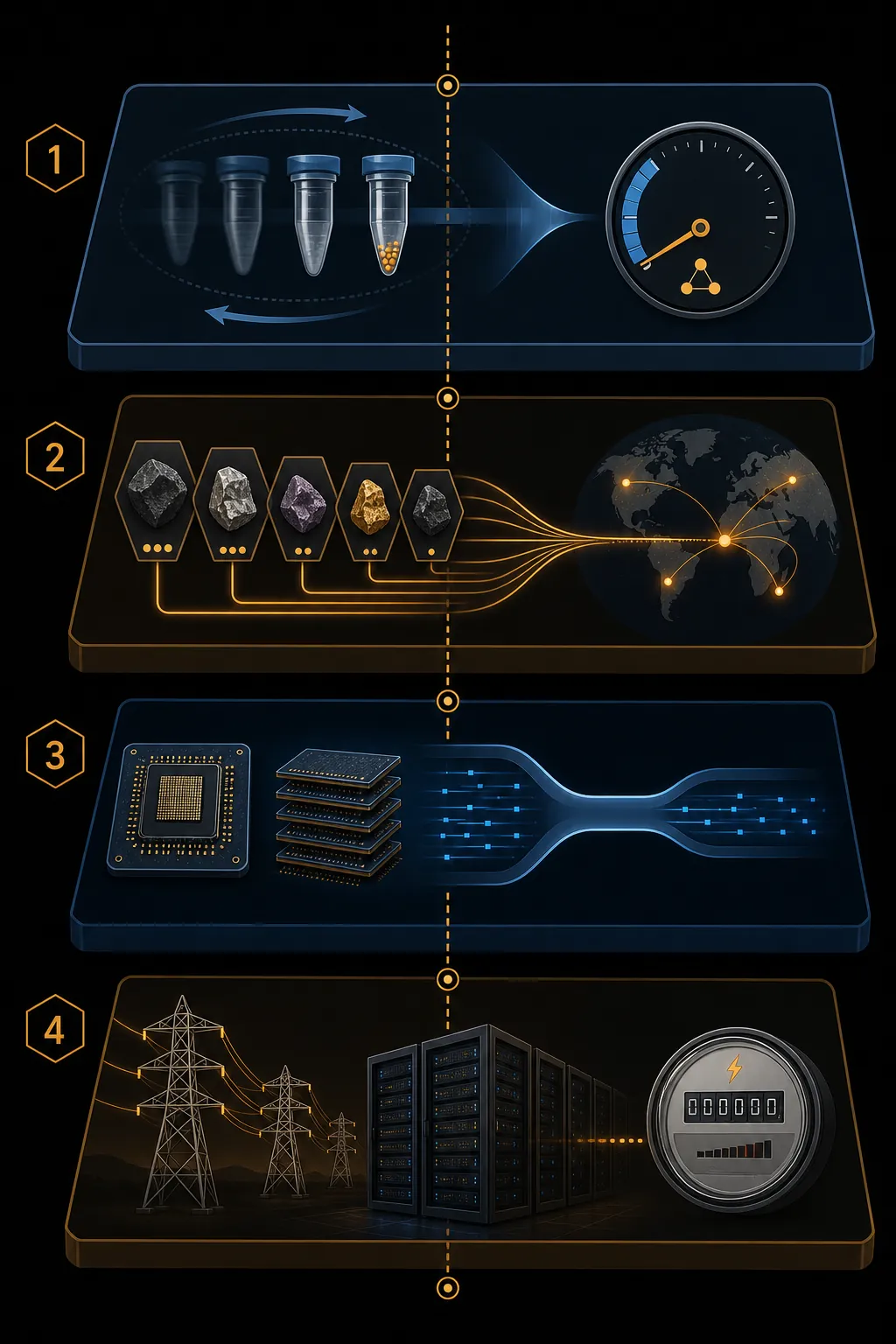
The table is compact, but the operational problem is not. Procurement teams do not buy “geopolitics.” They buy uranium conversion and enrichment services, magnets, transformers, memory, chip allocations, server capacity, cooling equipment, insurance, logistics lanes, and electricity commitments. The Saudi deal is awkward for older dashboards because the same event can alter assumptions in several of those categories at once.
The Enrichment Layer Is Where Confidence Should Slow Down
Nuclear fuel-cycle risk is not just about whether Saudi Arabia builds reactors. For supply-chain planning, the sharper question is who controls enrichment technology, where the technology sits, what safeguards apply, and how buyers can verify that the resulting fuel pathway does not introduce compliance exposure.
RUSI’s assessment gives the baseline discomfort: in 2024, US utilities still purchased 20% of enrichment services from Russia, and global civil nuclear supply chains are described as “notoriously oligopolistic,” with only a small number of players at each phase.[1] That means an AI model should not treat enrichment as a broad vendor universe where capacity can be reallocated smoothly after a shock. It should model concentration, licensing, sanctions exposure, transport routes, long contracting cycles, and the limited number of qualified suppliers.
The Saudi case adds a governance complication. Public analyses describe a “black box” enrichment model: US-controlled technology operating on Saudi soil. That is exactly the kind of structure a graph model can represent as a set of nodes and permissions. The model can distinguish the physical location of the facility, the ownership or control of the technology, the fuel-cycle stage, the relevant regulators, and the downstream customers exposed to a policy change.
But it cannot verify what has not been released. The full 123 Agreement text has not been made public, so enrichment conditions and safeguards language remain unconfirmed. A platform may infer likely constraints from prior agreements or from official statements, but those inferred edges should not appear with the same visual confidence as confirmed supplier relationships. In a sourcing review, that difference is not academic. It determines whether the team can defend a mitigation action or must mark the assumption for legal and policy review.
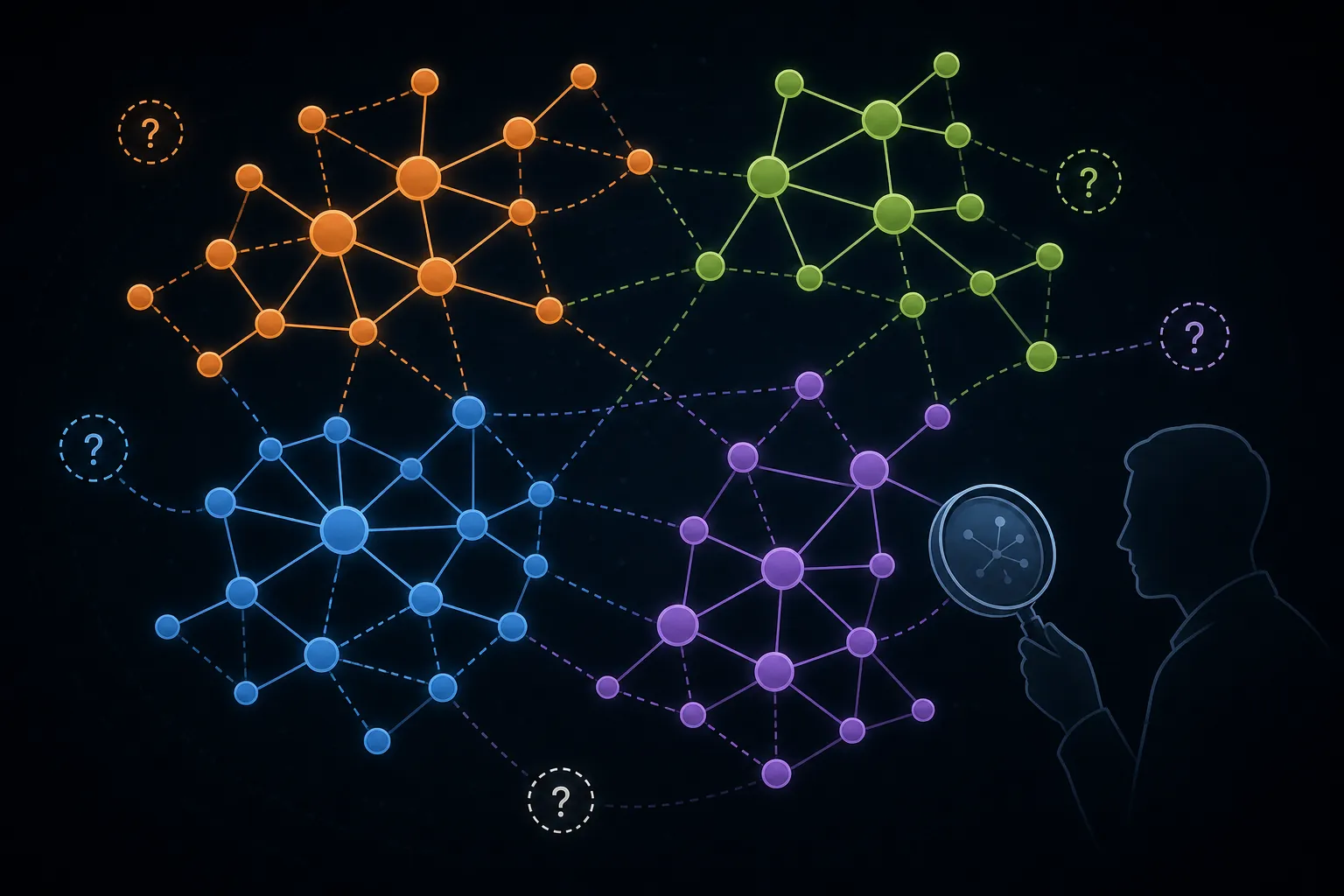
This is where the best AI risk model behaves less like an oracle and more like a disciplined evidence ledger. A confirmed edge might be “US utilities purchased 20% of enrichment services from Russia in 2024.” An inferred edge might be “future Saudi enrichment governance could affect nuclear fuel qualification pathways.” An unknown edge might be “specific safeguards obligations under the unreleased agreement text.” A useful dashboard should make those categories visible before it scores the scenario.
Why Critical Minerals Belong in the Same Model
The critical-minerals layer is not an add-on to make the nuclear story look broader. Columbia CGEP notes that the Strategic Framework for Cooperation signed alongside the 123 Agreement includes uranium, metals, permanent magnets, and critical minerals.[2] Those categories place the deal inside a wider industrial-policy frame: fuel inputs, grid hardware, defense-relevant materials, and advanced manufacturing inputs all become part of the same cooperation package.
For procurement teams, that means the model should connect nuclear development to mineral-processing capacity, magnet supply, and suppliers that may already be constrained by clean-energy, defense, and electronics demand. The model does not need to claim that a Saudi reactor project will immediately consume a specific volume of any given mineral unless that volume is documented. It does need to show that the policy framework links categories that are often monitored by separate teams.
A conventional dashboard may keep uranium in an energy-risk tab and permanent magnets in an industrial-components tab. That separation is tidy until a single diplomatic package moves both. Graph-based monitoring is useful here because it can surface shared exposure: the same jurisdiction, the same state-owned counterparties, the same export-control sensitivity, or the same logistics corridor can sit behind several categories.
The safer interpretation is still narrow. The public material supports a linkage between the agreement package and critical-mineral cooperation. It does not prove that specific procurement shortages will follow. A model output that jumps from “framework includes critical minerals” to “magnet shortage probability increases by a precise percentage” would be dressing an assumption as measurement.
The AI-Infrastructure Layer Pulls Chips Into the Nuclear Case
Saudi Arabia’s AI infrastructure ambitions make the nuclear deal harder to isolate. Enki AI’s 2026 supply-chain guide ties Saudi Arabia’s $1 trillion investment pledge to Nvidia-linked AI infrastructure, while identifying advanced packaging rather than wafer production as the true bottleneck in the TSMC context and noting Micron’s forecast that HBM shortages extend beyond 2026.[3]
That creates a different risk path from the enrichment problem. Nuclear fuel-cycle exposure is concentrated around specialized licensed capacity and governance. AI infrastructure exposure runs through chip allocations, advanced packaging, HBM supply, data-center buildout, and power. Both are strategic, but they fail in different places.
A graph model should therefore avoid a generic “semiconductor risk” node. It should separate wafer fabrication from advanced packaging, HBM from general DRAM, GPU allocation from server deployment, and data-center construction from available power. If a Saudi AI buildout competes for packaging or HBM capacity, the procurement consequence may appear in server lead times or allocation terms rather than in the headline availability of chips.
This is one of the strongest arguments for AI-assisted geopolitical supply-chain modeling. The relevant connection is not intuitive from a category tree. A nuclear cooperation agreement, an AI investment pledge, a packaging bottleneck, and a power constraint do not belong to the same commodity family. They do, however, belong to the same capital-allocation and infrastructure race.
Electricity Is Not Background Infrastructure Anymore
The energy layer is where AI and nuclear planning start to fold back into each other. Logistics Viewpoints reported in May 2026 that AI data centers are turning electricity into a strategic supply-chain constraint, citing Meta’s El Paso data center target of roughly 1GW capacity at more than $10 billion of investment and American Electric Power’s five-year capital plan increase to $78 billion, attributed to data-center demand.[4]
The same source notes that the Saudi data center market is expected to grow at 29% CAGR through 2030, a figure that refers to the broader Saudi data center market rather than AI-specific facilities.[4] That caveat matters. The number supports a planning concern about data-center growth and power demand; it does not, by itself, quantify AI-only electricity load.
For an S&OP team, electricity risk changes the shape of the scenario. A disruption is no longer limited to a port delay, supplier shutdown, or export-control event. It may show up as delayed energization, grid-connection queues, higher backup-power requirements, longer lead times for transformers, or revised phasing for data-center capacity. Nuclear development can be part of the answer to long-term power needs, but it also introduces its own licensing, construction, fuel, and governance dependencies.
How a Graph Model Should Connect the Case
A credible model would start by building a cross-domain graph rather than forcing the event into one risk taxonomy. The event node would connect to the 123 Agreement, the Strategic Framework, nuclear fuel-cycle stages, critical-mineral categories, AI infrastructure commitments, chip-packaging capacity, HBM availability, data-center power demand, and Gulf physical-disruption variables.
The dated public signals should anchor the graph. RUSI’s enrichment concentration data belongs in the nuclear fuel-cycle cluster.[1] Columbia CGEP’s description of the agreement package belongs in the policy and critical-minerals cluster.[2] Enki AI’s packaging and HBM discussion belongs in the semiconductor-infrastructure cluster.[3] Logistics Viewpoints’ electricity and data-center evidence belongs in the power-capacity cluster.[4]
- Confirmed links: dated public facts such as the July 22, 2026 signing, the 20% Russian enrichment-services share for US utilities in 2024, and the inclusion of uranium, metals, permanent magnets, and critical minerals in the cooperation framework.[1][2]
- Inferred links: plausible propagation paths such as AI infrastructure commitments increasing sensitivity to advanced packaging, HBM, and power availability.
- Unknown links: unreleased agreement language, specific safeguards terms, and internal state decisions that public data cannot verify.
The model should then run scenarios across correlated constraints. Columbia CGEP notes that the deal was signed in the context of the Iran war, with Gulf states receiving retaliatory strikes.[2] For a supply-chain model, the relevant issue is not a broad geopolitical essay on the Gulf. It is whether port closures, airspace restrictions, insurance changes, or routing disruptions could interact with nuclear, mineral, chip, or data-center plans at the same time.
That is where multi-source monitoring earns its place. News feeds, sanctions updates, shipping data, airspace advisories, regulatory filings, supplier disclosures, and energy-capacity announcements can all be connected to the same scenario map. The model’s job is to show procurement which assumptions are moving together before a disruption becomes obvious in purchase-order data.
What Existing AI Risk Systems Can Plausibly Do
Published capabilities from geopolitical AI systems support the general modeling approach, but they do not prove that any vendor has already modeled this Saudi deal. Mantis Analytics and New Lines Institute describe a partnership around customizable geopolitical risk assessment.[5] BlackRock’s geopolitical risk work, including BGRI-style monitoring of fragile nodes, has been described as a way to track geopolitically sensitive market and supply-chain exposure.[6]
Those capabilities are relevant because this case needs entity resolution, event monitoring, relationship mapping, and scenario simulation. A graph-based system can connect a policy event to exposed suppliers, transport corridors, capacity bottlenecks, legal regimes, and demand-side commitments. It can update the map as new public signals arrive. It can also show where a disruption in one domain changes the priority of another, such as a Gulf logistics event coinciding with constrained chip-packaging capacity or power-equipment lead times.
The useful output is not the most dramatic visualization. It is a ranked set of decision questions: Which suppliers depend on constrained enrichment or fuel-cycle services? Which contracts assume stable Gulf routing? Which AI infrastructure plans depend on HBM allocations extending beyond 2026? Which data-center milestones depend on grid capacity rather than construction progress? Which assumptions are confirmed by dated public evidence, and which require counsel, compliance, or government-affairs review?
Where the Model Should Not Be Trusted Alone
The Saudi case also shows the boundary of model confidence. Dependency concentration, bottleneck propagation, and correlated scenario paths are legitimate model strengths. Enrichment safeguards, Saudi governance behavior, and state-actor intent are not the same kind of problem. They require expert overlay because the public record is incomplete and historical training data may not capture the specific governance structure now being negotiated.
A model can monitor compliance signals around a black-box enrichment arrangement: official statements, regulator actions, inspection language if released, procurement notices, technology-transfer restrictions, and sanctions-relevant developments. It can flag inconsistency. It can preserve a timeline. It can tell a team that an assumption has shifted from “unverified” to “publicly supported” after new documentation appears.
It cannot inspect undisclosed agreement text. It cannot know private negotiating positions. It cannot convert intent into a reliable probability simply because the graph contains many related events. In a nuclear supply-chain context, that limitation should be visible on the screen, not buried in a methodology appendix.
This is especially important when a platform uses confidence scores. A high-confidence link should mean the underlying relationship is well evidenced, not merely that the model has seen similar language before. If the underlying evidence is an unreleased agreement, a policy inference, or a vendor claim, procurement leaders need the label before they rely on the score.
A Procurement Decision Frame
For platform evaluation, the Saudi nuclear deal is a better test case than a generic volatility demo. It forces the system to connect four domains without pretending they are the same kind of risk. The practical question is whether the tool can preserve evidence quality while showing cross-domain exposure.
| Question for the platform | What a strong answer looks like |
|---|---|
| Can it distinguish confirmed, inferred, and unknown links? | The graph visibly separates public facts, model inferences, and legally or politically unverified assumptions. |
| Can it model bottlenecks below the headline category? | Advanced packaging, HBM, enrichment services, and power availability appear as separate constraints rather than generic semiconductor, nuclear, or energy nodes. |
| Can it update scenarios as public evidence changes? | New regulatory text, sanctions activity, shipping disruption, airspace restrictions, or utility-capacity signals alter the relevant nodes and assumptions. |
| Can it support a sourcing review? | The output explains what changed, which suppliers or commitments are exposed, and which decisions require expert verification. |
ChainSignal’s Choosing an AI Platform for Geopolitical Supply Chain Risk is the natural next read for platform selection criteria. The Saudi case also sits beside disruption-planning work such as How ML Risk Models Quantify Red Sea Maritime Disruptions, What the Simultaneous Hormuz and Red Sea Crises Mean for Oil and Supply Chains, and Lessons from the Red Sea Crisis for AI Disruption Planning, because those cases test whether a model can turn physical disruption signals into procurement actions.
The strongest use of AI here is not to declare the Saudi nuclear deal safe or dangerous. It is to show how enrichment concentration, critical-mineral cooperation, AI-chip infrastructure, and electricity planning can become coupled exposures. Treat the output as a scenario map. Treat the evidence labels as part of the output. Anything less is just a political judgment rendered as a colored node.
References
- The US-Saudi Nuclear Deal: Supply Chain and Non-Proliferation Implications. RUSI.
- What a US-Saudi Arabia Nuclear Agreement Could Mean. Columbia CGEP. July 23, 2026.
- AI Chip Supply Chain Risk 2026: Your Essential Guide. Enki AI.
- Nuclear Power Is Becoming Part of the AI Infrastructure Supply Chain. Logistics Viewpoints. May 2026.
- Mantis Analytics and New Lines Institute partnership on customizable geopolitical risk assessment. New Lines Institute.
- BlackRock Geopolitical Risk Indicator coverage. SDCExec/Bloomberg.
Cited evidence
- Why AI Supply Chain Models Miss Physical Warehouse Destruction
The 2026 Wildberries warehouse attacks show that major AI supply chain planning platforms advertise geopolitical scenario modeling but do not include total physical destruction of a logistics node from a kinetic attack. This article examines the gap and what buyers should demand in RFPs.
- How AI Capex Is Reshaping Supply Chain Software Vendor Risk
A vendor-intelligence analysis of the five major supply-chain planning platforms—Kinaxis, o9 Solutions, Blue Yonder, Anaplan, and RELEX—maps their financial health and AI deployment evidence against the $700B+ hyperscaler AI capex wave. The findings reveal that only Kinaxis offers audited financials and verifiable AI outcomes, while the other four operate under private or subsidiary ownership that obscures financial and deployment risk, making the transparency gap itself a material selection factor for enterprise buyers.
- How AI Supply Chain Disruption Planning Handles Texas Earthquakes
This analysis shows how AI-powered scenario planning platforms (o9, Kinaxis, Blue Yonder, Everstream) enable supply chain leaders to model and mitigate the accelerating induced seismicity risk in the Permian Basin, drawing on documented trend data, regulatory responses, and platform capabilities.
Ready to check your own team's readiness for this pattern?
See the procurement readiness checklist →Spotted something inaccurate or incomplete in this entry? ChainSignal reviews corrections and additional evidence before publishing an update — this is not a public comment thread.
Flag an inaccuracy / submit evidence for this entry →