How Supply Chain AI Fared Under the Red Sea Chokepoint
The Red Sea crisis tested supply-chain AI platforms like no other event since the category matured. This analysis compares how Kinaxis, Blue Yonder, o9, RELEX, and Anaplan handled the disruption, revealing where real usage data exists and where vendors rely on marketing claims.
The Red Sea crisis became a practical test of AI for supply chain disruption planning because it attacked the part of planning that looks neat in software demos and ugly in operating meetings: a narrow chokepoint, uncertain escalation, vessels already in motion, customers waiting, and finance asking what the reroute will do to margin. By Q3 2026, the disruption was no longer a short shock. Suez volumes had fallen by 72%, Southeast Asia-to-U.S. East Coast transit times were reported 47% longer, roughly $6 billion in weekly trade was disrupted, and Cape of Good Hope rerouting had absorbed an estimated 5% to 7% of global fleet capacity.[1][2][3]
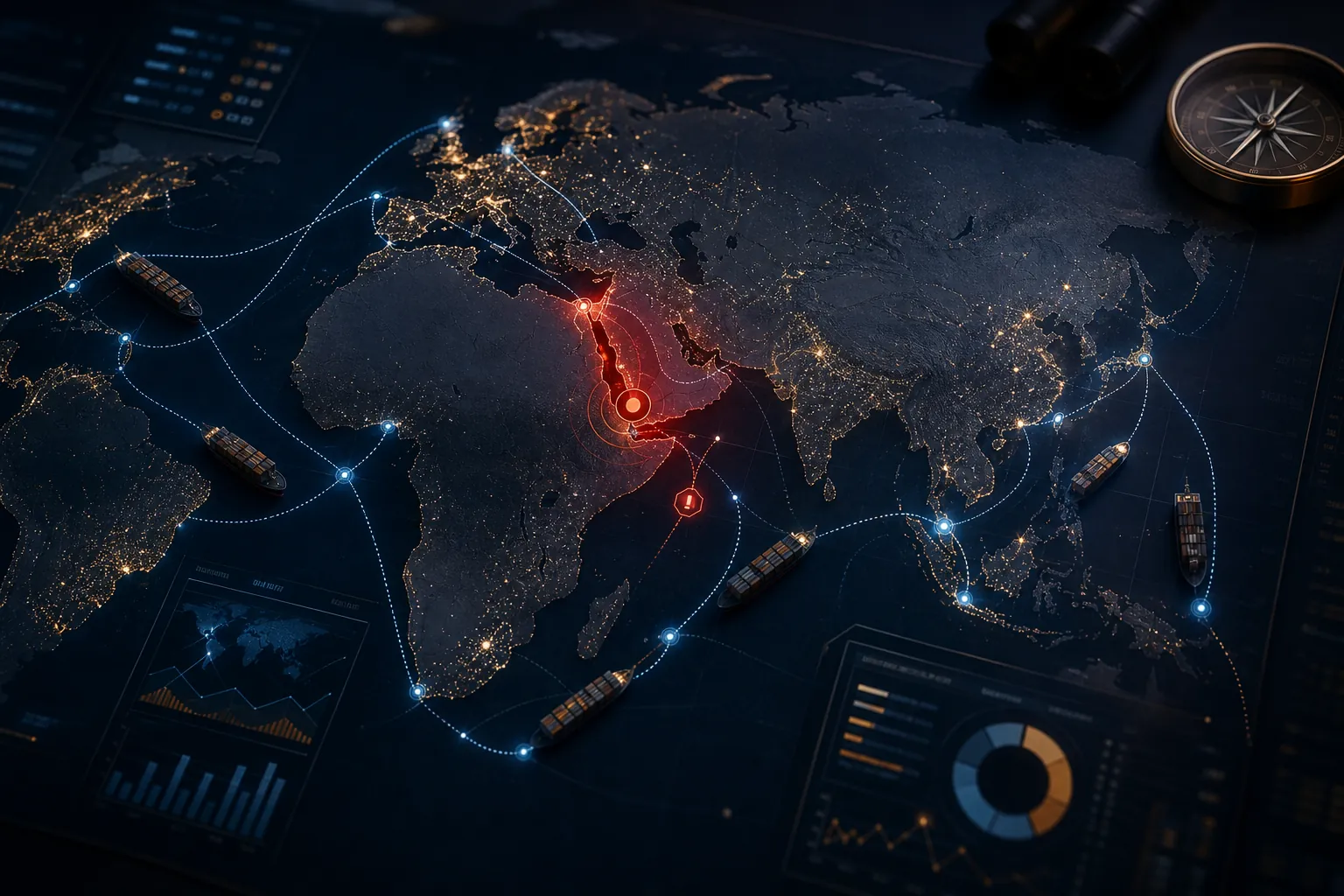
Those numbers matter because they define the work a planning platform had to support. This was not a normal demand-sensing problem. A useful system had to show which orders and lanes touched the chokepoint, compare alternatives fast enough for live decisions, expose downstream inventory and service consequences, and give the financial owner something more defensible than a colored risk map.
On the public record, the strongest live-adoption signal comes from Kinaxis. After the June 2026 Iran strike, Kinaxis reported a 1,400% increase in daily Oil & Gas scenario-planning volumes and a 306% all-industry spike. The company said customers “immediately tried to assess risk, reroute shipments, understand downstream effect of potential chokepoints,” which is the right sequence of actions for a Red Sea-style disruption rather than a generic resilience claim.[4]
The First Useful Signal Is Whether Operators Opened the Tool
Kinaxis’s 1,400% figure should not be read as audited business value. It is first-party platform data, and it does not tell buyers how many shipments were actually rerouted, how much cost was avoided, which customers were protected, or whether service levels improved. But it is still a better starting point than a capability page. In a planning crisis, adoption under stress is evidence that users saw enough value to run scenarios when the facts were still moving.
The distinction matters. A planning director does not need another abstract promise that AI can “orchestrate resilience.” They need to know whether the platform became part of the operating cadence: who built the scenario, who reviewed the result, which lane owner changed a routing decision, and whether finance could see the cost and working-capital consequences before the call ended.
MIT Sloan’s work on geopolitical supply-chain risk is useful calibration here. Its three-pillar model — understand, anticipate, adapt — came from studying 13 multinational companies, and the authors concluded that the conventional disruption playbook “falls short” for politically motivated disruptions.[5] The Red Sea case fits that warning. A conventional playbook can identify late vessels; it may not be enough to evaluate a military-risk chokepoint, a capacity-constrained reroute, and a margin tradeoff while procurement, logistics, and the business unit are pressing for different answers.
There is also a data-quality trap. Xeneta has warned that “AI without good foundational data can make things worse, not better,” especially when models trained on stable conditions are used during abnormal disruptions.[6] That warning lands hard in the Red Sea context. A system that knows a lane’s normal transit time but not terminal-level exceptions, carrier behavior, blank sailings, detention exposure, or substitute-port constraints can create confident answers that operators should not trust.
What Kinaxis Shows, and What It Still Does Not Prove
The Kinaxis data is notable because it points to actual user behavior after a dated geopolitical shock. The June 2026 Iran strike did not occur in isolation; it intensified attention on nearby maritime chokepoints while the Red Sea disruption was already forcing rerouting and capacity absorption. In that moment, Kinaxis says customers increased scenario-planning activity sharply, especially in Oil & Gas, where exposure to Middle East trade lanes and energy-market volatility would naturally make chokepoint analysis urgent.[4]
For a buyer, the important part is not the size of the percentage by itself. A 1,400% surge can be impressive and still leave open whether the starting volume was small, whether the scenarios were operationally adopted, and whether the recommended actions performed well. The stronger point is behavioral: when the crisis worsened, users apparently moved into the system to test alternatives.
That puts Kinaxis ahead of platforms whose public evidence is mostly architectural. Scenario planning is not automatically disruption response, but live scenario volume after a real event is closer to disruption response than a description of what a model could simulate. It suggests the platform was present during the decision window, not merely used later to explain what happened.
The missing artifact is the one procurement teams should ask for: a named-client post-mortem showing the baseline, the disruption, the alternatives evaluated, the selected action, the financial and service impact, and the governance trail. Kinaxis has the strongest public adoption signal in this material. It has not, on the available record, published the fully transparent Red Sea client case that would turn that signal into validated outcome evidence.
Operational Visibility Is Not the Same as Scenario Planning, but Siemens Shows the Bar
One adjacent case shows what good disruption evidence can look like when it gets closer to operating metrics. Siemens Digital Logistics, discussing Portcast during the Red Sea crisis, reported an 80% reduction in manual updates, 15% lower detention and demurrage charges, a 5% reduction in expedited freight costs, and predictive ETA with terminal-level granularity.[7]
That is not a like-for-like comparison with Kinaxis, Blue Yonder, o9, RELEX, or Anaplan as planning platforms. Portcast sits closer to shipment visibility and ETA prediction. Still, the metrics are useful because they name the operating burdens that matter during a chokepoint disruption: manual exception chasing, detention exposure, expedite spend, and terminal-level uncertainty. A planning-platform vendor claiming Red Sea readiness should be able to explain how its scenarios consumed, produced, or reconciled with this kind of operational signal.
Blue Yonder Looks Structurally Well Matched, but Public Outcome Evidence Is Thinner
Blue Yonder’s Command Center maps closely to the Red Sea use case on paper. Its public materials describe map-based geopolitical threat overlays, translation of operational risk into business metrics such as “revenue at risk” and “margin erosion,” a GenAI Orchestrator for natural-language impact questions, and Resolution Rooms for cross-team coordination.[8]
That architecture addresses a real handoff problem. A disruption alert is not enough if logistics sees vessel risk, finance sees only aggregate cost, and the business unit sees customer commitments without the route assumptions behind them. A useful Command Center should let those groups work from the same exposure model, ask different questions against the same disruption, and preserve the decision thread as the situation changes.
The gap is not conceptual fit. The gap is published proof. The available Blue Yonder material does not provide a named Red Sea client post-mortem with quantified savings, service protection, or avoided expedite cost. That does not mean the system failed under the crisis. It means buyers should treat the public evidence as capability evidence rather than validated Red Sea outcome evidence.
For a procurement team, the right demo is not “show me the geopolitical overlay.” It is “show me a disruption thread from alert to alternative lanes to revenue at risk to decision owner to execution status.” The Resolution Room is relevant only if it records the messy multi-function handoff that actually determines whether a scenario changes a shipment, a purchase order, or a customer promise.
o9 Contributes Scenario Economics, Not a Red Sea Deployment Proof Point
o9’s most useful contribution in the current record is not a Red Sea client case. It is scenario economics. In its July 2026 “Hormuz Rollercoaster” analysis, o9 described a staged disruption timeline: Day 0 to 2 with a 10% to 20% spot freight-rate jump, Day 3 to 30 with a €30 million annualized cost impact for a €200 million logistics spender, and Day 30 to 90 with structural cost increases through cascading effects.[9]
Those figures help buyers frame what a planning model should calculate. A chokepoint scenario is not just “lane closed” or “lane open.” It has phases. Freight rates move before all contractual effects are visible. Alternative capacity tightens. Inventory buffers erode at different speeds by SKU, region, and customer priority. Finance needs to know when a temporary premium becomes a structural margin problem.
But the o9 material should be kept in its lane. It is thought leadership and quantification, not a public post-mortem showing that an o9 customer used the platform to manage Red Sea rerouting with measured results. It makes o9 look analytically serious about geopolitical scenario design. It does not, by itself, prove live disruption-response performance.
The Temptation of the Big Anecdote
The most eye-catching case in the broader material is an unnamed automaker that allegedly used AI to reroute through 12 alternative ports pre-mapped with political stability scores, avoiding $220 million in losses.[10] It is exactly the kind of story that attracts attention because it joins route options, geopolitical scoring, and a large financial outcome.
It should also be handled carefully. The automaker is not named, the figure is not independently verified in the provided material, and the case is not tied to one of the five planning platforms being compared here. As a cautionary example, it is useful: the best disruption systems pre-map viable alternatives before the crisis. As proof that a specific vendor handled the Red Sea crisis, it carries little weight.
RELEX and Anaplan Show Transferable Scenario Value, Not Maritime Chokepoint Validation
RELEX deserves a narrower reading. Its scenario-planning workflow — Create, Calculate, Analyze, Decide — is a sensible operating sequence for disruption planning, and its Vita Coco case reports $3 million in savings through tariff scenario planning.[11] That is meaningful adjacent evidence because tariff shocks also force teams to compare cost, sourcing, inventory, and service options under policy uncertainty.
But tariff planning is not the same as maritime chokepoint disruption. A Red Sea event adds vessel location, carrier capacity, port congestion, security risk, and lead-time volatility. RELEX can credibly claim relevant scenario-planning capability from the available material. The public record provided here does not validate a Red Sea-specific rerouting response.
Anaplan’s public material sits in a similar category. Its dynamic scenario-modeling content cites a Swiss med-tech company that pivoted production in one day versus weeks manually, and it discusses agentic AI for disruption simulation.[12] That is a useful example of planning-speed improvement under shock conditions, especially where production and supply alternatives have to be compared quickly.
Again, the boundary matters. A one-day production pivot under a tariff shock does not prove that Anaplan managed a Red Sea reroute, priced ocean alternatives, or coordinated logistics execution during a prolonged chokepoint disruption. It supports Anaplan’s relevance to scenario modeling. It does not close the maritime evidence gap.
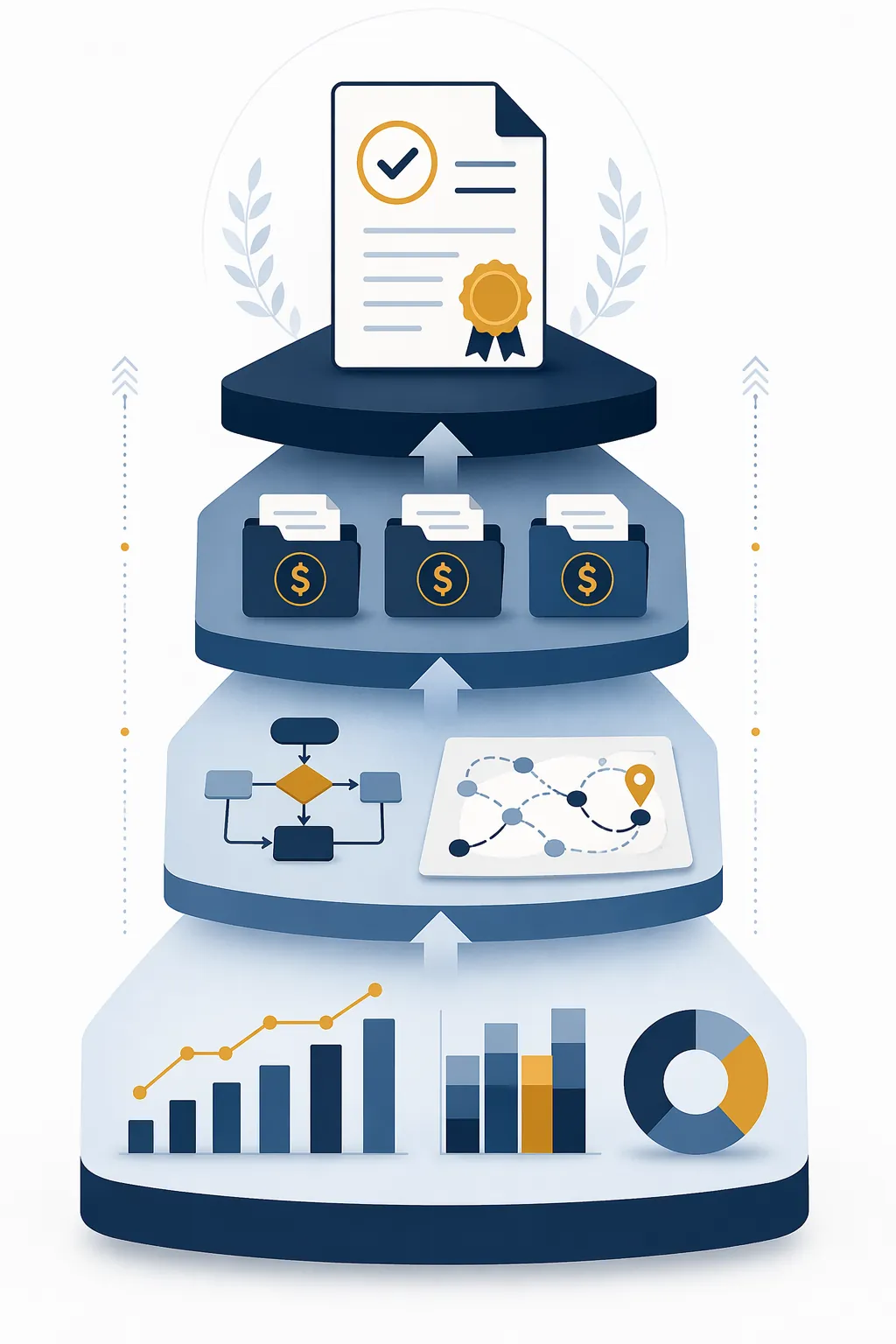
How the Evidence Stacks Up
| Platform | Strongest public evidence in the provided material | What it supports | What it does not prove |
|---|---|---|---|
| Kinaxis | First-party platform data showing 1,400% Oil & Gas and 306% all-industry scenario-planning surges after the June 2026 Iran strike | Live adoption signal during a related chokepoint shock | Audited savings, named-client Red Sea outcomes, or execution success |
| Blue Yonder | Command Center capabilities including threat overlays, revenue-at-risk translation, GenAI queries, and Resolution Rooms | Strong structural fit for cross-functional disruption response | Published named-client Red Sea post-mortem with quantified outcome |
| o9 | Hormuz scenario timeline with freight-rate and logistics-cost impact estimates | Useful economic model for geopolitical chokepoint scenarios | Deployment proof that o9 managed a Red Sea client response |
| RELEX | Scenario workflow and Vita Coco tariff-planning savings case | Transferable scenario-planning capability under policy shock | Maritime chokepoint rerouting validation |
| Anaplan | Dynamic scenario modeling and Swiss med-tech one-day production pivot case | Planning-speed improvement under adjacent disruption | Red Sea-specific route, cost, and service outcome evidence |
This is not an apples-to-apples benchmark. The public material comes from different vendors, different publication dates, and different evidence types. Some sources describe platform usage; some describe product architecture; some quantify hypothetical or generalized disruption economics; some offer adjacent customer cases. Treating them as equal proof would reward whoever writes the broadest marketing page.
AlixPartners’ guidance for shippers navigating the Red Sea crisis reinforces the practical scope of the problem: contingency planning has to cover more than awareness, because shippers need coordinated plans for route alternatives, cost exposure, customer implications, and execution under uncertainty.[13] That is the standard a planning platform should be measured against. The software has to carry a decision across functions, not just display that a disruption exists.
What Buyers Should Ask Before Accepting a Red Sea Claim
The procurement question is not whether a platform has AI. By 2026, every serious planning vendor can describe AI-assisted scenario generation, natural-language querying, exception detection, or orchestration. The question is what kind of evidence sits behind the claim.
- Separate usage volume from outcome: ask whether scenario spikes led to executed reroutes, inventory moves, supplier changes, or customer-allocation decisions.
- Separate modeled capability from deployment proof: a map overlay or GenAI query layer is relevant only if it supports a documented decision workflow.
- Separate adjacent cases from chokepoint validation: tariff, production, or inventory cases can show planning strength without proving maritime disruption response.
- Ask for the financial bridge: the vendor should show how rerouting options translated into freight cost, detention risk, expedite exposure, revenue at risk, and margin impact.
- Ask for named-client governance: who approved the scenario, who executed the change, what data was used, and what happened after the decision.
Kinaxis comes out strongest in the available evidence because its published data shows users entering scenario-planning workflows immediately after a dated geopolitical shock. Blue Yonder looks structurally well matched to the Red Sea problem, especially where operational risk has to be translated into financial exposure and coordinated across teams. o9 adds useful scenario economics for how chokepoint shocks unfold over time. RELEX and Anaplan show credible adjacent scenario-planning value, but not Red Sea-specific validation.
No vendor in this comparison has yet published the clean artifact that would settle the matter: a named-client Red Sea post-mortem with the disruption timeline, the modeled options, the selected actions, and quantified service and financial outcomes. Until that exists, buyers should treat AI-for-supply-chain-disruption-planning claims tied to Red Sea attacks as a tiered evidence problem: activity metrics first, modeled capability second, adjacent cases third, and verified deployment outcomes at the top.
References
- Red Sea crisis scale data, project44
- Red Sea crisis transit-time and fleet-capacity data, J.P. Morgan
- Red Sea crisis weekly trade disruption data, Suaid Global, July 2026
- How Iran conflict triggered 1,400% supply chain scenario planning surge, Kinaxis
- Stay Ahead of Geopolitical Supply Chain Risks, MIT Sloan Management Review
- The biggest supply chain risks of 2026 and how to navigate them, Xeneta
- When sea freight gets smarter, Siemens Digital Logistics, September 5, 2025
- Blue Yonder Command Center information page, Blue Yonder
- The Hormuz Rollercoaster: What supply chain leaders learn from the back-and-forth, o9 Solutions, July 2026
- Navigating turbulent waters: How geopolitical shifts and AI-powered visibility stabilize global supply chains, Sensos
- Supply chain scenario planning, RELEX Solutions
- Dynamic scenario modeling for supply chain resilience, Anaplan
- Turmoil in the Red Sea: 4 components that should be part of every shipper’s contingency plan, AlixPartners
Cited evidence
- OpenAI Frontier Agents in Supply Chain: Where They Excel
An analysis of OpenAI Frontier's six confirmed launch customers — including HP's demand forecasting and inventory management deployment — shows that Frontier agents excel at structured cross-system coordination and exception management, not at the strategic planning tasks handled by specialized platforms like o9, Blue Yonder, or Kinaxis.
- How AI Capex Is Reshaping Supply Chain Software Vendor Risk
A vendor-intelligence analysis of the five major supply-chain planning platforms—Kinaxis, o9 Solutions, Blue Yonder, Anaplan, and RELEX—maps their financial health and AI deployment evidence against the $700B+ hyperscaler AI capex wave. The findings reveal that only Kinaxis offers audited financials and verifiable AI outcomes, while the other four operate under private or subsidiary ownership that obscures financial and deployment risk, making the transparency gap itself a material selection factor for enterprise buyers.
- What Trump's Ratepayer Pledge Means for AI Data Center Supply Chains
The Ratepayer Protection Pledge shifts grid upgrade costs but lands on a supply chain already crippled by transformer shortages, tariff exposure, and multi-year lead times—forcing enterprise AI buyers to plan for higher costs and delays through at least 2028.
Ready to check your own team's readiness for this pattern?
See the control tower readiness checklist →Spotted something inaccurate or incomplete in this entry? ChainSignal reviews corrections and additional evidence before publishing an update — this is not a public comment thread.
Flag an inaccuracy / submit evidence for this entry →