Peter Rabbit Baby Food Recall Exposes Supplier Quality Gap
The July 2026 recall of ~380,000 Peter Rabbit Organics pouches traced to a packaging-supplier defect that the brand owner's quality system missed. This analysis shows what supplier-quality visibility tools in planning platforms like o9 and Kinaxis could have detected earlier, and why the gap matters for CPG procurement teams evaluating supplier risk monitoring.
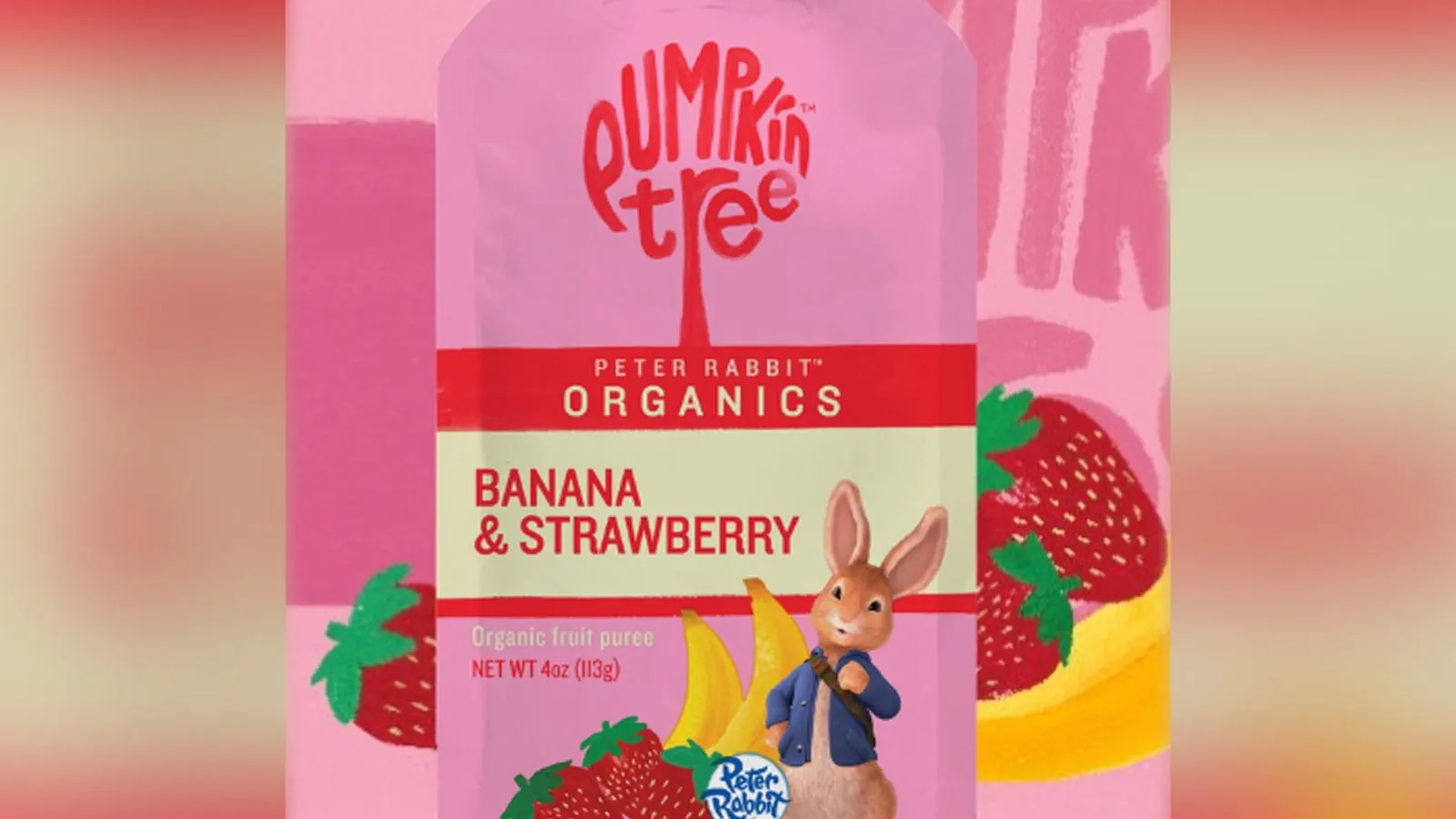
The supply-chain impact of the Peter Rabbit baby food recall starts with the pouch, not the puree. In July 2026, PT Organics Limited recalled select Pumpkin Tree Peter Rabbit Organics Banana & Strawberry Fruit Puree pouches after soft food-grade plastic strands from the inner pouch liner could detach when the pouch was squeezed. The FDA notice identifies the problem as a packaging-supplier defect: the supplier initiated its own recall after finding the issue, then informed PT Organics, and PT Organics confirmed the defect through inspection before recalling affected product codes.[1]
That sequence matters. This was not a public record of a formulation failure, a processing kill-step failure, or a heavy-metal exceedance. It was a physical packaging defect discovered upstream, communicated downstream, and then confirmed by the brand owner. For procurement and quality teams, the uncomfortable question is not whether every pouch defect can be prevented. It is why the brand owner’s operating picture appears to have depended on the supplier finding and communicating the defect first.
Consumer Reports put the scale at about 380,000 pouches, citing Pumpkin Tree, and reported that the affected product had been sold at Kroger, Meijer, and Target. Its account also tied the recall to six best-before codes connected to sales spanning March through July 2026.[2] The FDA notice is narrower in one respect: it gives the product identification and recall facts, but not the total unit count.[1] That distinction is worth keeping clean, because recall analysis gets sloppy fast when official product-code evidence and reported commercial scale are treated as the same thing.
What the FDA Timeline Says About the Control Gap
The FDA notice describes a supplier-origin problem in plain operational terms. A packaging supplier detected a defect involving soft plastic from the inner liner of the pouch. That supplier issued its own recall. PT Organics was informed by the supplier, inspected product, confirmed the presence of the soft plastic strands, and then initiated its consumer-facing recall.[1]
There is no need to make the case louder than that. The public record does not name the packaging supplier. It does not report injuries connected with the recall. It does not provide PT Organics’ recall cost. It does not support a claim that the food itself was contaminated during formulation. The signal is narrower and more useful: supplier packaging quality failed in a way that became visible to the brand owner after the supplier had already found it.
In a traceability review, that is the point where the room stops talking about brand values and starts asking for system timestamps. When did the supplier first detect the liner issue? Was it tied to an inspection lot, a production run, a material batch, or a specific pouch-making line? When was PT Organics notified? Which finished-product lots were connected to the packaging lots? Which retailers received them? Who approved the code isolation? The FDA notice gives the public skeleton of that sequence; the missing operational muscle is the supplier-quality data flow that should connect those events before a recall notice has to explain them.
PT Organics Shows Quality Evidence, Just Not for This Failure Mode
PT Organics’ public product-safety material complicates the easy version of the story. The company posts batch-level heavy-metal testing results for its products, which is meaningful quality evidence in baby food because it addresses composition and ingredient-related risk.[3] That does not disappear because a packaging recall occurred.
It also sharpens the gap. Batch-level heavy-metal testing can tell a parent, buyer, or quality reviewer something about what is in the food. It does not, by itself, show that pouch laminate integrity, liner adhesion, seal behavior, supplier inspection results, deviations, and corrective actions were flowing into the brand owner’s systems in near real time. The recall exposed a packaging-integrity blind spot, not the absence of all quality discipline.
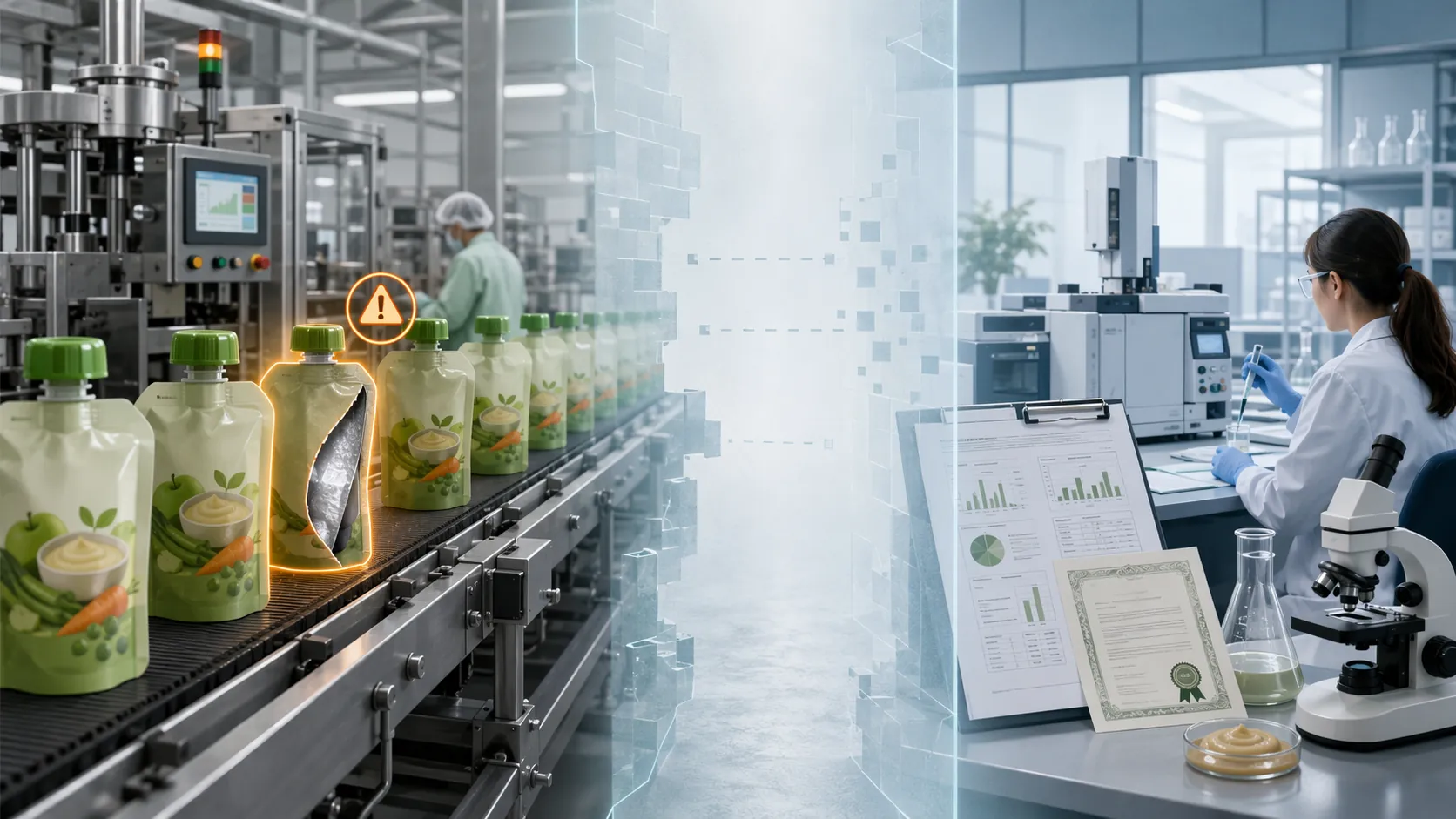
That distinction is exactly where supplier scorecards can become dangerous. A supplier can look acceptable on delivery, certification status, price variance, and periodic audit closure while still failing to expose the next physical defect quickly enough. A quality posture that is strong around formulation evidence can still be weaker around packaging-material surveillance if supplier inspection data lives in email attachments, supplier portals nobody checks daily, or PDF certificates that arrive after production has moved.
The Practical Traceability Test
A better test for this kind of recall is not whether a planning platform can display supplier risk in a heat map. The useful test is whether it can shorten the distance between five events:
- Supplier detects a defect in a packaging lot, material input, inspection sample, or production run.
- Supplier records the deviation with enough lot-level detail to connect it to finished goods.
- Brand owner quality receives and acknowledges the event before customer complaints or public notices drive the work.
- Planning, customer service, legal, and procurement work from the same affected-code universe.
- Procurement reassesses supplier risk using the deviation and corrective-action record, not just annual scorecard averages.
The Peter Rabbit recall does not prove that PT Organics lacked every one of those controls. Public recall notices are not system audits. What the notice does show is that the supplier discovered the issue first and that PT Organics confirmed it after supplier communication.[1] For a procurement director evaluating supplier-risk monitoring in Q3 2026, that is enough to ask how packaging inspection events are captured, escalated, matched to finished goods, and made visible before the brand owner is already in containment mode.
Where Planning Platforms Can Help, and Where Claims Should Stop
Supplier-quality modules in planning and supply-chain platforms are relevant here because the failure sits between procurement, quality, planning, and commercial execution. o9 Supplier Collaboration, Kinaxis Supplier Management, and Blue Yonder Supplier Quality Management should be evaluated less as dashboard products and more as workflow systems: can they force supplier events into shared exception management, connect those events to supply and demand exposure, and preserve confirmation history when the question becomes who knew what and when?
That is not the same as saying any one of those platforms would certainly have prevented the Peter Rabbit recall. The public materials do not reveal PT Organics’ internal systems, supplier contract terms, inspection cadence, or integration design. A platform cannot rescue a supplier relationship if the required inspection characteristics are not specified, if deviations are not mandatory to report, or if lot genealogy is too loose to isolate exposure quickly.
| Supplier-quality signal | Why it matters in a pouch-liner defect | What a platform should make visible |
|---|---|---|
| Incoming or in-process packaging inspection result | Shows whether the supplier saw liner, seal, laminate, or pouch-integrity issues before shipment | Inspection status, failed characteristic, affected packaging lot, timestamp, and disposition |
| Supplier deviation or nonconformance | Creates a record before the issue becomes a finished-goods recall | Deviation owner, severity, lot linkage, containment action, and brand-owner acknowledgement |
| Corrective and preventive action | Separates one-off containment from supplier process correction | Root-cause statement, corrective action, due date, approval status, and recurrence checks |
| Finished-goods lot genealogy | Connects defective packaging lots to shipped product codes | Affected SKU, best-before code, production window, retailer exposure, and inventory status |
| Supplier risk reassessment | Turns the event into procurement action rather than a closed quality ticket | Scorecard impact, sourcing constraints, alternate capacity, and next audit focus |
The most useful product demo for a CPG buyer is not a generic supplier-risk map. It is a replay of this kind of event with hypothetical data: a packaging supplier logs a liner-adhesion deviation; the system ties it to open purchase orders and received packaging lots; finished-goods lots using those pouches are put on hold; retailer allocation is checked; quality signs off on release or containment; procurement sees whether the supplier’s corrective action closes on time. The point is not theater. The point is whether the workflow removes days, duplicated spreadsheets, and conflicting answers from a defect that started outside the brand owner’s walls.
Why This Case Is Representative Enough to Matter
The industry backdrop supports treating the Peter Rabbit recall as a representative supplier-quality case, not a strange exception. In ETQ’s Pulse of Quality survey coverage, 61% of manufacturers said up to half of all recalls originate from supplier issues, and 39% reported per-recall costs in the $10 million to $49.99 million range.[4] Those are industry survey figures, not PT Organics figures. They should not be used to estimate the company’s cost.
Recall volume pressure is also not theoretical. CRC Group reported that FDA recall units in Q1 2025 surged 232% to about 70 million units.[5] That context does not make every recall severe, and it does not say anything specific about baby-food pouch liners. It does explain why procurement teams are being pushed to treat recall containment speed as a supplier-management capability, not only a regulatory response capability.
For a smaller brand owner, that distinction can be especially important. Public company-profile data identifies PT Organics Limited as a small company, and the public recall materials do not provide revenue or recall-specific cost information. A smaller organization may still have legitimate testing, supplier qualification, and recall execution practices. What it may not have is the same integration leverage over packaging suppliers that a larger CPG company can demand through systems, data-sharing requirements, and contract language.
The Procurement Question for Q3 2026
The useful lesson from the Peter Rabbit recall is not that every supplier defect needs an AI label. It is that packaging quality data belongs in the same operating conversation as supply assurance. If a supplier sees a physical defect before the brand owner does, the brand owner’s systems should still be able to absorb that signal quickly, connect it to finished goods, and make containment decisions without rebuilding the lot story by hand.
That changes how supplier-quality functionality should be scored in planning-platform evaluations. CPG teams comparing o9, Kinaxis, Blue Yonder, RELEX, or adjacent tools should ask for evidence of supplier inspection capture, deviation escalation, corrective-action workflow, lot linkage, and brand-owner confirmation history. Abstract supplier-risk scoring is secondary. The harder and more valuable question is whether the system exposes supplier inspection events, deviations, and confirmation workflows early enough to change containment speed.
References
- PT Organics Limited Recalls Select Pumpkin Tree Peter Rabbit Organics Banana & Strawberry Fruit Puree Pouches, FDA, 2026, link
- Peter Rabbit Organics baby food recall article, Consumer Reports, July 22, 2026, link
- Product Safety, Pumpkin Tree Snacks, link
- ETQ Pulse of Quality survey coverage, SupplyChainBrain, link
- Recall analysis, CRC Group, link
Cited evidence
- Taylor Farms cyclospora exposes AI traceability gaps
An analysis of four documented traceability failures during the Taylor Farms cyclospora outbreak, evaluating which current AI technologies could have addressed them and delivering a vendor-neutral verdict for enterprise buyers evaluating food safety traceability platforms.
- Walmart’s Dresser Recall Exposes the Compliance Blind Spot in Logistics AI
Walmart’s 2026 Mainstays dresser recall (165,000 units, STURDY Act violation) reveals that its advanced supply chain AI—optimized for packaging defects and cost—did not inspect product safety compliance. This case helps retail leaders understand where logistics AI falls short on safety.
- How AI Recall Management Improves Food Safety Outcomes
This article examines measurable outcomes from AI-driven recall management deployments, including trace-speed reductions, recall-scope compression, and cost avoidance, while distinguishing verified claims from marketing assertions. It provides evidence to help supply-chain leaders evaluate AI investments for food safety.
Ready to check your own team's readiness for this pattern?
See the procurement readiness checklist →Spotted something inaccurate or incomplete in this entry? ChainSignal reviews corrections and additional evidence before publishing an update — this is not a public comment thread.
Flag an inaccuracy / submit evidence for this entry →