How AI Predicts Drug Recall Risks in Pharma Supply Chain
AI-driven recall risk scoring can flag pharmaceutical batches at risk of recall before they leave the supply chain, with early vendor deployments reporting 42% cost reductions and up to 90% less manual recall labor — but effectiveness depends on data quality, system integration, and human oversight.
Drug recall risk scoring matters because the problem is already large enough to swamp manual triage. One analysis of FDA drug recall data counted 15,749 recalls from 2012 through mid-2024, an average of 1,284 a year, with 10.4% classified as Class I [1].
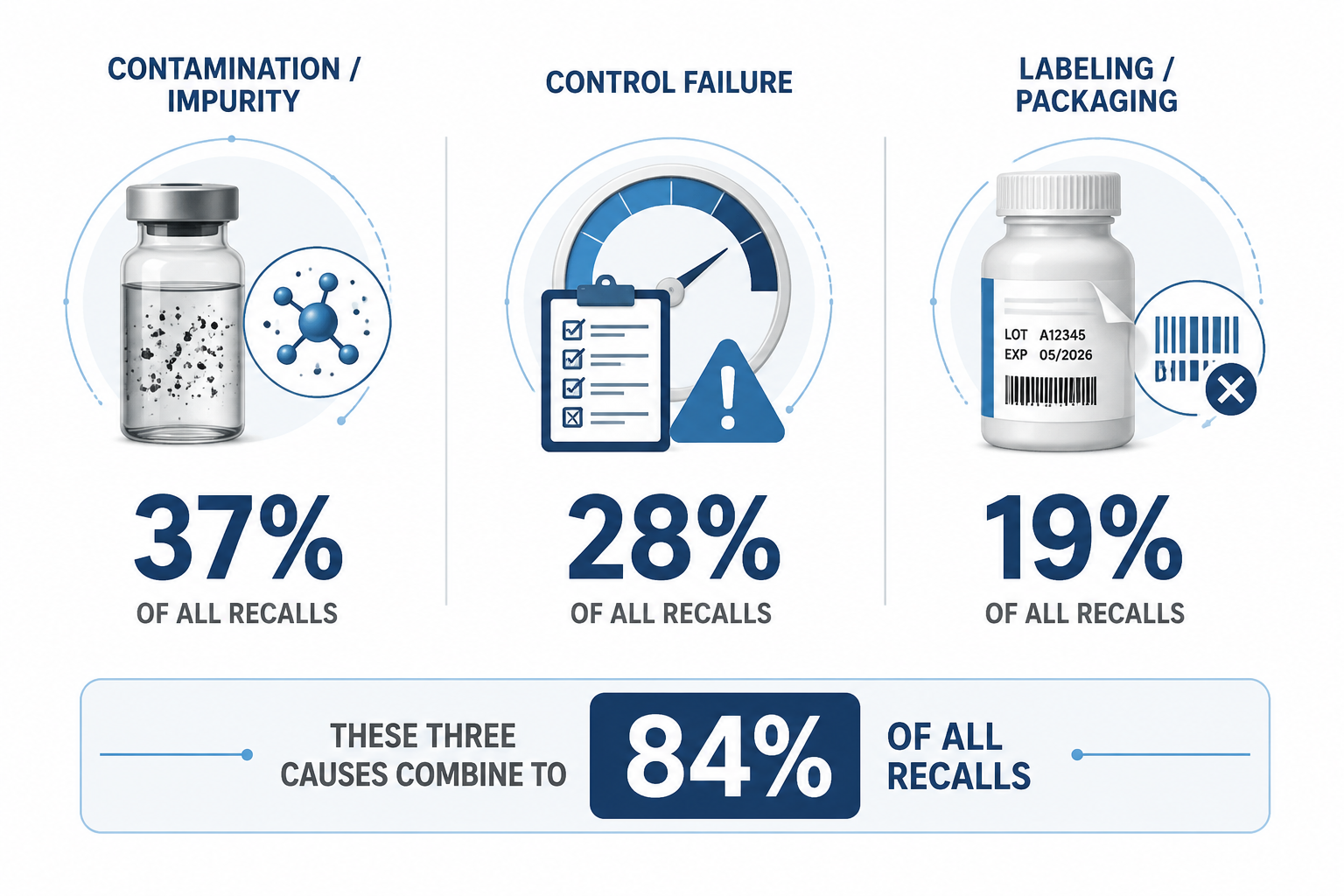
The more useful question is where those recalls start. A 2024 FDA-data review in the Journal of Pharmaceutical and Biomedical Analysis found that 84% of recalls clustered in three buckets: 37% impurities or contaminants, 28% control issues, and 19% labeling or packaging errors. The same study puts the average recall at about 400,000 product units and 1.3 years from initiation to termination [2].
What AI Is Scoring
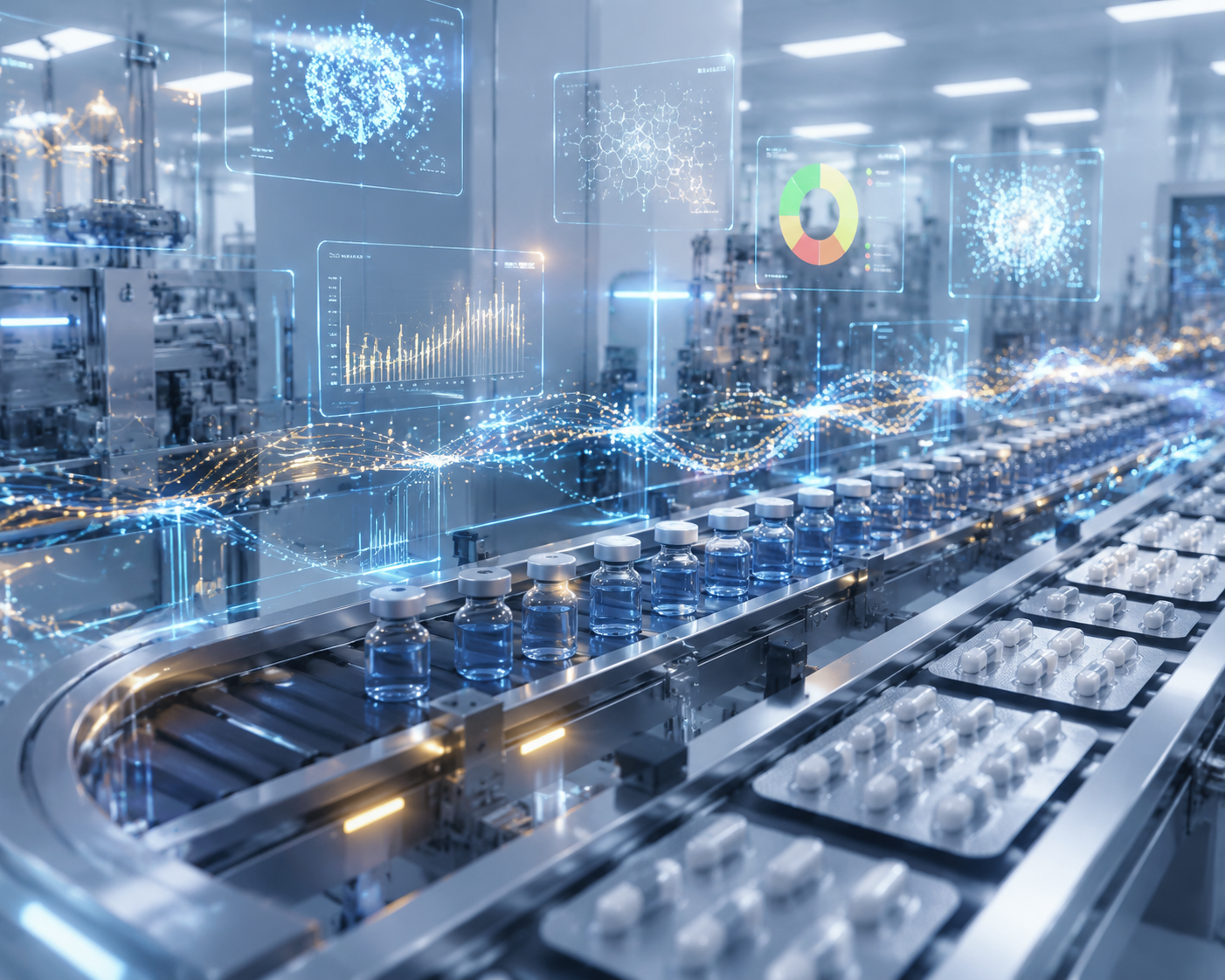
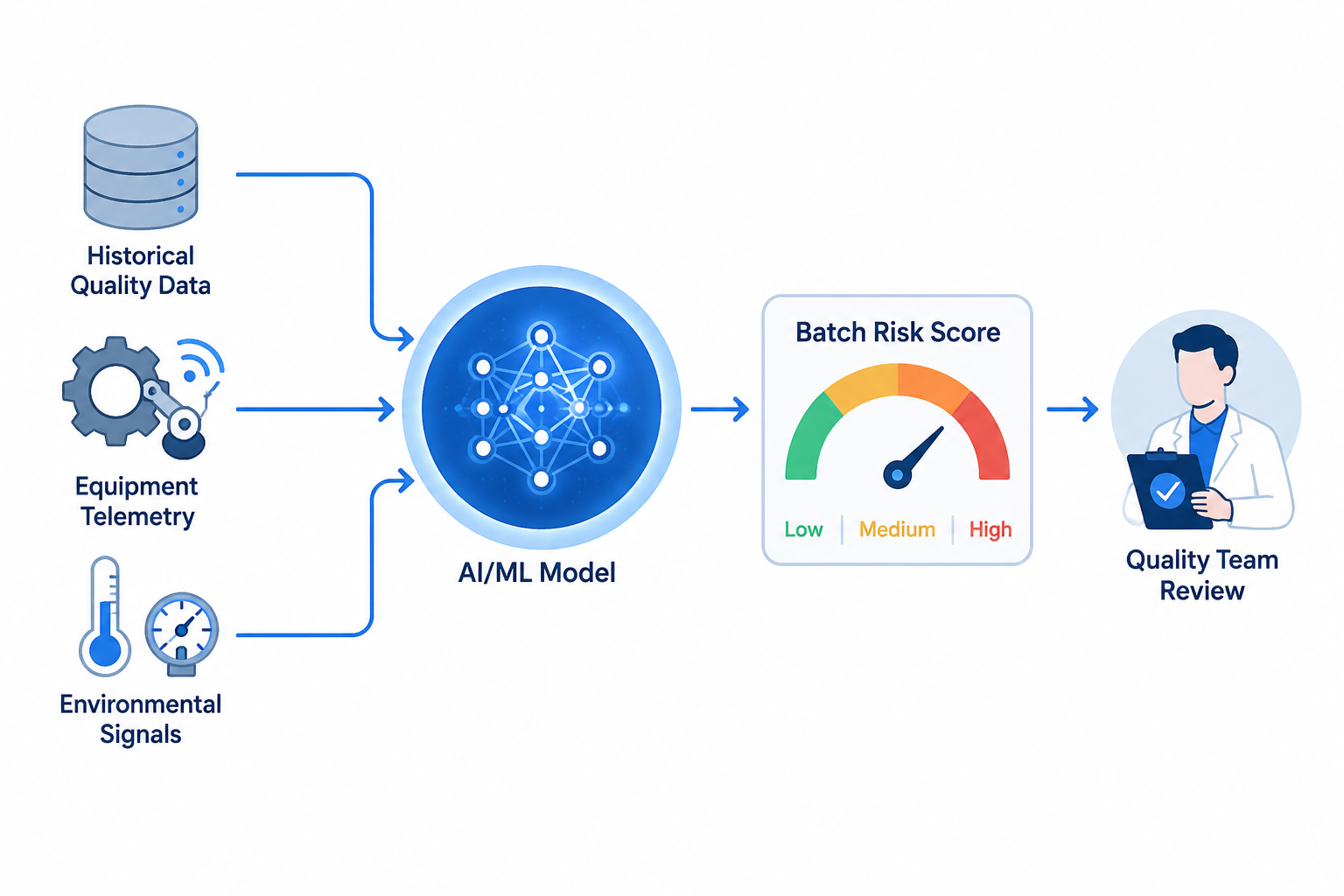
This is where ai for drug recall risk supply chain becomes more than generic anomaly detection. The useful version scores batches before release by combining historical quality data, equipment telemetry, and environmental signals, then surfacing a risk band for QA review. It is decision support, not a replacement for release authority.
What the Evidence Supports
One 2025 academic estimate reported a 42% average reduction in recall cost from AI-driven predictive analytics, apparently by tightening where recall effort is focused. That is directional evidence, not a settled benchmark, because the source is abstract-only in this brief [3].
LSPedia says its serialized recall module achieved up to a 90% reduction in manual recall labor in operational testing with early adopters. That points to labor compression in recall execution, but the claim is still vendor-reported and the sample size and method are not disclosed [4].
Emerging Alliance reports that AI batch deviation prediction on a tablet coating line cut batch rejections by 40% after catching humidity and drum-speed variation that had not been obvious in routine review. The same vendor also frames the deployment as a 3- to 6-month ROI case, but both figures should be read as vendor-reported, not independently verified [5][6].
What Has To Be True In Practice
The common failure mode in this kind of project is assuming the model is the product. It is not. The product is the pipeline: digitized batch records, structured deviation taxonomy, connected quality and manufacturing systems, and enough clean telemetry to make the score stable across sites and shifts. If the labels are inconsistent or the historian gaps out, the risk score inherits that mess.
That is why human review stays central. A score can tell a QA team where to look first; it cannot certify a batch, clear a deviation, or absorb the regulatory consequences of a bad release decision. Sphera's supply-chain guidance makes the same governance point: AI helps only when data quality and human oversight stay in the loop [7].
Seen that way, AI-based recall risk scoring is already operationally meaningful. It will not eliminate recalls, and it should not be sold as if it will, but the current evidence supports a narrower claim: when it is wired into quality systems and used by people who still own the release decision, it can reduce manual triage, focus recall action, and shrink some of the cost and disruption before product leaves the supply chain.
References
- FDA Drug Recall Statistics - Lightfoot Law DC - https://www.lightfootlawdc.com/blogs/fda-drug-recall-statistics/
- A 10-year analysis of FDA drug recalls - Journal of Pharmaceutical and Biomedical Analysis, 2024 - https://www.sciencedirect.com/science/article/abs/pii/S0731708524003893
- AI-driven predictive analytics in pharmaceutical recall management - Journal of International Crisis and Risk Communication Research, 2025 - https://jicrcr.com/index.php/jicrcr/article/view/3379
- Serialized Recall Module - LSPedia - https://www.lspedia.com/products/onescan-solution-suite/recall-management-module
- AI batch deviation prediction in pharmaceutical manufacturing - Emerging Alliance - https://www.emerging-alliance.com/ai-batch-deviation-prediction-pharma/
- SAP B1 and AI recall risk - Emerging Alliance - https://www.emerging-alliance.com/pharma-sap-b1-and-ai-recall-risk/
- Making the Most of AI-Driven Supply Chain Risk Management - Sphera - https://sphera.com/resources/blog/making-the-most-of-ai-driven-supply-chain-risk-management/
Cited evidence
- How AI Maps to Supply Chain Disaster Preparedness Phases
Supply chain leaders need a way to prioritize AI investments across the disaster lifecycle. This article maps specific AI capabilities — predictive analytics, NLP, computer vision, digital twins, and agentic AI — to each phase of disaster preparedness, response, and recovery, with real-world evidence and ROI data to guide decision-making.
- How AI Predicts Food Safety Outbreaks in the Supply Chain
Machine learning models can forecast food contamination risks weeks to months in advance by combining internal supply chain data with external signals like weather anomalies and commodity prices. This article examines the current evidence from academic studies, government pilots, and early industry deployments to help supply chain leaders evaluate predictive food safety systems.
- AI drone attack disruption as a structural supply chain risk
AI-enabled drone attacks on military logistics and commercial maritime chokepoints have created a distinct disruption vector that requires structural changes to supply chain risk frameworks. This use case explains how supply chain leaders can assess and monitor this emerging threat using AI risk monitoring tools.
Spotted something inaccurate or incomplete in this entry? ChainSignal reviews corrections and additional evidence before publishing an update — this is not a public comment thread.
Flag an inaccuracy / submit evidence for this entry →